TL;DR: Hitting a pedestrian in California can make you financially liable for medical bills, lost wages, and pain and suffering if your negligence caused the crash, even when the pedestrian also made a mistake. Mandatory 24-hour reporting to police or the California Highway Patrol (CHP) applies when the crash causes injury or death. Meanwhile, a 10-day SR-1 filing is required for injury, death, or property damage exceeding $1,000.
A crash involving a pedestrian can lead to civil liability for medical bills, lost wages, pain and suffering, and other losses. It can also create reporting duties with the CHP, local police, and the Department of Motor Vehicles (DMV). Depending on the facts, the crash may also lead to an insurance investigation, traffic citations, or a criminal investigation.
These crashes aren’t rare. California recorded 1,106 pedestrian fatalities in 2023, according to the UC Berkeley Safe Transportation Research & Education Center (SafeTREC). That averages to about three pedestrian deaths per day across the state and reflects how frequently serious pedestrian crashes can occur.
Still, a driver is not automatically at fault just because their vehicle struck a pedestrian. Although pedestrians often have the right of way, California law considers whether the driver and the pedestrian exercised reasonable care and whether each person’s actions contributed to the crash.
Key Facts About Pedestrian Accidents In California
- Automatic Fault: A driver is not automatically liable simply because their vehicle struck a pedestrian. Liability depends on the conduct of everyone involved.
- Driver Negligence: A driver may be liable if speeding, distraction, failure to yield, or another failure to use reasonable care caused or contributed to the collision.
- Pedestrian Fault: A pedestrian’s own negligence can reduce the compensation they may recover under California’s comparative fault rules.
- Other Responsible Parties: Another driver, employer, vehicle owner, public entity, property owner, contractor, or manufacturer may share responsibility in some cases.
- Reporting Requirements: A mandatory 24-hour police or CHP report and a 10-day DMV SR-1 filing are required after any crash causing injury or death.
Table of Contents

Civil Liability: When Is The Driver Financially Responsible?
The driver may be financially responsible if their negligence caused or contributed to the pedestrian’s injuries. In practical terms, this means that the driver failed to use reasonable care while driving, which contributed to the collision and caused the pedestrian to suffer compensable losses.
Examples may include:
- Failing to yield when the pedestrian had the right-of-way.
- Speeding or driving too fast for the conditions.
- Running a red light or stop sign.
- Driving while distracted.
- Failing to keep a proper lookout or respond reasonably to a visible pedestrian.
If a driver is found liable, the amount a pedestrian may recover depends on the proven damages and each party’s share of fault. Recoverable damages may include:
- Emergency medical care and hospitalization.
- Surgery and rehabilitation.
- Future medical treatment.
- Lost wages.
- Reduced future earning capacity.
- Pain and suffering.
- Other legally recoverable accident-related losses.
The driver’s auto liability insurance may pay covered damages up to the available policy limits. If the pedestrian’s recoverable damages exceed those limits, the driver might have to pay out of pocket.
A Driver’s Immediate Legal Duties After A Pedestrian Accident
After a pedestrian accident in California, drivers must immediately stop at the scene, provide required information and reasonable assistance, and file a written report with the CHP or local police within 24 hours if the crash causes injury or death.
What you do in the minutes and days that follow directly affects both your legal exposure and your ability to seek compensation. California imposes specific duties at the scene and hard deadlines after you leave.
At the scene:
- Stop immediately. California law requires any driver involved in an accident to stop at the scene. Leaving the scene of an accident involving injury or death can result in misdemeanor or felony hit-and-run charges under California Vehicle Code § 20001.
- Help the injured. Provide reasonable assistance, including calling 911 or arranging emergency medical transport if the pedestrian is injured.
- Exchange information. Provide the identifying and vehicle information required by California law to the pedestrian and any responding officer. For injury or death collisions, CVC § 20003 governs the information a driver must provide to the person struck.
- Document everything. Photograph your vehicle, the crosswalk or roadway, traffic signals, tire marks, the pedestrian’s position, and any visible injuries. Collect witness names and contact information before they leave the scene.
- Do not admit fault. Stick to facts when speaking with police. Do not apologize or make statements that could be interpreted as an admission of liability.
After leaving the scene:
- Within 24 Hours: Under CVC § 20008, if a crash results in injury or death, the driver must make or cause a written report to the CHP within 24 hours. If the crash occurred within a city, the driver may instead file the report with the local police department.
- 10 Days: File DMV form SR-1 if the crash resulted in injury, death, or property damage exceeding $1,000.
Missing a required reporting deadline can create legal problems and leave gaps in the official record. Failure to file a required SR-1 can also affect your driving privileges.
Does Hitting A Pedestrian Automatically Make You Liable?
No. A driver is not automatically liable simply because their vehicle struck a pedestrian. Fault depends on whether the driver, pedestrian, or another party failed to use reasonable care and contributed to the collision.
A driver may be liable for failing to yield to a pedestrian who had the right of way. However, a pedestrian who suddenly enters the roadway when a vehicle is too close to stop safely may share fault.
California’s comparative fault rules allow responsibility to be divided based on each party’s contribution to the crash.
Can Someone Else Be Responsible If Your Car Hits A Pedestrian?
The fact that your vehicle made contact with a pedestrian does not necessarily mean you bear all of the responsibility. There are different causes of pedestrian accidents. California looks at the conduct of the driver, the pedestrian, and any other person or entity whose negligence contributed to the collision.
The Driver And Pedestrian May Share Fault
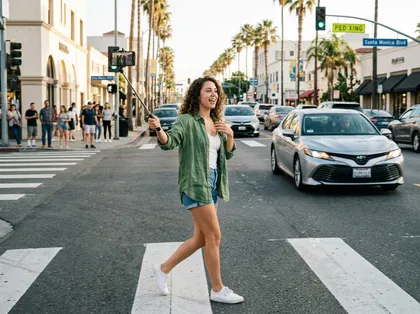
Right-of-way is often one of the first issues examined. Under CVC § 21950, drivers must yield the right-of-way to pedestrians crossing within marked crosswalks and unmarked crosswalks at intersections. A marked crosswalk can also be located away from an intersection. Failing to yield when required can be significant evidence of negligence in a pedestrian accident claim.
Pedestrians also have legal duties. CVC § 21950(b) provides that a pedestrian may not suddenly leave a curb or other place of safety and walk or run into the path of a vehicle that is so close as to constitute an immediate hazard. Drivers, however, must still exercise due care for pedestrian safety.
These mutual duties matter when deciding whether you, the pedestrian, or both contributed to the crash. California’s definition of a pedestrian is also broader than someone traveling on foot. CVC § 467 includes certain people who use human-powered conveyances and individuals who use specified mobility devices because of a physical disability.
California Uses Comparative Fault
California follows pure comparative negligence, established under Li v. Yellow Cab Co., 13 Cal. 3d 804 (1975). This means responsibility can be divided among parties whose negligence contributed to an accident.
For example, you may have failed to yield while the pedestrian also entered the roadway unsafely. If the pedestrian is found 30% responsible for the collision, the court would generally reduce their recoverable damages by 30%.
No rule automatically assigns all fault to the driver because a vehicle struck a pedestrian. Likewise, a pedestrian’s mistake does not automatically eliminate a personal injury claim.
Evidence can become especially important when fault is disputed. Depending on the accident, pedestrian accident lawyers rely on available evidence, which may include:
- Dashcam or surveillance footage.
- Police or CHP collision reports.
- Eyewitness statements.
- Photographs and video from the scene.
- Traffic-signal information.
- Vehicle damage and the point of impact.
- Skid marks, debris, and other physical evidence.
- Roadway conditions and visibility.
Video evidence can disappear or be overwritten, so promptly obtaining and preserving available footage may help establish the pedestrian’s location, the vehicle’s movement, traffic-signal conditions, and the events immediately before impact.
Other Parties Who May Be Liable For A Pedestrian Accident
Fault is not always limited to you and the pedestrian. Another person, business, or government entity may have contributed to the circumstances that caused the crash.
| Possible Responsible Party | How They May Be Involved |
|---|---|
| Another Driver | Another motorist may have forced you to swerve, blocked your view, or caused the events that led to the collision. |
| An Employer | An employer may share responsibility if an employee caused the crash while acting within the scope of their job. |
| A Vehicle Owner | A vehicle owner may be liable in some cases when another person was driving the owner’s vehicle. |
| A Property Owner or Business | Landscaping, signs, construction materials, or other conditions on private property may block visibility or create a roadway hazard. |
| A Vehicle or Parts Manufacturer | A manufacturer may be responsible if defective brakes, steering parts, tires, or other vehicle components contributed to the crash. |
Identifying everyone who contributed to the crash can affect how fault is divided and may reveal additional insurance coverage or other sources of compensation. For the driver, the investigation may show that another party shares some or all of the responsibility. For an injured pedestrian, this can help identify who may be responsible for paying recoverable damages.
What If A Road Defect Contributed To The Crash?
If a dangerous road condition contributed to the collision, you may not be the only party whose conduct is examined. A city, county, Caltrans, or another public entity may share responsibility when a qualifying dangerous condition of public property contributed to the pedestrian’s injuries.
Examples may include:
- A malfunctioning traffic signal.
- An unsafe roadway design.
- An obstructed sightline.
- Poorly maintained public property.
- Another unsafe condition involving public property.
The existence of a road defect alone does not make a public entity liable. The injured pedestrian still has to meet the legal requirements to bring a claim against that entity.
For you as the driver, evidence of a roadway problem can matter because it may affect how fault is divided. For the injured pedestrian, it may also identify another potential source of compensation beyond the driver’s liability insurance.
Claims against public entities follow special procedures and shorter deadlines. Under California Government Code § 911.2, a claim relating to personal injury or death generally must be presented to the responsible public entity within six months of the incident that causes the claim.
The correct filing destination depends on which public entity is involved:
- City: The claim generally goes through the city’s claims process.
- County: The claim generally goes to the appropriate county.
- State of California or Certain State Agencies: The claim may go through the Department of General Services’ Government Claims Program.
Because these deadlines can arise long before a standard personal injury lawsuit must be filed, identifying a potentially responsible public entity early can affect both the pedestrian’s claim and the amount of responsibility assigned to you.
Filing Deadlines For Pedestrian Accident Lawsuits In California
For many private personal injury claims against a driver, business, or another non-government party, California Code of Civil Procedure § 335.1 generally provides two years from the date of injury to file a lawsuit.
Different rules may apply in other situations:
- Wrongful Death: If the pedestrian dies from crash-related injuries, eligible family members may have a wrongful death claim. The filing period is generally two years from the date of death.
- Underage Victims: Special tolling rules may affect the filing deadline when the injured person is a minor. They usually have until they turn 20 to file a personal injury lawsuit.
- Public Entity: A government claim must be presented within 6 months before you can sue the public entity.
- Other Specialized Claims: Different statutes or procedural rules may change the applicable deadline.
From the driver’s perspective, these deadlines mean the matter may remain active long after the crash itself. Your insurer may investigate and handle a covered claim, but you should promptly forward any demand, claim, or lawsuit you receive.
For an injured pedestrian, acting early can help preserve evidence, identify all potentially responsible parties, and determine which filing deadlines apply.
What Arash Law Has Recovered For Pedestrian Accident Victims
Arash Law’s pedestrian injury case results illustrate the range of outcomes that depend on the specific facts, the severity of injuries, and the strength of the evidence preserved after a crash:
$10,000,000 (Pedestrian Accident). A client suffered serious injuries after being run over by a speeding vehicle. Arash Law secured a $10 million recovery.
$6,100,000 (Pedestrian Accident). A 6-year-old client was involved in a pedestrian accident. Arash Law secured this settlement in August 2021.
Past results do not guarantee future outcomes. Every case is different, and results depend on the specific facts and evidence involved.
Frequently Asked Questions About Pedestrian Accidents In California
Pedestrian accidents may raise questions about fault, insurance coverage, damages, and legal responsibility. The FAQs below address common concerns for both drivers and injured pedestrians, including comparative fault, important evidence, and what may happen after a crash.
Will My Insurance Rate Increase After Hitting A Pedestrian?
In California, your premium may increase at renewal if the insurer finds you at least 51% at fault for the pedestrian accident. The specific effect depends on your insurer and your driving and coverage history.
What If The Pedestrian Walks Away And Says They Are Not Injured?
You should still stop, exchange information, and comply with any applicable reporting requirements. Some injuries may not be obvious right away. If the collision caused an injury, California’s injury-crash reporting requirements apply even if the pedestrian initially says they are fine.
Will My Insurance Cover The Pedestrian’s Injuries?
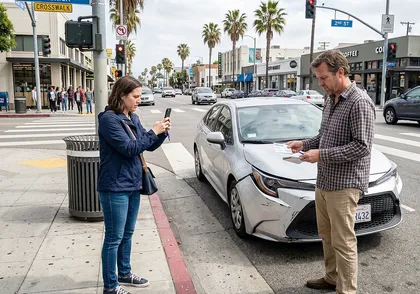
Generally, yes. If you are legally responsible and your policy covers the accident, your bodily injury liability coverage may pay the pedestrian’s medical expenses, lost income, and other covered damages up to your policy limits. Starting January 1, 2025, California’s SB 1107 sets the minimum auto liability coverage at:
- $30,000 per person
- $60,000 per occurrence
- $15,000 for property damage.
If the pedestrian’s damages go beyond your policy limits, you could be personally liable for the extra amount.
What If The Pedestrian Was Intoxicated?
The pedestrian’s intoxication may reduce your liability if it contributed to the crash. Under California’s comparative-fault rules, responsibility can be divided between the driver and the pedestrian based on each person’s conduct. Intoxication alone does not automatically eliminate your liability. An attorney can evaluate the specific facts to assess how impairment affects the fault calculation in your case.
What If The Pedestrian Has No Health Insurance?
Your auto liability coverage may pay the pedestrian’s medical costs up to your policy limits, regardless of the pedestrian’s own health insurance status. Their lack of coverage does not change the fact that your insurer must still consider the claim under the policy terms and applicable regulations; whether coverage applies and what is paid depends on fault, damages, and your specific policy.
Does Hitting A Pedestrian Go On My Driving Record?
Yes. In California, a reportable pedestrian crash can be added to your DMV driving record regardless of who caused it. The effect on your insurance rates and your license depends on fault, any citations issued, and any criminal or administrative proceedings that follow. A fault finding in a serious injury or fatality crash can carry consequences beyond insurance rates.
Talk To Arash Law About Your California Pedestrian Accident Claim
If you were injured in a pedestrian accident, whether you were walking, driving, or otherwise involved, more than one party may share responsibility. Fault may also involve another motorist, an employer, a vehicle owner, a public entity, or another responsible party.
Arash Law represents injured victims throughout California and has recovered over $1 billion for clients. A contingency-fee arrangement means you don’t pay attorney’s fees unless we obtain compensation for you. This is based on the terms in the written fee agreement required by California Business and Professions Code § 6147.
Call (888) 488-1391 for a free case evaluation. Arash Law: Make Them Pay, Call AK.
Sources
- UC Berkeley Safe Transportation Research & Education Center (SafeTREC), 2025 SafeTREC Traffic Safety Facts: Pedestrian Safety. https://safetrec.berkeley.edu/2025-safetrec-traffic-safety-facts-pedestrian-safety
- California Vehicle Code § 20001. Requires a driver involved in a collision resulting in injury or death to stop at the scene. https://leginfo.legislature.ca.gov/faces/codes_displaySection.xhtml?lawCode=VEH§ionNum=20001.
- California Vehicle Code § 20003. Driver duties after a collision resulting in injury or death. https://leginfo.legislature.ca.gov/faces/codes_displaySection.xhtml?sectionNum=20003.&lawCode=VEH
- California Vehicle Code § 20008. Written report within 24 hours after a collision resulting in injury or death. https://leginfo.legislature.ca.gov/faces/codes_displaySection.xhtml?sectionNum=20008.&lawCode=VEH
- California Vehicle Code § 21950. Governs a driver’s duty to yield to pedestrians. https://leginfo.legislature.ca.gov/faces/codes_displaySection.xhtml?sectionNum=21950.&lawCode=VEH
- California Vehicle Code § 21954. Duties of pedestrians crossing outside a marked crosswalk or an unmarked crosswalk at an intersection, while preserving the driver’s duty to use due care. https://leginfo.legislature.ca.gov/faces/codes_displaySection.xhtml?sectionNum=21954.&lawCode=VEH
- California Vehicle Code § 467. California’s statutory definition of a pedestrian. https://leginfo.legislature.ca.gov/faces/codes_displaySection.xhtml?sectionNum=467.&lawCode=VEH
- California Vehicle Code § 16056. Minimum automobile liability limits. https://leginfo.legislature.ca.gov/faces/codes_displaySection.xhtml?sectionNum=16056.&lawCode=VEH
- California Department of Motor Vehicles, Report of Traffic Accident Occurring in California (SR-1). Filing requirements for reportable collisions. https://www.dmv.ca.gov/portal/dmv-virtual-office/accident-reporting/
- California Department of Insurance, Automobile Insurance Guide. Explains that an auto premium may increase at renewal when the insured is at least 51% at fault for an accident. https://www.insurance.ca.gov/01-consumers/105-type/95-guides/01-auto/auto101.cfm
- California Government Code § 835. Requirements for public-entity liability based on a dangerous condition of public property. https://leginfo.legislature.ca.gov/faces/codes_displaySection.xhtml?sectionNum=835.&lawCode=GOV
- California Government Code § 911.2. Six-month claim-presentment period that generally applies to claims for personal injury or death against public entities. https://leginfo.legislature.ca.gov/faces/codes_displaySection.xhtml?sectionNum=911.2.&lawCode=GOV
- California Department of Motor Vehicles, California Driver’s Handbook, Financial Responsibility, Insurance Requirements, and Collisions. Covers reportable collisions, SR-1 filings, and DMV driving-record entries. https://www.dmv.ca.gov/portal/handbook/california-driver-handbook/financial-responsibility-insurance-requirements-and-collisions/
- California Department of General Services, Government Claims Program. Procedures for claims for money or damages against the State of California. https://www.dgs.ca.gov/ORIM/File-A-Claim
- California Code of Civil Procedure § 335.1. Two-year statute of limitations for injury or death caused by another’s wrongful act or neglect. https://leginfo.legislature.ca.gov/faces/codes_displaySection.xhtml?sectionNum=335.1.&lawCode=CCP
- Li v. Yellow Cab Co., 13 Cal. 3d 804 (1975). California Supreme Court decision adopting pure comparative negligence. https://scholarlycommons.pacific.edu/cgi/viewcontent.cgi?article=2458&context=mlr
- California Business and Professions Code § 6147. Requirements for written contingency-fee agreements. https://leginfo.legislature.ca.gov/faces/codes_displaySection.xhtml?sectionNum=6147.&lawCode=BPC
Disclaimer
The information on this page is for general educational purposes and does not constitute legal advice. No attorney-client relationship is formed by reading or relying on this content. If you were injured, consult a licensed California personal injury attorney about your specific situation.