TL;DR: Many preventable mistakes can weaken a California auto accident claim. Delaying medical care, failing to gather evidence at the scene, making careless statements, settling too early, missing reporting and filing deadlines, and overlooking available insurance coverage are among these. Early legal guidance can help you protect your rights and your potential auto accident claim.
The most common preventable mistakes in California auto accident claims are delaying medical care, losing evidence at the scene, mishandling insurer communications, settling too early, missing deadlines, and failing to identify all available coverage. Any one of these can weaken an otherwise valid claim. Delaying care, saying the wrong thing to an insurer, or missing a filing deadline can cost you compensation, even when the other driver was fully at fault.
A collision leaves you shaken and in pain, and that confusion can lead to decisions that feel reasonable at the time. Some of the most damaging errors happen before most people realize a legal claim is even at stake. Adjusters, deadlines, and evidence rules do not pause while you recover. That’s why being familiar with and avoiding possible mistakes in auto accident claims is important.
Key Facts About Auto Accident Claims in California
- Filing deadlines: California’s standard personal injury filing deadline is two years from the date of injury under CCP § 335.1.
- Government-entity cases have a shorter pre-lawsuit deadline: Crashes involving a city, county, or state agency, such as Caltrans, have a separate pre-lawsuit claim requirement (often six months) that is far shorter than the standard two-year deadline.
- SB 1107 raised California’s minimum auto insurance limits effective January 1, 2025: $30,000 per person, $60,000 per accident, and $15,000 for property damage.
- Alcohol-impaired driving caused roughly 1 in 3 California traffic deaths in 2023: California Office of Traffic Safety (OTS) data shows 1,355 alcohol-impaired fatalities out of 4,061 total, about 33%, underscoring why determining the full scope of liability in any crash matters.
- Scene evidence and official collision reports: When CHP investigates a crash, it documents the collision on a CHP 555 Traffic Collision Report. Local police departments generally use their own report format for crashes within city limits.
Table of Contents

Mistake 1: Delaying Medical Care and Ignoring Symptoms
Waiting to see a doctor gives insurance adjusters a ready-made argument to deny or reduce your claim. When there is a gap between the accident and your first medical visit, adjusters argue your injuries were minor, pre-existing, or unrelated to the crash. That gap becomes a direct line of attack against your damages.
Your body also does not always signal pain right away. Adrenaline released during a crash can mask serious injuries for hours or even days. You may feel fine at the scene and wake the next morning, unable to move your neck or develop concussion symptoms days later.
Seek appropriate medical care as soon as possible after a crash, even if you feel fine at first. Getting medical care in an emergency room, urgent care clinic, or your primary care physician can create a time-stamped medical record linking your injuries to the crash. That documentation is often the most powerful evidence supporting a claim.
A claim with continuous medical documentation from day one is far harder for an insurer to challenge. A claim with a gap, even a short one, gives the adjuster a factual foothold that can take months of litigation to overcome. Understanding what to do after a car accident in those first hours directly affects the strength of every claim that follows.
Mistake 2: Failing to Preserve Critical Scene Evidence
Skid marks, debris fields, and witnesses can disappear before you have a chance to document them. Once gone, the other driver can reframe what happened with little to contradict them.
If you are physically able to document the scene before emergency responders clear it, do so. If not, ask a passenger or bystander to help. Gather:
- Photos of Vehicle Damage: Capture all angles of every vehicle involved that you can safely reach.
- Road Conditions: Photograph wet pavement, potholes, faded lane markings, poor lighting, or any hazard that may have contributed to the crash.
- Skid Marks: These can help investigators evaluate a vehicle’s movement, braking, and possible pre-impact speed or position, and the evidence may disappear quickly once traffic resumes or the roadway is cleared.
- Witness Contact Information: Full names and phone numbers from anyone who saw the collision. Witness memory degrades within days; a name and number collected at the scene can be indispensable months later.
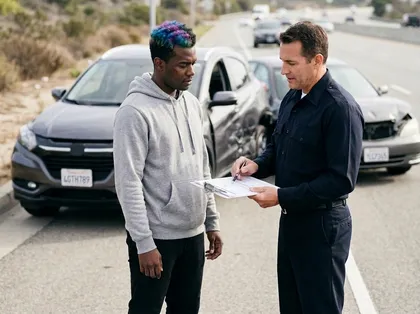
If CHP investigates your crash, it documents the collision on a CHP 555 Traffic Collision Report. If a local police department responds instead, it generally creates its own report using a similar format. Either report records the officer’s observations, any citations issued, and the initial factual record of fault. Request it as soon as it becomes available.
For car accidents involving a government-maintained road, such as a defective signal, a pothole on a state highway, or a Caltrans failure, evidence preservation is especially urgent. Those claims trigger strict pre-lawsuit filing deadlines under Government Code § 911.2.
Mistake 3: Giving Careless Statements and Posting on Social Media
You are not legally required to give a recorded statement to the other driver’s insurer, and doing so without an attorney present is a huge mistake that can damage a claim. An adjuster may sound helpful, but their end goal is to find something you say that can minimize what the insurance company pays. Your own insurer is different since your policy may require you to cooperate with its investigation.
Recorded statements lock you into a version of events before you understand your injuries, see your medical records, or speak with an attorney. An offhand description of how you felt at the scene, such as “I was okay at first,” can resurface months later to undercut a claim for serious injuries.
Social media posts carry the same risk. Posts made on private accounts can be requested through legal discovery, the formal evidence-exchange process used in a lawsuit. A photo from a family dinner posted two weeks after the crash, or a comment that you are “doing better,” can be taken out of context and used against what your medical records say.
Pausing social media entirely while a claim is active is a common protective step. Do not delete or alter existing posts once a claim is active without talking to your attorney first, since that can raise separate legal problems. Many injured Californians also ask their attorney to handle all communications with insurers, including calls, texts, and emails.
How you respond to a settlement offer is the next critical decision.
Mistake 4: Accepting Early Settlements Before Knowing Your Full Damages
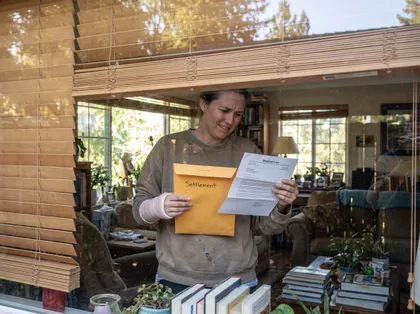
Accepting a settlement offer before you know your full medical costs is a critical mistake. Insurers routinely send offers before you reach maximum medical improvement (MMI), the point at which your condition has stabilized, and future care needs can be assessed. Those early offers rarely account for future surgery, ongoing therapy, or lost future income.
Accepting too early is the one mistake that cannot be undone, because a signed release eliminates your right to pursue future claims. You generally waive the right to seek additional compensation even if you realize that your condition is worse than you expected.
Understanding how long a settlement takes in California can help you resist pressure to sign before the picture is complete. Being patient is not being passive. A personal injury lawyer can also calculate your reasonable losses, accounting for past, current, and future needs resulting from the incident.
Mistake 5: Missing Reporting and Filing Deadlines
Missing a reporting or filing deadline can permanently close the door on a valid claim, and California sets several deadlines depending on what happened and who may be responsible.
- 24-Hour Accident Report: CVC § 20008 generally requires the driver to make or cause to be made a written report within 24 hours after a crash involving injury or death.
- DMV SR-1: A driver generally must submit an SR-1 form within 10 days if anyone was injured or killed or if property damage exceeded $1,000, under CVC § 16000.
- Standard Deadline, Private Parties: CCP § 335.1 generally gives you 2 years from the date of injury to file a personal injury lawsuit against a private party.
- Government Entity Deadline: If a public entity, such as a city, county, or Caltrans, is liable, a written tort claim must generally be presented within 6 months under Government Code § 911.2. This rule applies only when a government entity is potentially liable, not to every auto accident claim.
- Caltrans Filing Route: Death, personal injury, and personal-property claims of $12,500 or less may be filed directly with Caltrans. Larger claims generally go through the Department of General Services, Office of Risk and Insurance Management (DGS/ORIM) Government Claims Program. Claims against a city or county go directly to that entity.
- After the Claim Is Filed: A public entity generally has 45 days to act under Gov. Code § 912.4. If it sends a compliant written rejection notice under Gov. Code § 913, you generally have six months from that notice to file suit under Gov. Code § 945.6. If no compliant written notice is ever sent, a different two-year deadline from accrual generally applies instead.
- Late-Claim Procedure: If the six-month claim window is missed, Government Code § 911.4 allows a limited late-claim application, generally within a reasonable time not exceeding one year after accrual.
- Minor Injured Parties: For many private personal injury claims, the filing deadline may be tolled, or paused, while the injured person is a minor. Government-entity, medical malpractice, and other specialized claims can have different timing rules, so the applicable deadline should be reviewed with an attorney.
Mistake 6: Failing to Identify All Available Insurance Coverage
Failing to identify all available insurance coverage can leave you paying out of pocket for serious injuries, because the at-fault driver’s policy limits are rarely enough to cover major medical bills and lost wages.
California’s updated minimum auto liability limits of $30,000 per person, $60,000 per accident, and $15,000 for property damage under SB 1107 (effective January 1, 2025) are higher than the old standard. However, they still fall short of the costs of serious injuries.
When medical bills, lost wages, and long-term care add up, the at-fault driver’s policy limit alone often leaves a significant gap. Many injured Californians miss available coverage because they assume the at-fault driver’s policy is the only source of recovery; umbrella policies, employer commercial policies, and their own uninsured/underinsured motorist (UM/UIM) coverage may all apply.
Coverage Sources Worth Identifying After Any Serious Crash
- At-Fault Driver’s Umbrella Policy: If the at-fault driver carries a personal umbrella policy, it may pay out after their base liability limits are exhausted, often adding $1 million or more in additional coverage.
- Employer Liability Policy: If the at-fault driver was operating a vehicle in the course of their employment at the time of the crash, their employer’s commercial policy may also apply.
- Your Own Uninsured/Underinsured Motorist (UM/UIM) Coverage: This may provide coverage when the at-fault driver has no insurance or, for UIM coverage, when the applicable liability limits are lower than your UM/UIM limits, and those liability limits have been exhausted by payment.
- Medical Payments (MedPay) Coverage: If your own auto policy includes MedPay, it may help cover your medical expenses up to the policy limit, regardless of who caused the crash.
Arash Law investigates every potentially liable party and every applicable insurance policy as a standard part of case development, including employer policies, umbrella policies, and clients’ own UM/UIM coverage. Finding the full coverage picture is not a bonus step; it is often the difference between a claim that covers treatment and one that funds a genuine recovery.
Talk to Arash Law Before You Respond to Any Settlement Offer
Early offers rarely reflect the full value of a California auto accident claim. If you have received a settlement offer or if an adjuster has asked for a recorded statement, a free case evaluation before you respond can help you protect your claim and understand your options. Arash Law has recovered over $1 billion for injured Californians across the state.
Call (888) 488-1391 for a free case evaluation today.
What Arash Law Has Recovered When Claimants Did Not Settle Early
Arash Law’s case results illustrate what full evaluation, rather than a quick settlement, can mean for injured Californians.
In one traumatic brain injury case, the insurer initially offered $18,500, later raising it to $300,000 on the eve of trial. Our attorneys rejected both offers because they did not reflect the true value of the harm the client suffered. After a full trial, the jury returned with a unanimous $3,500,000 verdict.
In another case, a speeding company van driver caused severe injuries to a client; after key depositions shifted the case trajectory, the firm secured an $8,800,000 settlement.
These results are drawn from our case results and are representative of what diligent investigation and case development, not early settlement pressure, can produce.
Past results do not guarantee future outcomes, as every case is unique.
Frequently Asked Questions About Auto Accident Claim Mistakes in California
Do I Have to Give a Recorded Statement to the Other Driver’s Insurance?
No. You are not legally required to give a recorded statement to the at-fault driver’s insurer. California auto accident claimants have the right to decline until they have legal representation. Giving a statement before speaking with an attorney creates a risk that your own words will be used to minimize or deny your claim. The other driver’s insurer represents that driver’s interests, not yours.
How Soon Should I See a Doctor After a Crash?
Seek medical attention as soon as reasonably possible after a crash, especially if you have pain, dizziness, numbness, confusion, or other symptoms. Some injuries may not become obvious immediately. Prompt evaluation can also create medical records that document your symptoms, diagnosis, and treatment after the accident.
Can I Post About My Accident if My Social Media Accounts Are Private?
Private settings do not protect your posts from legal discovery. Adjusters and defense attorneys most commonly look for activity photos, location check-ins, and remarks about physical condition posted after the crash date. Once a claim is filed, it is advisable to avoid all posts about the accident, your injuries, or your daily activities. If active litigation has begun, consult your attorney before making any public statements online, even on private accounts.
What if the At-Fault Driver Is Uninsured?
If the at-fault driver is uninsured, you may still have options for compensation. In California, your own uninsured motorist (UM) coverage may help pay for bodily injury losses if it applies to the crash. You may also be able to pursue the at-fault driver personally, although recovery can depend on whether that person has assets or other available sources of payment.
How Do I Know if an Early Settlement Offer Is Fair?
An early settlement offer may be too low if it does not account for the full extent of your injuries, future medical care, lost income, property damage, and other losses. Before accepting, make sure your medical condition is reasonably understood and compare the offer against your documented damages. Once you sign a release, you generally cannot seek additional compensation for the same claim later. That’s why many injured victims seek help from car accident lawyers first.
Do Personal Injury Lawyers Get Paid Only if They Win?
Many California personal injury attorneys handle cases on a contingency-fee basis, meaning their fees are paid from any recovery rather than upfront. If there is no recovery, you generally owe no attorney fees, though costs may vary by contract. This means you can retain legal representation without paying attorney fees up front, though responsibility for case-related costs depends on the fee agreement. California law, Business and Professions Code § 6147, sets specific disclosure and contract requirements for contingency-fee agreements.
What Happens if a Government Entity Is Responsible for My Crash?
If a public entity, such as a city, county, or state agency like Caltrans, is responsible for a road defect or signal failure, a separate and shorter deadline applies. For many personal injury claims, you generally must present a government claim within six months of the date the claim accrued before filing a lawsuit. These cases can involve dangerous road conditions, public vehicles, or other government negligence, so identifying the responsible agency early is important.
Get a Free Case Evaluation from Arash Law Today
Early legal guidance can help you prevent the auto accident claim mistakes discussed above. Arash Law has recovered over $1 billion for injured Californians. Our team has decades of combined experience identifying multiple liable parties, different applicable insurance policies, and the full value of claims before advising a client to settle.
Your first step costs you nothing. We handle personal injury cases on a contingency-fee basis, meaning attorney’s fees are typically paid from your recovery, not up front.
Call (888) 488-1391 to schedule your free case evaluation and find out what your California auto accident claim may be worth.
Arash Law. Make Them Pay, Call AK.
Sources
- California Office of Traffic Safety (OTS). California Traffic Safety Quick Stats. Accessed September 2026. https://ots.ca.gov/ots-and-traffic-safety/score-card/
- California Legislature. California Code of Civil Procedure § 335.1: Two-Year Statute of Limitations for Personal Injury Claims. https://leginfo.legislature.ca.gov/faces/codes_displaySection.xhtml?lawCode=CCP§ionNum=335.1
- California Legislature. Vehicle Code § 20008: 24-Hour Written Accident Report Requirement. https://leginfo.legislature.ca.gov/faces/codes_displaySection.xhtml?lawCode=VEH§ionNum=20008
- California Legislature. Vehicle Code § 16000: 10-Day DMV SR-1 Report Requirement. https://codes.findlaw.com/ca/vehicle-code/veh-sect-16000/
- California Legislature. Government Code § 911.2: Six-Month Government Claim Deadline. https://leginfo.legislature.ca.gov/faces/codes_displaySection.xhtml?lawCode=GOV§ionNum=911.2
- California Legislature. Government Code § 911.4: Late-Claim Application Procedure. https://leginfo.legislature.ca.gov/faces/codes_displaySection.xhtml?lawCode=GOV§ionNum=911.4
- California Legislature. Government Code § 912.4: 45-Day Agency Response Window. https://leginfo.legislature.ca.gov/faces/codes_displaySection.xhtml?sectionNum=912.4.&lawCode=GOV
- California Legislature. Government Code § 913: Written Notice of Claim Rejection. https://leginfo.legislature.ca.gov/faces/codes_displaySection.xhtml?lawCode=GOV§ionNum=913
- California Legislature. Government Code § 945.6: Lawsuit Deadline After Claim Rejection. https://codes.findlaw.com/ca/government-code/gov-sect-945-6/
- California Department of Transportation (Caltrans). Submit a Damage Claim. https://dot.ca.gov/programs/procurement-and-contracts/submit-a-claim
- California Legislature. SB 1107: Minimum Auto Insurance Liability Limits (effective January 1, 2025): $30,000/$60,000/$15,000. https://leginfo.legislature.ca.gov/faces/billNavClient.xhtml?bill_id=202120220SB1107
- California Department of General Services, Office of Risk and Insurance Management. Government Claims Program. https://www.dgs.ca.gov/ORIM
- California Highway Patrol (CHP). Traffic Collision Reporting and the CHP 555 Form. https://www.chp.ca.gov/policy/highway-patrol-manual-hpm/
Disclaimer
The information on this page is for general educational purposes and does not constitute legal advice. No attorney-client relationship is formed by reading or relying on this content. If you were injured, consult a licensed California personal injury attorney about your specific situation. Arash Law. (888) 488-1391.