TL;DR: Yes. Auto insurance covers pedestrian accidents through the at-fault driver’s bodily injury liability policy, your own UM/UIM coverage, or MedPay. ER bills, surgery, lost wages, and pain and suffering can all be compensable.
Yes, auto insurance covers pedestrian accidents, typically through the at-fault driver’s bodily injury liability policy or your own, if it includes uninsured/underinsured (UM/UIM) or Medical Payments (MedPay) coverage. Under California law, the sequence in which insurance policies apply determines how much you can actually recover, and that sequence is where many claims succeed or fail.
The at-fault driver’s bodily injury liability insurance is generally a primary source of recovery when a driver strikes a pedestrian in California. If the driver is uninsured, you may be able to seek benefits from your own auto policy, even if you weren’t driving at the time. UM coverage may apply. In a case where the driver is underinsured, UIM coverage generally applies only after exhausting the applicable liability limits. Meanwhile, MedPay could cover urgent medical expenses regardless of fault.
The UC Berkeley Safe Transportation Research and Education Center (SafeTREC) found in its 2025 Pedestrian Safety report that pedestrian fatalities have been rising even as walking as a mode of transportation grows. The report also documents thousands of serious pedestrian injuries in California.
The result is a large and growing population of injured walkers who need to understand exactly how insurance works after a crash. That includes not just which policies apply, but also the order in which they apply and how quickly coverage must be activated.
Key Facts About Auto Insurance and Pedestrian Accidents in California
- California law sets minimum bodily injury liability limits that took effect January 1, 2025. The Primary Coverage section below explains what those floors mean for your claim.
- UM/UIM coverage follows you as a person. California Insurance Code (INS) § 11580.2 means your auto policy can cover you even if you are hit when you’re not behind the wheel.
- MedPay is generally no-fault. It can cover eligible medical expenses regardless of who caused the crash, subject to the policy’s terms and limits, while your main liability claim is pending.
- Partial fault reduces, but does not eliminate, your right to recover. See the fault section below for how California’s comparative negligence rule applies in practice.
- The standard filing deadline is 2 years from the date of injury for lawsuits against private parties under California Code of Civil Procedure (CCP) § 335.1. INS § 11580.2 also gives victims two years to take specific actions to preserve a UM claim. However, claims against public entities have a six-month presentation deadline under Government Code § 911.2.
Table of Contents

The At-Fault Driver’s Auto Liability Policy
The at-fault driver’s bodily injury liability coverage may provide compensation first. California law requires all drivers to carry proof of financial responsibility, and most satisfy that requirement with a liability policy.
Under Senate Bill (SB) 1107, effective January 1, 2025, California’s mandatory minimum bodily injury liability limits are $30,000 per person and $60,000 per occurrence, with $15,000 for property damage. They represent the minimum liability limits that a California policy must generally provide, not the amount an insurer must pay on every claim or a ceiling on what an injured pedestrian can pursue from responsible parties.
However, pedestrian injuries are routinely severe due to the lack of physical protection compared to vehicle occupants. Broken bones, traumatic brain injuries, spinal damage, and internal injuries can generate medical bills that far exceed an at-fault driver’s minimum-limit policy within days of the crash. If that initial coverage runs out before covering your losses, the next question is whether other policies apply.
How Your Own Auto Insurance Can Protect You as a Pedestrian
Your auto insurance can protect you after a pedestrian accident through optional add-ons such as UM/UIM and MedPay coverage. Depending on the policy and the facts of the crash, they may help pay for injuries even though you were not inside a vehicle:
- UM/UIM: UM coverage may apply when the responsible driver has no applicable insurance or is an unidentified hit-and-run driver. UIM coverage may apply when the responsible vehicle’s liability limits are lower than the injured insured’s UM/UIM limits (INS § 11580.2).
- MedPay: MedPay is no-fault coverage that pays your medical bills as they come in, regardless of who caused the crash. You do not need to prove the other driver was at fault to use it. MedPay limits vary by policy, but this coverage can prevent medical debt from accumulating while your primary claim moves forward.
If your auto policy falls short, health insurance can bridge the gap, but it comes with its own legal considerations.
Using Health Insurance and Medical Liens in California
Private health insurance, Medi-Cal, or Medicare can cover your upfront treatment costs after a pedestrian accident, letting you see a doctor, surgeon, or specialist immediately, without waiting for your personal injury case to resolve.
Depending on the type of coverage (private health insurance, Medi-Cal, Medicare, or another program), the plan or program may have reimbursement rights or a medical lien (a formal legal claim) against your settlement for the amounts it paid on your behalf.
Many injured pedestrians fear a lien will wipe out their entire settlement. In most cases, it does not have to. For private health plans, California law generally limits the share that many private healthcare plans can recover from a personal injury settlement. Medi-Cal and Medicare operate under separate state and federal lien rules. The goal in all cases is to preserve as large a share of the recovery as possible for the injured person.
What if You Were Partially at Fault for the Accident?
The state’s pure comparative negligence doctrine (Li v. Yellow Cab Co., 1975) establishes that partial fault on your part does not necessarily end your right to compensation. Instead, it generally reduces your damages proportionally to your fault. If a jury or adjuster assigns you 25% of the fault, that cuts your recovery by 25%. However, you keep the other 75%.
California Civil Code (CIV) § 1714 imposes a legal duty to take reasonable care to prevent harm. If an at-fault driver causes an accident by breaching that duty, such as by failing to yield to you at a crosswalk, they could be legally responsible for the resulting injuries and losses. However, since CIV § 1714 gives everyone in the state a legal duty of care, you could also be found partially at fault for any negligence on your part, such as crossing the street while looking at your phone.
Insurance adjusters may exploit pure comparative negligence by arguing that a pedestrian’s jaywalking, distraction, or failure to yield justifies assigning more fault than the evidence supports. That’s because every percentage point they push onto you is money they do not have to pay. Successful arguments that you share the blame could limit how much you can recover for your losses.
Our California pedestrian accident lawyers know how adjusters build these arguments and what evidence can help disprove them. The firm’s approach includes requesting CHP collision reports through the CHP Crash Portal or other authorized procedures, retaining reconstruction experts, and building a counter-narrative from the physical evidence up. Call (888) 488-1391 so we can review your specific situation and explain how we can help.
What Damages Can an Injured Pedestrian Recover?
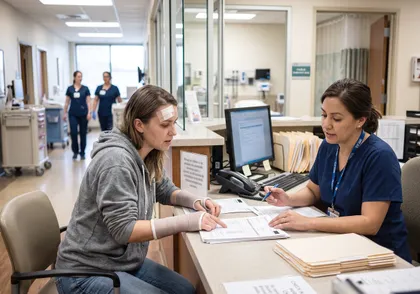
A pedestrian accident leaves you with two categories of loss: concrete financial costs and injuries that do not come with a bill but are real and compensable under California law.
Economic damages are your documented financial losses:
- Emergency Room and Hospital Bills: Costs from the date of the crash and any subsequent hospitalizations.
- Surgeries and Procedures: Operations required to treat your injuries.
- Physical Therapy and Ongoing Care: Rehabilitation and follow-up treatment as you recover.
- Lost Wages: Income you lost while unable to work because of your injuries.
Non-economic damages cover harm that does not carry a receipt:
- Pain and Suffering: The physical hurt you carry every day as a result of your injuries.
- Emotional Distress: Anxiety, fear, post-traumatic stress disorder (PTSD), or trauma that persists after the accident.
- Loss of Quality of Life: Activities, relationships, and enjoyment you can no longer experience the same way.
What If a Dangerous Road Condition Caused the Accident?
Not every pedestrian accident is solely the driver’s fault. Defective sidewalks, missing crosswalk signals, inadequate lighting, or hazardous road surfaces left unaddressed by a government agency can contribute to or cause a crash.
If a state or local government entity’s negligence played a role, the claim process is different, and the timeline is far shorter.
You cannot go directly to court against a government entity. For claims against California state agencies, such as Caltrans, you generally must first present a claim. You can file this through the state Government Claims Program. For certain Caltrans claims of $12,500 or less, you must file directly with Caltrans.
For cities, counties, and other local public entities, the claim is generally presented directly to the entity in question under the same Government Claims Act deadline.
How Long Do You Have to File a Pedestrian Accident Case in California?
State law imposes different time limits for taking specific actions after a pedestrian accident. The deadline that applies to your situation depends on factors such as what you’re filing, whether the at-fault party is a public or private entity, and whether any exceptions apply:
- Personal Injury: The standard deadline for a personal injury lawsuit against a private party, such as the driver who hit you, is two years from the date of your injury (CCP § 335.1). Missing that deadline can permanently bar recovery against that party.
- Property Damage: You generally have three years to sue if the pedestrian accident damaged any personal property, such as eyeglasses, laptops, or cellphones (CCP § 338).
- Government Tort: If a government entity may be liable, you must generally present a written government claim within six months under Government Code (GOV) § 911.2 before you can sue. Missing the six-month claim-presentation deadline can bar you from pursuing compensation altogether, though the law may allow for a late claim application in some instances. Once it receives your claim, the public entity has 45 days to respond. From here:
- If the public entity issues a written rejection notice that complies with GOV § 913, you generally must file a lawsuit within 6 months after the notice is personally delivered or mailed (GOV § 945.6).
- If the public entity does not provide a compliant written notice, GOV § 945.6 generally gives the claimant two years from the date the cause of action accrues.
For many private personal injury claims, the law may toll the filing deadline while the injured person is a minor. Government entity claims and other specialized claims can also have different timing rules, so consider reviewing the applicable deadline with an attorney.
California UM claims also have a separate two-year requirement. Under INS § 11580.2, an insured generally must, within two years of the accident, file suit against the uninsured motorist, reach an agreement with the insurer on the amount due, or formally institute arbitration by providing the required written notice. Reporting the accident to the insurer alone does not necessarily satisfy this requirement.
Evidence does not wait for deadlines. Witness memories can fade, physical evidence from the scene can disappear within hours, and surveillance systems often overwrite footage within days. Starting the evidence preservation process early after a pedestrian accident matters as much as knowing the filing deadline.
What Arash Law Has Recovered for Pedestrian Accident Clients
Arash Law has handled pedestrian accident cases across California and achieved results that reflect what can happen when attorneys who know the law tackle disputes over coverage, injuries, and fault. Our past case results reflect our work on behalf of pedestrian accident victims across California:
$10,000,000: Pedestrian Accident. Pedestrian struck by a speeding vehicle. The client suffered serious injuries after being run over. Arash Law secured a significant financial recovery and coordinated the best available medical care.
$6,100,000: Pedestrian Accident. August 2021 settlement for a 6-year-old client injured in a pedestrian accident. These cases can be more complex because state law usually imposes different filing deadlines and settlement rules when an accident involves a minor.
Past results do not guarantee future outcomes. Every case is different, and results depend on the specific facts and evidence involved.
Frequently Asked Questions About Auto Insurance and Pedestrian Accidents in California
Auto insurance can raise practical questions after a pedestrian accident, especially when multiple policies, coverage limits, or fault issues are involved. The FAQs below address common questions about available coverage and other issues that may affect a California pedestrian accident claim.
What Happens to the Driver’s Insurance if They Hit a Pedestrian?
If a driver hits a pedestrian and is found at fault, the driver’s bodily injury liability coverage may pay the pedestrian’s covered losses, up to the policy limits. The insurer will investigate the claim, evaluate fault and damages, and may negotiate or pay a settlement on the driver’s behalf.
What Should I Do in the Days After a Pedestrian Accident?
Seek medical care immediately, even if you feel okay. Keep a daily log of your symptoms and save all medical bills and records. Avoid using social media, as an insurer can use a single photo or post to minimize your claim. These steps can help you get the necessary medical care, document your injuries and losses, and protect your claim in the long term.
What If the Driver Who Hit Me Had No Insurance or Fled?
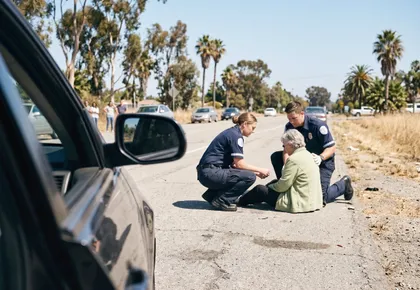
If the driver had no insurance, your own uninsured motorist (UM) coverage may apply, even if you were a pedestrian. If the driver fled and remains unidentified, California generally requires physical contact, a police report within 24 hours, and a sworn statement to your insurer within 30 days for a UM hit-and-run claim.
In the case the driver is later identified and insured, you may also have a claim against that driver’s liability coverage. See the UM/UIM section above for how to activate it.
Will My Insurance Rates Go Up if I Use My UM/UIM Coverage?
Generally not. Under California’s Proposition 103 rating rules, insurers generally may not increase your rates for a crash that was not your fault. Using UM/UIM coverage after a hit-and-run or an uninsured-driver crash should not result in a rate increase. However, specific policy terms and circumstances can vary, and an attorney can review your situation.
Can I Recover Damages if I Was Partially at Fault for the Accident?
Yes, in most cases. California follows a pure comparative negligence rule, so you can still recover damages even if you were partly at fault. However, your percentage of fault generally reduces your compensation. See the “What If You Were Partially at Fault” section above for how California’s rule adjusts your recovery.
Can I Recover Damages if the Car Did Not Actually Hit Me?
Yes, in some cases. If you swerved, jumped, or fell to avoid a negligent driver and suffered an injury, you may still have a negligence claim even without physical contact. However, if the driver is unidentified and you are seeking California UM benefits for a hit-and-run, INS § 11580.2 generally requires physical contact, along with specific reporting requirements, so you may be unable to file a UM claim.
Do Pedestrians Always Have the Legal Right of Way in California?
No. California law gives pedestrians the right of way at marked crosswalks and at unmarked intersections. Outside those areas, pedestrians must yield to vehicles that are so near as to constitute an immediate hazard. Regardless of where you were when you were hit, drivers owe a duty of reasonable care to everyone on or near the road.
Talk to Arash Law About Your California Pedestrian Accident Claim
Many insurance companies begin building their defense the moment someone reports a pedestrian accident. Going up against them without the same knowledge is a costly disadvantage. That’s where we can help. Our legal team knows how coverage rules, comparative-fault arguments, and medical-lien calculations can affect your ability to pursue compensation, and we take these factors into account when guiding you through the claims process.
Arash Law has recovered over $1 billion for injured Californians and handled pedestrian accident cases that span the full range of insurance disputes. These cases include minimum-limit policy claims, multi-policy UM/UIM recoveries, and government-entity claims. Our attorneys handle pedestrian accident cases on a contingency fee basis. You owe nothing in legal fees unless you recover.
Call (888) 488-1391 for a free case evaluation.
Arash Law: Make ‘Em Pay, Call AK.
Sources
UC Berkeley Safe Transportation Research and Education Center (SafeTREC). 2025 SafeTREC Traffic Safety Facts: Pedestrian Safety. Pedestrian fatalities are increasing in California alongside growth in walking as a commute mode. https://safetrec.berkeley.edu/2025-safetrec-traffic-safety-facts-pedestrian-safety
California Legislature. Senate Bill 1107: Auto Insurance Minimum Liability Limits, effective January 1, 2025. Minimum bodily injury liability: $30,000 per person / $60,000 per occurrence / $15,000 property damage. https://leginfo.legislature.ca.gov/faces/billNavClient.xhtml?bill_id=202120220SB1107
California Legislature. Code of Civil Procedure § 335.1: Two-year statute of limitations for personal injury claims. https://leginfo.legislature.ca.gov/faces/codes_displaySection.xhtml?lawCode=CCP§ionNum=335.1
California Legislature. Government Code § 911.2: Six-month government tort claim presentation deadline. https://leginfo.legislature.ca.gov/faces/codes_displaySection.xhtml?lawCode=GOV§ionNum=911.2
California Legislature. Insurance Code § 11580.2: Uninsured/underinsured motorist coverage requirements. https://leginfo.legislature.ca.gov/faces/codes_displaySection.xhtml?lawCode=INS§ionNum=11580.2
California Legislature. Civil Code § 1714: General duty of care and liability for injuries caused by a lack of ordinary care. https://leginfo.legislature.ca.gov/faces/codes_displaySection.xhtml?lawCode=CIV§ionNum=1714
Li v. Yellow Cab Co., 13 Cal. 3d 804 (1975): Pure comparative negligence standard in California. https://scholarlycommons.pacific.edu/cgi/viewcontent.cgi?article=2458&context=mlr
Arash Law. Case Results. Pedestrian accident settlements and verdicts cited in this post, including $12,000,000, $10,000,000, and $6,100,000 results. https://arashlaw.com/case-results/
California Department of General Services, Office of Risk and Insurance Management. Government Claims Program. https://www.dgs.ca.gov/ORIM/Services/Government-Claims-Program
Disclaimer
The information on this page is for general educational purposes and does not constitute legal advice. No attorney-client relationship is formed by reading or relying on this content. If you were injured, consult a licensed California personal injury attorney about your specific situation. Arash Law: (888) 488-1391.