TL;DR: An accident lawyer can negotiate with insurance adjusters and push for a higher settlement by presenting evidence of liability plus documented injuries. This helps injured drivers or passengers counter low offers and protect their right to compensation before California’s 2-year deadline reduces leverage.
Highlights:
- Get medical care and follow the treatment plan until your condition stabilizes.
- Save photos/video, vehicle damage shots, and contact info for witnesses.
- Keep copies of medical records, receipts, and proof of missed work.
- Have your lawyer send a demand package with a response deadline.
- Track insurer timelines – 15 days to acknowledge, 40 days to accept/deny.
- Confirm settlement payment timing – within 30 days after signing.
- Protect filing leverage – 2 years to sue; 6 months for government claims.
Tip: Store originals of photos, dashcam footage, and medical notes, and share copies only.
Table of Contents
Yes, an accident lawyer can negotiate with insurance adjusters on your behalf. In many cases, that is one of the main reasons people hire one. A lawyer can look at the insurer’s offer. They compare it to your medical bills, lost income, future care needs, and pain and suffering. If the offer is low, they can negotiate for a higher price.
That matters because insurance adjusters handle claims every day. They know how to protect the company’s interests. A good lawyer knows those tactics, gathers the right evidence, and handles the back-and-forth for you. If the insurer won’t negotiate in good faith, the lawyer can prepare for litigation. This often shifts how negotiations go.
If someone else’s negligence caused your injuries, you may have a personal injury claim. After a lawyer reviews the facts, they can check if you have a valid case. They will also identify available insurance coverage and begin preparing for settlement talks.
How Accident Lawyers Negotiate With Insurance Adjusters
An experienced attorney uses medical data, liability assessments, and California law to build a solid claim. They can anticipate common insurance adjuster negotiating methods. These include:
- Making quick, low offers before you receive a full diagnosis.
- Recording comments to reveal contradictions in your statements.
- Blaming “pre-existing” issues for your injuries rather than the accident.
- Shortening medical timetables.
Once the evidence is organized, the lawyer usually sends a demand package. That package often includes:
- A summary of why the other party is liable.
- A timeline of your treatment.
- Proof of lost wages.
- Evidence of future medical needs.
- Photos, video, or other supporting proof.
- A settlement demand with a response deadline.
Lawyers also watch the deadlines that can affect leverage. In California, the usual time limit to file a personal injury or wrongful death lawsuit is two years. Shorter deadlines can apply in cases involving a government entity. If the insurer knows you are close to running out of time, it may feel less pressure to make a fair offer.
In some cases, a lawyer may also deal with medical liens. That means negotiating claims for repayment from health insurers, medical providers, or others who covered accident-related treatment.
How The Negotiation Process Works

Most personal injury claims do not settle in one conversation. The process usually involves treatment, investigation, a demand, and several rounds of negotiation.
Here is what that often looks like:
- Medical Treatment: Your records help show what injuries you suffered, what care you needed, and how the accident affected you.
- Investigation: Your lawyer gathers evidence about how the accident happened and who was at fault.
- Condition Stabilizes: In many cases, lawyers wait until your condition has stabilized or doctors can better estimate your future needs. This helps prevent settling before the full value of the claim is clear.
- Demand Letter: Your lawyer sends the insurer a written demand that explains fault, damages, and the amount sought to resolve the claim.
- Insurer Review: The insurance company reviews the demand, the records, and the claimed losses.
- Counteroffers: The insurer may reject the initial offer and counter with a lower one. Negotiations often go back and forth more than once.
- Settlement or Lawsuit: If both sides agree, the case settles. If not, the lawyer may file suit and continue negotiating while the case moves forward.
- Release and Payment: If the case settles, you usually sign a release. After paying liens, costs, and fees, the remaining funds are released.
How Can A Personal Injury Attorney Assist With Insurance Negotiations?
A personal injury lawyer helps by turning your claim into something the insurer cannot dismiss easily. Here is a look at how they assist victims pursuing personal injury settlements:
- Accurate Case Assessment: An accident lawyer looks at more than your current bills. They assess the seriousness of your injuries, the care you may need later, the income you lost, and how the injury affects daily life. That helps them place a more realistic value on the claim.
- Gathering Evidence: Strong negotiations depend on proof. A lawyer can collect records, reports, witness statements, photos, surveillance footage, and other evidence that support your version of events and your damages.
- Dealing With Insurance Tactics: Some insurers delay responses, dispute treatment, or argue that you were partly at fault. A lawyer can respond to those arguments with evidence and keep the claim on track.
California’s Fair Claims Settlement Practices Regulations set standards for how insurers must handle claim dispute resolution. An attorney can rely on these regulations when an insurance company delays, avoids giving a clear answer, or takes too long to pay a settlement.
The regulations require insurers to stick to the following timeline:
- They have 15 days from receipt to acknowledge claims.
- They have 40 days to accept or deny claims.
- They have 30 days after a claimant signs an agreement to pay a settlement.
A lawyer may also help you file a complaint with the California Department of Insurance if claims handling appears improper. However, that does not replace a lawsuit or guarantee payment on the injury claim itself.
- Negotiating With Insurers for a Higher Payout: Sometimes losses clearly exceed the available policy limits. In those cases, negotiations can become more complex. A personal injury lawyer may explore the insurance policy terms. They can check whether there is additional coverage, whether the insured may contribute personally, or whether the insurer’s refusal to settle later created bad-faith exposure. Those issues are fact-specific and usually require a careful legal analysis.
- Addressing Comparative Negligence: California follows pure comparative negligence. That means the law can assign fault to more than one person in an accident. If you are partly responsible, your compensation may be reduced by your share of the fault.
For example, if your damages total $10,000 and the law assigns you 25% of the fault, you could recover $7,500. Lawyers often negotiate hard over fault percentages because even a small shift can make a big difference in settlement value.
- Negotiating a Settlement After a Lawsuit Is Filed: Filing a lawsuit does not end settlement talks. Many cases still settle after a lawyer files a lawsuit. Once the insurer realizes that the case is going to trial, it may take the claim more seriously.
- Using Alternative Dispute Resolution: Some cases resolve through alternative dispute resolution (ADR), such as mediation or arbitration. These options can be faster and less expensive than a full trial. A lawyer can advise whether one of these paths makes sense in your case.
- Taking the Case to Court: If the insurer will not make a reasonable offer, a lawyer can take the case to court. That includes handling pleadings, discovery, motions, expert work, and trial presentation.
- Negotiating Subrogation Claims: If your health insurer or another payor covered accident-related bills, it may seek reimbursement from your settlement. This is often called subrogation. A lawyer can review those claims and try to reduce the amount that must be repaid, so you keep more of the recovery.
What Damages Can You Recover Through Negotiations?

Most personal injury settlements involve two broad categories of damages: economic and non-economic.
Economic damages are the financial losses you can usually document more directly. These may include:
- Medical Expenses: The costs of previous and future medical treatment. These expenses include hospitalization, surgeries, drugs, and rehabilitation.
- Lost Wages: Compensation for wages lost owing to the incapacity to work.
- Loss of Earning Capacity: Future income lost if the injury impairs one’s ability to work in the long term.
- Property Damage: Compensation for the repair or replacement of damaged property.
- Out-of-Pocket Expenses: Any additional costs incurred as a result of the injury. They include transportation or care services.
Non-economic damages cover losses that do not have a set price. These may include:
- Pain and Suffering: The physical and mental anguish caused by the accident.
- Emotional Distress: Damage caused by psychological conditions such as depression, anxiety, and post-traumatic stress disorder (PTSD).
- Loss of Enjoyment of Life: Compensation for being unable to take part in daily activities. That includes hobbies, recreational activities, or other pleasures of life.
- Loss of Consortium: Given to the victim’s registered domestic partner or spouse for the loss of companionship and support.
To negotiate these damages well, your lawyer needs more than a diagnosis. They need records, treatment history, work information, and a clear picture of how your injuries affect your daily routine.
How Lawyers Value Pain And Suffering During Negotiations?
There is no fixed formula for pain and suffering in California. During settlement talks, lawyers and insurers often look at:
- How serious the injury is.
- How long does the recovery take?
- Whether the injury causes lasting limitations.
- How the injury affects daily life.
They may also use methods like:
- Multiplier Method: Multiplies economic damages by a number based on injury severity.
- Per Diem Method: Assigns a daily value to pain and suffering during recovery.
These methods are only starting points. In many cases, strong medical records, consistent treatment, and clear proof of how the injury changed your life matter more than any formula.
Should I Try To Negotiate With Insurance Companies On My Own?
After an accident, you may ask yourself, “Do I need a personal injury lawyer to negotiate a settlement for me?” You can try to negotiate with insurers, but it often puts you at a disadvantage.
Insurance adjusters handle claims for a living. Most injured people do not. If you do not know the value of your claim, the insurer may offer less than the case is worth and frame it as a fair resolution. Reviewing data on how much most personal injury cases settle for can help you understand whether an offer falls within a reasonable range.
Self-representation can be especially risky if:
- Your injuries are serious.
- Liability is disputed.
- The insurer argues you had a pre-existing condition.
- More than one party may be responsible.
- You may need future care.
- Liens or reimbursement claims are involved.
If the case does not settle and litigation becomes necessary, handling the matter alone becomes much harder.
Will The Statute Of Limitations Affect Your Insurance Negotiations?
Victims must file personal injury or wrongful death lawsuits within two years, as per § 335.1 of California’s Code of Civil Procedure. This deadline starts running from the date of the injury or when it was or should have been discovered. The statute of limitations will influence your insurance discussions.
Certain exceptions could shorten or extend this two-year time limit. For government claims, the claim presentation deadline is only 6 months. On the other hand, if the injured party is underage, the statute of limitations starts when they turn 18.
If you do not settle your claim before the deadline that applies to your case, you may lose leverage. If you can no longer sue the insurance company (or their client) for damages, they have no reason to offer you a reasonable settlement. You could end up with little or no compensation and no alternatives for seeking damages.
Frequently Asked Questions About Insurance Negotiations After Accidents
If you’re unsure of how to pursue a settlement through a personal injury claim, you may be seeking free advice from an accident lawyer. To provide clarity, below are some of the most frequently asked questions about negotiating with insurance adjusters after an accident.
What Are Signs Of A Good Settlement Offer?
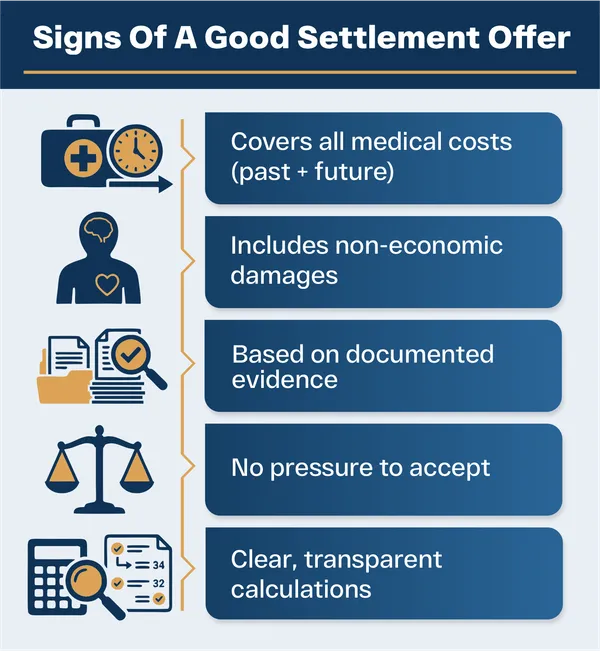
Fair insurance settlements should account for all current and future damages. They should include considerations for long-term medical care and reduced earning capacity.
Accept the offer if:
- Medical treatment is complete, and you’ve reached MMI so that you can estimate the value of your current and future losses.
- The offer represents fair compensation for your non-economic damages, such as pain and suffering.
- Going to trial involves enormous risks that outweigh the possible advantages.
What To Avoid Saying To An Insurance Adjuster?
Avoid admitting guilt, speculating, or offering unnecessary details. These errors can jeopardize your opportunity to pursue the insurance compensation you may be entitled to. Accident victims should exercise caution while dealing with adjusters. Their primary loyalty is to the insurance company, and their purpose is to reduce the business’s financial exposure.
Can My Attorney Negotiate My Medical Liens?
Yes. Most personal injury lawyers negotiate with hospitals, doctors, and insurance companies. Negotiations may help you keep a larger portion of your settlement. Here are a few ways lawyers can help you:
- Understanding Laws and Contracts: An attorney is familiar with complex federal and California laws. The Make-Whole and Common Fund Doctrines can help limit the amounts to which other lien holders are entitled. Under the Make Whole doctrine, you have the right to be made whole before money is returned to your insurance company. Your lawyer will also check your health insurance coverage.
- Identifying Lien Holders: Your attorney can identify lien holders. They can track medical and chiropractic bills for repayment.
- Clarifying Expectations: A skilled legal team can manage correspondence with possible lien holders. Lawyers will keep them up to date on the status of your case. They can also explain how the settlement repayments would work.
- Negotiating Your Repayment: As your case gets close to resolution, your attorney can talk to your health insurance company and other lien holders. They can negotiate on your behalf to reduce the amount owed.
How Long Does Accident Negotiation Take?
The duration of accident negotiations varies based on injury severity and case complexity. Whether the case is settled through negotiation or goes to trial also factors into the timeline. Simple cases with clear responsibility and modest injuries may settle in a few months. In contrast, cases involving catastrophic injuries, disputed fault, or several defendants can take years to resolve.
Contact A California Injury Lawyer For Help With Negotiations
Handling insurance claims can be tricky. You’ll need a solid grasp of the law and a smart strategy. You may have to deal with insurance company tactics, underscoring the importance of having skilled legal representation. That’s where Arash Law can help.
Our accident lawyers can conduct a thorough case evaluation and provide clear guidance throughout the legal process. We can negotiate based on your situation and step in at any stage to advocate for your rights. Ultimately, we’ll work to pursue the full compensation you deserve under California law.
If you are wondering, “Do lawyers only get paid if they win?” the answer is yes for our accident attorneys, who work on a contingency fee basis. That means you don’t need to pay them for their services up front. We only charge you if we win or settle your case. In other words, no win, no fee.
Call AK Law at (888) 488-1391. Our California personal injury lawyers can help you understand your legal options.