
TL;DR: Usually, no. After an accident, you normally pursue the party that caused your injuries, not your own insurance company. Your insurer only matters if it owes benefits under your policy and fails to pay them properly.
Highlights:
- Identify all coverage sources: health, MedPay, UM/UIM, workers’ comp, disability.
- Report the accident or injury promptly to each insurer and your employer.
- Request your policy, claim file, and any denial letter in writing.
- Submit medical bills, wage proof, photos, witness details – keep delivery proof.
- Track insurer timelines: acknowledge within 15 days, decide within 40 days.
- Calendar filing deadlines – 2 years for injury lawsuits, 6 months for government claims.
- For work injuries, report within 30 days; start UM process within 2 years.
Tip: Preserve evidence and communications (screenshots, letters, call notes), and stick to facts – avoid guessing about fault, coverage, or medical causes.
Table of Contents
Generally, you do not sue your own insurance company after an accident. In most cases, you pursue a personal injury claim against the person, business, or property owner who caused your injuries. Your own insurer becomes part of the issue only when it owes benefits under your policy and does not pay them as it should.
Many injured people assume that any payment problem means they need to sue their own insurer, but that is not always the case. There are often two separate issues: the personal injury claim against the at-fault party and a separate dispute with your own insurance company. That second issue may come up in uninsured or underinsured motorist claims, MedPay disputes, or other benefits under your policy, but it does not replace the main injury case.
When Can You Sue Your Own Insurance Company After An Accident?
Your own insurance may still come into play in a personal injury case, but usually as a source of coverage, not as the main target of the claim. The personal injury claim stays focused on the person, business, property owner, employer, or public entity that caused your injuries. Your own insurance becomes relevant when it helps pay certain costs, fills a gap, or provides benefits while the case against the at-fault party moves forward.
Your own insurance may be involved in these situations:
- Health Insurance: It may help pay for emergency care, hospital treatment, surgery, follow-up visits, and other medical care while your personal injury claim is still pending.
- Medical Payments Coverage: In a motor vehicle case, this coverage may help pay immediate medical bills regardless of fault.
- Uninsured or Underinsured Motorist Coverage: In a motor vehicle case, this may apply if the at-fault driver has no insurance or not enough insurance to cover your injuries.
- Workers’ Compensation: If the injury happened at work, workers’ compensation may provide medical care and other benefits even if you also have a separate personal injury claim against a negligent third party. California also requires prompt reporting, and waiting more than 30 days can jeopardize benefits.
So, your own insurance can matter, but usually in a supporting role. It may help cover treatment, provide temporary benefits, or fill in where the at-fault party’s coverage falls short. Even then, the personal injury claim itself usually remains focused on the party whose negligence caused the harm.
Victims who face these issues often search for free advice from an accident lawyer. Consulting a lawyer can help clarify what your policy covers, address disputes, and determine the best course of action to protect your claim.
Common Reasons Insurance May Delay, Limit, Or Deny Payment
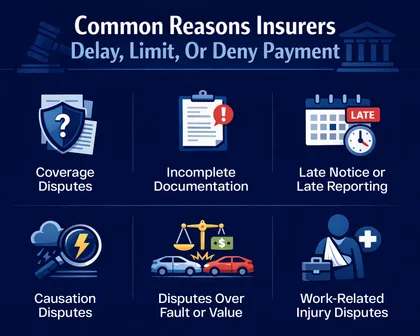
When your own insurance affects the claim, the company handling the benefit may still raise issues that delay, reduce, or deny payment. This can happen with health insurance, medical payments coverage, uninsured or underinsured motorist coverage, or workers’ compensation. Understanding these issues can help you gather the right records and protect your claim.
Here are common issues you may face:
- Coverage Disputes: The insurer may argue that the policy does not cover the treatment, loss, or type of accident involved. You can respond with the policy language, medical records, bills, and other documents that show the claim falls within the available coverage.
- Incomplete Documentation: The insurer may state it lacks sufficient information to process the claim. This can happen if medical records, billing statements, wage records, treatment notes, or accident details are missing. You can protect yourself by submitting documents promptly and keeping proof of what you sent.
- Late Notice or Late Reporting: The insurance company may claim you did not report the accident, injury, or need for benefits on time. You can respond by showing when you gave notice and, if needed, explaining any delay.
- Causation Disputes: The insurer may argue that your injuries, including the need for chiropractic care, were not caused by the accident. It may claim that your condition existed before the incident or that it came from something else. You can respond with medical records and provider opinions that connect your injuries to the accident.
- Disputes Over Fault or Value: In uninsured or underinsured motorist claims, the insurer may dispute who caused the accident or how much your injuries are worth. If you are unsure of the value of your case, reviewing how much most personal injury cases settle for can provide helpful context. Clear evidence, such as photos, witness statements, treatment records, and proof of losses, can help support your position.
- Work-Related Injury Disputes: In workers’ compensation cases, the insurer may question whether the injury happened during the course of employment or whether the reported condition is work-related. Prompt reporting and consistent medical records can help address these issues.
Coverage disputes and other insurance-related problems can directly affect what your own insurance pays while your personal injury case moves forward. Clear records, timely notice, and strong supporting evidence can help you challenge payment problems and protect your right to benefits.
Key California Laws And Regulations Protecting You
California has rules that tell insurers how they must handle claims under your policy. These rules are especially important when your own coverage applies, such as uninsured or underinsured motorist benefits or medical payments coverage.
Some of the main protections include:
- Insurance Code Section 790.03(h): Bars unfair claim practices, such as misrepresenting coverage, failing to investigate properly, delaying claim decisions, or failing to explain a denial clearly.
- 10 California Code of Regulations Section 2695.5(e): Requires the insurer to acknowledge your claim within 15 days.
- 10 California Code of Regulations Section 2695.7(b): Requires the insurer to accept or deny the claim within 40 days after receiving proof of claim, unless it gives a written reason for needing more time.
- 10 California Code of Regulations Section 2695.7(b)(1): If the insurer denies the claim, it must explain the decision in writing and point to the policy or law it relied on.
- Insurance Code Section 11580.2: Sets the rules for uninsured and underinsured motorist claims, including arbitration requirements in motor vehicle cases.
These laws give you a simple way to judge whether the insurer handled your claim fairly, clearly, and on time.
Why Might Your Own Insurance Dispute Benefits After An Accident?
When your own insurance is involved after an accident, the dispute is usually not about the main personal injury claim itself. That claim still focuses on the person or entity that caused your injuries. Instead, the dispute is usually about whether your policy or benefits apply, how much should be paid, or whether the insurer believes the records support the payment you requested. California also has claim-handling rules for insurers, and some accident-related benefits follow separate systems, such as workers’ compensation for job injuries.
Here are common reasons your own insurance may dispute payment:
- Coverage Disputes: The insurer may argue that the policy does not cover the accident, treatment, or loss involved.
- Causation Disputes: The insurer may claim your injuries were preexisting or were not caused by the accident.
- Documentation Issues: The insurer may state it lacks sufficient records, bills, wage information, or medical support to approve payment.
- Medical Necessity Disputes: A health insurer or other benefit provider may question whether certain treatment was necessary or related to the injury.
- Work-Related Injury Disputes: In a workplace accident, workers’ compensation may dispute whether the injury happened in the course of employment or what benefits are owed. California’s workers’ compensation system separately addresses medical care, temporary disability, permanent disability, death benefits, and supplemental job displacement benefits.
- Fault and Value Disputes in Motor Vehicle Cases: If uninsured or underinsured motorist coverage applies, the insurer may dispute who caused the crash or how much the bodily injury claim is worth.
Even when your own insurance is involved, the main personal injury claim usually remains against the party that caused your injuries.
What Can You Recover From Your Own Insurance After An Accident?

If you seek payment from your own insurance after an accident, what you can recover depends on the type of coverage you have and the kind of accident involved. In a personal injury case, your own insurance may help pay certain benefits while your claim against the at-fault party moves forward. However, it may not cover every loss you can recover in a personal injury claim.
Your own insurance may help cover:
- Medical Treatment through Health Insurance: This may include emergency care, hospital bills, surgery, follow-up visits, physical therapy, chiropractic care, and other covered treatment.
- Workers’ Compensation Benefits: If the injury happened at work, workers’ compensation may cover medical care, temporary disability benefits, permanent disability benefits, and other job-related injury benefits.
- Disability Insurance Benefits: If your injuries keep you from working, disability coverage may replace part of your lost income, depending on the policy.
- Medical Payments Coverage or Similar First-Party Benefits: Some policies may help pay limited medical costs after certain accidents, regardless of fault.
- Uninsured or Underinsured Motorist Benefits: If the accident involved a motor vehicle and the at-fault driver had no insurance or not enough insurance, your policy may help cover bodily injury losses.
So, your own insurance may help with medical bills, wage-related benefits, or other limited payments, depending on the policy. However, if your injuries caused broader losses, such as pain and suffering or full lost earnings, you may still need to pursue a personal injury claim against the person or entity that caused the accident.
What Should You Do To Protect Your Benefits And Build A Strong Case?
If your own insurance or benefits apply after an accident, act quickly and keep clear records. Different types of coverage have different rules, so early action can help prevent delays, denials, or missed deadlines.
To protect your claim:
- Report the accident or injury quickly.
- Request key documents in writing, such as your policy, denial letter, or claim records.
- Keep a simple timeline of treatment, calls, emails, payments, and denials.
- Submit supporting proof, including medical records, bills, wage records, and accident-related documents.
- Review any denial carefully to ensure it aligns with the policy and the facts.
- Track appeal or complaint options if payment is delayed or denied.
- Speak with a lawyer if needed to understand how the benefits issue affects your personal injury claim.
Helpful records include your policy documents, claim communications, medical records, bills, wage loss records, and denial letters. These materials can help show the benefits available, the support you provided, and how the insurer responded.
What Deadlines Can Affect Your Injury Lawsuit?
Deadlines can affect both your personal injury case and any benefits that may apply through your own coverage. Not every deadline applies in every case, but acting early helps protect your rights and avoid gaps in payment while the claim moves forward.
Some of the main deadlines to watch include:
- Personal Injury Lawsuit Deadline: In most California injury cases, you generally have two years to file a lawsuit against the person or entity that caused your injuries.
- Government Claim Deadline: If a city, county, or other public entity may be responsible, you usually must file an administrative claim within six months before you can sue.
- Workers’ Compensation Deadlines: If the injury happened at work, you should report it to your employer right away. Waiting more than 30 days can affect benefits, and workers’ compensation proceedings generally must begin within one year in many cases.
- State Disability Insurance Deadline: If your injuries prevent you from working, a California State Disability Insurance claim generally should be filed within 49 days after the disability begins.
- Motor Vehicle Coverage Deadlines: If uninsured or underinsured motorist coverage applies, California law has its own rules and timing requirements, including a formal step that generally must be taken within two years in uninsured motorist cases.
- Policy or Plan Deadlines: Health insurance, disability coverage, and other benefits may have their own notice, claim, or appeal deadlines, so review the policy or plan documents as soon as possible.
Missing one of these deadlines can affect the medical, wage-related, or other benefits available to you, even if your main personal injury claim is still valid. That is why it helps to identify all possible sources of recovery early and track each deadline separately.
FAQs About Insurance Claims After An Accident
If your own insurance or benefits may apply after an accident, it is important to understand how those issues can affect your personal injury claim. Here are common questions injured people may have.
Why Do Insurance Companies Deny Claims In California?

Insurers deny claims when they believe your policy does not cover the loss or your proof is incomplete. A denial becomes a problem when it ignores your evidence or lacks a clear written explanation. At that point, many injured people start thinking, “I need a personal injury lawyer,” because a lawyer can review the denial, determine whether the insurer complied with California law, and help protect the claim.
How Long Does It Take To Receive Compensation After An Insurance Claim?
It depends on how complex your claim is, but California sets clear timelines. Your insurer must acknowledge your claim within 15 days and accept or deny it within 40 days after receiving proof of the claim. If the claim stays open, the insurer must send updates every 30 days. Once approved, payment must be issued within 30 days. Delays beyond these steps can raise questions about claim handling.
What Should You Not Say In A Claim?
Do not guess or make statements you cannot support with evidence. Avoid exaggerating or downplaying your injuries or losses. Do not agree with the insurer’s interpretation of coverage without reviewing your policy. Keep your statements clear, accurate, and consistent with your records. Insurers rely on your statements when they evaluate your claim.
How Long Does An Insurance Company Have To Accept Or Deny A Claim In California?
Your insurer must accept or deny your claim within 40 days after receiving proof of claim. If they need more time, they must explain the reason in writing. The insurer must continue to send updates every 30 days until a decision is made.
Can I Sue My Own Insurance Company For Uninsured Or Underinsured Motorist Benefits?
Yes, but your case usually starts with arbitration, not a standard lawsuit. California law requires you to take action within two years of the accident, which can include starting arbitration. This process decides how much your insurer owes under your policy. If your insurer also handles your claim unfairly, you may pursue a separate bad-faith case.
Get Help With Insurance Disputes Affecting Your Injury Claim After An Accident
Insurance issues can affect your recovery after an accident, but they are usually only one part of the bigger picture. The main personal injury claim still focuses on the person or entity that caused your injuries. At the same time, your own insurance or benefits may affect medical bills, wage-related benefits, or other parts of your case.
At Arash Law, our accident lawyers can review how insurance issues relate to your personal injury claim and explain your options in plain language. We look at the facts, available coverage, and records showing how the accident has affected you.
We assist clients by:
- Reviewing insurance policies, benefit documents, and claim records.
- Explaining how insurance issues may affect a personal injury claim.
- Gathering proof of losses, including medical bills, wage records, and other accident-related documents.
- Identifying deadlines that may affect benefits or the injury case.
- Handling communication with insurance companies when needed.
- Preparing the case for settlement negotiations or litigation against the at-fault party.
You may be wondering, “Do lawyers only get paid if they win?” At AK Law, the answer is yes. We work on a contingency fee basis, meaning we only get paid if we obtain compensation for you.
Call (888) 488-1391 to discuss your situation and understand your options.