TL;DR: Fog does not cause car accidents by itself, but it raises crash risk by reducing visibility, distorting speed judgment, and shortening reaction time. In fog, drivers who fail to slow down or adjust their distance often cause rear-end crashes, pileups, and pedestrian injuries, with over 38,700 fog crashes yearly.
Highlights:
- Fog doesn’t cause accidents, but it significantly increases crash risk due to poor visibility.
- Slow down in fog to avoid rear-end crashes and pileups.
- Increase your following distance, as fog reduces visibility and reaction time.
- Use low-beam headlights; high beams worsen fog glare.
- Avoid sudden movements to maintain vehicle control in low visibility.
- Stay focused; distractions like phones make fog driving riskier.
- Check weather apps and GPS for real-time fog alerts on your route.
Tip: Drive smoothly in foggy conditions to maintain control of your vehicle.
Table of Contents
Fog does not directly cause car accidents. However, it can significantly contribute to them by reducing visibility. Instead, careless driving remains the leading cause of car collisions in foggy weather.
In parts of California, especially in the Central Valley, the risk of a crash increases dramatically as fog thickens. When motorists don’t adjust their driving in these conditions, they’re more likely to cause accidents.
Does Fog Increase Car Accident Risk In California?
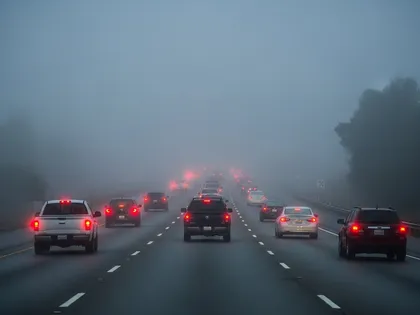
Fog can increase the likelihood of car crashes in California by significantly reducing visibility. Drivers may find it harder to distinguish nearby objects, such as street signs and other cars. They may also experience poorer depth perception, making it difficult to determine how far away another vehicle is. Finally, fog can make it more challenging for drivers to tell how fast they’re going.
These effects can make certain types of car accidents more likely. Examples include rear-end collisions, head-on crashes, and sideswipes. As a result, fog is one of the most dangerous weather conditions for drivers.
Fog-Related Crash Statistics
Adverse weather causes thousands of crashes in the United States each year. Rain, sleet, and snow can create slippery road surfaces, reducing tire traction. Notably, fog can accompany all these weather conditions, making it a year-round hazard.
National Crash Statistics Involving Fog
In low visibility conditions, speed variance increases, increasing the risk of a crash. The Federal Highway Administration (FHWA) reports that more than 38,700 car accidents occur in fog each year. These crashes result in over 600 fatalities and more than 16,300 injuries.
The FHWA adds that low visibility conditions accounted for just 4% of weather-related accidents from 2019 to 2023. However, they contributed to 13% of the resulting fatalities. This study underscores the dangers of fog-related car crashes.
Statewide Crash Statistics Involving Fog
In 2023, Caltrans recorded 335 fog-related accidents on California highways. These resulted in:
- 5 fatalities
- 13 suspected serious injuries
- 46 suspected minor injuries
- 70 possible injuries
There were also 519 and 742 fog-related crashes in 2022 and 2021, respectively. Although these figures have improved year after year, these incidents continue to occur in the Golden State.
Why Fog Creates Dangerous Driving Conditions
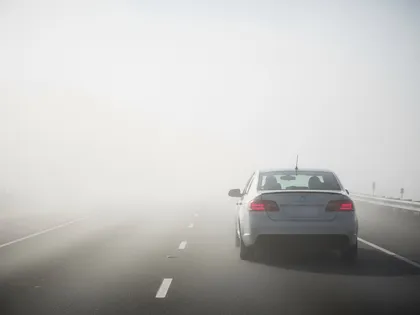
Fog reduces visibility, making it difficult for drivers to see hazards and judge distance. This weather condition can also cause optical illusions in areas that experience it more often. These include roads near large bodies of water, such as lakes, or along the coastline, especially in the mornings or evenings.
This hazard can also be more common at certain times of year. The Tule fog is common in the Central Valley from November to March, peaking in winter. Southern California’s June Gloom also brings fog and drizzle.
Here are some issues that drivers may face in foggy weather:
- Reduced Reaction Time — By reducing visibility, fog gives motorists less time to notice and react to sudden changes on the road ahead. For instance, it may obscure pedestrians until the driver is too close to avoid them. That driver may then panic, leading to a crash.
- False Perception of Speed — When fog is too thick, it can form a white or gray wall of visibility. That could make it more challenging for a driver to tell how fast they’re going. Other vehicles might also seem like they’re moving slower than they actually are.
- Risk of Chain Reaction Crashes & Pileups — Foggy conditions can affect multiple drivers, increasing the risk of chain-reaction crashes.
Driver Responsibility In Fog-Related Crashes
Though fog can contribute to an accident, drivers are responsible for adjusting to it like they would to any other hazard on the road. If they fail to do so, California law could hold them liable for any resulting collisions.
Driver Errors Commonly Linked To Fog Accidents
Some common mistakes that lead to fog-related accidents include:
Not Following Basic Speed Laws
Under state law, motorists should not drive faster than is reasonable or prudent. That means they need to slow down in specific weather conditions. However, drivers may overlook this requirement if they’re used to following the posted speed limits.
Doing this can be more dangerous, as fog can make it harder for them to tell how fast they’re actually going. As a result, statistics show that speeding drivers are responsible for almost three out of four fog-related crashes. These accidents also lead to the highest fatality rates.
Using High Beams
Drivers may use high beams under the misconception that, since they’re brighter, they can cut through the fog. However, these headlights are angled upward, causing light to bounce off water droplets. As a result, they can actually make the road more difficult to see.
Not Adjusting Following Distance
In California, drivers must give vehicles in front a reasonable amount of space. That can be harder to do in foggy conditions. Due to reduced visibility, drivers may start tailgating the car ahead without realizing it. This behavior can cause rear-end and multi-vehicle accidents.
Who Is Liable For A Fog-Related Crash In California?
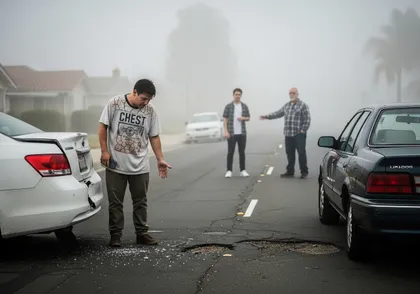
Driver negligence is often the main cause of fog-related car accidents. Depending on the circumstances, other parties may also contribute to a crash. In some cases, multiple individuals or entities may share responsibility for a collision.
Potentially liable parties include:
- Reckless Drivers — If they don’t slow down, leave extra stopping distance, or use proper lights in foggy conditions, they may cause accidents.
- The driver who initially caused the crash is primarily liable for injuries and losses. Their auto insurance may have to pay for the victim’s lost wages, property damage, and medical expenses, such as rehabilitation or chiropractic care.
- Other drivers who were following the car in front of them too closely may share accountability if they contribute to chain reactions and pileups.
- Government Entities — Government agencies responsible for public road conditions and traffic infrastructure may be partially to blame for fog-related collisions. They could create hazards due to:
- Insufficient road maintenance efforts.
- Missing or inadequate warning signs in areas that are prone to thick fog.
- Commercial Vehicle Operators — In California, they can be held responsible for their employees’ actions under the legal concept of vicarious liability. For example, a trucking company may be vicariously liable if one of its drivers failed to adjust to foggy conditions and caused an accident.
- Vehicle Manufacturers — They could share fault if mechanical issues, such as malfunctioning brakes or lights, contributed to the collision.
Common Fog-Related Accident Scenarios
In foggy conditions, these accidents occur more frequently than others:
- Rear-End Collisions — Drivers who cannot accurately judge speed and distance in foggy conditions may not be able to react to the vehicle ahead.
- Multi-Vehicle Pileups — In dense fog, more than one driver can make mistakes, causing multiple vehicles to collide.
- Single-Vehicle Collisions — Drivers may veer into ditches or barriers if they cannot clearly see road markings.
- Pedestrian Incidents — Low visibility makes it hard to see pedestrians, raising the risk of accidents.
How Comparative Fault Applies To Car Accidents In Foggy Conditions
A negligent driver is often liable for the damages they cause. However, more than one party can share fault in some cases. That includes injured victims.
Under California’s pure comparative fault system, you can still pursue compensation for your losses, even if you were up to 99% responsible for your accident. At trial, the court determines the extent to which your negligence caused your injuries. It then reduces your payout based on your percentage of fault.
Comparative fault may be more likely to apply in your case since fog can affect everyone involved in a crash. You can seek free accident lawyer advice to learn your options for seeking damages under these circumstances.
Prevention And Safety Measures
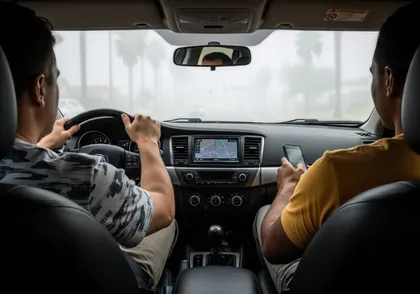
Simply adjusting how you drive can help you safely navigate foggy roads. Here are some things you can do to prevent accidents:
- Reduce Speed — Driving slowly gives you more time to react to unexpected obstacles and road conditions.
- Increase Following Distance — Keep a greater distance from the vehicle ahead of you, especially if you can’t tell how far away it is or how fast it’s going.
- Use Low-Beam Headlights — Low beams angle downward, so they’re more effective at reducing glare and improving visibility. You can also use adaptive headlights if your car has them. These specifically adjust intensity and direction in response to fog density.
- Don’t Make Sudden Movements — Smoothly steering and braking can help you maintain control.
- Avoid Distractions — Keep your focus on the road. Using your phone or eating behind the wheel can make it even harder to notice accident hazards in foggy conditions.
- Listen for Emergency Signals — Keep your windows slightly open to hear emergency signals. That way, you can avoid contributing to pileups.
- Turn on Your Fog Sensors — Some vehicles have sensors that detect low-visibility conditions. They can then automatically adjust driving settings for your safety.
- Leverage Weather Apps — Many weather apps offer real-time fog updates. Consider delaying trips if any of these alerts include areas along your route.
- Use GPS Navigation — Some GPS systems include weather overlays. You can use them to drive around roads experiencing foggy conditions.
Frequently Asked Questions
Below are answers to some of the most frequently asked questions about driving in foggy weather.
How Does Fog Contribute To Traffic Accidents?
Fog is produced by the suspension of very fine moisture droplets in the air. When light hits these droplets, it scatters. As these droplets get smaller, fog gets thicker, making roadways less visible. That ultimately makes it harder for drivers to spot and avoid potential accidents, increasing the risk of a crash.
What Is The Fastest Way To Defog A Windshield?
Turn on your car’s heater. Moisture will condense on the outside of your car’s windshield when the temperature and moisture content are higher outside your vehicle. Your goal is to adjust the car’s interior temperature to match. You can also use your car’s dedicated front or rear defrosters, which are specifically designed to prevent windshield fogging.
Are Headlights Required When Driving In Fog During The Day?
Yes. In California, you must turn on your headlights when driving in bad weather, whether it’s day or night. Drivers must use low-beam headlights when they can’t see ahead clearly for up to 1,000 feet.
Which Weather Has The Most Car Accidents?
Of all weather conditions, rain is associated with the most car accidents. An FHWA report shows that, on average, more than 77% of weather-related car collisions between 2019 and 2023 involved rain or mist. Over those years, rain also accounted for 82% of the injuries in these crashes. Notably, fog often accompanies this kind of weather.
Contact Arash Law About A Fog-Related Car Accident
Assessing fault after fog-related car accidents can be challenging. Some victims may even be reluctant to pursue compensation for their injuries and losses. Whether you’re thinking, “I need a personal injury lawyer,” or hesitating about pursuing a claim, Arash Law is here to help.
We can review your crash and check whether you have a valid claim. If you do, our team can identify who may be responsible, deal with insurance companies, and guide you as you seek fair compensation.
You might be worried about the cost and ask, “Do lawyers only get paid if they win?” At AK Law, the answer is yes. We work on a contingency basis. This no-win, no-fee policy means we only charge legal fees if we obtain compensation for you.
To schedule a free initial consultation, contact us at (888) 488-1391. Our car accident lawyers are ready to assist if a fog-related accident has injured you or a loved one.