TL;DR: Federal regulations on truck drivers cover hours of service, driver qualifications, vehicle maintenance, cargo securement, and insurance requirements. Violations such as fatigue, overloading, and improper training increase crash risks and often serve as key evidence in determining liability and fault in truck accident claims.
Highlights:
- Check whether federal or state trucking rules apply to the crash.
- Review driver logs for hours-of-service compliance and fatigue indicators.
- Inspect maintenance records for brake, tire, and steering defects.
- Confirm cargo securement and weight compliance before transport.
- Verify CDL status, training, and drug testing compliance history.
- Look for FMCSA Clearinghouse entries affecting driver eligibility.
- Check CSA safety scores for prior violations or crash patterns.
Tip: Preserve all electronic logging device data and vehicle inspection records as early as possible before they are overwritten or deleted.
Table of Contents
Federal regulations for truck drivers establish the safety standards that all commercial drivers must follow. Truck drivers in California must comply with both federal and state regulations. These rules govern hours of service, weight limits, driver qualifications, and commercial licensing requirements.
Commercial trucks can weigh up to 80,000 pounds. When a truck of that size collides with a passenger vehicle, the consequences can be severe. Victims may suffer broken bones, spinal injuries, traumatic brain injuries, and lengthy recoveries. The physical and emotional effects of a serious truck accident can impact nearly every aspect of your life.
When a driver or trucking company violates these regulations, they may be liable for the resulting harm. Injured victims have the right to pursue compensation for their injuries and losses. A lawyer can identify the violations and gather supporting evidence. From here, they can build a strong claim for damages.
How Federal And California Trucking Regulations Work Together
Federal and California laws work together to regulate the trucking industry. Federal law sets baseline safety standards for commercial carriers. California adds state-specific rules for trucks operating on California roads. Both sets of regulations can influence liability assessments after a truck accident.
Federal regulations govern many aspects of commercial trucking, including:
- Hours-of-service limits that restrict driving time and require rest breaks.
- Driver qualification standards and commercial licensing requirements.
- Vehicle inspection, maintenance, and repair requirements.
- Cargo securement and transportation safety rules.
The Compliance, Safety, Accountability (CSA) program tracks violations of these regulations, along with crash history, to identify high-risk carriers.
The California Vehicle Code imposes additional requirements on commercial trucks. The California Highway Patrol (CHP) and Department of Motor Vehicles (DMV) help enforce these rules, including:
- A 55 mph speed limit for most commercial trucks.
- An 80,000-pound maximum gross vehicle weight.
A violation of either federal or California law can contribute to a crash. For example, a fatigued driver may violate hours-of-service rules. An overloaded truck could also breach California’s weight limits. Attorneys check federal and state rules to spot violations. They also figure out who might be responsible for the crash.
Hours Of Service Rules And Driver Fatigue Limits
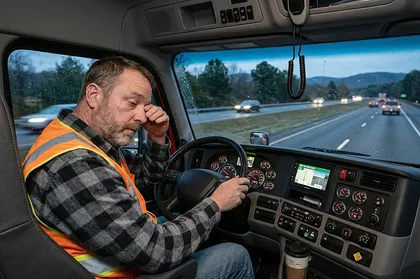
According to the Insurance Institute for Highway Safety, truck drivers who work for more than 8 hours are twice as likely to crash. Long work hours can cause sleep deprivation and fatigue. Federal and California regulations limit how long truck drivers may work. Electronic Logging Devices (ELDs) track driving hours and create records that are difficult to change.
Federal hours-of-service (HOS) regulations apply to interstate truck drivers. The rules include these restrictions:
- 11-Hour Driving Limit: A driver may drive up to 11 hours after taking 10 consecutive hours off duty.
- 14-Hour on-Duty Limit: A driver must complete all driving within 14 consecutive hours after coming on duty.
- 30-Minute Break Requirement: A driver must take a 30-minute break after 8 hours of driving.
- 60/70-Hour Limit: A driver may not drive after 60 hours on duty in 7 days or 70 hours on duty in 8 days. A driver may reset the period after taking at least 34 consecutive hours off duty.
- Sleeper Berth Provision: Drivers may split their required 10-hour off-duty period into two qualifying breaks. The two breaks must add up to at least 10 hours and include at least 7 consecutive hours in the sleeper berth.
Truckers can exceed federal HOS rules in limited situations. For example, they may drive for longer when poor weather or heavy traffic creates delays. These exceptions are narrowly applied. They must be properly documented to remain valid under federal law.
California applies different rules to many intrastate drivers. The state regulations generally allow:
- Up to 12 hours of driving.
- Up to 16 hours on duty.
Most commercial vehicles subject to California HOS rules must use an ELD unless an exemption applies. ELDs connect to the truck’s engine and automatically record driving time.
When a driver violates HOS limits, ELD records can show how long the driver was on duty before the crash. Those records may provide important evidence in a truck accident claim. A truck’s maintenance records and mechanical condition may also help explain why the crash happened.
Vehicle Maintenance, Cargo, And Weight Regulations
Trucking companies and drivers must comply with federal and California regulations. They need to keep their equipment and cargo safe. These regulations address vehicle inspections, cargo securement, and weight limits. Violations can increase the risk of serious truck accidents and catastrophic injuries.
Key regulations to know:
- Vehicle Maintenance Requirements: Drivers must inspect their trucks before and after each trip. They must record the results in a Driver Vehicle Inspection Report (DVIR). Important components include:
- Brakes
- Tires
- Lights
- Steering systems
Companies must repair safety defects before returning a truck to service.
- Cargo Securement Requirements: Drivers must secure cargo before starting a trip. They must inspect the load again within the first 50 miles. Additional checks are required:
- Every 150 miles.
- Every three hours.
Shifting cargo can cause rollovers, jackknife crashes, and lost-load accidents.
- Weight Limit Requirements: California generally limits the gross weight of trucks to 80,000 pounds. Overloaded trucks need more distance to stop. Extra weight places more stress on brakes and other components.
Violating any of these rules can increase the risk of a crash. Truck accident lawyers analyze inspection, cargo, and weight records. Their investigation can help identify safety violations and explain what caused the crash.
Truck Driver Qualifications And Drug Testing Requirements
Commercial truck drivers must meet strict qualifications before they can operate large trucks. Federal and California regulations set standards for licensing, training, and drug testing. These rules help protect everyone on the road. Violations can become important evidence after a truck accident.
Federal regulations establish minimum requirements for commercial drivers. Key requirements:
- Commercial Driver’s License (CDL): Drivers must obtain a CDL before operating a commercial truck. They must pass knowledge and skills tests. Federal regulations set these standards under 49 CFR Part 391.
- Entry-Level Driver Training: New drivers must complete approved training before taking their CDL skills test. The training includes both classroom and behind-the-wheel instruction.
- Drug & Alcohol Testing: Federal regulations require testing:
- Before employment.
- At random throughout the year.
- After certain crashes.
- When reasonable suspicion exists.
The FMCSA also maintains a Drug and Alcohol Clearinghouse. It tracks violations for commercial drivers. Employers must check the Clearinghouse before hiring a driver and throughout employment. A violation can prevent a driver from legally operating a commercial vehicle until they complete the required treatment and testing process.
California applies additional requirements to commercial drivers. For example:
- Drivers must obtain a California CDL to operate commercial vehicles in the state.
- Commercial drivers must maintain a blood alcohol concentration (BAC) level of lower than 0.04% while driving.
State agencies may suspend or revoke commercial driving privileges for violations.
To comply with regulations, trucking companies must hire qualified drivers. They must also maintain driver qualification records. Otherwise, they may face liability if one of their drivers causes a crash.
Many people seek free advice from truck accident lawyers after a serious truck crash. Attorneys review driver records, training files, and testing records to determine whether a violation contributed to the accident.
How Violations Of Federal Regulations Affect Truck Accident Claims In California

Violations of federal truck regulations can significantly influence California truck accident claims. These rules are designed to prevent crashes involving large commercial vehicles. When they are broken, they often help explain why an accident happened. Courts and insurers will evaluate whether the violation contributed to the crash and the resulting injuries.
California law allows people injured by another’s negligence to file personal injury claims. However, they must first show that the at-fault party owed them a legal duty to prevent harm. Because that party acted carelessly, they breached their duty and caused the accident.
However, in cases involving federal trucking regulations, “negligence per se” may apply. A truck driver or trucking company may be negligent per se if they break a law intended to protect the public.
When this legal theory applies, you usually don’t have to prove ordinary negligence. Instead, the federal trucking violation itself may serve as evidence of negligence. To illustrate, suppose a driver exceeds federal HoS limits. Because they’re fatigued, they cause a crash. They may be negligent per se.
Federal trucking violations can also affect fault evaluation. Under California’s comparative negligence system, multiple parties can be liable for a crash. Regulatory violations may shift a greater share of fault to a truck driver or company.
Evidence of non-compliance with federal regulations can ultimately help victims prove negligence in a truck accident case. In other words, it could support their right to seek compensation for the medical bills, lost wages, and pain and suffering they sustained in a crash. The at-fault party’s insurance usually covers these damages.
If that party is the trucking company, you could file a claim against the minimum liability insurance coverage it must carry under federal law. The limits can vary based on the cargo being transported. Standard freight carriers must typically carry at least $750,000 in coverage. Higher limits apply to hazardous materials carriers.
Frequently Asked Questions About Truck Accident Cases Involving Federal Law
Truck crashes raise legal questions that are not easy to answer. Road rules, driver rules, and safety rules can all apply to a single crash. These answers address the most common questions about truck accidents in California.
What Is The Difference Between Federal And California Truck Regulations?
Federal rules set baseline safety standards for trucks that cross state lines. California law imposes stricter rules, such as lower speed limits and lane restrictions. Both sets of rules may apply to your case. If so, federal law may preempt state law if there is a direct conflict. However, California may impose stricter safety requirements in many areas, such as speed limits and intrastate driving rules. Determining which rules apply often depends on whether the trucking operation is interstate or intrastate.
Can An Hours Of Service Violation Help My Truck Accident Case?
Yes, hours-of-service rules limit how long a driver can drive without rest. A violation may indicate that the driver was too tired to comply with federal safety rules. ELD records show the exact hours a driver worked.
Who Can Be Held Liable If A Commercial Truck Violates Safety Rules?
Multiple parties may share liability in your truck accident case. The truck driver may be at fault for fatigued driving, speeding, or other unsafe driving behavior. The trucking company, cargo loaders, and maintenance providers might all share blame. Vehicle or parts manufacturers could also be responsible for the crash.
What Happens If The Trucking Company Refuses To Share Data?
Federal law requires carriers to keep ELD records for at least six months. Your attorney can ask for the data through discovery. Discovery is the formal legal process for exchanging evidence in a lawsuit. Courts may instruct the jury to assume the missing data would have shown the trucking company was at fault.
Can I Recover Compensation If I Was Partially At Fault?
Yes. California follows a pure comparative negligence system. You may still recover compensation even if you share fault for the accident. However, the court or insurance company will reduce your compensation by your percentage of fault.
Many people start thinking, “I need a personal injury lawyer” when the insurance company blames them for the crash. An attorney can help determine fault and protect your right to recover compensation.
What Evidence Will A Lawyer Use To Support My Claim?
A lawyer may use many types of evidence to prove how the crash happened and who was responsible. This evidence can also help show the extent of your injuries and losses. Among these are:
- ELD records.
- Truck black box data.
- Maintenance & inspection records.
- Driver qualification & training files.
- Drug & alcohol testing records.
- Cargo & weight records.
- Accident scene photos & videos.
- Witness statements.
- Police reports.
- Medical records, including those for chiropractic care and other treatments.
Together, this evidence can help establish liability and support your compensation claim.
Get Help After An Accident From Lawyers Who Understand Trucking Regulations
Arash Law represents truck accident victims throughout California. Our attorneys have handled complex trucking cases against large carriers and their insurers. We know which federal regulations apply to your case. Federal safety rules can help establish fault, and we know how to use them. We work to pursue fair compensation based on your situation.
You need experienced legal support on your side. An initial consultation with us costs you nothing. Many people ask, “Do lawyers only get paid if they win?” We work on a contingency fee basis, so you pay no attorney’s fees unless your case resolves in your favor.
Call AK Law today at (888) 488-1391. When you call, we can discuss your situation and explain your available legal options.