TL;DR: Road accidents can be reduced through several connected areas: safe road users, safe vehicles, safe speeds, safe roads, and post-crash care. Drivers can avoid distraction and impairment, maintain their vehicles, and adjust their speed to conditions. Government agencies can improve roads, manage speeds, enforce safety laws, and support emergency response. If one safety measure fails, another may still prevent a fatal or serious injury.
Road accidents can be controlled by making road users, vehicles, speeds, roads, and post-crash care safer. These protections work together to prevent crashes and reduce the risk of death or serious injury when a collision still occurs.
Drivers can help by staying sober and focused, using safe speeds, following traffic laws, and maintaining their vehicles. Transportation agencies can improve roads and intersections, while emergency medical systems can reduce harm after serious crashes.
No single measure can prevent every collision. A strong road-safety strategy uses several layers of protection. Understanding what causes crashes, what the law requires of every California driver, and what steps to take after a collision can make a critical difference for your safety and legal claim.
Key Facts About Road Accidents In California
- Road users must avoid dangerous behavior. Vehicle Code § 23123.5 restricts handheld-device use while driving. Vehicle Code § 23152 prohibits driving under the influence of alcohol or drugs.
- Vehicles must be safe to operate. Vehicle Code § 24002 prohibits operating a vehicle that is in an unsafe condition, presents an immediate safety hazard, or lacks equipment required by the Vehicle Code.
- Drivers must use a safe speed. Vehicle Code § 22350 prohibits driving faster than is reasonable or prudent for the weather, visibility, traffic, road surface, and road width.
- Roads need proper improvement and maintenance. Streets and Highways Code § 91 directs the California Department of Transportation to improve and maintain state highways. Government Code §835 may also impose public-entity liability when a dangerous condition of public property causes injury, and its requirements are met.
- Emergency response is part of road safety. Health and Safety Code § 1797.204 requires local emergency medical services agencies to plan, implement, and evaluate an organized system of readiness and response services.
- States must plan for highway safety. Under 23 U.S.C. § 148, states receiving Highway Safety Improvement Program funds must develop, implement, and update a Strategic Highway Safety Plan based on safety problems, data, and strategies to reduce fatalities and serious injuries.
Table of Contents

What Is The Best Way To Control Road Accidents?
An effective way to reduce road accidents is to address the behaviors and conditions that make crashes more likely or more severe. The Federal Highway Administration’s Safe System Approach recognizes that people will make errors and that the human body can only withstand limited crash forces. It focuses on five connected areas: safe road users, safe vehicles, safe speeds, safe roads, and post-crash care.
California’s 2025–2029 Strategic Highway Safety Plan aligns its work with those areas and adds safer land use as another element. The goal is to reduce the chance of a crash while also reducing the risk of death or serious injury when a crash does occur.
This approach means drivers, transportation agencies, vehicle manufacturers, law enforcement, communities, and emergency responders all share responsibility for safer roads.
Safe Road Users
Safe road users reduce crashes by making safer choices and following the traffic rules that apply to them. For drivers, this includes staying focused and sober, maintaining a safe following distance, yielding when required, checking for other road users, and avoiding sudden or unpredictable movements. Pedestrians, bicyclists, and motorcyclists also contribute to safety by following applicable traffic laws and using appropriate safety equipment.
Avoid Distracted Driving
Drivers should keep their eyes, hands, and attention on the road. Common distractions include texting, reading messages, holding a phone, entering directions, reaching for objects, eating, or focusing too much on passengers.
California Vehicle Code §23123.5 generally makes it unlawful to hold and operate a handheld wireless phone or electronic communications device while driving. Limited use of a properly mounted device is permitted under the conditions specified by law.
Drivers can reduce distraction by setting navigation and music before starting a trip. If a task needs their full attention, they should stop in a safe place before handling it.
Prevent Impaired Driving
Drivers should not operate a vehicle when alcohol, drugs, or medications make driving unsafe. California law prohibits driving under the influence of alcohol or drugs under Vehicle Code §23152. It also generally prohibits driving with a blood alcohol concentration of 0.08% or higher.
People who plan to drink can arrange another way home, such as a sober driver, public transportation, taxi, rideshare service, or overnight stay.
Some prescription and over-the-counter medications may also cause drowsiness or affect reaction time. Drivers should follow medication warnings and avoid driving when they cannot safely control a vehicle.
Leave Enough Space To React
Following another vehicle too closely leaves less time to react when traffic suddenly slows. Drivers may need even more space during rain, fog, heavy traffic, construction, or other conditions that make stopping harder.
Predictable driving also helps. Drivers should signal before turning or changing lanes, check mirrors and blind spots, and avoid sudden movements.
Watch For Pedestrians, Bicyclists, And Motorcyclists
Drivers should pay extra attention to road users who have little physical protection in a collision.
Check carefully before:
- Turning at an intersection.
- Changing lanes.
- Entering or leaving a driveway.
- Backing up.
- Opening a vehicle door.
California Vehicle Code §21950 addresses drivers’ duties toward pedestrians in marked and unmarked crosswalks. Vehicle Code §21760 sets requirements for passing bicyclists safely.
Motorcycles are smaller than passenger vehicles and may also be harder to notice. Checking mirrors and blind spots before turning or changing lanes can reduce the risk of a collision.
Use Seat Belts And Helmets
Seat belts and helmets do not usually prevent the first collision. They can reduce the severity of injuries in a crash.
Drivers and passengers should use proper restraints. Children should use the child restraint or seat belt required for their age and size.
Vehicle Code §27803 requires motorcycle drivers and passengers to wear compliant helmets. Vehicle Code §21212 generally requires bicycle riders under age 18 to wear helmets in locations covered by the statute.
Safe Vehicles
Safe vehicles can help drivers avoid crashes and can reduce injuries when a collision occurs. Vehicle safety depends on both proper maintenance and vehicle design.
Maintain The Vehicle
California Vehicle Code §24002 prohibits operating a vehicle in an unsafe condition that presents an immediate safety hazard. It also prohibits operating a vehicle without the equipment required by the Vehicle Code.
Drivers and vehicle owners should regularly check:
- Tires and tire pressure.
- Brakes.
- Headlights and brake lights.
- Windshield wipers.
- Mirrors.
- Steering components.
- Warning lights.
A worn tire may reduce traction. Faulty brakes may increase stopping distance. Broken lights can make a vehicle harder for other road users to see. Drivers should also respond to vehicle safety recalls.
Use Safety Technology As Intended
Modern vehicles may include safe-driving technologies designed to prevent or reduce certain crashes.
Examples include:
- Automatic emergency braking.
- Forward-collision warnings.
- Electronic stability control.
- Blind-spot warnings.
- Lane-departure alerts.
- Rearview cameras.
These systems add another layer of protection. They do not remove the driver’s responsibility to watch the road and remain ready to control the vehicle.
The Federal Highway Administration includes safe vehicles as one of the five elements of its Safe System approach. It describes safe vehicles as vehicles designed and regulated to reduce both the frequency and severity of collisions.
Safe Speeds
Safe speeds focus specifically on how fast a vehicle is traveling and whether that speed is appropriate for the conditions. Lower, properly managed speeds can give drivers more time to respond and reduce the force of a collision.
Adjust Speed To Conditions
California Vehicle Code §22350, known as the Basic Speed Law, states that a person may not drive faster than is reasonable or prudent considering weather, visibility, traffic, and the condition and width of the roadway.
A driver may therefore need to travel below the posted speed limit during:
- Rain or fog.
- Heavy congestion.
- Poor visibility.
- Road construction.
- Slippery pavement.
- Heavy pedestrian activity.
The posted speed limit does not guarantee that the same speed will be safe under every condition.
Reduce Speed Where People Are More Vulnerable
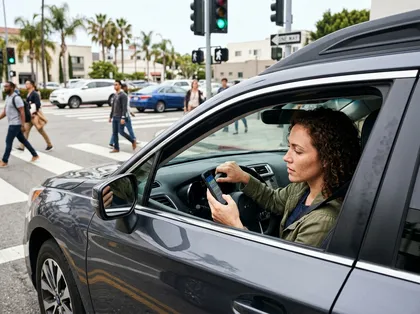
Lower speeds become especially important in places where vehicles interact with people walking or cycling. Schools, residential streets, shopping areas, transit stops, and busy crossings may present situations where a driver needs more time to see and respond to another road user.
The Federal Highway Administration (FHWA) explains that safe speeds support human injury tolerances in three ways: by reducing impact forces, giving drivers more time to stop, and improving visibility.
Avoid Aggressive Driving
Speed safety also involves more than staying under a posted limit. Drivers can reduce risk by avoiding racing, tailgating, rapid lane changes, and aggressive acceleration through intersections. These behaviors can reduce the time and space available for everyone to respond when something unexpected happens.
Safe Roads
Safe roads are designed and maintained to reduce dangerous conflicts and account for predictable human mistakes.
A roadway can influence where drivers look, how fast they travel, where pedestrians cross, and how different types of road users interact.
Design Safer Intersections
Intersections create many points where vehicles, pedestrians, and bicyclists cross paths.
Depending on the location, safety improvements may include:
- Roundabouts.
- Protected turn phases.
- Improved traffic signals.
- Better lighting.
- Pedestrian refuge islands.
- More visible crosswalks.
- Pedestrian signals or beacons.
Roundabouts, for example, can lower vehicle speeds and reduce some severe crossing conflicts.
Prevent Roadway Departure Crashes
Drivers who leave their lanes may enter opposing traffic or strike roadside objects.
Road agencies may use median barriers, shoulder or centerline rumble strips, improved pavement markings, curve warnings, and other treatments to reduce these crashes or their severity.
Create Safer Space For Pedestrians And Bicyclists
Roads can also separate users who travel at very different speeds.
Depending on the location, agencies may use sidewalks, bicycle lanes, separated bicycle facilities, pedestrian islands, shorter crossings, and traffic-calming measures.
The Federal Highway Administration (FHWA) explains that safe road design can separate road users by space or time, warn people about hazards, and account for inevitable mistakes.
Under Streets and Highways Code § 91, Caltrans must improve and maintain state highways. When a public roadway has a dangerous condition that causes injury, Government Code § 835 may provide a basis for public-entity liability if all statutory requirements are satisfied.
Post-Crash Care
Post-crash care reduces harm after a collision. It does not prevent the initial impact. Instead, it focuses on quickly locating injured people, stabilizing them, providing emergency treatment, and transporting them to an appropriate medical facility.
Report Serious Crashes Quickly
Emergency responders cannot help until they know that a crash has occurred. Calling 911 promptly after a serious collision can connect injured people with law enforcement, firefighters, paramedics, and other emergency services.
Some newer vehicles and mobile devices can also detect severe crashes and automatically contact emergency services.
Provide Timely Emergency Medical Care
Paramedics may evaluate injuries, stabilize patients, and decide where to transport a seriously injured person. Some injuries may require a designated trauma center rather than the nearest hospital. The appropriate destination depends on the patient’s condition, location, available resources, and local emergency medical protocols.
California Health and Safety Code § 1797.204 requires each local emergency medical services agency to plan, implement, and evaluate an organized system of readiness and response services.
Prevent Additional Harm After The Crash
Post-crash safety also includes protecting the crash scene and reducing the risk of secondary collisions. Police, firefighters, transportation agencies, tow operators, and emergency medical personnel may need to manage traffic while injured people are treated and damaged vehicles or debris are removed.
FHWA identifies quick emergency response, stabilization, and transport as central parts of post-crash care under the Safe System approach.
How Serious Are Road Accidents In California?
California continues to record thousands of roadway deaths despite recent improvements.
According to the Insurance Institute for Highway Safety (IIHS), 3,876 people died in motor vehicle crashes in California in 2024. That equals about 9.8 deaths per 100,000 residents and 1.19 deaths per 100 million vehicle miles traveled. IIHS reports these figures using federal crash, population, and vehicle-mile data, including fatality data from the U.S. Department of Transportation’s Fatality Analysis Reporting System (FARS).
2024 data also show:
| California Traffic Statistic | 2024 |
|---|---|
| Total motor vehicle crash deaths | 3,876 |
| Pedestrian deaths | 1,090 |
| Motorcyclist deaths | 522 |
| Bicyclist deaths | 162 |
| Speeding-related deaths | 1,139 |
Speeding was a factor in about 29% of California motor vehicle crash deaths in 2024. Pedestrians accounted for about 28% of all motor vehicle crash deaths in the state.
NHTSA’s April 2026 early estimate projects about 3,630 traffic fatalities in California in 2025. That figure is still an estimate and may change when the final 2025 Fatality Analysis Reporting System data become available.
The decline is encouraging, but the numbers show why road safety still requires action across road users, vehicles, speeds, road design, and emergency care.
Data Transparency Note: The 2024 figures above are based on IIHS’s analysis of federal fatality data, which became available in 2026. The 2025 California figure is an NHTSA statistical projection, not a final fatality count. NHTSA states that the 2024 and 2025 state figures may be revised when updated FARS files become available.
What To Do If Another Driver Fails To Drive Safely And Causes A Crash
If another driver’s unsafe conduct caused your crash, focus on your medical care, required reports, evidence, and legal rights in the days that follow.
1. Seek Medical Care
Get appropriate medical treatment for your injuries and follow your doctor’s recommendations.
Some crash injuries may become more noticeable over time. Keep records of:
- Emergency room or hospital visits.
- Doctor appointments.
- Diagnostic tests and imaging.
- Prescriptions.
- Physical therapy or other treatment.
- Medical bills and related expenses.
Medical records can help show what injuries you suffered, when symptoms appeared, and what treatment you needed.
2. Save Evidence From The Crash
Keep any evidence you have already collected and gather additional records as they become available.
Useful evidence may include:
- Photos and videos from the scene.
- Vehicle damage photos.
- Police or California Highway Patrol reports.
- Witness names and contact information.
- Repair estimates.
- Dashcam or surveillance footage.
- Insurance correspondence.
Some evidence may disappear or become harder to obtain over time, so preserving it early can be important when fault is disputed.
3. Complete Required Reports
If you were driving a vehicle involved in a crash that caused an injury or death, California Vehicle Code § 20008 generally requires you to make or cause a written report to law enforcement within 24 hours. The report may be made to the California Highway Patrol (CHP) or, for a crash within a city, to CHP or that city’s police department. This requirement is separate from the DMV SR-1.
California requires you to file an SR-1 report with the Department of Motor Vehicles (DMV) when the crash meets the reporting requirements. The report is generally due within 10 days when a crash results in:
- Any bodily injury, no matter how minor.
- A death.
- Property damage exceeding $1,000 to any one person’s property.
The SR-1 is separate from a police report and from notifying an insurance company.
4. Be Careful When Dealing With Insurance Companies
Notify your own insurer as required by your policy. Be more cautious when the other driver’s insurance company contacts you.
You generally do not have to give the other driver’s insurer a recorded statement. An adjuster may ask about how the collision happened, your injuries, or your medical history. Your answers may later be used when deciding fault or evaluating the claim.
Avoid guessing about the cause of the crash, accepting blame, or minimizing injuries that are still being evaluated.
5. Keep Track Of Your Losses
Save records showing how the crash has affected you financially and physically.
These may include:
- Medical bills.
- Prescription costs.
- Transportation expenses for treatment.
- Vehicle repair or replacement costs.
- Pay stubs or employer records showing lost income.
- Receipts for other accident-related expenses.
Keeping these records organized can make it easier to document your damages later.
6. Consider Legal Support
Consider speaking with a California personal injury lawyer if you were injured and another driver may be responsible.
Car accident lawyers can review the evidence, identify available insurance coverage, evaluate disputed fault, and determine which filing deadlines apply. Legal help may be especially important when injuries are serious, liability is contested, several parties may be involved, or an insurer is pressuring you to settle.
California follows pure comparative negligence, so any percentage of fault assigned to you can reduce your recovery. Getting legal advice early can also help preserve evidence before it disappears.
If another driver’s unsafe conduct caused your injuries, Arash Law can review the crash and explain your options. Call (888) 488-1391 or contact us online for a free case evaluation.
Frequently Asked Questions About Road Accidents And Liability In California
How Does A Driver’s Failure To Follow Safety Rules Impact My Personal Injury Claim?
A traffic-law violation can support a personal injury claim if it helped cause the crash.
Under California Evidence Code § 669, a violation may create a presumption of negligence when certain legal requirements are met. For example, this may apply when a driver:
- Runs a red light.
- Uses a handheld phone unlawfully.
- Drives at an unsafe speed.
The violation does not automatically decide the entire case. The injured person must still show that the defendant’s conduct caused the accident and resulting harm.
What Evidence Is Needed To Prove Another Driver Was Responsible For The Collision?
Useful evidence may include the police or CHP collision report, photos, videos, witness statements, medical records, vehicle damage, and electronic data.
Depending on the crash, evidence may include:
- Photos and videos from the scene.
- Witness names and statements.
- Traffic-camera or surveillance footage.
- Vehicle event data recorder information.
- Cell phone records in a distracted-driving case.
- Medical records and diagnostic imaging.
- Repair estimates and damage photos.
A CHP 555 report may contain information about the people and vehicles involved, statements, diagrams, road conditions, and the investigating officer’s findings. However, the contents of a collision report do not automatically determine civil liability.
Some evidence may disappear quickly. Video can be erased, vehicles may be repaired or sold, and electronic information may become harder to obtain. Preserving important evidence early can help when fault is disputed.
Can I Recover Compensation If Poor Road Maintenance Caused My Crash?
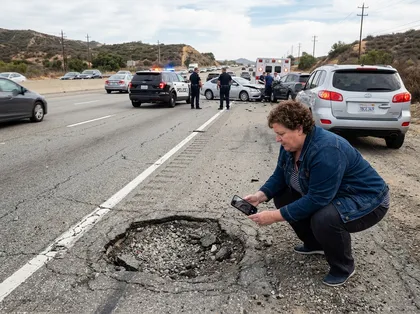
Possibly. A California public entity may be liable when a dangerous condition of public property causes an injury, and the requirements of Government Code § 835 are met.
Examples may include a dangerous roadway defect, a broken traffic control device, poor visibility, or another hazardous condition. Liability depends on factors such as whether the condition was dangerous, whether it caused the injury, and whether the public entity created the condition or had the notice required by law.
Claims against public entities also follow different procedures. For many personal injury claims, the injured person must first present a government claim within six months under Government Code § 911.2.
Claims involving Caltrans follow specific filing procedures. A claim against Caltrans for death, personal injury, or injury to personal property or growing crops of $12,500 or less may be filed directly with the appropriate Caltrans District Claims Office. Claims over $12,500 must be submitted to the California Department of General Services, Office of Risk and Insurance Management, Government Claims Program.
If the public entity rejects the claim, another deadline may apply to the lawsuit. If the public entity sends a written rejection notice that complies with Government Code § 913, a lawsuit generally must be filed within six months after the notice is personally delivered or mailed. Government Code § 945.6 generally allows up to two years from when the claim arises to file suit if the required written notice is not given.
Because these time limits can be much shorter than the deadline for an ordinary injury claim, it is important to identify a possible government defendant early.
How Long Do I Have To File A Car Accident Claim In California?
For most California personal injury lawsuits against a private party, the deadline is generally two years from the date of injury under Code of Civil Procedure § 335.1.
Claims for damage to a vehicle or other property generally have a three-year deadline under Code of Civil Procedure § 338.
A much shorter deadline may apply when a government entity is involved. For many personal injury claims against a California public entity, a written administrative claim must first be presented within six months under Government Code § 911.2.
Some exceptions or tolling rules may apply. For example, the statute of limitations for many private injury claims may be tolled while the injured person is a minor. Government claims and other specialized cases follow different rules.
Missing a statute of limitations or a government claim deadline can bar the claim. Evidence may also disappear long before the legal deadline expires, so it is usually better to investigate the accident early.
Talk To Arash Law About Your California Car Accident Claim
Road accidents can be reduced, but even careful drivers, passengers, pedestrians, bicyclists, and motorcyclists can be injured when others fail to act safely. If you were injured in a California traffic accident, Arash Law can review the facts, identify potentially responsible parties, and explain the legal options that may apply to your situation.
We handle qualifying personal injury claims on a contingency fee basis under a written fee agreement. Attorney’s fees are not paid up front and are generally taken from any recovery. Case costs may be handled separately under the agreement.
Call (888) 488-1391 or contact us online for a free case evaluation.
Arash Law. Make ‘Em Pay, Call AK.
Sources
Insurance Institute for Highway Safety. Fatality Facts 2024: State by State.
https://www.iihs.org/research-areas/fatality-statistics/detail/state-by-stateNational Highway Traffic Safety Administration, National Center for Statistics and Analysis. Early Estimate of Motor Vehicle Traffic Fatalities and Fatality Rate in 2025. DOT HS 813 800, April 2026.
https://crashstats.nhtsa.dot.gov/Api/Public/ViewPublication/813800Federal Highway Administration. Safe System: An Approach Toward Zero Traffic Deaths.
https://highways.dot.gov/safety/zero-deaths/safe-system-approach-toward-zero-traffic-deathsFederal Highway Administration. Proven Safety Countermeasures.
https://highways.dot.gov/safety/proven-safety-countermeasuresGo Safely, California. Safe Systems Approach.
https://gosafelyca.org/safe-systems-approach/California Department of Transportation. Strategic Highway Safety Plan.
https://dot.ca.gov/programs/safety-programs/shspCalifornia Department of Motor Vehicles. Report of Traffic Accident Occurring in California (SR-1).
https://www.dmv.ca.gov/portal/dmv-virtual-office/accident-reporting/California Department of General Services, Office of Risk and Insurance Management. File a Government Claim.
https://www.dgs.ca.gov/ORIM/File-A-ClaimCalifornia Highway Patrol. Collision Report: CHP 190.
https://www.chp.ca.gov/Notify-CHP/Collision-Report-CHP-190United States Code. 23 U.S.C. §148: Highway Safety Improvement Program.
https://uscode.house.gov/view.xhtml?req=%28title%3A23%20section%3A148%20edition%3Aprelim%29California Supreme Court. Li v. Yellow Cab Co. (1975) 13 Cal. 3d 804: California’s Pure Comparative Negligence Rule.
https://scholarlycommons.pacific.edu/cgi/viewcontent.cgi?article=2458&context=mlrCalifornia Legislative Information. Vehicle Code §20008: Written Report of Injury or Fatal Crash. https://leginfo.legislature.ca.gov/faces/codes_displaySection.xhtml?lawCode=VEH§ionNum=20008.
California Legislative Information. Vehicle Code §21212: Bicycle Helmet Requirements.
https://leginfo.legislature.ca.gov/faces/codes_displaySection.xhtml?lawCode=VEH§ionNum=21212.California Legislative Information. Vehicle Code §21760: Passing Bicycles.
https://leginfo.legislature.ca.gov/faces/codes_displaySection.xhtml?lawCode=VEH§ionNum=21760.California Legislative Information. Vehicle Code §21950: Pedestrian Right-of-Way.
https://leginfo.legislature.ca.gov/faces/codes_displaySection.xhtml?lawCode=VEH§ionNum=21950.California Legislative Information. Vehicle Code §22350: Basic Speed Law.
https://leginfo.legislature.ca.gov/faces/codes_displaySection.xhtml?lawCode=VEH§ionNum=22350.California Legislative Information. Vehicle Code §23123.5: Handheld Wireless Devices.
https://leginfo.legislature.ca.gov/faces/codes_displaySection.xhtml?lawCode=VEH§ionNum=23123.5California Legislative Information. Vehicle Code §23152: Driving Under the Influence.
https://leginfo.legislature.ca.gov/faces/codes_displaySection.xhtml?lawCode=VEH§ionNum=23152.California Legislative Information. Vehicle Code §24002: Unsafe Vehicle Condition.
https://leginfo.legislature.ca.gov/faces/codes_displaySection.xhtml?lawCode=VEH§ionNum=24002.California Legislative Information. Vehicle Code §27803: Motorcycle Helmet Requirements.
https://leginfo.legislature.ca.gov/faces/codes_displaySection.xhtml?lawCode=VEH§ionNum=27803.California Legislative Information. Health and Safety Code §1797.204: Local Emergency Medical Services System.
https://leginfo.legislature.ca.gov/faces/codes_displaySection.xhtml?lawCode=HSC§ionNum=1797.204.California Legislative Information. Streets and Highways Code §91: Improvement and Maintenance of State Highways.
https://leginfo.legislature.ca.gov/faces/codes_displaySection.xhtml?lawCode=SHC§ionNum=91.California Legislative Information. Vehicle Code §16000: Accident Reporting to DMV.
https://leginfo.legislature.ca.gov/faces/codes_displaySection.xhtml?lawCode=VEH§ionNum=16000.
California Legislative Information. Evidence Code §669: Presumption of Failure to Exercise Due Care.
https://leginfo.legislature.ca.gov/faces/codes_displaySection.xhtml?lawCode=EVID§ionNum=669.California Legislative Information. Government Code §835: Dangerous Condition of Public Property.
https://leginfo.legislature.ca.gov/faces/codes_displaySection.xhtml?lawCode=GOV§ionNum=835.California Legislative Information. Government Code §911.2: Government Claim Presentation Deadline.
https://leginfo.legislature.ca.gov/faces/codes_displaySection.xhtml?lawCode=GOV§ionNum=911.2.California Legislative Information. Government Code §913: Notice of Action on Government Claim. https://leginfo.legislature.ca.gov/faces/codes_displaySection.xhtml?lawCode=GOV§ionNum=913.
California Legislative Information. Government Code §945.6: Deadline After Government Claim. https://leginfo.legislature.ca.gov/faces/codes_displaySection.xhtml?lawCode=GOV§ionNum=945.6.
California Legislative Information. Code of Civil Procedure §335.1: Personal Injury Filing Deadline.
https://leginfo.legislature.ca.gov/faces/codes_displaySection.xhtml?lawCode=CCP§ionNum=335.1California Legislative Information. Code of Civil Procedure §338: Property Damage Filing Deadline.
https://leginfo.legislature.ca.gov/faces/codes_displaySection.xhtml?lawCode=CCP§ionNum=338.California Department of Transportation. Submit a Claim / Filing a Damage Claim Against Caltrans. https://dot.ca.gov/programs/procurement-and-contracts/submit-a-claim
Disclaimer
The information on this page is for general educational purposes and does not constitute legal advice. No attorney-client relationship is formed by reading or relying on this content. If you were injured, consult a licensed California personal injury attorney about your specific situation.