TL;DR: Car accident victims in California generally have 2 years to sue for personal injury and 3 years for property damage, but claims against government entities may require action within 6 months. Missing these deadlines can bar recovery. These time limits most affect drivers, passengers, and vehicle owners seeking compensation after a crash.
Highlights:
- Get medical evaluation promptly and keep all discharge notes and treatment records.
- Photograph vehicles, injuries, road conditions, and collect witness contact information.
- Request and preserve dashcam and traffic-camera footage before it’s overwritten.
- File DMV SR-1 if injury, death, or property damage exceeds $1,000.
- Notify your insurer quickly – ideally within 24 hours – and confirm policy deadlines.
- Track insurer response rules: 15-day acknowledgment, 40-day decision, 30-day payment.
- If a government vehicle/roadway is involved, file the required administrative claim first.
Tip: Keep a dated folder of photos, receipts, medical notes, and insurer letters, and when giving statements stick to facts and avoid guessing.
Table of Contents
After a car accident in California, victims have to sue within certain time frames depending on the type of case they file:
- Personal Injury — In most car accident cases, they have to sue within two years from the crash date.
- Property Damage — Victims have three years from the accident to file a case.
- Government Claims — If a crash involved a government agency, victims must first file an administrative claim within six months. They have another six months to file a lawsuit if they receive a written rejection.
The state’s statute of limitations sets these legal deadlines. The time limits enable you to investigate the incident, gather evidence, and construct a strong case. At the same time, it protects potential defendants from facing legal claims indefinitely. However, some exceptions can change these deadlines.
You can file a lawsuit for a car accident if settlement negotiations with insurers fail. This issue may occur due to:
- Coverage disputes
- Insufficient insurance limits
- Uninsured/underinsured parties
- Third-party liability
What Is A Statute Of Limitations?
A statute of limitations sets the deadline within which an individual can file a lawsuit. These time limits vary by state and the type of legal claim. They’re important because they:
- Encourage parties to resolve legal disputes promptly.
- Allow victims ample time to investigate, gather evidence, and build their cases.
- Protect potential defendants from facing outdated claims.
- Prevent courts from becoming overwhelmed with stale cases.
Apart from that, the time limit also matters because it helps preserve the reliability and credibility of the available evidence. Here’s why:
- Physical Evidence Can Deteriorate — Some evidence can break down over time. Examples include tire marks, biological evidence, and vehicle damage. Deteriorating proof can make it difficult for accident victims to prove fault.
- Witness Memories Can Fade — Eyewitness testimony plays a key role in personal injury cases. When too much time passes, witnesses may forget important details. This situation can potentially lead to inaccuracies.
Courts generally enforce filing deadlines strictly. They often dismiss late filings unless a recognized tolling or delayed-accrual rule applies. However, there are special circumstances that may change these deadlines.

Statute Of Limitations For Car Accidents In California
Here’s an overview of the statute of limitations in California:
- Personal Injury Claims — Victims typically have two years after a car accident to file a personal injury lawsuit in California. In this type of claim, they can seek compensation for losses related to injuries. These include medical costs, lost income, and emotional distress, among others.
- Government Claims — For an injury or property case against a government entity, you have six months after your car accident to file an administrative claim. This deadline may change depending on the following:
- If you receive a written rejection, you generally have six months from the rejection notice to file a lawsuit.
- If the agency doesn’t respond in 45 days, you usually have two years from the incident date.
- Property Damage Claims — California law imposes a three-year statute of limitations for property damage claims. These cases enable victims to seek compensation for the repair and replacement of damaged property. In cases such as car accidents, a damaged vehicle is often involved.
- Wrongful Death Claims — Eligible surviving family members can file these cases after a fatal car accident. They have to follow the same legal deadline as the one for personal injury claims. However, the two-year statute of limitations begins on the date of the victim’s death, not the date of the accident.
Car accident lawyers often review a case’s details to help clients determine the applicable deadline. In some instances, exceptions may apply.
Exceptions To The Car Accident Statute Of Limitations
Tolling may occur in specific situations that affect a plaintiff’s ability to file a claim. Here are some possible scenarios:
- Accident Cases Involving Minors — The statute of limitations will only start once they turn 18. Until then, the victim’s parents or legal guardians can file the case on their behalf. The California Code of Civil Procedure § 352 highlights this exception.
- Delayed Discovery of Injuries — If injuries aren’t apparent right after the accident, the statute of limitations starts on the discovery date or when you should have reasonably discovered them. Some injuries do not manifest until later on, making this distinction critical. This rule might apply in California car accident cases if the victim:
- Did not immediately discover that a defective auto part contributed to the accident.
- Showed no visible signs of physical harm shortly after the car crash despite a thorough medical evaluation. However, they later developed an injury or condition related to the accident.
- Unknowingly got exposed to hazardous chemicals during the car accident. As a result, symptoms of exposure did not appear right away.
- Mental Incapacity — If the injured party is mentally incapacitated, the filing deadline stops until they regain mental capacity.
- Defendants in Jail — Incarceration can affect case logistics and, in turn, the time limit. However, it does not automatically extend the statute of limitations. If you think a criminal case is related (e.g., DUI), you can ask an attorney to explain how it affects evidence and your case.
- Liable Party Outside of State — California has a tolling statute for defendants who are absent from the state (CCP § 351). How it applies can be fact-specific, so consider confirming with a car accident lawyer.
Many car accident cases are straightforward, with standard time limits applying. However, other cases can be more complex. Some victims may seek free accident lawyer advice to carefully consider exceptions and other factors. A car accident attorney can clarify which ones may apply to your case.
Steps To Filing A Car Accident Case In California
It is essential to follow the proper procedure for filing a claim after a car accident in California. Most often, victims only have to sue if insurance negotiations fail or if a lawsuit remains their only option for seeking compensation.
However, keep in mind that filing an insurance claim does not pause the deadline for filing a lawsuit. The insurance claim process is often part of the two years during which you must initiate legal action.
Here’s a quick overview of what you can expect when filing a lawsuit:
Gather Important Evidence
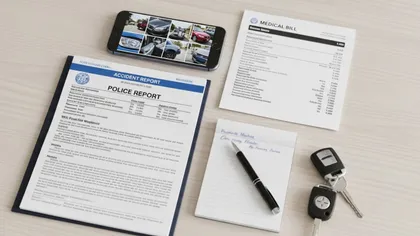
To have a case, it’s crucial to collect documents and other types of evidence that can support your claim. For car accidents, these can include:
- Police reports
- Medical records
- Photos/videos of the accident scene
- Eyewitness statements
- Traffic camera footage
- Dashcam footage
You can gather relevant proof if you do the following after a car collision:
- Get Medical Help — A doctor’s medical records can show that you sustained your injuries from the accident. They also document the necessary treatments for your injuries. These may include surgery, physical therapy, chiropractic care, and prescription medication. You can include these medical expenses in your damages request.
- Report to the Authorities — The report from the authorities who responded at the scene can help substantiate your case. The California Department of Motor Vehicles (DMV) also requires accident reporting through the SR-1 form if it results in:
- Injuries, no matter how minor
- Fatalities
- Property damage worth more than $1,000
- Document the Scene — These can serve as visual evidence of how the accident may have occurred. Photos and videos can also show your visible injuries and any damage to your vehicle.
- Obtain Information — You can get the names and contact information of the involved parties and possible witnesses.
- Keep Receipts and Records — Preserve evidence of your losses. These may include hospital bills, proof of income, receipts from the auto shop, and other records that can show your losses. In some cases, further remedies, such as physical therapy, chiropractic care, or prescription medication, may be necessary for victims. Keep records of the costs of these treatments as well.
- Detail the Impact of the Incident — Consider writing a journal or consulting a therapist. These can help you document the intangible effects of your injuries, such as the pain and suffering they cause.
You can also consider getting legal support from a car accident attorney. They can help you assess whether you have enough evidence of your accident to file a case.
File The Car Accident Case
The process of filing a lawsuit often goes like this:
- Submitting the Claim in Court — You file a legal document with the court that outlines your allegations and requested compensation.
- Service of Process — The defendant is formally notified about the lawsuit against them.
- Discovery Phase — Both parties share evidence. This includes written questions and depositions, which provide sworn testimonies.
- Trial — If the parties do not settle after discovery or mediation, a judge or jury will proceed with the case.
If the matter proceeds to trial, the judge or jury will decide the outcome, and there is no guarantee of any particular result.
Why Having Legal Representation Helps Your Car Accident Case
After a car accident, you might think, “I need a personal injury lawyer to guide me.” The legal process can be overwhelming, especially when filing a lawsuit. Compared to insurance claims, taking a case to court is often more complex and intimidating. If you are not familiar with the process of filing a lawsuit, an attorney can help.

- Knowledge of the Law — Lawyers can evaluate your car accident and determine whether you have a valid claim. They can guide you on the appropriate steps for your case.
- Support in Negotiations — An attorney can assess the potential value of your claim. They will document your losses and handle negotiations with the other party on your behalf. If someone questions liability, an attorney can gather and present additional evidence to prove fault.
- Assistance with Legal Deadlines — California has strict deadlines for filing car accident claims. In most cases, you have two years from the date of the crash to file a case. Missing these deadlines generally means you will lose your right to pursue compensation. An attorney can guide you through each step and help you comply with all time limits.
If your concern is the cost of hiring one, you can take advantage of the free initial consultation that injury law firms often offer. You may also wonder, “Do lawyers only get paid if they win?” The answer depends on their fee structure. If they work on a contingency fee basis, they only get legal fees if they win you compensation.
Frequently Asked Questions (FAQs)
Below are some of the common concerns of car accident victims.
Can I Still Sue If I Was Partially At Fault?
Everything depends on your level of fault and the laws of the state where the accident occurred. In California, where pure comparative negligence applies, you may recover compensation even if you are primarily at fault, as long as the other party is also partially responsible. However, the court can reduce your potential award by the percentage of blame it assigns to you.
Which Deadline Applies If I Have Both Injuries And Car Damage?
If you have both injury and property damage, the deadlines for each claim differ. You usually have two years for injury (CCP § 335.1) and three years for property damage (CCP § 338). However, the longer statute of limitations for property damage does not extend the deadline for personal injury cases.
How Long Does An Insurance Company Have To Settle A Claim?
The California Department of Insurance (CDI) has a specific timeline for an insurance company to settle a claim. The agency’s Fair Claims Settlement Practices Regulations (10 CCR §§ 2695.5–2695.7) set out these rules. Generally, insurers have to:
- Acknowledge the claim within 15 days.
- Accept or deny a claim within 40 days.
- If the insurer accepts the claim, it must pay the claimant within 30 days.
However, complex claims may need more investigation. In such cases, the insurer must provide written updates every 30 days. Since every claim is unique, the settlement timeline can vary.
How Do I Ensure I Don’t Miss The Deadline To Sue After A Car Accident?
You can comply with legal deadlines by acting promptly after your accident. For example, you can gather evidence while it’s fresh, which strengthens your case. The time limit also gives victims enough time to negotiate a settlement with insurers, and, if necessary, take their case to court. The earlier you start, the better prepared you will be for each step.
How Long Do I Have To Report An Accident To Insurance In California?
Notify your insurance company right after an automobile accident in California. In most cases, it’s best to report the accident within 24 hours.
California law doesn’t have a strict deadline for reporting. However, individual insurance policies usually have their own specific windows. Consider reviewing your contract or asking your insurance agent about the time limits they require for reporting car accidents.

Protect Your Rights After A Car Accident
You generally have two years to file a personal injury lawsuit after a car accident. During this period, you have to gather evidence and build your case. The process may vary depending on the details of your accident. Additionally, the time required to obtain proof often depends on how readily available it is. While some cases are straightforward, others may involve more complex factors.
The AK Law Firm can provide legal support if you’re planning to sue after a car accident. Our car accident lawyers can review the available details of your case to determine whether you have a valid claim. If you do, we can assist you in dealing with the other parties and negotiating a settlement.
For cases that go to court, we can provide legal representation. To learn more about how we can help you, call us at (888) 488-1391.