
TL;DR: A passenger in a car accident can receive compensation for medical bills, lost income, and pain based on injury severity and available insurance coverage. Recovery depends on which driver was at fault and the policy limits available, with most lawsuits due within 2 years in California.
Highlights:
- Get medical care immediately and save discharge papers, tests, and prescriptions.
- Photograph vehicles, roadway, and visible injuries, including bruising, over the following days.
- Collect each driver’s name, contact, license, plate, and insurance details.
- Ask officers for the report number and request the police or CHP report.
- Get witness names and phone numbers before anyone leaves the scene.
- Notify your insurer promptly and ask about MedPay and UM/UIM coverage.
- File DMV SR-1 within 10 days; public-entity claims are often due in 6 months.
Tip: Keep a dated folder of photos, symptoms, receipts, and messages, and stick to facts when speaking with insurers.
Table of Contents
In California, a passenger in a car accident may recover compensation for medical bills, lost income, pain and suffering, and other losses, but there is no standard payout amount. The amount depends on the severity of the injuries, the total damages, who caused the crash, and the available insurance coverage.
Passengers usually are not at fault because they were not driving, but the value of the claim can still vary. A payout may depend on whether one or more drivers were responsible, whether multiple insurance policies apply, and whether the available coverage is enough to pay for the passenger’s losses fully.
Factors That Affect How Much Compensation A Passenger May Receive
Passengers in California may receive different amounts of compensation after a car accident. The amount depends on the severity of their injuries, how the accident occurred, and the at-fault driver’s insurance coverage. Each case is different so that the final payment can vary based on these important factors.
-
Severity of the Injury: More serious injuries usually increase the value of a passenger claim. That is because they lead to higher treatment costs, more time off work, future care needs, and greater pain and suffering. California law recognizes two types of damages:
- Economic Damages: These include medical expenses and lost earnings.
- Non-Economic Damages: These cover pain, suffering, inconvenience, and emotional distress.
- Medical Evaluation and Documentation: Clear, complete medical records can affect a claim’s value. These records show that the crash caused the injury. Insurance companies review doctors’ reports, treatment details, medical bills, and proof of missed work to determine whether everything supports the injury and the amount requested in the settlement.
- Insurance Coverage: Even a strong injury case may be limited by available insurance coverage. The California Department of Insurance explains that each type of coverage has a limit, and the insurer will not pay above that limit. That’s why policy limits, stacked coverage, and the availability of Uninsured/Underinsured Motorist (UM/UIM) or Medical Payments coverage can affect how much a passenger can recover.
- Liability Determination: Passengers begin from a stronger position than drivers because they did not operate the vehicle. However, liability can still become complicated in multi-car crashes. California is a pure comparative negligence state. Under this rule, fault can be shared among multiple drivers, including non-parties. Percentages are given to everyone whose actions significantly caused the harm.
- Comparative Fault Arguments Against the Passenger: A passenger is rarely the focus of fault, but defendants may still argue that the passenger’s own conduct contributed to the injury. California comparative fault rules allow a defendant to try to prove that a plaintiff’s conduct contributed to the harm. If that argument succeeds, it can reduce damages.
What Should An Injured Passenger Do After A Car Accident?
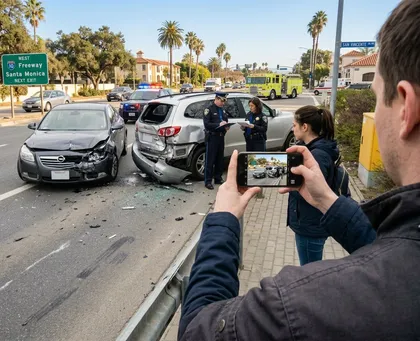
After a car accident, a passenger should seek medical care right away and keep all records. It is also important to document the scene and gather information. These steps can help protect your rights if you decide to pursue a claim.
- Get Medical Help: Seek care right away to get proper treatment. Keep records like discharge papers, test results, medications, and follow-up instructions.
- Report the Accident: If police arrive, make sure a report is filed and ask for the report number.
- Collect Driver Information: Get each driver’s name, phone number, license number, plate number, and insurance details.
- Gather Witness Contacts: If there are witnesses, ask for their names and contact information before they leave. Car accident lawyers can contact them on your behalf if you decide to pursue a claim.
- Take Photos: Capture images of the cars, road, visible injuries, and anything that shows how the accident happened.
- Notify Your Insurance: Inform your insurance company and ask about your coverage as a passenger. Notifying your insurance provider can help you access needed benefits quickly, even if someone else is liable.
- Check SR-1 Requirements: Find out if an SR-1 report must be filed within 10 days if there are injuries or damage over $1,000. The California Department of Motor Vehicles (DMV) requires this report when these conditions are met. This process is separate from filing a police report.
The driver or vehicle owner is usually responsible for reporting the incident. However, in some cases, the passenger may also be the car owner and must file it as such. If you, as a passenger, are not involved in the reporting, your details must still be included in the report if you sustained injuries. The processes necessary after an accident can be overwhelming. Some victims consider seeking free advice from a car accident lawyer to make informed decisions.
Who Can A Passenger File A Claim Against?
A passenger can file a claim against multiple parties. Who is liable depends on who caused the accident and the available insurance coverage. These may include the driver of the vehicle they were in, another driver involved, the vehicle’s owner, or an employer. Other coverages may also apply.
-
The Driver of the Other Vehicle: If the other driver caused the crash, a passenger may pursue that driver’s liability insurance claim. California DMV guidance explains that liability insurance pays for injury or property damage suffered by someone other than the policyholder. The required minimum insurance requirements in the state are as follows:
- $30,000 for injury or fatality to an individual.
- $60,000 for injury or death to more than one person.
- $15,000 for property damage.
- The Driver of the Car You Were Riding In: If your own driver caused the crash, you may still have a claim against that driver’s liability coverage. The personal relationship does not erase the insurance claim. What matters is whether that driver’s conduct caused your injuries.
- Drivers in a Multi-Car Crash: If two or more drivers contributed to the collision, they may share liability. California comparative fault rules allow assigning responsibility in percentages that total 100 percent. That matters because a passenger may need to pursue multiple insurers to cover the losses they suffered.
-
An Employer or Business: A passenger may have a claim against an employer or business if the driver was on the job. This rule, called vicarious liability, means someone can be held responsible for another person’s actions. Additionally, some businesses have third-party liability insurance for these types of incidents. This option may apply to:
- Truck accidents
- Rideshare accidents
- Food delivery accidents
- Commercial vehicle accidents
-
UM/UIM Coverage and Medical Payments Coverage: If the at-fault driver has no insurance or not enough insurance, a passenger may be able to use the UM/UIM coverage on the car they were riding in. California’s UM/UIM statute defines an insured as a person who is in, on, entering, or exiting the insured vehicle. A passenger may also have UM/UIM under their own auto policy or a household family member’s policy if they qualify as an insured under that policy.
Medical Payments coverage usually comes first from the MedPay coverage on the vehicle the passenger occupied, if that policy includes it. The California Department of Insurance explains that MedPay covers medical expenses for you, your family, or other occupants of your car, regardless of fault.
With several options to pursue a claim, it’s reasonable for victims to think, “I need a personal injury lawyer” in these situations. A lawyer can help determine what possible legal options injured passengers may have in seeking compensation.
What The Process Looks Like For Car Accident Claims
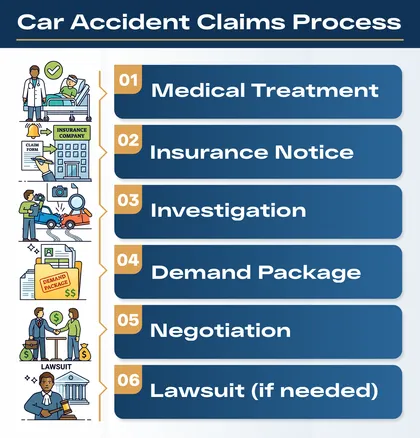
When passengers sustain injuries in a car accident, the claim process helps them pursue compensation for their losses. Knowing the steps can help victims better understand the process. It can also help them set realistic expectations for how long the case might take.
- Treatment: Prioritizing treatment first allows for a complete and accurate evaluation of your losses.
- Insurance Notices: Notify your own auto insurance (if applicable) and the driver’s insurance.
- Investigation: Insurance adjusters or attorneys review medical records, police reports, and evidence to determine liability and damages.
- Demand Package: Your car accident attorney, or you, writes a demand letter. This document lists all verified losses and includes supporting medical documents.
- Negotiation: The insurance company reviews your demand and may offer a settlement. Negotiations continue until parties reach a fair resolution.
- Filing a Car Accident Lawsuit (If Needed): If negotiations fail or there are liability disputes, a lawsuit may be filed in California courts to pursue compensation.
What Evidence Matters Most In A Passenger Claim?
To have a strong passenger injury claim, you need to have solid proof. Documentation can help show how the accident happened, who may be at fault, and the extent of injuries. Collecting information early can help strengthen your claim.
These pieces of evidence can include:
- Medical records and bills that connect the crash to the injury.
- Pay records or employer statements that show missed work or reduced earnings.
- Photos and video from the scene and from the days after the crash.
- Police or California Highway Patrol (CHP) reports.
- Witness statements and contact details.
- Insurance claim numbers and policy information.
- Records of future treatment recommendations, such as therapy, follow-up care, or specialist referrals.
Car accident attorneys can use these pieces of evidence to establish liability. Other evidence, like medical bills and pay records, can help show the full extent of losses and support the settlement amount in a passenger injury claim.
What Damages Can An Injured Passenger Recover?
Injured passengers in a car accident may be able to pursue damages based on the accident’s impact on their lives. Understanding available compensation types helps passengers know their rights. This way, they can take the right steps to make a fair claim.
-
Economic Damages: Economic damages are the financial losses that can be verified with records. California Civil Code section 1431.2 lists examples, such as the following:
- Medical Expenses: These include costs of urgent care, hospital stays, and doctor visits. If the primary physician recommends other treatments, the claim can also include them. Some of these may include physical therapy, chiropractic care, or counseling.
- Lost Income: Some injuries, such as broken bones, may require a longer recovery period, leading to missed work. In these cases, they can include lost wages in their claims. More serious injuries, like traumatic brain or spinal cord damage, may reduce earning ability, and compensation can cover that loss.
- Out-of-Pocket Expenses: Passengers may seek reimbursement of costs they paid directly as a result of the accident. These costs include getting to medical appointments, home care, help with everyday duties if injuries make them hard, and other associated costs. Keeping receipts and documents can help prove these expenses.
-
Non-Economic Damages: These refer to personal losses that lack a set dollar value. These can include:
- Pain and suffering
- Inconvenience
- Mental suffering
- Emotional distress
- Loss of companionship
- Loss of enjoyment of life
Punitive damages are not available in every crash case. In California, they require clear and convincing proof that the defendant acted with oppression, fraud, or malice. In simple terms, that means conduct far worse than ordinary carelessness.
When valuing a passenger claim, start with the full damage picture, not just the emergency room bill. A car accident lawyer considers several factors to assess a claim’s value. These include past and future care, income loss, pain and suffering, and changes to daily life.
How Long Does A Passenger Have To File A Claim In California?
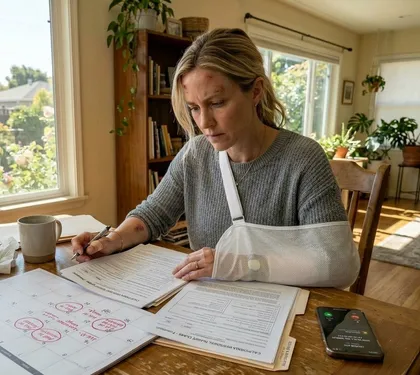
Different deadlines can apply to claims. For insurance claims, each provider may have its own filing deadlines, so it’s important to submit claims as soon as possible. If you are pursuing a lawsuit, there is a separate deadline called the statute of limitations. California Code of Civil Procedure section 335.1 sets a two-year deadline for most personal injury claims.
However, there are certain exceptions:
- For Victims Under 18: The two-year time limit will not begin until they turn 18. Still, their parents or legal guardians can file the lawsuit on their behalf until then.
- For Delayed Discovery of Injuries: Sometimes, injuries from a crash do not become apparent right away. In such cases, the filing deadline may be extended based on when the injuries were discovered or when they should have been.
-
For Government Claims: If a public entity may be involved, the filing deadline is often much shorter. Under Government Code section 911.2, a claim for personal injury must generally be submitted within 6 months of the incident. This deadline may apply to accidents involving public vehicles, such as:
- City-owned vehicles
- County-owned vehicles
- Transit agency buses or vehicles
- Other public entity vehicles
To protect your claim, identify the public entity driver or vehicle, document the incident thoroughly, and notify the responsible agency as soon as possible.
Frequently Asked Questions
It’s normal for passengers to worry about what to do after a car accident. Here are answers to some common legal questions that come up in these situations.
Will My Medical Bills Be Paid Even If The Driver Was A Friend Or Family Member?
Yes, you can still have coverage for your medical bills, even if the driver is a friend or family member. What matters is which insurance applies. The at-fault driver’s liability insurance, Medical Payments coverage, or uninsured/underinsured motorist coverage may help. In California, liability insurance covers injuries the driver causes. Meanwhile, Medical Payments coverage can help pay some medical bills for passengers, regardless of who caused the accident.
What If There Were Multiple Injured Passengers?
Then policy limits matter even more. California’s minimum bodily injury limits are split between a per-person number and a per-accident number. When two or more people are injured, the accident limit applies, and the injured people share that limit under the policy.
How Much Does It Cost To Hire A Car Accident Lawyer?
Fee arrangements can vary depending on the car accident lawyer and the complexity of the case. More complex cases often require more time and resources, which can affect the overall fee. Each lawyer may also have different ways of structuring their fees.
If your concern is, “Do lawyers only get paid if they win?” There are injury law firms, such as Arash Law, that work on a contingency fee basis. Under this fee structure, they are only paid attorney’s fees if they obtain compensation for their clients.

If I Were A Passenger In A Car Accident, Can I Still Sue?
Yes, if someone else’s actions caused your injuries. California courts say that if another person’s actions harm someone, they can sue. They can claim physical, emotional, or psychological injuries. Additionally, they may seek money for medical bills, lost wages, emotional harm, or other losses. However, suing is usually a last resort if seeking damages through insurance was unsuccessful.
Can I Bring A Claim Against Both Drivers?
Yes, if the facts show both drivers contributed to the crash. California comparative fault rules allow a division of liability among multiple persons or entities. That is why a passenger claim may involve more than one insurer and more than one defendant.
Injured As A Passenger In A Car Accident? Legal Representation Can Help You Seek Damages
Passengers are typically not at fault for an accident because they were not driving, but insurance coverage and liability issues can still be complex. Coverage limits, multiple drivers, UM/UIM questions, and medical proof can change the value of the case. If you need help sorting out liability and available coverage, the car accident lawyers at AK Law can review the crash and explain the next steps in clear terms. Call us at (888) 488-1391 to schedule a free initial consultation.