California Parked Car Injury Accidents
- PAY NOTHING UPFRONT
- OVER $0 BILLION RECOVERED
- ZERO-FEES UNTIL WE WIN
We’ll review what happened and tell you what options may be available.
Or, get LIVE help now — call our free 24-hour accident hotline at (888) 488-1391
California Attorneys Guiding Claims After Parked Car Injury Accidents
Parked car injury accidents in California can still lead to personal injury claims, even when one vehicle was not moving. Under California negligence law, a driver can be legally responsible if they fail to use reasonable care and cause injuries to someone inside, entering, exiting, or standing near a parked vehicle.
These accidents often happen in parking lots, on busy streets, or near curbside parking. Even low-speed crashes can interfere with work, daily routines, and physical recovery. Depending on how the collision occurred and what evidence exists, an injured person may have the right to pursue compensation under California law.
Why Parked Car Accident Cases In California Are Different
Parked car injury accidents in California often occur in high-traffic areas where parking turnover is constant, and pedestrians move near parked vehicles throughout the day. Common locations include:
- Parking lots at Costco, Walmart, Target, and Trader Joe’s, where drivers frequently back out into shared pedestrian lanes.
- Grocery store lots with tight parking rows and limited visibility caused by large vehicles.
- Areas with limited visibility caused by large vehicles and tight parking rows.
Curbside parked-car injuries are also common in everyday California settings. These injuries can occur when a passing vehicle strikes someone standing next to a parked car. They commonly happen along busy streets, residential curbs, and commercial parking areas.
Downtown business districts near major civic and government buildings, like:
- San Francisco City Hall
- Los Angeles City Hall
- Stanley Mosk Courthouse (Los Angeles County Superior Court)
Large California medical office campuses and hospital systems, such as:
- Cedars-Sinai Medical Center (Los Angeles)
- Ronald Reagan UCLA Medical Center (Los Angeles)
- Stanford Health Care / Stanford Hospital (Palo Alto)
Restaurant-lined commercial corridors with frequent curbside parking, including:
- In-N-Out Burger locations across Southern California
- Original Joe’s (San Francisco)
- The Grove dining district (Los Angeles)
Beach parking lots and public coastal access points, like:
- Santa Monica Pier
- Huntington Beach Pier
- Santa Cruz Beach Boardwalk
Public transportation areas create additional risk. Accidents involving parked cars often happen near:
- Metro rail stations
- BART stations
- Caltrain stops
- Park-and-ride lots
In these areas, people often stand next to parked vehicles while unloading items, assisting passengers, or waiting, and drivers pulling into or out of spaces may not account for pedestrians moving between cars.
California law determines how courts and insurers assign fault. Under the California Vehicle Code:
- Specific distance rules govern how close a vehicle may be parked to curbs, intersections, and crosswalks.
- Parked vehicles may not obstruct visibility or traffic flow.
- Insurers routinely review parking compliance when determining liability.
- Drivers of moving vehicles must still use reasonable care when backing up or driving through parking areas.
- Low speed does not excuse unsafe driving.
California’s pure comparative negligence rule also applies. Insurers often assign partial fault to multiple parties and may argue that parking position, visibility, or surrounding conditions contributed to the incident, which commonly leads to early fault disputes in parked car injury claims.
Proving Negligence In A Parked Car Injury Case
Negligence principles govern most parked car injury claims in California. To establish liability under California law, a claimant must prove four elements:
- Duty of Care — The driver had a legal duty to use reasonable care to avoid harming others.
- Breach of Duty — The driver failed to act reasonably, such as by driving inattentively, speeding in a parking area, or failing to maintain a proper lookout.
- Causation — The driver’s conduct caused the injury. The claimant must show the injury would not have happened without that conduct.
- Damages — The injured person suffered actual harm, such as medical expenses, lost income, or physical impairment.
A claimant must support each element with evidence that meets California standards, such as medical records, accident reports from local police or the California Highway Patrol, photographs of the scene, and witness statements.
How Insurance Typically Applies To California Parked Car Accidents
In California parked car cases, insurers consider how the collision occurred and whether they can identify the at-fault driver to determine coverage.
When the responsible driver is known, their liability insurance typically applies. In hit-and-run or uninsured situations, UM/UIM coverage may provide bodily injury protection if policy requirements are met.
Collision coverage may address vehicle damage regardless of fault, while Medical Payments (MedPay) coverage may help with immediate medical expenses. California insurers frequently request documentation early and may delay payment while liability is evaluated.
Evidence Commonly Reviewed In California Parked Car Injury Claims
In parked car injury accidents, insurance companies and courts in California rely on specific types of evidence to evaluate fault and damages. This evidence helps determine how the accident occurred and whether negligence played a role. Commonly reviewed materials include:
- Police reports from local law enforcement or the California Highway Patrol.
- Photos or video showing the scene, vehicle damage, and the vehicle’s position.
- Driver and insurance information.
- Witness statements, when available.
- Surveillance footage from nearby businesses or properties.
- Prior insurance claims or records, particularly in hit-and-run cases.
(No guarantee of outcome. Results displayed were dependent on unique facts of that case, and different facts will bring different results.)
What Typically Happens After A Parked Car Accident Claim Begins
Once a parked car injury claim begins in California, the process usually follows a predictable sequence shaped by state reporting rules, insurance practices, and the way evidence is reviewed. What happens next often depends on where the incident occurred, how quickly it was reported, and whether the at-fault driver can be identified.
- Medical care begins, and injuries are documented. Even low-speed parked car collisions can cause injuries that worsen over time. Medical records created early often become the foundation of the claim.
- Accident reports and required filings are completed. Local police or the California Highway Patrol may prepare an accident report, and an SR-1 form must be filed with the DMV if the crash involved injuries, death, or significant property damage.
- Insurance companies investigate fault and coverage. Insurers review vehicle placement, parking compliance under the California Vehicle Code, witness statements, and any available photos or video to decide who may be responsible.
- Comparative fault issues are raised. California insurers frequently examine whether parking position, visibility, or surrounding conditions played a role, even when a vehicle was stationary.
- Settlement discussions or disputes follow. Some claims resolve once injuries stabilize and liability is clearer. Others stall when fault is disputed or the evidence is limited.
- A lawsuit may be filed in the California Superior Court if needed. When a claim cannot be resolved through insurance, the case may proceed through the court system, where deadlines and procedural rules apply.
Most victims work with experienced lawyers to navigate this process. They look for free accident lawyer advice and guidance on how to file to ensure the process runs smoothly.
Effects Of Severe Injuries In Parked Car Accident Claims
Parked car accidents in California can appear minor, especially when they happen at low speeds. However, low-speed impacts can still cause serious injuries, and injury severity, not vehicle speed, largely determines how a claim is evaluated, how long it takes to resolve, and what evidence is required.
More serious injuries usually involve longer medical treatment, ongoing symptoms, and a greater need for documentation. In parked car accident claims, this often includes injuries such as:
- Traumatic brain injuries, including concussions with lasting cognitive effects.
- Spinal and disc injuries, such as herniated discs or nerve damage.
- Internal injuries, which may not appear immediately but require imaging and monitoring.
- Fractures, particularly to the arms, legs, ribs, or hips.
- Significant soft tissue injuries, including ligament or tendon damage that limits movement.
When these conditions are present, insurers typically scrutinize medical records more closely and may challenge whether the injuries were caused by the collision.
In California, injury severity also affects the overall value and complexity of a claim. Claims involving lasting pain, reduced mobility, or long-term treatment tend to take longer to resolve than cases involving short-term injuries like mild whiplash. Medical expenses, lost income, and the impact on daily activities become more central to the analysis as injury severity increases.
Because of this, the focus in parked car injury cases is not only on how the accident occurred, but also on the severity of the injuries, their impact on daily life, and whether the medical evidence supports the claimed harm under California law.
Common Causes Of Parked Car Accidents
Parked car accidents often result from driver negligence in parking lots and curbside areas. Common causes include:
- Backing Out Without Clear Visibility — Drivers fail to thoroughly check for pedestrians or nearby vehicles before reversing.
- Distracted Driving — Drivers use phones or fail to watch their surroundings while moving through parking areas.
- Speeding Through Parking Lots — Driving too fast reduces reaction time and increases stopping distance.
- Driving Under the Influence — Impaired judgment affects distance awareness and reaction speed.
- Failing to Follow Traffic and Right-of-Way Rules — Drivers ignore posted signs or pedestrian right-of-way when entering or exiting parking spaces.
Who Is Liable In A Parked Car Injury Accident?
Drivers should pay attention to avoid hitting people or vehicles, especially parked ones. When a car is legally parked, the driver who is moving is generally considered at fault and may be liable for the resulting injuries. Even if a vehicle was parked improperly, insurers often still focus on the actions of the moving driver, though they may raise questions about shared responsibility.
California follows a pure comparative negligence rule, meaning fault can be apportioned between parties. Each person is responsible only for their share of the blame, and compensation is reduced accordingly. As a result, someone who is partly at fault for a parked car injury accident may still recover damages based on the percentage of fault assigned to the other party.
Recoverable Damages In Parked Car Accident Claims
If negligence caused your injury in a parked car accident, you can pursue compensation. The types of damages available usually fall into two main categories.
Economic damages cover direct financial losses caused by the accident, such as:
- Medical bills
- Lost income
- Vehicle repair or replacement
- Reduced ability to earn income in the future
Non-economic damages address the personal impact of the injury, including:
- Physical pain
- Emotional or psychological distress
- Loss of enjoyment of daily life
Is There A Deadline For Filing A Car Accident Claim?
In California, you generally have only two years to file a parked car accident claim. Missing this deadline means that the court will likely dismiss your case. This time limit refers to the statute of limitations. In rare cases, certain exceptions may extend or shorten the deadline for your claim. For example:
- Delayed Discovery Rule — In some cases, injuries may not be immediately apparent. The discovery rule permits the statute of limitations to start on the day the plaintiff learned of the injury. This rule may also apply if the injury was not reasonably discoverable.
- Government Claims — A government agency may share liability for an injury. Claims in these cases are subject to a shortened timeframe. According to California law, you have six months to file a government claim. If the government denies your claim, you have another six months to file a lawsuit.
- Underage Victim — Under the California Code of Civil Procedure, the legal deadline can pause for minors. The clock typically won’t start until they turn 18. However, an underage victim’s parent or legal guardian can file a claim at an earlier time.
Being aware of these legal deadlines can help you avoid setbacks. It can also help you decide on your next course of action for your claim.
California’s Pure Comparative Negligence Law
California law allows injured parties to recover damages even if they are partially at fault for an accident. The state follows the pure comparative negligence rule. This law holds each party responsible only for their share of fault. As such, courts may reduce an injured victim’s compensation proportionally to their percentage of blame. That means someone who is 80% at fault can still pursue 20% of their damages.
How Arash Law Can Help With Parked Car Accident Cases
If another party caused your parked car accident, Arash Law can help. Our attorneys can assist in seeking compensation for property damage, medical bills, and other expenses.
Our car accident attorneys can do the following for your case:
- Investigate how the accident occurred.
- Identify the parties potentially liable for your losses.
- Evaluate which insurance policy applies to your case.
- Gather evidence, including medical records and financial documentation.
- Communicate with insurers on your behalf.
- Prepare legal documents and claims as needed.
We can handle car accident cases, including those involving parking lots, that result in severe injuries.
Frequently Asked Questions (FAQs)
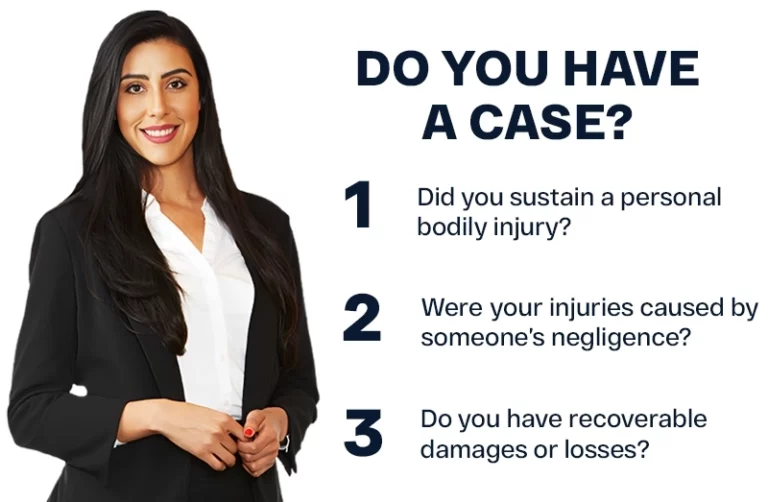
Often, car accident victims hesitate to consult a lawyer due to uncertainty about costs. They may have several questions running through their minds. Do I have a case? How do I identify liable parties in an accident? Do lawyers only get paid if they win?Â
You can get answers to many of these questions with a quick call to an attorney. However, we provide clear answers to some of the most frequently asked questions below.
Can You Sue Someone For Hitting Your Parked Car In California?
You can sue the person responsible for the damages if your car is legally in a designated parking area. People often pursue this route if their policy does not cover the property damage from the accident. However, if the at-fault driver leaves the scene, a lawsuit may be difficult to pursue, as you need to identify the responsible party.
I Need A Personal Injury Lawyer. How Much Does Hiring One Cost?
The cost of hiring a parked car injury lawyer depends on your lawyer’s experience, the complexity of the case, and whether litigation is necessary. Most of these lawyers work on a contingency fee basis, where they only get paid if they win your case or secure a settlement.Â
If you’re planning to work with an attorney, understand how their fee structures work to plan your budget and avoid hidden costs. Some firms offer free initial consultations where you can ask about these concerns.
How Long Do Parked Car Injury Accident Settlements Take?
A parked car injury settlement can take anywhere from months to years to resolve. The timeline varies depending on factors such as whether you can identify the at-fault driver and the willingness of other parties to cooperate.Â
Minor car accident claims may resolve faster. Others, especially those involving more serious injuries or disputed liability, can take longer to resolve.
What Is The Average Car Accident Settlement Amount?
Car accident settlements vary widely, and no single average applies to all cases. The final compensation value depends on many factors. Generally, the severity of injuries is often a crucial factor in determining a case’s value. To get an estimate of your potential settlement based on your specific situation, consult a lawyer.
Consult A Lawyer About Your Parked Car Injury Accident
Parked car injury accidents in California can occur on busy streets, in garages, and in parking lots. Even though many collisions occur at low speeds, they can still result in serious injuries. Seeking legal guidance after the accident can help you protect your rights.
At Arash Law, our parking lot accident lawyers can help you seek compensation. We can guide you as you file a claim for your medical bills, lost wages, pain and suffering, and other losses. We can help you negotiate with insurance companies and handle disputes as they come. Call us at (888) 488-1391 for a free initial consultation.