Rancho Cucamonga Slip-and-Fall Lawyers

We’ll review what happened and tell you what options may be available.
MAKE THEM PAY, CALL AK!
24-hour accident hotline: (888) 488-1391
Who We Help After a Slip-and-Fall Accident in Rancho Cucamonga
Arash Law represents the following people after slip-and-fall injuries in Rancho Cucamonga:
- Customers and shoppers who fell at Victoria Gardens, Terra Vista Town Center, big-box retailers along Foothill Boulevard, or other open-air shopping centers
- Restaurant and winery patrons injured on wet floors, broken walkways, poorly lit stairs, or unsafe patios
- Apartment-complex and HOA residents injured on stairs, handrails, walkways, pool decks, gates, or in common areas
- Pedestrians injured on Rancho Cucamonga city sidewalks, in city parks (including Red Hill Park), or at city facilities
- Workers and delivery personnel injured on someone else’s premises during the course of work (workers’ compensation plus third-party premises claim)
- Older adults — falls are the leading cause of fatal and non-fatal injuries among Californians 65 and older (source: California Department of Public Health)
- Families of those killed in fatal falls (wrongful death)
Why Rancho Cucamonga Slip-and-Fall Victims Call Arash Law
- We investigate retail centers, restaurants, apartments, parks, sidewalks, and public-property falls — not just generic personal injury claims.
- We identify exactly who controlled the hazard: property owner, tenant business, mall operator, property manager, janitorial vendor, maintenance contractor, security vendor, HOA, or public entity.
- We send preservation letters within days to capture surveillance footage, sweep logs, inspection logs, cleaning schedules, and maintenance records before they’re overwritten or destroyed.
- We respond to common insurer defenses including “open and obvious,” comparative fault, “no notice of the hazard,” and disputes over the severity of your injury.
- We handle the City of Rancho Cucamonga government claim process for falls on city property — including the strict six-month deadline.
- No fees unless we win — case costs may apply.
Rancho Cucamonga Slip-and-Fall Lawyers Dedicated To Protecting Your Rights After An Injury
If you slip, fall, and get injured on someone else’s property, you may have the right to file a premises liability claim. California law requires people or businesses that own, lease, occupy, or control property to use reasonable care to keep the property reasonably safe for visitors. If they fail to do so, they can be liable for the resulting injuries and losses.
Slips and falls can happen anywhere in Rancho Cucamonga, from homes in Alta Loma to malls like Victoria Gardens. Unsafe conditions, such as uneven walkways and poor lighting, can lead to accidents. These issues are often easy to fix. However, a slip-and-fall has the potential to cause serious, life-threatening injuries.
For these reasons, state law allows victims to seek compensation for the impact of a fall on their quality of life. Rancho Cucamonga slip-and-fall lawyers help by explaining their rights and options. That way, they can make informed decisions about how to move forward.
Why Slip-and-Fall Cases In Rancho Cucamonga Are Different
Rancho Cucamonga slip-and-fall cases turn on one question more than any other: who controlled the hazard? In a city built around large open-air shopping centers, business parks, multi-tenant retail, master-planned residential neighborhoods, and an active city sidewalk and park system, the answer is often not the obvious one. A fall at Victoria Gardens, for example, may involve the mall operator, the individual store tenant, the janitorial vendor, the security vendor, and the maintenance contractor — each with separate insurance, separate retention policies for video and inspection logs, and separate legal exposure.
Three Rancho-specific factors shape these cases:
Premises control is usually split
At Victoria Gardens, Terra Vista Town Center, Cucamonga Business Park, and similar open-air or multi-tenant developments, control of any given area can be split between the property owner, the anchor tenant, individual tenants, a property management company, a janitorial company, a maintenance contractor, and (for common areas) the development’s operator. A preservation letter goes to all of them, not just the store you fell in. Sending it to only the named tenant is one of the most common reasons valid claims fail.
Surveillance retention is short — often 7 to 30 days
Most retailers and shopping center operators in Rancho Cucamonga run surveillance systems that automatically overwrite footage on rolling schedules between 7 and 30 days. Once it’s gone, it’s gone. The first written preservation request must go out within days of the incident, and it must be sent to every party that might have a camera covering the area — not just the store.
Public property claims have a six-month clock
Falls on Rancho Cucamonga city sidewalks, in city parks (including Red Hill Park), or at city facilities require a formal government claim filed with the City Clerk under California Government Code §911.2 within six months of the injury. The City of Rancho Cucamonga Risk Management Division has 45 days to investigate and respond after a claim is filed. Miss the six-month deadline and the claim is generally barred regardless of how strong the underlying facts are.
Who Typically Controls the Hazard — Rancho Cucamonga Premises-Control Map
Below is the firm’s working map of who is typically liable in different Rancho Cucamonga premises environments. Every case is fact-specific — this list is a starting point, not a substitute for case investigation.
Victoria Gardens / open-air retail centers
Likely parties: mall operator (Forest City / current operator), individual store tenant, janitorial vendor (for common areas and storefronts), security vendor, parking-lot maintenance contractor, landscape maintenance company. Preservation letters go to all of them within 7 days of the incident.
Terra Vista Town Center and big-box retail along Foothill Boulevard
Likely parties: property owner, anchor tenant (Target, Ralphs, etc.), in-store cleaning crews (often employees), third-party janitorial company (after-hours), property manager, parking-lot maintenance vendor.
Restaurants and wineries (Sycamore Inn, Biane Winery, etc.)
Likely parties: restaurant/winery owner, restaurant employees responsible for spill response, exterior lighting contractor, floor-mat rental company (where applicable), patio and walkway maintenance vendor.
Apartment complexes and HOAs (Alta Loma, Etiwanda, citywide)
Likely parties: property owner / landlord, property management company, HOA (for common areas — stairs, walkways, pool decks, mailrooms), maintenance contractor, pool-service vendor. Key evidence includes maintenance request logs, prior tenant complaints, and inspection records.
City sidewalks, city parks (Red Hill Park), and city facilities
Liable party: City of Rancho Cucamonga. See the Filing a Government Claim section below — six-month deadline, City Clerk filing, 45-day City investigation window.
Workplace falls — workers’ comp plus possible third-party premises claim
If you fell at work on someone else’s property — for example, a delivery driver who fell at a Rancho warehouse — you may have both a workers’ compensation claim against your employer and a third-party premises liability claim against the property owner or controlling entity. These two claims run in parallel and can dramatically increase total recovery.
Filing a Slip-and-Fall Claim Against the City of Rancho Cucamonga
If you fell on a city-owned sidewalk, in a city park, at a city facility, or in any other location controlled by the City of Rancho Cucamonga, you cannot simply sue the City. California Government Code §911.2 requires that you first file an administrative claim with the City Clerk’s office. Miss the deadline and your case is generally barred.
Here is the actual process the City of Rancho Cucamonga’s Risk Management Division follows for general liability claims (source: cityofrc.us, City of Rancho Cucamonga General Liability page):
- Obtain the standard “Claim Against the City of Rancho Cucamonga” form from the City Clerk’s office or the city’s website.
- Complete the form fully — including the date, time, exact location of the incident, a description of the conditions, the names of any witnesses, the nature of the injuries, and the dollar amount of damages claimed.
- Sign the claim with an original signature. The City typically requires an original — not a copy — and may reject claims submitted only by email or fax.
- File the claim with the City Clerk within six months of the date of injury (California Government Code §911.2).
- The City has 45 days to investigate and respond — they may accept, deny, or take no action. If the City denies the claim or takes no action, the six-month statute of limitations for filing a lawsuit in San Bernardino County Superior Court begins to run from the date of the denial notice.
- During the City’s investigation period, preserve all evidence on your side: photos of the hazard taken before any repair, medical records, witness contact information, and any incident report filed with the City at the time of the fall.
- Consider filing a California Public Records Act request for: prior complaints about the same hazard, the City’s inspection records for the area, the maintenance history of the sidewalk/park/facility, and any prior claims involving the same location.
Common reasons City of Rancho Cucamonga slip-and-fall claims are denied:
- The hazard was minor and within the “trivial defect” doctrine (typically a height differential under ½ to 1 inch, fact-dependent).
- The City had no actual or constructive notice of the hazard — meaning no prior complaints and no reasonable inspection regime would have caught it.
- The injured person was not paying attention to where they were walking.
- The injuries were not as severe as claimed.
Each of these defenses has a counter that depends on careful evidence preservation and prior-complaint research, which is why filing a claim against a public entity is rarely a do-it-yourself project.
(No guarantee of outcome. Results displayed were dependent on unique facts of that case, and different facts will bring different results.)
Injuries Commonly Caused By Slip-and-Fall Accidents In Rancho Cucamonga
Slip-and-fall accidents can result in a wide range of injuries. Some may heal in days, but others might face permanent disabilities. This can lead to long-term medical care and financial strain. These losses can directly affect claim value, which is why insurers often request exhaustive medical documentation to prove their extent. Common slip-and-fall injuries include:
- Traumatic Brain Injuries (TBIs): Can lead to temporary or permanent cognitive impairment or memory loss.
- Broken Bones: Broken bones can occur in the hips, wrists, arms, ankles, or legs. Serious fractures may require surgery, casting, physical therapy, or chiropractic care.
- Spinal Cord Injuries: May result in partial or full paralysis.
- Knee, Ankle, and Foot Injuries: These injuries can limit mobility. That makes it difficult to perform everyday tasks and maintain independence. Surgery and rehabilitation may be necessary.
- Emotional Distress: Anxiety, depression, and fear of future falls, which can affect a victim’s emotional well-being and recovery process.
Older adults are particularly vulnerable to these catastrophic injuries. Due to their frailty, even a minor sprain or fracture can drastically reduce their independence and quality of life. In fact, falls are the leading cause of fatal and non-fatal injuries among Californians aged 65 and older.
Children are similarly at risk of severe injury after a slip-and-fall because they’re still growing. For instance, a TBI can seriously affect long-term mental growth. That might make studying and working harder as they age. Rancho Cucamonga slip-and-fall lawyers consider both these current and future losses when estimating the value of a claim.
How Insurance Applies To Slip-and-Fall Claims
In Rancho Cucamonga, slip-and-fall accidents often involve the property owner’s liability insurance. That means the applicable coverage can vary depending on the accident location. Policy limits and disputes over the facts of the case can determine how much compensation you can actually pursue.
Here’s a look at the coverage types you might encounter:
- Homeowners or Renters Insurance: This may provide liability coverage or medical payments coverage for certain injuries on residential property, depending on the policy and who controls the hazard.
- Commercial General Liability (CGL) Insurance: May compensate for medical bills, lost wages, and pain and suffering after a slip-and-fall on commercial property, such as Cucamonga Business Park.
- Umbrella Insurance: Carried by some property owners. It provides additional coverage once primary liability limits are exhausted. Umbrella insurance is crucial for high-cost claims. These claims can go beyond the usual limits of homeowners, renters, or CGL insurance policies.
- Workers’ Compensation: Covers medical care and lost wages after an employee slips, falls, and gets injured while working.
Insurance companies in Rancho Cucamonga, like in all of California, may challenge claims. They do this to reduce their financial risk. Common arguments involve:
- The Nature of the Slip Hazard: Whether the hazard was “open and obvious,” and whether it existed long enough that the property owner should have discovered and addressed it.
- The Victim’s Share of Fault: Whether the injured person’s footwear, attention, warnings, or conduct contributed to the fall.
- The Victim’s Injuries: Whether they’re actually as severe as the victim claims.
- The Victim’s Losses: Whether certain medical treatments were necessary and whether the assigned value of subjective losses, such as pain and suffering, is reasonable.
- The Available Evidence: Whether there is enough proof to show that a slip hazard caused the victim’s injuries, and that the property owner should have known about the unsafe condition.
- The Applicable Insurance: Whether another party’s insurance might cover the situation. It also considers whether the victim’s losses are covered under the property owner’s policy.


What Typically Happens After A Slip-and-Fall Claim Begins
In California, the claims process for a slip-and-fall accident typically involves gathering evidence and assessing damages and liability. From here, victims pursue compensation from the at-fault party’s insurance company. In some cases, a Rancho Cucamonga slip-and-fall lawyer must escalate the case to the San Bernardino County Superior Court.
Here’s what usually happens after the insurer receives a claim:
- A claims adjuster independently investigates the accident.
- The adjuster determines fault and applicable coverage. They offer a settlement if they accept the claim. However, they can also deny compensation.
- The victim negotiates for another amount if they reject the initial offer or successfully appeal a denial.
- If both parties cannot reach an agreement, the victim files a lawsuit with the San Bernardino County Superior Court. Negotiations can continue afterward.
- The claim resolves at any point before trial if the victim accepts a settlement.
- If a lawsuit is filed, some civil proceedings may take place at the San Bernardino County Superior Court, Civil Division, Rancho Cucamonga District, located at 8303 Haven Avenue.
Who Can Bring A Slip-and-Fall Claim In Rancho Cucamonga?
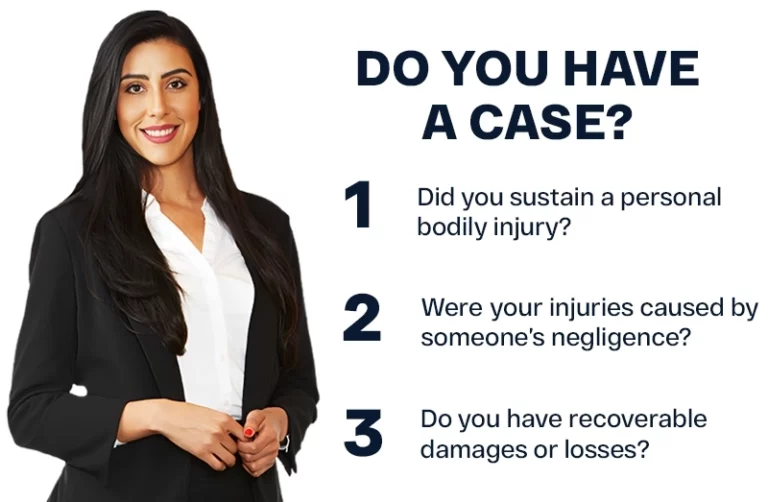
People injured in a slip-and-fall on someone else’s property may have a claim if they can show that a property owner, tenant, manager, business, public entity, or another responsible party failed to use reasonable care.
However, a fall on someone else’s property does not automatically make the property owner liable. If you sustained injuries, you only have a case if you can show that someone could have fixed the slip hazard quickly to prevent the fall.
That said, several victims could potentially have a slip-and-fall claim, including:
- Social guests on residential property.
- Customers on a business’s premises.
- Employees in the workplace.
- Other workers, including independent contractors, who provide services on someone else’s property.
- People on public property, such as sidewalks and parks.
If a victim dies due to their slip-and-fall injuries, their surviving relatives could also have the right to bring a wrongful death claim.

Who Is Liable For A Rancho Cucamonga Slip-and-Fall?
Liability for a slip-and-fall accident typically falls on the property owner. However, anyone with control over the premises could be at fault in Rancho Cucamonga. Under California law, different parties may be responsible depending on the specific details of the accident. These can include:
- Residential property owners.
- Commercial property owners.
- Tenants on residential or commercial property.
- Property management companies.
- Third-party contractors or maintenance companies.
- Public entities.
California uses the pure comparative negligence rule. That means a court can find you partly at fault for your fall and injuries. However, that won’t completely bar you from pursuing compensation. Instead, your percentage of fault will reduce your potential compensation.
Proving Liability In A Rancho Cucamonga Slip-and-Fall Case
To prove liability, you must show a property owner’s negligence in Rancho Cucamonga. You need to present evidence that they did not address or warn you of hazards they knew about. As a result, you sustained actual injuries and losses.
To prove liability, you need to show these four key elements of negligence:
- Duty: The at-fault party controlled the property where the slip-and-fall occurred. They thus owed you a legal duty to keep you safe on their premises.
- Breach: They failed to exercise this duty by failing to fix or warn you about a hazard. In many slip-and-fall cases, the injured person must show that the responsible party created the hazard, actually knew about it, or should have discovered it through reasonable inspections, and either of the following:
- Actual Notice: They directly observed or were told about the hazard.
- Constructive Notice: The unsafe condition existed long enough for the at-fault party to have discovered it through routine property inspections or maintenance.
- Causation: The breach of duty caused the slip-and-fall and your injuries.
- Damages: You suffered tangible losses. Examples include medical expenses, lost wages, pain and suffering, or other related costs incurred as a result of your injury.
Worked example (illustrative, not a real case): A shopper at a grocery store on Milliken Avenue in Rancho Cucamonga slips on spilled milk and sustains a concussion, requiring an ER visit and several weeks off work.
How the four elements apply: (1) Duty — the store owed customers a duty to maintain reasonably safe floors. (2) Breach — the store’s own records show another shopper reported the spill to staff two hours earlier and the spill was never cleaned. (3) Causation — the unaddressed spill caused the fall. (4) Damages — ER bills, follow-up neurology visits, time off work, pain and suffering.
What evidence wins this case: store sweep logs for that aisle on that day, surveillance footage showing the spill timing and the prior shopper’s report, the original incident report filed at the store, and the cleaning crew’s schedule. All of these disappear within 30 days unless a preservation letter goes out.
Compensation Available In Rancho Cucamonga Slip-and-Fall Accident Cases
Under California law, slip-and-fall accident victims in Rancho Cucamonga can pursue compensation for the full range of harm caused by unsafe property conditions. A claim can cover more than just medical bills. It can also address how a fall affects a person’s ability to work, function, and quality of life. Factors such as injury severity and recovery time affect the available compensation.
Lawyers for slip-and-fall cases in Rancho Cucamonga generally categorize a victim’s losses into these categories:
- Economic Damages: Meant to compensate for current and future financial losses, including:
- Current and future medical bills.
- Lost wages.
- Loss of earning capacity.
- Non-Economic Damages: Compensate for subjective losses that don’t have a clear monetary value, such as:
- Pain and suffering.
- Loss of enjoyment of life.
- Loss of consortium.
Eligible surviving family members may seek wrongful death damages, which can include funeral and burial expenses, loss of financial support, and loss of companionship, care, and guidance.
Evidence That Disappears Fast In Rancho Cucamonga Premises Cases
Property owners and shopping center operators in Rancho Cucamonga generally fix unsafe conditions quickly after an accident — which makes proving the condition existed before the fix difficult unless evidence is preserved in the first few days. The following materials matter most:
- Surveillance footage from the store, the mall operator, neighboring tenants, parking-lot cameras, and any nearby commercial property — most systems overwrite in 7 to 30 days
- Sweep logs and inspection logs from the property owner, tenant, and any third-party janitorial vendor
- Cleaning schedules and the identity of the cleaning crew on duty at the time of the fall
- Maintenance work orders and prior repair history for the area
- Photos of the hazard before it is cleaned, repaired, or signed — wet floor, spill, pavement defect, lighting condition, missing or improperly placed warning signs
- Incident reports filed with the store, mall management, or property manager (request a copy in writing)
- Witness names and contact information — other shoppers, employees, security staff, delivery drivers
- Prior complaints about the same hazard (via Public Records Act request for city property; via discovery for private property)
- Medical records connecting the injury to the fall, including initial ER visit, imaging, and follow-up care
- Footwear and clothing worn at the time of the fall — preserve, do not wash
California’s Statute Of Limitations For Slip-and-Fall Cases
In Rancho Cucamonga, the state’s statute of limitations applies to slip-and-fall cases. It generally establishes that you have two years from the date of your injury to file a lawsuit. The San Bernardino County Superior Court will strictly enforce this deadline. That means you could lose your right to compensation if you file late.
However, some exceptions may shorten or extend the statute of limitations:
- If the City of Rancho Cucamonga or San Bernardino County is potentially responsible — for example, a fall on a city sidewalk, in Red Hill Park, or at a city facility — a government claim must be filed within six months of the injury (California Government Code §911.2). Claims against the City of Rancho Cucamonga are filed with the City Clerk; the City Risk Management Division has 45 days to investigate and respond. Claims against San Bernardino County are filed with the County’s Risk Management/Clerk of the Board.
- In some situations, the “discovery rule” may apply. If the injury or its severity was not immediately apparent, the time limit starts when you reasonably discover or should have discovered it.
- For victims who are minors, the deadline pauses until they turn 18. A parent or legal guardian can sue on their behalf before this time.
What Our Rancho Cucamonga Slip-and-Fall Injury Lawyers Do
Our lawyers help victims in Rancho Cucamonga pursue slip-and-fall claims when they face severe injuries or significant insurer pushback. These cases usually deal with time-sensitive evidence. They include disputes about fault and arguments over which entity controlled a property. Our attorneys address these challenges so victims can focus on their physical recovery.
Here’s a brief overview of what a slip-and-fall lawyer from Rancho Cucamonga can do:
- Investigate accidents to identify responsible parties and gather critical evidence.
- Coordinate with medical providers, including local clinics such as Loma Linda University Healthcare – Rancho Cucamonga Specialty Clinic, to document the full extent of injuries.
- File and manage claims, including negotiating settlements with insurers.
- Submitting a civil case and presenting it in court, if necessary.

Slip-and-Fall Accident Claims In Rancho Cucamonga: Frequently Asked Questions (FAQs)
Slip-and-fall claims in Rancho Cucamonga can raise various legal questions. This depends on how and where the injury happens. However, victims often share the same concerns following these incidents. Below are answers to some of the most common questions they ask.
How Hard Is It To Win A Slip-and-Fall Lawsuit In Rancho Cucamonga?
It can be hard to win a slip-and-fall lawsuit in Rancho Cucamonga. Unlike in other personal injury cases, you have to prove more than just negligence. You also have to show that the at-fault party knew or should have known about the slip hazard. It’s thus crucial to have strong evidence to support your case.
What Evidence Helps A Slip-and-Fall Claim In Rancho Cucamonga?
Key evidence for slip-and-fall cases in Rancho Cucamonga includes anything that shows the nature of the slip hazard and how long it existed. It’s also helpful to have proof of whether the property owner should have addressed it. As such, consider gathering the following:
- Photos of the hazardous condition.
- Surveillance footage.
- Witness statements from those who saw the fall.
- Medical records documenting your injuries.
- A copy of the incident report created by the property owner or manager.
- Inspection or maintenance logs related to the property where you were injured.
- Municipal maintenance records, if the accident occurred in a public place such as Red Hill Park.
I fell at Victoria Gardens. Who do I sue — the store, the mall, or the cleaning company?
Possibly all of them. Victoria Gardens is operated by a mall management company; individual stores are leased to separate tenants; common areas are typically maintained by a janitorial vendor; and parking-lot and walkway maintenance is often handled by a separate contractor. If you fell inside a store, the tenant is usually a defendant. If you fell in a common walkway, the mall operator and janitorial vendor are usually defendants. If the fall involved a damaged walkway or pothole, the parking-lot maintenance vendor may be a defendant. A preservation letter goes to all of them within 7 days — we do not wait to identify the “right” defendant before locking down evidence.
I fell on a sidewalk in Rancho Cucamonga. Is that a city case or a property owner case?
It depends on who legally owns and maintains the sidewalk. Most public sidewalks are city property — meaning a claim against the City of Rancho Cucamonga under Government Code §911.2 (six-month deadline). However, adjacent property owners can in some cases share liability if they created or aggravated the defect (for example, by tree roots from their property heaving the sidewalk). The first step is identifying ownership — we pull City property and ROW maps before deciding which defendants to name.
My elderly parent fell at their apartment complex in Rancho Cucamonga. Do they have a case?
Yes, potentially. California law requires landlords and HOAs to maintain common areas — stairs, handrails, walkways, lighting, gates, pool areas — in a reasonably safe condition. For older adults specifically, falls are the leading cause of fatal and non-fatal injuries in California (source: California Department of Public Health), and even a fracture or concussion can drastically reduce independence and quality of life. Damages can include current and future medical care (including assisted-living costs if independence is lost), pain and suffering, and loss of enjoyment of life. Key evidence: prior maintenance requests, prior complaints from other residents, the landlord’s inspection records, photos of the hazard, and the resident’s own medical records documenting the injury and its impact.
Do Lawyers Only Get Paid If They Win My Slip-and-Fall Case?
Many slip-and-fall lawyers in Rancho Cucamonga work on a contingency-fee basis. Under this arrangement, they only get paid if they win or settle your case. That way, you can obtain legal representation without upfront costs. It may be helpful if you’re struggling with finances after your slip-and-fall.
Speak With Our Rancho Cucamonga Slip-and-Fall Accident Lawyers Today
Slips and falls can occur anywhere in Rancho Cucamonga. Though they may seem minor, they can result in serious injuries and substantial losses. However, pursuing compensation for these incidents can be easier said than done. Insurers may downplay what occurred, and evidence can disappear if not preserved quickly. If you’re unsure of your next steps, you’re likely seeking free advice from a slip-and-fall lawyer.
Consider booking a free initial consultation with Arash Law. Our Rancho Cucamonga slip-and-fall lawyers will review the circumstances of your fall, identify who was in charge of the property, and determine whether you have a valid claim. If you do, we’ll help you gather evidence, build your case, and pursue the compensation you deserve under California law.
Our firm extends its services throughout the rest of California. That said, you can also consult us about a slip-and-fall if you’re from other nearby cities in San Bernardino County, including Fontana, Ontario, and Upland.
Call us now at (888) 488-1391 to book your free case review.