TL;DR: According to the National Safety Council (NSC) 2024 report, drivers ages 25 to 34 made up the largest share of drivers involved in crashes (21.8%), followed by drivers ages 35 to 44 (18.3%). Drivers ages 20 to 24 and 16 to 19 had higher crash shares than their share of licensed drivers. Crash involvement generally decreased with age, with drivers 75 and older accounting for 4.3% of all crashes.
Highlights:
- Identify whether younger or older drivers increase your crash risk.
- Check if inexperience may have contributed to the accident.
- Consider whether a slower reaction time affected the collision.
- Compare driver behavior against safe driving expectations in California.
- Document how the crash occurred immediately after the incident.
- Gather witness details before memory or contact information is lost.
- Review insurance coverage tied to the at-fault driver’s age group.
Tip: Take photos of vehicles, road conditions, and injuries before anything is moved.
Table of Contents
Traffic crashes affect drivers of every age, but some age groups face much higher risks than others. According to a 2024 report from the National Safety Council (NSC), drivers aged 25–34 make up 17.2% of all licensed drivers. They also account for the largest share of drivers involved in all crashes (21.8%) and fatal crashes (20.8%).
When considering the number of licensed drivers in each age group, teen and young adult drivers are involved in crashes more often. Drivers under 16 make up only 0.4% of all crash-involved drivers. That figure accounts for 100,000 drivers in that age group. Drivers ages 16–19 make up only 3.8% of licensed drivers, but they account for 8.8% of all crash-involved drivers and 6.8% of drivers involved in fatal crashes.
Data Transparency Note: This article relies on data from the National Safety Council (NSC) and the Insurance Institute for Highway Safety (IIHS) on crash rates, as well as records from the California Office of Traffic Safety (OTS). The most recent report reviewed for this article was the NSC’s 2024 report on driver age and crash involvement. Because state and federal agencies periodically revise preliminary crash figures, readers should confirm current statistics directly with the NSC, IIHS, or California OTS before relying on them for legal or policy purposes.
Comparison Of National Traffic Crash Rates By Age Group
Traffic accident rates differ by age. Some age groups get involved in crashes more frequently than others, primarily due to inexperience and risk-taking behavior. Physical or cognitive abilities also affect these rates.
The table below compares licensed drivers, drivers involved in all crashes, and drivers involved in fatal crashes by age group, based on the National Safety Council (NSC) 2024 report.
| Age Group | No. of Licensed Drivers | % of All Licensed Drivers | No. of Drivers in All Crashes | % of Drivers in All Crashes | No. of Drivers in Fatal Crashes | % of Drivers in Fatal Crashes |
|---|---|---|---|---|---|---|
| Younger than 16 | 150,000 | 0.1% | 100,000 | 0.4% | 200 | 0.3% |
| Ages 16–19 | 9,083,000 | 3.8% | 2,040,000 | 8.8% | 4,100 | 6.8% |
| Ages 20–24 | 17,881,000 | 7.5% | 2,910,000 | 12.5% | 6,800 | 11.2% |
| Ages 25–34 | 41,191,000 | 17.2% | 5,070,000 | 21.8% | 12,600 | 20.8% |
| Ages 35–44 | 41,474,000 | 17.3% | 4,270,000 | 18.3% | 10,900 | 18.0% |
| Ages 45–54 | 37,378,000 | 15.6% | 3,290,000 | 14.1% | 8,600 | 14.2% |
| Ages 55–64 | 38,436,000 | 16.0% | 2,850,000 | 12.2% | 8,100 | 13.3% |
| Ages 65–74 | 32,538,000 | 13.6% | 1,780,000 | 7.6% | 5,400 | 8.9% |
| Ages 75 and older | 21,848,000 | 9.1% | 1,010,000 | 4.3% | 4,200 | 6.9% |
This dataset shows us that:
- Drivers aged 16–19 are involved in 8.8% of all crashes and 6.8% of fatal crashes, despite making up only 3.8% of licensed drivers. They represent a disproportionately high-risk population on the road, given the total accident volume relative to the size of licensed drivers.
- Drivers aged 25–34 account for the single highest raw numbers in the data set. They make up over 5 million drivers involved in crashes and 12,600 fatal crashes. Their crash percentages (21.8% of all crashes and 20.8% of fatal crashes) significantly outpace their 17.2% share of drivers.
- Drivers aged 75 and older account for only 4.3% of all crashes, but their involvement jumps sharply to 6.9% of fatal crashes, despite making up 9.1% of licensed drivers. This increase indicates a high severity rate when they do crash.
- Drivers aged 45–74 are the safest drivers relative to the size of the licensed driver population in that age group. Their crash involvement rates sit comfortably below their share of the total population.
To get a clearer view of each age group’s accident rate, let’s compare the number of drivers involved in crashes to the total number of licensed drivers per age group.
| Age Group | No. of Licensed Drivers | Overall Crash Rate Per 100,000 Licensed Drivers | Fatal Crash Rate Per 100,000 Licensed Drivers |
|---|---|---|---|
| Ages 16–19 | 9,083,000 | 22 | 45 |
| Ages 20–24 | 17,881,000 | 16 | 38 |
| Ages 25–34 | 41,191,000 | 12 | 31 |
| Ages 35–44 | 41,474,000 | 10 | 26 |
| Ages 45–54 | 37,378,000 | 9 | 23 |
| Ages 55–64 | 38,436,000 | 7 | 21 |
| Ages 65–74 | 32,538,000 | 5 | 17 |
| Ages 75 and older | 21,848,000 | 5 | 19 |
The crash involvement rate per 100,000 licensed drivers generally decreases with age, with the highest rate among the youngest drivers and the lowest overall crash rate among drivers 75 and older.
Which Age Group Is Involved In The Most Traffic Accidents?
Drivers ages 25 to 34 are involved in the most car accidents. According to the NSC’s 2024 report, this age group accounts for 21.8% of all drivers involved in crashes (about 5.07 million drivers). They also account for the largest share of drivers involved in fatal crashes, at 20.8% (12,600 drivers), even though they represent 17.2% of all licensed drivers.
Teens and older adults also face a high crash risk per mile driven. According to the Insurance Institute for Highway Safety (IIHS), drivers aged 16 to 19 have a fatal crash rate per mile driven that is over three times higher than that of drivers aged 20 and older. The risk is highest for 16- to 17-year-olds.
While teen drivers have less experience, older drivers are more vulnerable to serious injuries. That’s primarily due to their physical fragility and slower reaction times. They also face a heightened risk of medical complications from trauma.
Why Teen Drivers Face Higher Crash Risks
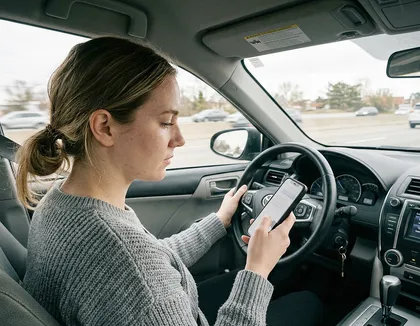
Teen drivers are involved in more crashes than experienced drivers because they haven’t yet developed the skills that come with years of driving experience. Certain behaviors make that gap especially dangerous.
The California Office of Traffic Safety (OTS) reported that in 2023, 428 teen drivers (ages 15-20) were involved in fatal crashes. While that was a 10.1% decrease from 2022, this age group continues to get involved in accidents due to their limited driving experience. Learning the biggest risk factors can help teens avoid crashes and understand who may be responsible after an accident.
Common risk factors for teen crashes include:
- Inexperience: New drivers often miss hazards and take longer to react than experienced drivers.
- Passengers: Carrying teen passengers increases crash risk because they can distract inexperienced drivers.
- Low Seat Belt Use: Teens wear seat belts less often than older drivers, which increases their risk of serious injury or death in a crash.
California’s Graduated Driver Licensing (GDL) law helps reduce teen crash risk. During the first 12 months of a provisional license, drivers under 18 generally cannot drive between 11 p.m. and 5 a.m. or carry passengers under 20 unless a licensed driver age 25 or older is with them.
When a parent signs a teen’s driver’s license application, they accept limited financial responsibility if the teen causes injury or property damage while driving. If you got injured in an accident with a teen driver, free advice from a traffic accident lawyer can help you understand your options. They can assess whether the parents are liable for your injuries and losses.
How Physical Vulnerability Affects Older Drivers
Older drivers face a higher injury risk in crashes because aging makes the body more fragile. In 2023, California recorded 647 older adult traffic deaths, which made up 16% of all traffic fatalities. Nationwide, older adults accounted for 7,891 deaths, or 19% of all traffic fatalities. These numbers show that older drivers do not always crash more, but they often suffer more serious harm when crashes happen.
The problem is physical fragility. When a crash happens, an older body absorbs force differently than a younger one. Older drivers, especially those aged 80–84, face a higher risk of dying in a crash. It is not because of their driving behavior. An aging body simply has less ability to survive the same crash forces that a younger person might endure without serious injury.
When injuries do occur, recovery can be long. Older crash victims may need extended care, including visits to a chiropractor or months of physical therapy. When crashes like these occur, and victims need to pursue compensation for their injuries and losses, the question of who is at fault becomes the next critical issue.
How Driver Age Impacts Traffic Accident Claims
A driver’s age generally does not change who is legally at fault after a crash. California law holds every motorist to the same legal standard. If you can prove that a driver’s careless or reckless actions directly led to the accident, your injuries, and losses, you could pursue compensation from them through a personal injury claim. However, driver age can affect the insurance coverage available to you.
Driver Age And Liability
Regardless of that other driver’s age, you may be eligible to file a personal injury claim against that person if you can show that:
- Under California Civil Code § 1714, they owed you a legal duty of care to drive safely to avoid harming others.
- They breached that duty.
- The breach caused the accident.
- You sustained actual injuries and losses.
For example:
- A teen driver texting behind the wheel failed to notice you crossing the street. As a result, they failed to yield at the crosswalk and hit you. You sustained multiple complex fractures and had to undergo surgery.
- An older adult driver took prescription medication before going on a long drive, despite knowing that the medication would make them drowsy. They fell asleep on the road, causing their car to drift into your lane and cause a head-on collision. You suffered a TBI and could not return to work for several months.
However, if a teenager caused the accident, a parent, legal guardian, or another vehicle owner may share liability. The concept of negligent entrustment applies when a vehicle owner allows a minor to drive, even if the owner knows the minor will not operate the vehicle safely. Examples include a history of reckless driving, driving without a valid license, repeated traffic violations, or impairment issues.
In these cases, the owner may be held independently liable for entrusting the vehicle to the minor, in addition to any liability the minor has for causing the crash. California’s comparative negligence rule would apply, allowing courts to allocate fault to multiple parties. Each one would owe you compensation based on their percentage of liability.
If you are thinking, “I need a personal injury lawyer to help prove fault,” it is important to act quickly. A traffic accident lawyer can help you gather evidence that can support your case, such as:
- Surveillance footage from nearby intersections and establishments.
- The police’s official accident report.
- Witness statements.
- Expert testimony from accident reconstructionists and medical professionals.
- Proof of negligent entrustment.
Driver Age And Applicable Insurance
Age can influence how a claim is handled in practical ways. Teen drivers are more likely to be involved in accidents due to inexperience, and they may be covered under their parents’ auto insurance policy.
In most cases, the other driver’s auto liability policy covers losses. However, if the at-fault driver is a minor, parents or guardians may share financial responsibility for damages when they have signed a minor’s driver’s license application, subject to California Vehicle Code § 17707 and applicable liability limits.
If you sustained serious injuries, your losses may exceed the available liability coverage, depending on the policy limits and the extent of your damages. You may have to seek benefits from your own auto insurance or healthcare policy.
Legal Deadlines For Filing A Traffic Accident Case In California
California law gives you two years from the date of the accident to file a personal injury lawsuit. If you miss the deadline, you generally lose your right to seek compensation, though limited exceptions may apply.
Exceptions can affect this deadline in certain situations. One key exception applies if the injured person was under 18 at the time of the accident: the clock may pause until their 18th birthday. Once they turn 18, they have two full years to file.
You can consult car accident lawyers who offer free case reviews to learn how long you still have to file a lawsuit. Choose one with a proven track record and experience with your specific type of traffic accident case.
Frequently Asked Questions About Driver Age And Traffic Accident Claims

Many people wonder how age affects liability after a traffic accident in California. A driver’s age does not always determine who is legally responsible for a crash. The answers below explain teen drivers, parental liability, older drivers, and the compensation you may recover.
Are Older Drivers Legally Held To A Different Standard Of Care?
No. Every licensed driver in California must use reasonable care to avoid harming others. A driver’s age does not change this legal duty. Whether a driver is 25 or 70, the law applies the same standard of care.
Can A Parent Be Sued For A Teen Driver’s Accident In California?
Yes. Under § 17707 of the state’s Vehicle Code, if a parent signs a minor’s driver’s license application, that parent may be financially responsible if the teen causes a crash. An injured person can file a claim against the parent, but state law limits the parent’s liability for bodily injury and property damage.
How Does California Law Treat Injured Passengers Who Are Minors?
If a car crash injures a minor, California law generally pauses the filing deadline until they turn 18. In most cases, they have two years from their 18th birthday to file a personal injury lawsuit. The law calls this rule tolling the statute of limitations.
Will Uninsured Motorist Coverage Apply If A Teen Driver Hits Me?
Yes. If you have it on your auto policy, your uninsured motorist (UM) coverage may apply if a teen driver hits you. UM coverage can help pay for medical expenses, lost wages, and other covered bodily injury damages, up to your policy limits. California Insurance Code § 11580.2 requires uninsured motorist coverage in bodily-injury auto liability policies, but policyholders may reject or reduce that coverage in writing, so check your policy.
What Happens If I Share Fault With An Elderly Driver?
The state follows a pure comparative fault system. That means you, the injured victim, can still recover money even if you share some blame. However, a court can reduce your compensation by the percentage of fault you bear. For example, if your losses total $100,000 but the court finds you 25% at fault, your potential recovery drops to $75,000.
Need Legal Help? Talk To A Skilled Attorney
National data shows that drivers of some age groups cause more accidents than others. Yet, regardless of an at-fault driver’s age, the traffic collisions they cause can result in injuries and losses that pose serious challenges to injured victims. If you were hurt in such a crash, our attorneys at Arash Law are ready to review your case.
We advocate for clients who suffer serious injuries in car crashes, no matter the age of the driver who caused it. Though we can’t promise similar results for future claims, here are a few representative case results that show how our strategies have worked for past clients:
- Our client was sitting in his truck on the side of the road when another driver fell asleep at the wheel, drifted, and hit his vehicle. He suffered neck and lower back injuries and needed spinal surgery. He recovered well after treatment, and the case settled for the full $1 million policy limit just weeks before trial.
- A young woman suffered injuries in a rear-end crash. She showed symptoms of a mild traumatic brain injury. Even with limited medical bills of about $84,000 and no objective evidence, the legal team secured a $1 million recovery for her.
- A jury ruled in favor of our 68-year-old client, who suffered a serious spine injury in a car crash. The trial lasted eight days, and the jury awarded over $1.7 million, bringing closure and justice to the client after a contested case.
If you’re wondering, “Do lawyers only get paid if they win?”, the answer is yes at Arash Law. Our lawyers at AK Law work on a contingency fee basis, which means no upfront costs and no paying the attorney’s fees unless we recover compensation for you. There is no financial risk to reaching out.
Call (888) 488-1391 to schedule your free initial consultation. Speaking with an attorney today could make a real difference in your case.