TL;DR: Chances of winning a car accident lawsuit are good when clear evidence shows the other driver caused the crash and your damages are documented. Injured drivers and passengers face lower chances when proof is weak, treatment is delayed, shared fault applies, or California’s 2-year deadline threatens the claim.
Highlights:
- Prove the other driver was at fault and document your damages clearly.
- Strong evidence, including medical records and photos, strengthens your case.
- California’s pure comparative negligence may reduce compensation if you share fault.
- Meet California’s two-year deadline for filing lawsuits to avoid dismissal.
- Prepare for the challenges of proving causation and damages with clear records.
- Legal help can organize evidence and navigate strict deadlines and procedures.
Tip: Stick to the facts, avoid admitting fault, and gather all necessary documentation.
Table of Contents
Your chances of winning a car accident lawsuit are higher when you can prove the other driver was at fault and you have clear evidence of your damages. If fault or damages are not well proven, your chances decrease. No lawsuit outcome is guaranteed, and each case depends on its own facts and evidence.
That is the direct answer.
Courts do not decide cases based on averages or sympathy. They decide based on proof. A car accident lawsuit succeeds when the injured person meets the legal burden to prove negligence and damages.
Many lawsuits do not reach a jury verdict. Some resolve earlier in the litigation process, but when discussing chances of winning a lawsuit, the key issue is whether the case can be proven in court.
What Courts Look At When Deciding A Car Accident Lawsuit
To win a car accident lawsuit, the plaintiff must prove negligence. Courts usually require proof of four elements:
- Duty of Care — Every driver has a legal duty to operate a vehicle safely.
- Breach of Duty — The driver failed to act safely. Examples include speeding, distracted driving, or violating traffic laws.
- Causation — The unsafe conduct caused the crash.
- Damages — The crash caused measurable harm.
If any of these elements is missing or weak, the lawsuit becomes harder to win.
For example:
- A crash with clear video showing a red-light violation strongly supports breach and causation.
- A crash with no witnesses and conflicting stories makes proving the case harder.
Courts use legal standards to decide whether someone wins a car accident lawsuit. When people review these proof requirements, some realize, “I need a personal injury lawyer,” because meeting the legal burden can be complex. However, those standards do not exist in a vacuum. California law sets the rules for how courts assign fault and award damages. Understanding these rules helps explain how judges and juries reach decisions.
How California Law Affects Lawsuit Outcomes
California law sets the legal rules for deciding car accident lawsuits. These rules guide courts in assigning fault and calculating compensation, and they also shape how car accident lawyers evaluate and prepare cases. Understanding them helps explain why some lawsuits succeed and others recover less than expected.
Two key legal principles shape most outcomes.
Pure Comparative Negligence
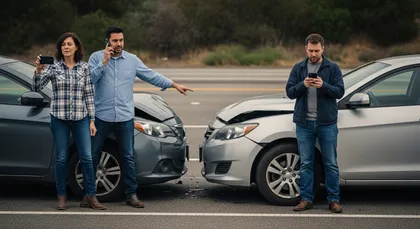
California follows a pure comparative negligence rule. This rule allows more than one driver to share fault for a crash. It also reduces compensation based on each person’s share of blame.
This means:
- A plaintiff can recover damages even if they’re partly at fault.
- The plaintiff’s percentage of fault reduces compensation.
Example:
- 20% fault → recovery reduced by 20%
- 40% fault → recovery reduced by 40%
This rule allows lawsuits to move forward even when both drivers made mistakes. At the same time, it encourages defendants to argue that the plaintiff shares some of the blame. Courts review evidence to assign fault percentages based on what the proof shows.
Comparative negligence does not block recovery, but it can lower it. Strong evidence helps limit unfair blame and protect the plaintiff’s claim.
Fault-Based Liability System
California uses a fault-based liability system for car accidents. The person who caused the crash must pay for the harm that follows. Courts do not divide costs evenly unless both sides share fault.
To win, plaintiffs must prove:
- Who caused the crash.
- How the collision caused their injuries.
- What were the resulting losses.
Without this proof, a lawsuit is unlikely to succeed. Courts require a clear link between the driver’s actions and the claimed damages. Fault-based rules keep the focus on responsibility. The side that proves fault and damages with clear evidence stands in a stronger position.
These legal rules explain how courts assign responsibility. But rules alone do not win lawsuits. Plaintiffs still need proof to support their claims. That is where evidence becomes critical.
Evidence That Strengthens A Car Accident Lawsuit
Strong evidence directly improves a plaintiff’s ability to meet the burden of proof. Judges and juries rely on records, photos, and testimony to understand what happened. Clear proof helps show who caused the crash and what losses followed. When proof is limited, a lawsuit becomes harder to win.
Common types of evidence include:
- Police collision reports
- Photos of vehicle damage and the scene
- Traffic or surveillance video
- Medical records
- Witness statements
- Repair invoices and bills
- Employment records showing lost wages
- Expert testimony when needed
Medical records are especially important because they connect injuries to the crash. Delays in treatment can raise questions about whether the crash caused the injury.
Photos help document:
- Vehicle positions
- Road conditions
- Damage patterns
- Traffic controls
Witnesses can support one version of events when drivers disagree. No single piece of evidence guarantees success, but multiple consistent records make a claim easier to prove. Even with evidence, some cases still face challenges. Not every crash leaves behind clear proof.
Why Some Car Accident Lawsuits Are Harder To Win
Some lawsuits become harder to prove because key details remain unclear. When proof has gaps, the defense can raise doubts. Doubt makes a case harder to win.
Common challenges include:
- Drivers give different stories about how the crash happened.
- No independent witnesses saw the collision.
- People take few or no photos at the scene.
- The injured person waits a long time before seeing a doctor.
- The injured person had similar medical problems before the crash.
- The cars show very little damage, but the claim involves serious injuries.
- The person cannot present bills, receipts, or wage-loss records.
These issues do not automatically destroy a case, but they give the defense more room to argue.
For example:
- A person can still recover after delayed treatment, but the records must explain why care was delayed.
- A person with prior injuries can still win, but doctors must show how the crash worsened the condition.
Courts focus on proof. They review records and timelines and ask one key question: Does the evidence show this crash caused these losses?
Medical proof often becomes one of the most debated parts of a lawsuit. That makes injury documentation especially important.
How Documentation Of Injuries Affects A Lawsuit
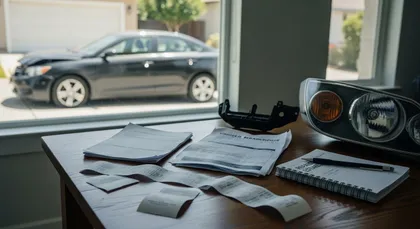
Injury documentation helps show the extent of the harm caused by the crash. Courts review medical records to confirm diagnoses, treatments, and recoveries. Clear records support a claim for damages.
Courts and insurers often review:
- When treatment started
- How often treatment occurred
- What doctors diagnosed
- Whether doctors linked the injury to the crash
- How recovery progressed
Prompt and consistent treatment strengthens causation. Delays or gaps can raise questions.
Defendants may argue:
- The injury came from another cause.
- The injury was minor.
- The condition existed before the crash.
Treatment type matters less than medical support. Chiropractic care, therapy, and specialist visits can all help if doctors document them properly.
Good records show how the injury affected daily life and work. Clear documentation makes it easier to prove damages. While medical evidence shows harm, insurance companies often first evaluate and challenge those claims.
The Role Of Insurance In Lawsuit Outcomes
Insurance companies often defend car accident lawsuits. They review claims and decide whether to accept or challenge them. Their evaluation can influence how a case moves forward.
Insurers typically review:
- Liability evidence
- Medical records
- Damage documentation
- Claim consistency
They may challenge:
- Who caused the crash.
- Whether treatment was necessary.
- Whether the crash caused the injury.
- The value of losses.
Insurance adjusters rely on records, not personal statements. Organized proof improves a plaintiff’s position.
Before evaluating settlement or trial risk, many plaintiffs try to find out if the other driver has insurance, since coverage often determines how claims are handled.
Insurance involvement does not decide the case. Courts still require proof. Judges and juries make the final decision when cases reach trial. Because lawsuits involve legal rules and procedures, many people wonder whether they need legal help.
Can You Win A Car Accident Lawsuit Without A Lawyer?
Some people handle lawsuits on their own, especially smaller cases. But lawsuits involve strict rules and deadlines. Mistakes can weaken a claim.
Self-represented plaintiffs must handle:
- Court filings
- Evidence rules
- Legal deadlines
- Trial preparation
- Negotiations
A lawyer can help collect and organize evidence, build a legal strategy, handle court procedures, and present the case in a clear, structured way. This support matters because car accident lawsuits are subject to strict rules and deadlines. Missing a step or filing incorrectly can weaken a claim, even when the facts seem strong.
Because legal help can be costly, many people ask how lawyers charge for these cases. Many personal injury lawyers work on a contingency fee basis. This usually means they charge legal fees only if they recover compensation. Fee terms can differ, so clients should confirm the details directly before hiring anyone.
Even with legal help, no outcome is guaranteed. Courts still decide cases based on evidence and law. Timing also plays a major role. A strong case can fail if someone files late or misses a legal deadline, which is why paying attention to deadlines is just as important as gathering proof.
Deadlines That Affect Your Ability To Win
California law sets time limits for filing lawsuits. Courts enforce these limits strictly. Missing a deadline can end a case before it starts.
The general deadline for car accident lawsuits in California is:
- Two years from the date of injury
Special rules may apply to:
- Government Claims — If a government agency or employee caused the crash, you must follow special claim rules. California law usually requires you to file an administrative claim with the agency within six months of the incident. If you miss this step, the court may dismiss your lawsuit.
- Cases Involving Minors — When the injured person is under 18, California law often pauses the normal filing deadline. The clock typically starts when the minor turns 18. However, parents or guardians can file earlier on the child’s behalf.
- Delayed Discovery of Injuries — Some injuries do not show symptoms right away. In limited situations, the filing deadline may start when the person discovers, or reasonably should have discovered, the injury. Courts apply this rule narrowly and expect medical support.
Meeting the filing deadline only starts the process. Filing on time protects your right to sue, but it does not guarantee a quick resolution. Once a lawsuit begins, the timeline depends on the case’s complexity and the number of issues the court must review.
How Long Car Accident Lawsuits Take
Many people ask how long a car accident lawsuit will last. The honest answer is that timelines vary because every case involves different facts, injuries, and disputes. Courts move cases based on complexity and scheduling, not solely on speed.
Some lawsuits resolve within a few months. Others take a year or longer. The timeline often depends on how many issues the court must sort out.
Factors that affect timing include:
- Case complexity
- Number of parties involved
- Severity of injuries
- Disputed liability
- Court scheduling and backlog
- Expert witness involvement
For example, a case with clear fault and documented injuries may move faster than a case with multiple drivers and conflicting stories. Expert testimony can also extend timelines because doctors or crash experts must review records and testify.
Longer cases are not automatically stronger or weaker. They usually involve more questions that require review. Courts take time to examine evidence before making decisions.
While timing affects how long a case lasts, the outcome still depends on what the plaintiff can prove. That brings the focus to damages.
What Damages Must Be Proven To Win
A plaintiff cannot win a car accident lawsuit without proving damages. Even if the fault is clear, the court still needs proof of actual losses. Damages show how the crash affected the injured person financially and personally.
Common damages include:
- Medical expenses
- Future medical costs supported by doctors
- Lost income
- Reduced earning capacity
- Property damage
- Pain and suffering
Damages must be supported by records. Courts often rely on:
- Medical bills
- Treatment records
- Employer verification of missed work
- Medical opinions about future care
For example, a claim for lost wages usually requires pay stubs or employer statements. A claim for future care often requires a doctor’s opinion.
Without proof of damages, a lawsuit cannot succeed even when fault is clear. Courts award compensation based on documented loss, not estimates.
Once faults and damages are clear, the final question becomes how those pieces come together to affect the overall chances of winning.
Realistic Takeaway On Winning A Lawsuit
People often look for a simple percentage or prediction. General information, including free accident lawyer advice, cannot determine whether a lawsuit will succeed because courts decide based on evidence and law.
Winning a car accident lawsuit depends on:
- Clear proof of fault
- Clear proof of damages
- Consistent documentation
- Meeting legal deadlines
- Credible evidence
It does not depend on:
- Guesswork
- Sympathy alone
- National averages
- Lawyer advertising
- Internet estimates
Past statistics provide background, but they do not predict results in a specific case. Each lawsuit stands on its own evidence.
No article, lawyer, or insurer can promise a win. Courts decide cases based on the evidence and the law. Law firms such as Arash Law often explain this reality to clients because managing expectations is part of understanding how lawsuits work.
With those realities in mind, it helps to step back and look at the simplest takeaway.
Frequently Asked Questions On Winning A Car Accident Case

Do Most Car Accident Lawsuits Go To Trial?
No. Many lawsuits are resolved before reaching a jury verdict. Trials take time and carry risk for both sides. But when discussing the likelihood of a lawsuit, courts still evaluate whether the case could be proven at trial.
What Happens If You Miss The Filing Deadline?
Missing the deadline usually ends your right to sue. In California, the general deadline is two years from the injury date. Special rules apply to government claims and minors. Courts enforce deadlines strictly.
Can Someone Win A Lawsuit Without Medical Treatment?
It is harder to win a lawsuit without treatment. Medical records help prove the crash caused harm. Without documentation, it becomes difficult to show damages. Courts require proof of injury.
Does Admitting Fault Affect My Chances Of Winning?
Yes. Admitting fault can reduce your chances of winning. Your statements can be used as evidence when courts or insurers decide who caused the crash.
California’s comparative negligence rule can lower your recovery if you share blame. It is best to stick to the facts and let the evidence determine fault.
Get Help Understanding Your Car Accident Case
Your chances of winning a car accident lawsuit depend on how well you can prove fault and damages. The sooner you understand your legal position, the easier it is to protect evidence, meet deadlines, and avoid mistakes that can weaken your claim.
If a crash injured you and someone else may be at fault, you may want to get professional legal guidance. A qualified legal professional can review your situation, explain your options, and help you understand whether your case has strong support.
AK Law offers free consultations for people with car accident injuries. You can call (888) 488-1391 to discuss your situation and learn about available options.