TL;DR: If you get hurt at a theme park, you can seek compensation when unsafe conditions, ride defects, or employee negligence caused your injury. Visitors, especially children, face serious harm from ride failures or crowd hazards, and California law gives 2 years to file a lawsuit.
Highlights:
- Seek medical attention immediately from park staff or first responders.
- Report the incident to a park employee and request an incident report.
- Take photos or videos of the scene, including hazardous conditions or equipment.
- Gather witness contact information for statements about the accident.
- Stick to the facts if questioned by park representatives or insurers.
- Consult with a personal injury lawyer to understand your legal rights and options.
Tip: Early documentation of the accident conditions helps strengthen your claim.
Table of Contents
If you get hurt at a theme park, focus on your health first, then document what happened and what caused it. If unsafe conditions, poor maintenance, or a defective ride component played a role, you may have the right to pursue compensation under California law.
Many visitors head to California parks expecting a day of rides, shows, and family memories. From Disneyland Resort and Universal Studios Hollywood to SeaWorld San Diego and LEGOLAND California, these destinations draw huge crowds each year, especially on weekends and school breaks.
With heavy foot traffic, fast-moving rides, and busy walkways, even a minor issue can quickly escalate into a serious injury. Knowing what to do right away helps protect your health and preserves the details that matter if a claim comes up later.
Here’s what to know about common theme park accidents, the injuries they can cause, who may be responsible, and the next steps people take when they decide to move forward with a claim.
What Should I Do Immediately After Getting Hurt At A Theme Park?
The steps you take after a theme park injury protect your health and your legal rights. Quick action helps document what happened and preserves important evidence. Follow these general steps if you or someone with you gets hurt.
Get Medical Help Right Away
Your health is the top priority. Ask a park employee to call first aid or emergency medical services. Most large theme parks have medical stations and trained staff. They can evaluate your condition and arrange transportation to the nearest hospital.
After the initial evaluation, some injuries may also require follow-up care from a doctor or chiropractor, especially for neck or back pain. Medical treatment creates records that connect your injury to the accident.
Report The Incident To The Appropriate Authority
Tell a park employee or supervisor about the accident as soon as possible. Theme parks usually create an incident report after a guest injury. Provide clear and honest information about what happened. Stick to the facts and avoid guessing about details.
Afterward, ask how to obtain a copy of the incident report. This document may become important for an insurance claim or legal case.
Capture The Scene Before It Changes
- The ride or attraction involved.
- Wet floors, broken equipment, or other hazards.
- The presence or absence of warning signs.
- Your visible injuries.
- The surrounding area.
These images show the conditions that existed at the time of the accident.
Speak With Witnesses And Record Key Details
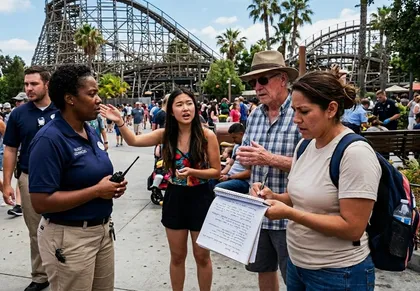
Write down everything you remember while the details remain fresh. Other visitors or employees may have also seen the incident. Ask for their names and contact information when they agree to share it. Later, you can reach out to them and ask about their account of how you were injured. Their statements can support your version of events.
Helpful details may include:
- The time and exact location of the accident.
- The ride or attraction involved.
- The names of any park employees who assisted you.
- Statements made by staff or witnesses.
- Crowd conditions or weather at the time.
Be Careful With Early Conversations
Park representatives may approach you soon after the accident to ask what happened. Answer basic questions and stick to the facts. Do not guess about details or causes. Insurance representatives might also contact you later. They may request a recorded statement or ask detailed questions about your injuries. Let your lawyer handle these conversations.
Similarly, do not sign documents or accept payments before you understand your rights. Quick settlements may not cover the full impact of your injuries.
Speak With A Lawyer
Large theme parks work with experienced insurance companies and legal teams. Amusement park accident attorneys can review what happened and explain your legal options. They can also gather evidence, evaluate damages, and communicate with insurers. Legal guidance helps you understand the value of your claim before making important decisions.
Common Types Of Theme Park Accidents
Theme park accidents can occur on rides, along walkways, inside attractions, or in crowded public areas. Equipment failures, unsafe surfaces, and noncompliance with food safety regulations can create situations that lead to both guest and employee injuries.
Large crowds also increase safety risks inside major parks. An estimate from TEA/AECOM 2023 Theme Index and Museum Index indicates that more than 17 million people visited Disneyland Park (Anaheim), 10 million visited Disney California Adventure Park (Anaheim), and over 9.7 million visited Universal Studios Hollywood (Universal City) in a single year.
With millions of visitors moving through rides, walkways, restaurants, and parking areas, even small hazards can quickly lead to accidents.
Common incidents in theme parks include:
- Roller coaster accidents due to equipment failure or operator mistakes.
- Ride malfunctions that stop abruptly or move violently.
- Slip and fall accidents from wet pavement or uneven surfaces.
- Falls from heights.
- Parking lot collisions involving vehicles and pedestrians.
- Water park drowning incidents or slips near pools.
- Food poisoning from contaminated food.
- Electrical failures or fires.
- Injuries caused by overcrowding or guest conflicts.
Injuries Victims Can Sustain At Theme Parks
Theme park accidents can cause a wide range of injuries, from minor bruises to life-altering trauma. High-speed rides, sudden movements, and hard surfaces can increase the severity of an accident. The type of accident often determines the type of injury sustained.
Common examples include:
- Whiplash
- Back injuries
- Spinal cord injuries
- Broken bones
- Severe bruising
- Head injuries
- Traumatic brain injuries
- Internal bleeding
- Organ damage
- Loss of limb
- Disfigurement
Children face unique risks during ride accidents. Defective restraints or ride failures can cause severe harm. High-impact movements or falls may lead to long-term physical trauma.
Meanwhile, employees and other theme park workers may sustain injuries that keep them from working while they recover. That may result in significant losses, especially if they incur high medical bills.
In rare situations, theme park accidents can result in fatal injuries.
Who Is Responsible When A Theme Park Accident Happens?
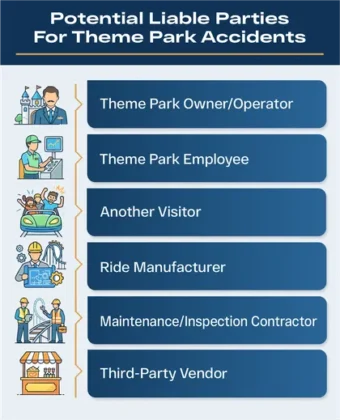
Theme park accident claims may involve more than one responsible party. Liability depends on what caused the incident and who controlled the hazard. Responsible parties may include:
- Theme Park Owner or Operator: May fail to maintain safe conditions, repair hazards, inspect rides, or warn guests about dangers.
- Theme Park Employees: Might cause harm due to improperly operating rides, ignoring hazards, or failing to secure restraints.
- Another Visitor: Could cause injuries to workers or fellow park-goers through reckless or intentional behavior.
- Ride Manufacturer: Might have produced defective ride parts or equipment that contributed to an accident.
- Maintenance or Inspection Contractor: Could have conducted faulty repairs or poor inspections, creating unsafe ride conditions.
- Third-Party Vendor: May create a dangerous condition through unsafe food-handling or cleaning practices.
Determining responsibility requires a close review of the incident. Investigators may examine ride operations, safety procedures, maintenance records, and witness statements. Several parties may share liability when different actions contribute to the same accident.
Understanding Liability In Theme Park Injury Cases
Liability in a theme park injury case depends on how the accident happened and who failed to act safely. California law applies several legal principles to determine who is legally responsible for a victim’s losses. These rules help identify whether the park, a worker, or another party caused the harm.
Several legal principles may come into play in a theme park accident:
- Premises Liability: Property owners must keep the premises reasonably safe for visitors. A theme park may face liability when it fails to repair hazards, inspect rides, remove dangerous conditions, or warn guests about known risks.
- Negligence: Negligence occurs when someone fails to use reasonable care, and that failure results in an injury. In a theme park setting, negligence may involve unsafe operations or the failure to address hazards.
To establish negligence, the injured person must show four key elements:
- A duty of care existed.
- The responsible party breached that duty.
- The breach caused the accident.
- The victim suffered actual harm.
- Product Liability: A defective ride or equipment failure may give rise to a product liability claim. Ride manufacturers, designers, or maintenance companies may share responsibility when defective components cause injuries.
Product liability claims may involve:
- Manufacturing Defects: Mistakes occur during production. The ride or part does not match the intended design and becomes unsafe.
- Design Defects: The ride or part has a dangerous design. The product remains unsafe even when built correctly.
- Marketing Defects (Failure to Warn): The product lacks clear safety instructions or warning labels. Guests or operators may not be aware of the risks.
California also follows pure comparative negligence rules. An injured person may still recover damages even if they share some responsibility for the accident. Compensation decreases in proportion to each party’s assigned percentage of fault. For example, if your total damages are $100,000 but you are found 25% at fault for the accident, you would receive $75,000.
How Long Do I Have To File A Theme Park Injury Case In California?
In California, you generally have two years from the date of the accident to file a personal injury case. Courts strictly enforce this timeframe under the state’s Code of Civil Procedure. Missing this deadline will likely bar your case, preventing you from recovering any compensation.
Different rules and time limits may apply in specific scenarios. For example:
- If a minor was injured, the statute of limitations pauses until they turn 18. However, parents or legal guardians can take legal action on their behalf before this time.
- If you’re an employee, you must report your injury to the theme park management within 30 days. Your employer will provide a DWC-1 form, which you should complete and return as soon as possible to start the claims process on time.
- If your injury occurred at a government-owned theme park like Gilroy Gardens, the Government Code requires you to file a written administrative claim within six months of the injury. You generally cannot file a lawsuit unless:
- The Claim Gets Rejected: You have six months from the date of the denial to sue.
- The Government Doesn’t Respond: If you don’t receive a reply within 45 days, the standard two-year deadline applies.
What Is “Assumption Of Risk” In A Theme Park Case?
Under the doctrine of primary assumption of risk, parks may not be liable for injuries resulting from the inherent risks of an attraction. For example, Universal Studios requires participants in its annual Halloween Horror Nights events to sign waivers. Guests accept certain risks by signing this document, including the possibility of being startled or scared.
However, Knight v. Jewett establishes that this doctrine does not protect them if gross negligence, intentional harm, or equipment failure introduces new hazards and causes an accident. In these cases, the definition of secondary assumption of risk would apply. In other words, victims can argue that a park owed them a duty of care and breached it, resulting in their injuries and losses.
That may allow for partial recovery under the state’s comparative negligence rules. For example, a guest who got injured at Halloween Horror Nights was able to sue Universal Studios when a scare actor jumped into her path, causing her to trip, fall, and sustain serious harm to her ankle and foot.
What Evidence Matters Most In Theme Park Cases?
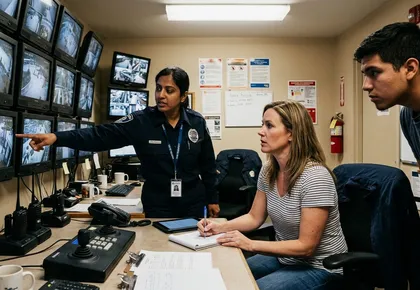
Records from the park, ride operators, and medical providers often matter the most in theme park injury cases. Strong evidence shows how the accident occurred. By disclosing safety failures, maintenance issues, and operator errors that contributed to the injury, it can help establish who was at fault. Relevant proof can also confirm the extent of your injuries and losses.
Important evidence includes:
- Ride maintenance and repair logs.
- Daily safety inspection records.
- Operator training and certification files.
- Surveillance video.
- The official park incident report.
- EMS and first aid treatment records.
- Third-party vendor contracts.
What Compensation May Be Available After A Theme Park Injury?
Compensation in a theme park injury claim usually falls into two categories. Economic damages cover measurable, out-of-pocket losses. Meanwhile, non-economic damages address the physical and emotional impact of the injury. What you can seek depends on how your injury affected your life and how it might continue to impact you in the future.
A theme park injury claim may include compensation for:
- Emergency medical treatment after the accident.
- Hospital care, surgery, and diagnostic tests.
- Physical therapy, rehabilitation, and follow-up treatment.
- Future medical care related to the injury.
- Prescription medication and medical equipment.
- Lost wages during recovery.
- Reduced earning ability caused by long-term injuries.
- Transportation and other out-of-pocket expenses related to treatment.
- Pain and suffering caused by the injury.
- Emotional distress or trauma following the incident.
- Loss of enjoyment of daily activities.
- Permanent scarring or disfigurement.
Serious accidents may also lead to long-term medical care or disability. Employees may be able to seek temporary or permanent disability benefits from workers’ compensation insurance or state programs. They do not need to prove negligence to file a workers’ comp claim, which may also cover medical expenses and lost wages.
In fatal incidents, surviving family members may pursue damages through a wrongful death claim. Through it, families can seek compensation for funeral expenses, loss of financial support, and loss of companionship.
Frequently Asked Questions About Theme Park Injury Claims
A theme park accident can raise concerns about your rights and next steps. The following answers address common questions visitors ask after a theme park injury.
Can I Sue If I Signed A Liability Waiver?
You can still sue in some situations. In California, while liability waivers can release parks from “ordinary negligence,” they cannot waive “gross negligence.” Courts may still allow a case when the park ignores known safety risks or fails to properly maintain rides and equipment. You can also seek free advice from a theme park injury lawyer to understand your options.
Can I Still Recover Damages If The Theme Park Claims I Am Partially Liable?
Yes. If you did contribute to your injury, you could still recover damages under California’s pure comparative negligence rule. However, your compensation may decrease based on your percentage of fault. If you didn’t, an attorney can help you gather proof, present it, and advocate for a fair assessment of fault.
What Should I Do If The Park’s Insurance Company Contacts Me?
Answer basic questions carefully and stick to the facts. Avoid giving recorded statements or signing documents right away. Let your lawyer handle further communication with the insurance company.
Do I Need A Personal Injury Lawyer To Handle My Theme Park Accident Case?
Yes, it’s beneficial to work with a lawyer, especially if you suffered serious injuries or face significant medical expenses. Theme park injury attorneys can investigate the accident, identify the responsible parties, and handle communication with the park or its insurance company.
How Can A California Theme Park Injury Attorney Help Me?
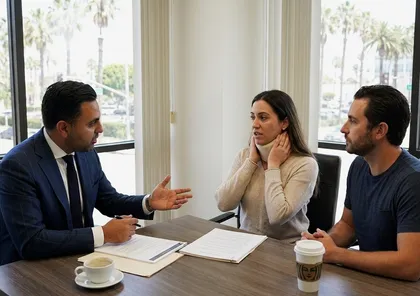
A California theme park injury attorney can investigate the accident, gather evidence, and identify the parties responsible for the injury. They can also handle communication with the park’s insurance company and review settlement offers. These legal professionals will explain your rights and the legal options available to you under California law.
Do Lawyers Only Get Paid If They Win A Theme Park Injury Case?
In most cases, yes. Many personal injury lawyers handle theme park injury cases on a contingency fee basis. That means legal fees come from any compensation recovered in the case. If the case does not win or settle, you generally don’t have to pay them for their services.
Talk To Arash Law’s Legal Team About Your Theme Park Injury Case
A theme park injury can leave you dealing with medical bills, missed work, and uncertainty about what to do next. If unsafe conditions, a ride malfunction, or someone else’s negligence caused the accident, you may have the right to pursue compensation. The attorneys at Arash Law will review your theme park injury case.
During a case review, these personal injury lawyers will assess the available evidence and explain the legal options that may apply to your situation. If you have a valid claim, they can help you pursue compensation for medical bills, lost wages, pain and suffering, and other losses.
Call AK Law at (888) 488-1391 today to schedule a free initial consultation.