TL;DR: Rear-end crashes are the most common type of accident on the freeway. The rear driver is often at fault, though exceptions exist. These collisions can cause whiplash, back injuries, and head trauma, and many California personal injury cases have a two-year filing deadline.
Highlights:
- Move to safety and call 911 if there are injuries, blocked lanes, or danger.
- Get a medical evaluation promptly and follow through with recommended treatment.
- Photograph vehicles, debris, lane positions, signs, and visible injuries immediately.
- Request the police report number and collect witness contact information.
- Preserve video and digital data – dashcam, traffic cameras, black box info.
- Keep a dated file of symptoms, work limits, bills, and repair invoices.
- Track deadlines: 2 years to sue, 6 months for public-entity claims.
Tip: When speaking with insurers, stick to verifiable facts and avoid guessing about speed, distance, or fault.
Table of Contents
Rear-end collisions happen on California freeways because traffic often moves at high speeds, then suddenly slows, compresses, or changes pace. These traffic accidents can lead to injury claims when negligence is involved. In rear-end crashes, following too closely, distracted driving, unsafe lane changes, or driving too fast for traffic conditions are often to blame. What seems like a simple crash can quickly turn into a serious injury claim involving whiplash, back injuries, head trauma, and disputed fault.
Understanding the most common freeway crash is not just about traffic safety. It is also about protecting your health, your evidence, and your legal rights after a collision. If a rear-end crash on a freeway injured you, several factors matter. These include who caused the crash, which insurance applies, how your injuries are recorded, and how long you have to file a claim. All of these factors can affect your recovery.
Why Are Rear-End Collisions So Common On Freeways?
Rear-end crashes are especially common on freeways because traffic moves fast, then suddenly slows when congestion builds. Drivers often have little time to react when vehicles ahead slow without warning, which makes even a brief delay in braking more dangerous.
Rear-end collisions can happen when a driver:
- Follows too closely.
- Is distracted by a phone, navigation screen, passenger, or something else inside the vehicle.
- Exceeds speed limits.
- Makes sudden lane changes.
- Brakes abruptly.
- Reacts too late, especially when impaired or fatigued.
Other factors can also play a role. Adverse weather conditions can reduce visibility and make roads more dangerous. Poor or unclear signage can also cause drivers to miss exits or misinterpret speed limits, leading to unsafe driving decisions. Freeway accident attorneys can review the available evidence to help determine what caused the accident and identify any potentially responsible parties.
Rear-end crashes on the freeway can be more serious because freeway speeds increase the force of impact. What looks like a simple collision can become a neck, back, or head injury claim. A single rear-end collision can also trigger a chain-reaction crash involving several vehicles, complicating fault and insurance issues.
What The Data Shows About Highway And Freeway Accidents In California
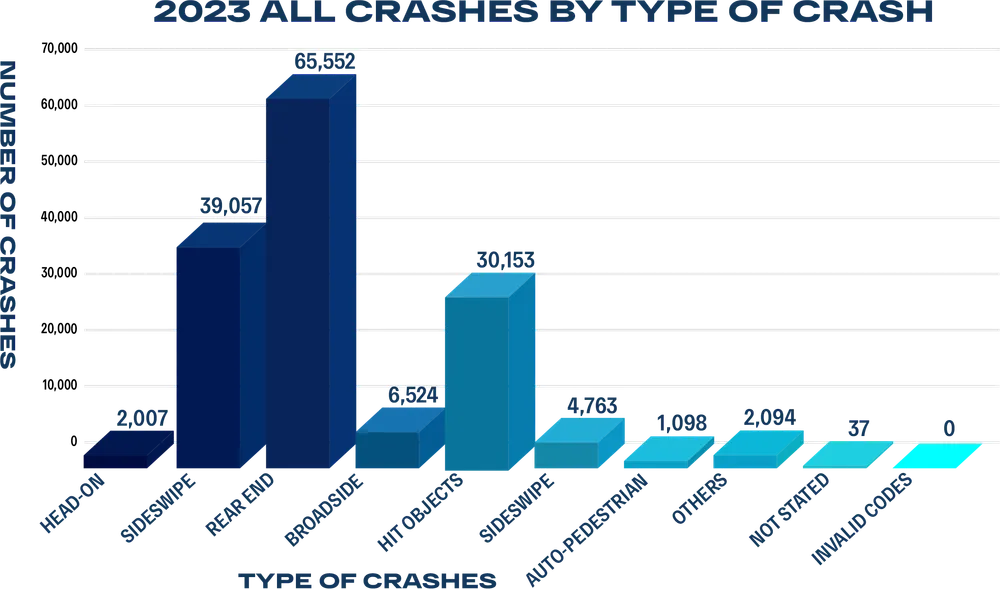
California data points in the same direction: rear-end collisions are the clearest answer to this question. In the 2023 Crash Data Report for California State Highways, Caltrans recorded 65,552 rear-end collisions, making them the most common crash type in that dataset. That report covers the state highway system, which is broader than freeway-only crash data. Even so, it still supports the practical answer to this title question: rear-end collisions are the most common type of accident on the freeway.
If you’re wondering what percentage of crashes are rear-end collisions, statewide statistics consistently show that they account for a significant share of total reported accidents.
While these crash types can occur in many settings, some occur more frequently than others. Those same freeway conditions help explain why rear-end crashes happen so often when traffic suddenly slows or bunches up.
What Should You Do Right After A Freeway Accident?
Your priority is safety. After a freeway accident, everything can feel confusing and fast-moving, so it helps to focus on the most important steps first. Acting carefully in the moments after a crash can protect your health, your safety, and your ability to handle what comes next.
- Move to a safer area if you can do so without worsening the situation.
- Call 911 if anyone is hurt, traffic is blocked, or the scene is unsafe.
- Get a medical evaluation as soon as possible, even if you think the crash was minor.
Early medical attention matters for two reasons. First, it protects your health. Second, it creates a clear record tying the freeway crash to your symptoms, treatment, and recovery. Freeway accident attorneys can use your medical records to connect your injuries with the accident.
What Evidence Matters After A Freeway Rear-End Crash?
Evidence like fading skid marks, overwritten camera footage, and departing witnesses disappears rapidly after a crash.
Try to gather and keep:
- Photos of vehicle damage, debris, lane positions, road signs, and visible injuries.
- Video from dashcams, nearby businesses, traffic cameras, or homes near ramps.
- The police report number and responding agency.
- Names and contact information for witnesses.
- Medical records, imaging, work restrictions, bills, and receipts.
- Phone screenshots or notes showing the exact time, location, and sequence of events.
- Repair estimates and towing or storage invoices.
Modern crash cases may also involve digital proof. Event data recorders, called black boxes, record information about a crash. Depending on the vehicle and system, data can include pre-crash or crash-related information such as speed, braking, and steering inputs. If distracted driving is suspected, phone records may also matter. Rear-end accident lawyers can use these pieces of evidence to determine if the other driver caused the collision.
If you are already thinking, “I need a personal injury lawyer,” you’ve probably realized you need professional help getting important proof. An early case review can identify what needs to be preserved before it disappears.
What Insurance Coverage May Apply After A Freeway Crash?
Many freeway accident cases start as third-party insurance claims against the at-fault driver. If the driver caused the crash, their bodily injury liability coverage might be the first way to recover medical bills, lost income, and other damages.
California requires drivers to carry minimum liability coverage. The state’s Department of Motor Vehicles (DMV) lists these minimum limits:
- $30,000 for injury or death to an individual.
- $60,000 for injury or death to more than one individual.
- $15,000 for property damage.
Uninsured/underinsured motorist (UM/UIM) coverage may apply if the victim has it in their policy. It can be used if the other driver is at fault but lacks insurance or has insufficient coverage. This coverage may also apply in hit-and-run accident cases.
Some cases may involve other ways to seek compensation, such as:
- A claim involving a commercial driver and the employer who put the vehicle on the road.
- A product liability claim may apply when a defective auto part, such as brakes or tires, causes the crash.
- A public entity claim is possible if a dangerous roadway condition or traffic-control issue contributed to the crash.
Different insurance issues can shape what happens next. The key questions are which policy applies first, whether the available limits cover the full loss, and whether another driver, employer, business, or public entity may also share responsibility. Given these complexities, some people seek free advice from a personal injury attorney to better understand their legal options.
Who Is At Fault In A Freeway Rear-End Collision?
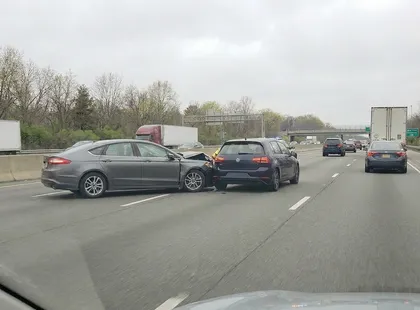
In many rear-end crashes, the rear driver is usually at fault. In California, it’s illegal for drivers to follow too closely. The Basic Speed Law also says you must drive at a safe speed based on the road, traffic, and weather. These rules matter because they affect how quickly a driver can stop.
However, the rear driver is not always automatically at fault. Responsibility can change if:
- The front driver suddenly cuts in and brakes hard.
- The front driver reverses without warning.
- The front vehicle has broken brake lights.
- Another driver makes an unsafe lane change, causing the crash.
Other parties may also be liable, including:
- Truck or Delivery Companies: If a commercial vehicle was involved, the employer or operator may share liability.
- Rideshare Drivers or Companies: Responsibilities can vary depending on the ride phase (e.g., driver is offline, waiting for a passenger, en route, or carrying a passenger).
- Road Maintenance Companies: If poor maintenance or ongoing work created a hazardous road condition that contributed to the incident.
- Vehicle or Parts Manufacturers: If a defective vehicle component or design flaw caused or worsened the crash.
California follows a rule called pure comparative negligence. This means:
- More than one person can share the blame, even the injured victim.
- Your percentage of fault reduces your potential recovery.
This is why it is important to challenge unfair blame with strong evidence, witness statements, vehicle damage, crash-scene photos, and any available video or electronic data.
What Injuries Can Happen In A Freeway Rear-End Crash?
A rear-end collision on the freeway can cause anything from whiplash to broken bones or a traumatic brain injury. More serious injuries usually mean more treatment, more time away from work, and greater damages.
Common injuries can include:
- Neck Pain & Whiplash: Your head snaps forward and back fast when a car hits you from behind, which can strain the neck.
- Back & Spine Injuries: The force of the crash can hurt your lower back or spine, causing pain and stiffness. In serious cases, a spinal cord injury can lead to paralysis.
- Head Injury or Concussion: Your head may hit the headrest or dashboard in these collisions. When the accident is severe, victims may sustain traumatic brain injuries (TBIs).
- Shoulder, Wrist, Knee, or Hip Injuries: You may brace for impact, which can strain or hurt your joints.
- Bone Fractures: Car crashes or pileups can cause bone fractures, especially at high speeds. Recovery can take a long time, and in some cases, injuries may require surgery or metal plates to help the bones heal properly.
Do not assume an injury is minor just because it isn’t immediately visible. Symptoms like headaches, dizziness, numbness, sleep problems, memory issues, and worsening pain can show up hours or even days later.
What Compensation May Be Available After A Freeway Accident?
A personal injury claim should reflect the full effect of the crash, not just the first emergency room bill. Depending on the facts, compensation may include:
- Medical Bills: These are the costs of medical treatment you received due to an accident. These can include:
- Emergency care, hospital bills, imaging, medication, and follow-up treatment.
- Physical therapy, chiropractic treatment, and other documented recovery care.
- Future medical treatment if symptoms continue.
- Lost Income: If the injuries you sustained need a longer recovery time, you can include lost wages in your claim. In cases of permanent disability, victims can pursue reduced earning capacity or loss of future income.
- Property Damage: The cost of repairing or replacing your vehicle or personal property.
- Out-of-Pocket Costs: Expenses directly related to the crash. They can include car rental fees, transportation costs, and medical devices during recovery. They may also cover services such as in-home care or daycare if your injuries prevent you from performing your usual daily tasks.
- Non-Economic Damages: Victims can experience intangible losses after an accident. These can include emotional distress, reduced quality of life, and pain and suffering.
A claim’s value depends on the injury, treatment, time away from work, credibility of the records, and the available insurance. Clear records of symptoms, appointments, treatment, and work limits can make a major difference when insurers question how badly you were hurt or whether the crash caused your condition.
How Long Do You Have To File A Freeway Accident Claim In California?
For most California personal injury cases, the general filing deadline is two years. The statute of limitations sets that baseline for injury or death caused by another party’s wrongful act or neglect.
There are certain exceptions:
- Claims Against Public Entities: Certain agencies are responsible for highway safety. If unsafe road design, poor road maintenance, missing traffic control devices, or a government vehicle may have contributed to the crash, you may need to file a government claim before filing a lawsuit. In many injury cases, the claim must be filed within six months. The agency usually then has 45 days to respond.
- Victim Is a Minor: The two-year time limit does not start until they turn 18. A parent or legal guardian can file the case on their behalf until then.
- Delayed Discovery of Injuries: Some injuries do not manifest immediately after the accident. If this is the case, the two-year deadline may start on the date of discovery or on the date the injury should have been discovered.
If the accident involves only property damage, affected individuals have three years to file a claim. Missing these deadlines can affect the validity of a case. Car accident lawyers can review the case details and determine the possible deadlines that may apply.
When Should You Talk To A Lawyer?

You do not need to wait for a settlement offer, a surgery recommendation, or a fault dispute before getting legal guidance. Early help can make a difference when a case involves certain complexities.
It’s a good idea to talk to a lawyer when your case involves:
- Significant losses
- Severe injuries
- Liability disputes
- Multiple liable parties
Additionally, obtaining evidence such as black box data or freeway camera footage may require additional steps. A freeway accident attorney can also assist with the process of getting them.
Frequently Asked Questions
Below are some answers to common legal questions about freeway accidents. These are meant to help you better understand your rights and next steps after a crash.
Are Rear Drivers Always At Fault In California?
No. Rear drivers are often at fault, but not in every case. The facts still matter. If the lead driver reversed, cut into the lane, braked abruptly, or had no brake lights, or if another driver caused the crash, liability can be shared or shifted.
What Causes Most Freeway Accidents?
Most freeway accidents stem from driver mistakes such as tailgating, distraction, speeding, unsafe lane changes, and impaired driving. Those errors become more dangerous on freeways because higher speeds and tighter traffic leave very little room for correction.
How Much Do Lawyers Charge In California?
The cost of hiring a lawyer depends on the case’s complexity and the lawyer’s fee structure. In most cases, the more complex a case is, the more time and resources it takes to handle it properly. These factors can affect the overall legal costs.
So, do lawyers only get paid if they win? Many injury law firms, including Arash Law, handle cases on a contingency fee basis. That means the attorney’s fee is taken from the recovery if the case succeeds, rather than being billed upfront. A lawyer should explain how the contingency arrangement works, what costs may apply, and when those costs are addressed.
How Much Is A Rear-End Accident Claim Worth?
There is no single formula for calculating a rear-end accident claim. Value depends on how the crash affects your health, work, and daily life, not just vehicle damage.
Key factors that affect compensation include:
- Severity of Injuries: How serious your injuries are affects medical care costs, lost wages, and the overall impact on life.
- Policy Limits: The amount of compensation available may depend on the at-fault party’s insurance policy limits. If total losses exceed those limits, recovery may be restricted, although attorneys may explore other legal options for compensation.
- Shared Liability: In some instances, victims may share fault in the accident. When this happens, the compensation they can pursue reduces depending on their portion of fault.
Every case is different, and a claim’s value depends on the specific facts involved. Freeway accident attorneys can review the details and help estimate potential losses based on the available evidence.
Talk To Arash Law After A Freeway Crash In California
Rear-end collisions are the most common type of accident on the freeway, but that does not make them any less complex. Freeway crashes can involve delayed symptoms, disputed fault, multiple vehicles, missing footage, and insurance issues that become harder to resolve over time.
If you want clear next-step guidance after a crash, our freeway accident attorneys at AK Law can help. We can explain your options, review the evidence picture, and tell you which deadlines and types of claims may apply. Call us at (888) 488-1391 for a free initial consultation.