TL;DR: About 20% of car accidents happen in parking lots, though the true number may be higher because many private-property crashes go unreported. Drivers, pedestrians, children, and older adults face risks from backing vehicles, distraction, poor layout, unclear fault, and time-sensitive video evidence.
Highlights:
- About 20% of car accidents happen in parking lots, possibly higher due to unreported crashes.
- Low-speed parking lot accidents can still cause serious injuries to pedestrians, children, and older adults.
- Distracted driving is common in parking lots, with many drivers using phones or GPS while moving.
- Reversing without visibility and confusing parking lot layouts contribute significantly to accidents.
- California requires SR-1 report filing within 10 days for accidents with injuries or with damages over $1,000.
- Pedestrians almost always have the right of way in parking lots, though drivers need to follow traffic rules.
Tip: Stick to the facts and avoid speculating about fault or injuries at the scene.
Table of Contents
Estimates suggest that about 1 in 5 (20%) collisions occur in parking lots, with some insurance data suggesting it may be even higher. There is no exact official figure because government crash databases don’t consistently classify parking lots as a separate category, though non-traffic accidents are also included in some reports. Many incidents on private property also go unreported, especially fender benders in parking areas. This makes it tough to measure the true percentage of these incidents.
Why Do Parking Lot Accidents Happen So Often?
Parking lots feel safer than streets because vehicles move at lower speeds. That lower speed may create a false sense of security. Drivers check phones, rush for spaces, back out with limited visibility, or ignore lane arrows and stop signs.
The NSC reported that many drivers admit to distracted behavior in parking lots. In one NSC public opinion poll, respondents admitted to doing the following in parking lots:
- 66% make phone calls.
- 63% program their GPS.
- 56% text.
- 52% use social media.
- 50% send or receive emails.
- 49% take photos or watch videos.
Apart from distracted driving, several factors affect the frequency of collisions in parking lots.
- Reversing with Limited Visibility: Many accidents occur when cars back out of parking spaces or turn in tight areas. Drivers may not see pedestrians, other cars, or small children. These blind spots make parking lots risky.
- Pedestrians Everywhere: Parking lots are full of people walking between cars, stores, and sidewalks. People can appear suddenly, and drivers may not always notice them in time.
- Confusing Layout: Some parking lots are poorly designed. Missing signs, unclear lane markings, tight corners, and obstructed sightlines can make it hard to determine who has the right of way.
- Speeding and Impatience: Even in small parking lots, some drivers rush to find a spot or leave quickly. Speeding makes it harder to stop in time to avoid a crash.
- Not Following Rules: Drivers sometimes ignore stop signs, yield signs, and lane markings. This confusion increases the risk of collisions in parking spaces.
Parking lot collisions can happen for many reasons. As a result, figuring out who is at fault can be tough. Some victims seek free advice from parking lot accident lawyers to understand their legal options after such incidents.
Overview Of Parking Lot Accident Statistics
Parking lot crashes are common, but the exact percentage varies by data source. CBS News reported, citing the National Safety Council (NSC), that one in five vehicle accidents happens in parking lots. Research from The Insurance Institute for Highway Safety-Highway Loss Data Institute (IIHS-HLDI) puts it more specifically: backing crashes, such as those in parking lots, account for about one-fifth of collision and property damage liability claims.
These numbers are consistent with other sources, which say that 20% of accidents occur in parking lots. Even though vehicles typically move at lower speeds in parking lots, incidents there should not be dismissed as minor. Collisions, even fender benders, can still result in injuries. They may also lead to expensive vehicle damage and repairs. Pedestrians face the greatest risk, particularly children and older adults.
How Do Right-Of-Way Rules Work In Parking Lots?
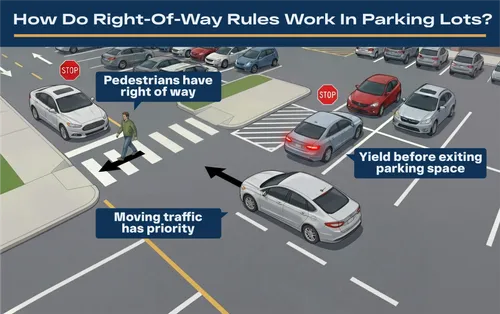
“Right of way” means who should go first in a traffic situation. Pedestrians often have strong right-of-way protections in marked walkways, crosswalks, and areas where drivers should expect foot traffic. However, fault can still depend on visibility, signage, driver conduct, and whether the pedestrian used reasonable care.
Parking lots can complicate right-of-way rules because private lots may have different layouts, unclear markings, and mixed pedestrian traffic.
Still, fault often depends on practical movement rules:
- Drivers backing out should check for vehicles and pedestrians before moving.
- Drivers backing out of parking spaces need to give way to traffic that is already moving.
- Drivers should obey stop signs, yield signs, lane arrows, and marked pedestrian crossings.
These are just the basics of right-of-way rules and pedestrian safety in parking lots. Pedestrian accident lawyers often review the circumstances of the incident, including whether right-of-way rules were followed, to help determine who may be at fault.
What Should You Do After A Parking Lot Accident?
Take the crash seriously, even if the vehicles were moving slowly. Low-speed crashes can still cause injuries, especially to pedestrians, older adults, children, and people with existing medical conditions.
After a parking lot crash, take these steps when it is safe:
- Move to Safety: Get away from moving vehicles and active lanes.
- Check for Injuries: Call 911 if anyone is hurt or needs emergency help.
- Exchange Information: Get the other driver’s name, license plate, insurance details, and contact information.
- Document the Scene: Take photos of vehicle positions, damage, signs, lane markings, lighting, and visible hazards.
- Identify Witnesses: Ask for names and contact information from people who saw the crash.
- Look for Cameras: Note nearby stores, security cameras, dashcams, and parking lot cameras. Parking lot accident attorneys often look for nearby store, security, or dashcam footage, or parking lot footage, that may show how the crash happened.
- Avoid Fault Statements: Do not guess, apologize, or say you are fine before a medical exam.
Parking lot accident liability can turn on small details. A few seconds of video can show important circumstances. It can reveal whether a driver backed out without looking or whether a pedestrian was visible. It can also indicate whether something blocked a sign or whether poor lighting made the area unsafe.
California also requires drivers to file an SR-1 report with the Department of Motor Vehicles (DMV) within 10 days if anyone is injured or killed or if property damage is over $1,000. This requirement applies even if the injury seems minor.
What Injuries Do Victims Sustain In Parking Lot Accidents?
Parking lot crashes can cause more than vehicle dents. Even a low-speed impact can hurt the neck, back, shoulders, knees, head, or hips. Pedestrians can suffer more serious harm because they have no protection from the vehicle.
Common injuries include:
- Whiplash & Neck Strain: These can occur when a parking lot collision suddenly jolts a vehicle, even at low speeds.
- Back Injuries: Victims may sustain these injuries from the force of impact or twisting during a crash or abrupt stop.
- Herniated Discs: A rear-end or side-impact crash can force the body against the seat, seat belt, or vehicle interior, placing sudden pressure on the spine and contributing to these injuries.
- Concussions: If a driver or passenger’s head hits the steering wheel, window, or headrest during impact, they may suffer a concussion.
- Shoulder & Knee Injuries: Victims may sustain these injuries when they brace for impact and hit the dashboard, door, console, or other interior surfaces during a crash.
- Broken Bones: Victims may suffer broken bones when the crash force throws them against the dashboard, door, window, or other hard surfaces inside the vehicle.
- Cuts, Bruises & Soft Tissue Injuries: These are common from broken glass, sudden impact, or contact with interior surfaces.
- Anxiety, Sleep Issues, or Trauma: A parking lot crash can leave victims afraid to drive, walk through busy lots, or return to the place where the accident happened.
Some injured people need emergency care, imaging, physical therapy, chiropractic treatment, injections, or surgery. Medical records matter because they help connect the injury to the crash and show how the injury affected daily life.
Does Insurance Cover Parking Lot Accidents?
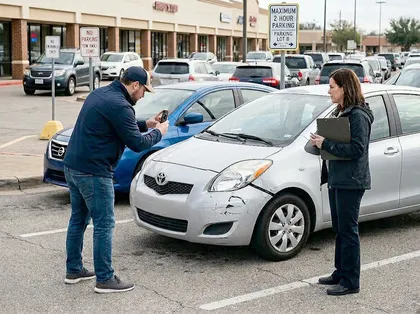
Insurance can cover parking lot accidents, but coverage depends on who caused the crash and what policies apply.
Potential coverage includes:
- Liability Insurance: Covers injuries or property damage caused by an at-fault driver, up to policy limits.
- Collision Coverage: Covers damage to your vehicle under your own policy, subject to any deductible.
- Uninsured or Underinsured Motorist (UM/UIM) Coverage: Applies when the at-fault driver has insufficient insurance or no insurance at all, depending on the policy and the facts. Uninsured motorist coverage may apply to some hit-and-run crashes, depending on the policy, whether physical contact occurred, and whether the crash was reported promptly.
- MedPay Coverage: Helps pay medical bills after a crash, regardless of fault, if included in your policy.
- Commercial or Business Coverage: Can apply if a delivery driver, rideshare driver, company vehicle, store vehicle, or parking operator caused or contributed to the crash.
If a dangerous parking lot condition contributed to the injury, the property owner’s insurance may also be involved. That can complicate the claim because different insurers may point fingers at each other.
Potentially Liable Parties In A California Parking Lot Accident
Liability depends on who or what caused the crash. In California, the injured person must show that another person or business failed to exercise reasonable care. Reasonable care means acting with the level of caution a careful person would use in the same situation.
Several parties can be at fault:
- Driver: They may be responsible if their negligence caused the collision. Careless actions include:
- Backing out without checking for vehicles or pedestrians.
- Driving too fast for conditions.
- Using a phone while driving.
- Ignoring traffic signs or markings.
- Failing to yield.
- Turning into a space without checking for traffic.
- Pedestrian or Other Visitor: Pedestrians may share fault if they acted carelessly. These actions include:
- Walking while distracted.
- Stepping into traffic suddenly.
- Ignoring marked walkways.
- Property Owner or Business: Premises liability applies when they fail to keep the property reasonably safe or warn about known hazards. Unsafe conditions that can contribute to a crash or injury include:
- Poor lighting
- Faded or missing lane markings
- Blocked sightlines
- Unsafe traffic flow
- Broken pavement
- Missing signs
- Overgrown landscaping
- Defective barriers and curbs
- Maintenance Company or Contractor: Companies may be liable if their work created or failed to fix a dangerous condition. Parking lot accident attorneys review contracts, inspection records, repair logs, and maintenance schedules to establish responsibility.
- Vehicle or Parts Manufacturer: A manufacturer may be liable if a vehicle defect contributed to the parking lot accident. Examples include brake failure, faulty backup cameras, or defective parking-assist systems.
When Do I Need A Lawyer After A Parking Lot Accident?
Some victims may think, “I need a personal injury lawyer” when their cases become too challenging to handle on their own. While some claims can be resolved through the insurance process without legal representation, others may require an attorney, especially in more complex cases.
You may need a lawyer’s help in cases that involve:
- Severe Injuries: These cases often involve significant losses that can be difficult to calculate. A parking lot accident attorney can help assess the full extent of losses, including future medical care and long-term impacts.
- Complex Liability: Fault is sometimes shared among multiple parties, complicating a claim. Negotiating fault percentages and proving liability can be challenging without legal guidance.
- Complicated Medical Condition: Many parking lot accidents occur at low speeds, but even low-speed crashes can worsen existing neck, back, joint, or nerve conditions. In California, the eggshell plaintiff rule may allow injured people to recover damages when an accident aggravates a pre-existing condition. These claims often require clear medical records and expert input to demonstrate how the crash affected the person’s health.
Frequently Asked Questions About Parking Lot Accidents
These answers address common questions about parking lot crashes in California.
What Compensation Can A Parking Lot Accident Claim Include?
A parking lot accident claim can seek compensation for losses caused by the crash. The available damages depend on the facts, insurance coverage, injury severity, medical proof, and fault.
Compensation can include:
- Medical bills
- Future medical care
- Lost income
- Reduced earning ability
- Vehicle repair or replacement
- Out-of-pocket costs
- Pain and suffering
- Emotional distress
- Loss of enjoyment of life
Who Is At Fault If Someone Hits My Car In A Parking Lot?
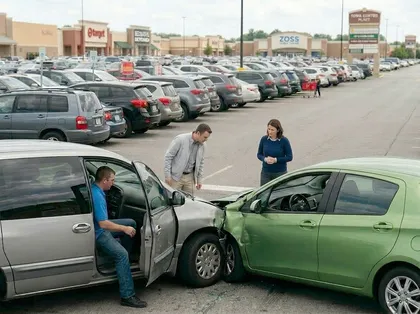
A driver backing out of a space can be at fault if they fail to check for oncoming traffic or other vehicles in the driving lane. A driver moving through a lane can share fault if they were speeding, distracted, or failed to obey markings. Fault ultimately depends on how the crash happened.
Evidence matters more than assumptions. Photos, video, witness statements, and the layout of the lot can help show who acted carelessly.
Can At-Fault Pedestrians Seek Compensation After A Parking Lot Crash?
Even if a pedestrian is partially responsible, they may still pursue damages. While pedestrians can share fault in some situations, drivers still have a duty to use reasonable care, especially in areas where people are walking. California’s pure comparative negligence rule allows any recovery even when a party shares liability. However, the available compensation is reduced depending on their portion of fault.
Will The Police Come To A Parking Lot Accident?
Police may respond if someone is injured, a driver leaves the scene, there is a safety issue, or there’s suspicion of DUI. Some parking lots are private property, so officers may not respond to minor crashes.
Even if police do not come, document the crash yourself. File any required DMV report, notify your insurer, and keep copies of photos, messages, incident reports, and medical records. Lawyers who handle parking lot accidents generally use these records to support claims.
How Long Do You Have To File A Parking Lot Accident Claim In California?
California allows injured people to file a personal injury lawsuit within two years after an accident. However, there can be exceptions.
- If the victim is a minor, the two-year time limit generally doesn’t start until they turn 18.
- For injuries discovered later, the injured person may have 2 years from the date they learned, or could have learned through reasonable care, that the accident caused the injury.
For property damage claims, the deadline is generally three years from the date of the incident. Shorter deadlines can apply if a government entity is involved. For example, if a city-owned vehicle, public parking structure, public employee, or dangerous public property condition contributed to the accident, you may need to file a government claim within six months.
How Much Does It Cost To Hire A Lawyer For Parking Lot Accidents?
The cost of hiring a lawyer depends on the complexity of the case and other factors. Claims with complex liability issues may take more time, evidence, and expert review, which can affect case costs.
If your concern involves the question, “Do lawyers only get paid if they win?” Many car accident lawyers, such as those at Arash Law, handle parking lot accident cases on a contingency fee basis. In such an arrangement, the attorney’s fees are paid out of the recovery if the case is successful. Before signing any agreement, ask the lawyer to explain the case costs and what happens if there is no recovery.
Talk To California Lawyers About A Car Accident In A Parking Lot
Parking lot accidents in California can involve more than a simple fender-bender. Liability can extend beyond drivers alone. Although these incidents are often minor, victims can still suffer real losses. Understanding your rights in these situations is important.
The parking lot accident lawyers at AK Law can review what happened, explain possible liability, and help you understand what legal options you may have. For a free case review, call us at (888) 488-1391.