TL;DR: The first 72 hours after a car accident in Artesia are crucial because early medical care and preserved evidence help prove fault and link your injuries to the crash. Without photos, a police report, and records from an emergency room or urgent care visit, insurers may dispute causation and reduce or deny payment for medical bills, lost wages, and vehicle repairs.
Highlights:
- Photograph the scene and vehicle damage from multiple angles.
- Collect the other driver’s and witnesses’ names, numbers, and insurance details.
- Identify dashcams and nearby cameras, then request footage before it gets overwritten.
- Ask responding officers for the police report number and how to request a copy.
- Get a medical evaluation within 24–72 hours, even if symptoms seem delayed.
- Report the crash to your insurer as soon as reasonably possible under your policy, and decline recorded statement requests from the other party’s carrier.
- Submit an SR-1 form within 10 days if the crash caused injury, death, or more than $1,000 in property damage.
Tip: Start a file for photos, bills, receipts, and symptom notes so you can stick to documented facts.
Table of Contents

The 72 hours after a car accident in Artesia are when your evidence is most vulnerable and most valuable. Evidence can begin to change or disappear soon after a car accident in Artesia. Vehicles may be repaired, roadway debris may be cleared, witnesses may become harder to reach, and some electronic recordings may eventually be overwritten. Taking reasonable steps to preserve available evidence early can help protect an injury claim.
Artesia is a small city, but it sits at the crossroads of several high-volume routes. Traffic can disturb scene evidence, and camera footage may be overwritten according to the device’s or operator’s retention settings. Identifying witnesses and footage sources promptly can help preserve available evidence.
Pioneer Boulevard passes through Artesia’s downtown area and contains many commercial properties. The Los Angeles County Sheriff’s Department’s (LASD) Lakewood Station provides law enforcement services to the City of Artesia. Depending on the circumstances, deputies may respond to a crash and prepare a traffic collision report. However, not every accident results in a full investigation or official report.
Your choices in the first three days shape the strength of every legal option that follows — including whether you see a doctor, preserve footage, or speak carefully with adjusters. Arash Law has worked with injury victims across Los Angeles County who lost significant ground because those early days passed without a plan.
How Liability Works After An Artesia Crash
California places the burden of proving fault on you as the injured party, not on the driver who caused the crash. To recover compensation, you must show that the other driver acted carelessly, that their carelessness caused the collision, and that the collision caused your injuries. Each of those links weakens over time.
Under California Civil Code § 1714, every person bears a legal responsibility to exercise ordinary care to avoid injuring others on the road. California is a fault-based insurance state, which means the party whose negligence caused the crash is responsible for the resulting losses. To establish that responsibility, your claim typically needs to satisfy four legal elements:
- Duty: The other driver had a legal obligation to operate their vehicle safely and avoid foreseeable harm to others.
- Breach: The driver failed that obligation by, for example, running a red light on Pioneer Boulevard, following too closely on a surface street, or driving while distracted.
- Causation: The driver’s breach directly caused the crash and the injuries you suffered.
- Damages: You experienced real, measurable losses, such as medical expenses, lost income, vehicle repair costs, or pain and suffering.
Cases built on evidence gathered in the first days after a crash tend to be stronger. A timestamped photo from the crash site, a collision report from the LASD Lakewood Station, and a medical record from the same day or the day after create a documented chain that connects the other driver’s actions to your injuries. Additionally, insurers can question the cause and severity of your injuries if you didn’t get medical attention right away. That’s why taking these steps within 72 hours of your accident can be crucial.
Step 1: Document The Scene And Contact Law Enforcement
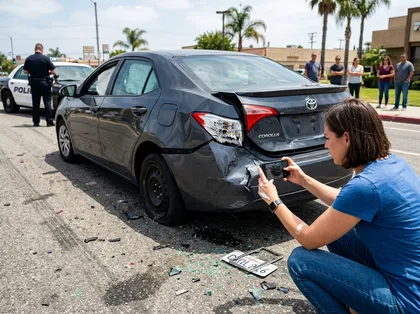
A traffic collision report from the LASD Lakewood Station, located at 5130 Clark Avenue in Lakewood, may become an important record in your claim. If deputies respond to a car crash in Artesia, they may prepare a Traffic Collision Report that includes the parties involved, road conditions, citations, statements, and the responding officer’s initial observations. Ask for the report or incident number when available, since it may help LASD locate the record. You may be able to request a copy in person or through LASD’s records request process.
If you are physically able and the scene is safe, gather the following before emergency responders clear the area:
- Driver and Insurance Details: Full name, license plate, driver’s license number, and insurance carrier and policy number from every driver involved.
- Scene Photographs: Images of both vehicles from all four sides, close-ups of impact damage, debris fields, skid marks, and any nearby traffic signals or street signs.
- Witness Information: Names and phone numbers of anyone who saw the crash before leaving the scene.
- Footage Locations: Note any dashcams on vehicles at the scene and any business or residential security cameras facing the collision point. Footage from commercial cameras along Pioneer Boulevard may be overwritten under the operator’s standard retention policy, so identifying potential sources early may be helpful.
Before leaving the scene, ask for the report or incident number and instructions for obtaining the report, if that information is available.
If the crash was serious enough that paramedics transported you directly from the scene, you could not complete these steps yourself. Take these steps as soon as you are able:
- Contact LASD Lakewood Station at (562) 623-3500 for guidance, or use LASD’s Records and Identification Bureau process to request a traffic collision report as an involved party.
- Photograph your vehicle’s damage at the tow yard.
- Preserve any damaged property, such as clothing, a helmet, or a broken phone, and do not repair or discard it.
Step 2: Get A Medical Evaluation Within 72 Hours
Some car accident injuries may not be obvious right away. Adrenaline and shock can temporarily reduce pain, while symptoms from whiplash, concussions, soft tissue injuries, and internal bruising may appear hours or days later. Seeking medical care within 24 to 72 hours can help protect your health and create an early record of your condition. Prompt evaluation may make it easier to connect your symptoms to the crash.
Insurance adjusters often review how soon an injured person sought treatment after a crash. A delay does not automatically defeat a claim, especially when there is a reasonable explanation. However, a long or unexplained gap may lead to questions about whether the crash caused the symptoms.
Depending on the severity of the crash, emergency personnel may transport an injured person to an appropriate trauma facility. MemorialCare Long Beach Medical Center is an adult and pediatric Level II Trauma Center near Artesia. The facility selected by emergency personnel depends on the crash location, the patient’s condition, travel time, hospital capability and availability, and applicable emergency medical protocols.
Consider the following steps:
- Visit an appropriate medical provider. Depending on your symptoms, this may include an emergency room, an urgent care clinic, a primary care physician, a chiropractor, an orthopedist, or a neurologist.
- Describe all symptoms clearly. Tell the provider about pain, stiffness, dizziness, headaches, numbness, weakness, confusion, or any other changes you noticed after the crash.
- Explain when the symptoms began. Even if they started later, note when they first appeared and whether they have become worse.
- Follow the recommended treatment plan. Attend follow-up visits and tell your provider about any changes in your symptoms or barriers to care.
- Keep copies of your records. Medical notes, imaging results, treatment plans, and bills may help document your injuries and losses.
Your car accident lawyers in Artesia would then have early documentation showing when your symptoms appeared, what treatment you received, and how your providers assessed your condition. After medical paperwork is in place, the focus shifts to using all available evidence to justify your injuries and losses to insurers.
Getting early medical care can be especially important in cities like Artesia, which has documented several traffic-related injuries despite its small size. According to California Office of Traffic Safety data, the city had 61 victims injured or killed in crashes in 2022, followed by 48 in 2023. However, OTS notes city rankings exclude freeway and state-highway crashes where cities do not have jurisdiction. Even in a city of about 15,789 residents as of July 1, 2025, collision-related injuries occur each year, reflecting steady traffic pressure from commuter routes and nearby freeway access.
Step 3: Manage Insurance Communication Carefully
The other driver’s insurance company may contact you soon after the crash. The adjuster’s role is to investigate and evaluate the claim for the insurer. What you say during these early conversations may affect how the insurer views fault, your injuries, and the value of your claim.
When speaking with the other driver’s insurer:
- Avoid Giving a Recorded Statement: You generally do not have to provide a recorded interview to the other driver’s insurance company.
- Keep the Conversation Brief: Confirm basic information, such as when and where the crash occurred, without giving a detailed account before you have reviewed the evidence.
- Do Not Guess About Fault: Avoid speculating about vehicle speeds, distances, visibility, or who caused the crash.
- Do Not Minimize Your Injuries: Some symptoms may not appear right away. Avoid making broad statements such as “I am fine” before you have received a medical evaluation.
- Request Written Communication: You may ask the adjuster to send questions and requests in writing.
Recorded statements may be compared with police reports, witness accounts, photographs, and medical records. An unclear or incomplete statement may lead to disputes about how the crash happened or whether it caused your injuries.
You may also have separate reporting duties after the collision:
- Notifying your own insurer: Most auto insurance policies require policyholders to report a crash promptly. Review your policy and provide notice as soon as reasonably possible.
- File a DMV SR-1 report when required: California generally requires an SR-1 Traffic Accident Report within 10 days when someone is injured or killed, or when property damage exceeds $1,000. This report is separate from a police report and does not replace an insurance claim or lawsuit.
- Save all correspondence: Keep copies of emails, letters, claim numbers, recorded-message requests, and other communications from insurance companies.
- Document your losses: Gather medical records, bills, wage information, repair estimates, photographs, and other evidence before submitting a settlement demand.
California follows pure comparative negligence. This means your percentage of fault may reduce your compensation, but sharing some responsibility does not automatically prevent recovery. For example, if your damages total $80,000 and you are found 25% at fault, your recovery may be reduced to $60,000.
Remember: you are not required to provide a recorded statement to the other insurer. If there is uncertainty about what to say, legal guidance may help keep communication aligned with your claim and deadlines. Find out if getting an attorney for a car accident in California is worth it.
Deadlines That Control Your Artesia Injury Claim
California sets firm legal deadlines that determine how long you have to take action, and those deadlines differ depending on who caused your crash.
- For crashes caused by another private driver. California Code of Civil Procedure § 335.1 generally gives adult victims two years from the date of injury to file a personal injury lawsuit in state court.
A civil case arising from an Artesia crash may be filed in the Los Angeles County Superior Court. The proper filing location should be confirmed through the court’s Filing Court Locator because venue and case-distribution rules may affect where the action is filed or heard. The two-year clock runs from the date of injury, not from the date treatment ends or an insurer issues a denial.
- For car crashes involving government claims. California Government Code § 911.2 generally requires you to present an administrative claim to the responsible public entity within six months. This deadline may apply when a government vehicle, a broken traffic signal, a pothole, a dangerous road condition, or a public-agency maintenance failure contributed to the crash.
Presenting the claim is generally required before you can sue the public entity. Missing the six-month deadline can seriously limit your rights, although California provides a separate late-claim process in certain circumstances. After the agency responds, additional deadlines may apply to filing a lawsuit.
Building a complete case can take significant time because it may involve obtaining medical records, reviewing evidence, negotiating with insurers, and preparing for possible litigation. Preserving evidence within the next 72 hours is important because some evidence may become unavailable or harder to recover over time.
Evidence Custodians For Your Artesia Claim
Knowing who holds your evidence — and how quickly it disappears — helps you act before preservation becomes impossible.
| Evidence | Custodian | What May Happen Without Prompt Action |
|---|---|---|
| Traffic Collision Report | LASD Lakewood Station, (562) 623-3500 | Use the report or file number to check whether the report is available. Some reports may be temporarily unavailable while an investigation is ongoing. |
| Dashcam and surveillance footage | Vehicle owners or businesses along the crash corridor | Retention periods vary by device and operator. Footage may be overwritten if it is not promptly identified and requested. |
| Scene and vehicle photographs | You, responding officers, or tow operator | Your vehicle may be repaired or scrapped within days. |
| Emergency and urgent care records | The treating hospital or clinic | Records are retained per California law, but gaps weaken your causation argument. |
| Witness contact information | You or responding deputies | Witnesses disperse and become harder to locate within days. |
| SR-1 filing confirmation | California DMV | You must file within 10 days. If the deadline has passed, submit the report promptly because untimely reporting may result in DMV action. |
Legal basis: California Vehicle Code § 20012 generally makes traffic accident reports confidential but authorizes disclosure to specified persons, including individuals involved in the accident and others with a proper interest. California Government Code § 911.2 sets the deadline for government claims. California Code of Civil Procedure § 335.1 establishes the limitations period for personal injury claims.
Frequently Asked Questions About Artesia Car Accident Claims
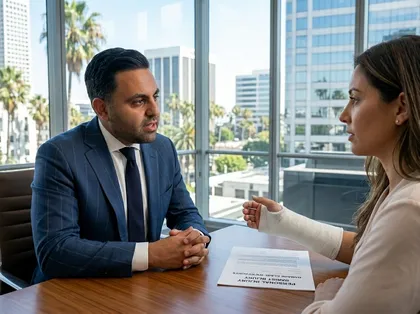
After a crash, the initial shock often gives way to questions about medical care, insurance calls, evidence, and legal deadlines. Many people seeking guidance after an Artesia accident want to understand how the local process works before speaking with anyone. The answers below address the most common questions Arash Law hears from clients in the Artesia area and across Los Angeles County.
What Happens If I Don’t See A Doctor Within 72 Hours Of My Accident?
A gap between the crash date and your first medical visit gives adjusters room to argue that your injuries came from a different cause. The longer the gap, the harder it becomes to confidently link your symptoms to the collision. Seeing a doctor soon after the crash, even if you feel relatively fine, creates a dated medical record that documents your condition in the immediate aftermath, before any alternative explanations can take hold.
Can I Still Recover Damages If I Was Partially At Fault For The Crash?
Yes. California’s pure comparative negligence rule allows you to recover compensation even if you share some responsibility for the accident. Your percentage of fault reduces your total damages. If a court determined you were 30% at fault and your total losses were $100,000, you could recover $70,000. Insurers sometimes use early recorded statements to argue a higher fault percentage, which is one reason to be careful about what you say before your documentation is complete.
How Soon Do I Need To Report The Crash To My Own Insurance Company?
Review your policy and report the accident to your insurer as soon as reasonably possible. Policies commonly require prompt notice, but the exact language and any stated deadline vary by policy. A significant delay, particularly one that limits your insurer’s ability to investigate, can give the carrier grounds to dispute or deny your claim. Keep your description factual and focused on what you observed, not on who you believe was at fault.
What If My Injuries Didn’t Appear Until Days After The Crash?
Symptoms associated with whiplash, concussion, and other soft-tissue injuries may develop or become noticeable hours or days after a crash. If new pain, stiffness, or neurological symptoms develop days after leaving the scene, see a doctor immediately and ensure the treating provider’s notes document the date of the crash and the date each symptom began. That timeline may help support the connection to the collision when considered with the medical findings and other evidence.
Do I Have To Pay Attorney’s Fees Upfront To Get Legal Help?
Many personal injury lawyers handle cases on a contingency fee basis. Under this agreement, you pay no attorney’s fees unless your case results in a recovery, whether through a settlement or a verdict. Additionally, the agreement must also explain how litigation costs and expenses will be handled, including whether the client may be responsible for any costs if there is no recovery.
What Should I Do If The Other Driver Wants To Settle Without Involving Insurance?
Do not accept payment or sign a release before you understand the full extent of the injuries and property damage, your insurance-reporting obligations, and what rights the agreement would waive. Drivers who propose private settlements may not have the financial resources to pay later, may change their account of events, or may simply become unreachable. Take the following steps to protect your claim:
- Report the crash to your insurer.
- Contact the LASD Lakewood Station if a report was not already filed.
- Submit the SR-1 form to the California DMV within the 10-day window.
Your own documented records protect you regardless of what the other driver says later.
Talk To Arash Law About Your Artesia Car Accident
The days immediately after a crash are the most important for your claim, and they are also the days when you are most likely to be managing pain, confusion, and pressure from insurers. Arash Law (also known as AK Law) represents injury victims throughout Los Angeles County, including Artesia. Our Artesia car accident lawyers can help you file a lawsuit in the Los Angeles County Superior Court when necessary. The proper courthouse should be confirmed using the court’s Filing Court Locator, as venue and case-assignment rules may affect where the case is filed or heard.
Arash Law works on a contingency basis. There are no attorney’s fees unless the firm recovers for you. There is no cost to speak with our team. Make Them Pay. Call AK. Call Arash Law at (888) 488-1391 to schedule your free consultation before critical evidence from the crash disappears.
Arash Law Case Results: Car Accidents & Rear-End Collisions
Past results do not guarantee future outcomes. Every case is different, and results depend on the specific facts and evidence involved.
$3,000,000 — Auto Vs. Auto: Evidence Overturned an Inaccurate Police Report. A police report incorrectly blamed Arash Law’s client for running a stop sign. After retrieving the black box data from the other vehicle, the firm uncovered evidence that the other driver was speeding and used physics to demonstrate that the excessive speed caused the crash. The firm recovered the full policy limits for the victim and family.
$1,750,000 — Auto Vs. Auto: Rear-End Collision Causing Severe Back Injuries. A client was violently rear-ended by a distracted driver, resulting in severe back injuries that required surgery. The case was resolved for $1.75 million.