TL;DR: Winding hillside roads in Orinda make accident claims harder to prove because steep grades, blind curves, and narrow lanes increase collision risk. Moraga Way alone prompted a $508,000 joint safety study grant in December 2025 — reflecting government-documented concern about this corridor. Injuries may stem from driver negligence, poor road maintenance, or both. Strict deadlines apply to government and private claims alike, with different rules depending on who owns the road where the crash occurred.
Highlights:
- Identify whether the crash occurred on a public or private road immediately.
- Document road hazards with photographs and dashcam footage before evidence disappears.
- Collect witness names and contact information at the scene.
- Note weather and road conditions that may have contributed to the crash.
- Understand that California uses pure comparative negligence to assign fault.
- File a government claim within six months if a city or Caltrans is responsible.
- Preserve medical records and treatment notes for injury documentation.
Tip: Act quickly to gather physical evidence, as skid marks, debris, and dashcam footage can be lost or overwritten within hours.
Table of Contents

Winding hillside roads make Orinda accident claims harder to prove because they involve more than just steep terrain. The $508,000 Moraga Way safety and connectivity planning grant, awarded in December 2025, shows that local agencies are studying multiple conditions along the corridor. That complexity can make accident claims harder to prove because investigators may need to distinguish between driver negligence, roadway design, visibility, maintenance, and other contributing factors.
Whether fault lies with a driver, the City of Orinda’s Department of Public Works and Engineering, a private homeowners association, or some combination of all three is rarely clear from the scene alone. Arash Law handles these layered claims throughout Contra Costa County, including the Lamorinda area.
A crash on a hillside road in Orinda can upend your morning within seconds. Medical bills arrive before you have figured out what happened, and the physical evidence, such as skid marks, road debris, and dashcam recordings, can vanish just as fast. When road conditions, road ownership, and driver behavior are all in dispute, assigning legal responsibility for your losses becomes a complex problem that requires deliberate, prompt action.
Call Arash Law at (888) 488-1391 to discuss your Orinda hillside road claim.
Why Fault On Orinda’s Hillside Roads Is Rarely Straightforward
Fault depends on both what each driver did and what the road required. California’s Basic Speed Law, found in Vehicle Code § 22350, requires every driver to travel at a speed that is safe for actual conditions, not just within the posted limit. That standard can become especially important on curved sections of Moraga Way, including the corridor between Moraga and Orinda.
Driver behavior and road design can each contribute to a crash, and in Orinda’s hillside environment, they often do so together. A few common contributing factors stand out on these routes:
- Blind Curves and Limited Sight Distance: Tight curves on hillside arterials compress the distance a driver has to react to a hazard ahead. When the view around a bend is blocked by terrain or vegetation, stopping safely depends on speed and pavement condition. Both of which can be in dispute after a crash.
- Steep Grades and Longer Stopping Distances: A downhill grade can increase the distance a vehicle needs to stop. A driver who could safely stop at a given speed on flat pavement may be unable to do so on the same descent in wet conditions.
- Weather and Road Surface Conditions: Orinda is located in the Oakland–Berkeley hills, where seasonal rain, fog or low clouds, and oil buildup after dry spells can affect visibility and pavement conditions. California law treats none of these as an excuse for unsafe speed. Drivers are expected to adjust for conditions they can reasonably anticipate.
A hillside crash does not automatically involve shared fault. One driver may be fully responsible, or the evidence may show that several people or entities contributed to the crash. When the design or maintenance of a public road may have played a role, the injured person must identify the agency responsible for that road and meet the special rules that apply to claims against public entities.
Public vs. Private Road Ownership Changes Everything About Your Claim
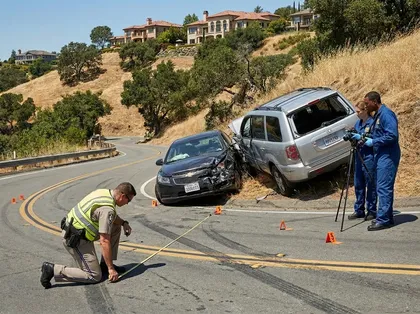
The road where your crash happened may look like a standard city street and still be privately maintained. That distinction determines which legal theory applies, which entity you can pursue, and how quickly you must act. Orinda’s hillside geography includes road segments maintained by the City of Orinda’s Department of Public Works and Engineering, Contra Costa County, Caltrans (for state routes), and private property owners or homeowners’ associations.
Liability analysis starts with a simple question: Who is responsible for the road surface where the hazard existed?
- City-Maintained Streets: If a defect on a city road, such as broken pavement, missing signage, or an eroded shoulder, contributed to your crash, California Government Code § 835 may create liability for the City of Orinda. That statute generally requires proof that the property was in a dangerous condition, that the condition created a reasonably foreseeable risk of the kind of injury that occurred, and that the condition proximately caused the injury. The claimant must also show either that a public employee’s negligent or wrongful act created the condition or that the public entity had actual or constructive notice of it in sufficient time to take protective measures.
- County or State Routes: Crashes on roads maintained by Contra Costa County or Caltrans follow the same Government Claims Act process, but the claim must be submitted to the appropriate agency. Sending a claim to the wrong entity can delay the process and may render it untimely if the correct entity does not receive it before the applicable deadline.
- Private Roads and HOA-Maintained Surfaces: Where a private property owner or homeowners association controls the road, premises liability principles apply. The owner may be legally responsible if they failed to address a known hazard that they knew or reasonably should have known about. These can include overgrown vegetation blocking sightlines at a curve.
Consulting early with an accident lawyer who handles Orinda injury claims can help you identify the correct respondent before a deadline expires. That step matters more than most injured people realize.
Claims against a government agency must be filed much sooner than a standard injury lawsuit. That shorter window makes it key to find out who owns the road right away. Some victims seek free advice from an accident lawyer to help them determine whether a property owner or a public entity is liable for their case.
No matter who owns the road, insurers tend to focus on your own actions to reduce what they owe. An injury law firm in Orinda can help you advocate for a fair assessment of fault in these cases.
How California’s Comparative Fault System Works in Contra Costa County Courts
California follows a pure comparative negligence system, adopted by the California Supreme Court in Li v. Yellow Cab Co. (1975), interpreting the general negligence standard in Civil Code § 1714. This means fault for an accident can be divided among multiple parties, including you. Your potential recovery is reduced by whatever percentage of fault a court assigns to your own conduct. If the Contra Costa County Superior Court finds you 20% responsible for the crash, your recovery is reduced by that 20%.
Insurers almost always raise comparative-fault arguments in hillside road cases because the road environment itself provides them with material. An adjuster may argue that you were traveling too fast for the curve, failed to account for wet pavement after the first fall of rain, or should have anticipated limited visibility. These arguments are predictable. They can be answered with the right evidence gathered quickly after the crash.
California’s pure comparative negligence rule does not bar your claim just because you share some fault. You may still recover damages even if you were more at fault than the other party, but the court will reduce your award by your percentage of responsibility. This makes evidence about what each party did and how the road conditions affected the crash important when fault and damages are calculated.
Building Your Evidence Before It Disappears
Many dashcams use loop recording, overwriting the oldest unprotected footage when the memory card becomes full. Similarly, physical evidence from a Moraga Way crash can be gone before you have finished treating your initial injuries. Preserving that evidence is one of the most time-sensitive steps after any Orinda hillside accident.
These are the evidence categories that carry the most weight in Orinda hillside road accident cases:
- Traffic Collision Report: Orinda Police Services, staffed by the Contra Costa County Sheriff’s Office, investigates traffic accidents within city limits and issues collision reports. An involved person or other authorized interested party may request the collision report from the Contra Costa County Sheriff’s Office.
- Dashcam and Roadway Photographs: Remove and preserve your dashcam’s storage card immediately. Take photographs of the road geometry, skid marks, road surface, signage, and any visible hazards. Skid marks fade with weather and traffic. Road debris is often cleared by the next morning.
- Witness Information: Orinda’s hillside roads carry commuter and residential traffic, but witnesses are not guaranteed at a crash scene. If anyone stops, get their name and phone number before they leave.
- Crash History Data: City-level collision records for Moraga Way and other Orinda corridors may help identify earlier collisions or trends. Accident lawyers can use intersection-level collision history to establish a pattern of hazards at a specific road segment. However, the data may be delayed, provisional, incomplete, or subject to correction. Prior crashes do not automatically prove that a road was legally dangerous.
- Road Maintenance Records: If a public road defect may have contributed to your crash, the City of Orinda’s Department of Public Works and Engineering holds maintenance and repair records for city-managed streets. A preservation letter can place the City on notice that relevant maintenance and repair records should be retained. However, the letter itself does not guarantee their preservation or production.
- Medical Records and Treatment Notes: Consistent treatment, whether through a physician, physical therapist, or chiropractor, creates a documented record of the extent and progression of your injuries. Some injuries from hillside crashes, including soft-tissue injuries and concussions, are not immediately apparent. If your recovery includes ongoing care such as chiropractic treatment, follow your provider’s recommended schedule consistently, as insurers often use gaps in treatment to argue your injuries were not as serious as claimed.
The evidence-gathering window is one of the strongest reasons to consult with an attorney early. If you are thinking, “I need a personal injury lawyer,” learning whether hiring a personal injury attorney is right for your situation can be a useful first step.
Contact Arash Law at (888) 488-1391. We can help you preserve evidence and identify every responsible party.
Strict Deadlines For Orinda Hillside Road Accident Claims
The clock on your Orinda hillside road claim starts running on the date of the crash, and different deadlines apply depending on who caused your injuries.
Claims Against Private Parties
If another driver, or a private property owner, caused your crash in Orinda, the California Code of Civil Procedure § 335.1 generally gives you two years from the date of injury to file a personal injury lawsuit in Contra Costa County Superior Court. Check where to file in Contra Costa for the current filing counter locations. Missing that deadline generally forfeits your right to seek compensation, regardless of how strong your evidence is. However, limited exceptions or tolling rules may affect when the filing period begins or ends. This filing window also applies to cases involving injuries at Orinda businesses, restaurants, and shopping areas.
Claims Against a Public Entity
If a road defect on a city, county, or state road contributed to your crash, the Government Claims Act imposes a much shorter deadline. California Government Code § 911.2 requires you to file a written claim with the responsible public entity within six months of the date the claim accrues — typically the crash date.
- City-managed street: Present the claim to the City of Orinda.
- County-managed road: Present the claim to Contra Costa County.
- State-controlled road: A claim against the State of California is generally submitted through the Department of General Services Government Claims Program. Caltrans may help confirm whether the state controlled the road.
A written Government Claims Act claim is not a lawsuit. It is a mandatory administrative step that must be completed before you can file a civil action against the government. Missing the six-month window can bar your claim entirely unless a narrow exception applies.
A person who misses the initial six-month deadline may apply for permission to present a late claim. Government Code § 911.4 generally requires that the application be submitted within a reasonable time and no later than one year after the claim accrued. Grounds may include mistake, inadvertence, surprise, or excusable neglect, but approval is not guaranteed.
Accrual and delayed-discovery rules can be complex. A person should not assume that discovering a road condition later automatically extends the deadline.
The six-month administrative-claim requirement generally applies when the claim seeks damages from a public entity. A crash involving only private parties is usually governed by the standard personal injury filing period.
Frequently Asked Questions About Orinda Hillside Road Accident Claims
These questions reflect what people injured on Orinda’s hillside roads commonly ask when seeking to understand their legal options. Each answer is based on California law and the specific road and agency landscape in Orinda.
Does Rain Or Fog Excuse A Driver Who Lost Control On A Hillside Road?
Rain and fog do not excuse a driver who lost control on an Orinda hillside road. California’s Basic Speed Law (found in Vehicle Code § 22350) requires every driver to adjust speed for actual conditions, including wet pavement, reduced visibility, and seasonal road oil. A driver who fails to slow down for rain or limited visibility on Moraga Way may not be able to rely on an act-of-God defense. Failing to adjust speed for foreseeable conditions may constitute negligence. Negligence means failing to use the care that a reasonable person would use under similar circumstances.
Can I File A Claim Against The City Of Orinda If A Road Defect Caused My Crash?
You can file a claim against the City of Orinda if you can show that the road defect existed on a city-maintained road, that the City of Orinda knew or should have known about it, and that it failed to fix the problem within a reasonable time. Government Code § 835 governs these claims.
The critical step is filing your written Government Claims Act claim with the City of Orinda within six months of the crash date. The City’s Public Works and Engineering Department may hold relevant road-maintenance records. Still, the Government Claims Act claim must be formally presented to the City in the manner required by Government Code § 915. Missing the deadline may bar the claim unless a late-claim procedure or another limited exception applies.
What Happens If The Road Is Maintained By A Private HOA, Not The City?
Private roads controlled by a homeowners’ association are subject to premises liability law, not the Government Claims Act. The HOA or individual property owner may be liable if they knew or should have known about a dangerous condition, such as overgrown vegetation blocking sightlines on a curve, and failed to correct it. The two-year statute of limitations under Code of Civil Procedure § 335.1 applies to injury claims against private parties. This gives you more time than a government claim but remains a firm deadline.
How Can Dashcam Footage Help My Hillside Road Case?
Dashcam footage can show road geometry, weather conditions, the other driver’s speed, and the moment of impact. This timestamped record is often more reliable than witness memory. The problem is that most dashcams record continuously, overwriting older footage as memory fills up. If you were in a crash, remove and preserve your dashcam’s storage card immediately. A written preservation notice may also ask another driver, business, insurer, or public entity to preserve relevant video and electronic records. The notice does not guarantee that the evidence exists or will be produced.
What Should I Do In The Hours Right After A Hillside Crash In Orinda?
Take the following steps immediately to protect your safety and your claim:
- Move to a safe location away from moving traffic.
- Call Orinda Police Services, staffed by the Contra Costa County Sheriff’s Office. Officers may investigate and prepare a collision report, depending on the circumstances.
- Take photographs of the entire scene to document the road surface, signage, sight distance around curves, and any visible hazards.
- Get the names and contact information of any witnesses before they leave.
Can Both The Driver And The Road’s Owner Share Fault For My Injuries?
In some cases, yes. California’s pure comparative fault system allows fault to be distributed among multiple parties. This can include a driver, a public entity, and a private road owner. The Contra Costa County Superior Court can assign percentages of responsibility to each party, and your recovery is reduced only by your own share of fault, not by the portions assigned to other defendants. This is why identifying every potentially liable party early, including the responsible public entity, can directly affect the amount you may recover. Arash Law can evaluate all potential defendants in Orinda hillside claims as part of every initial case review.
Working With Arash Law On Your Orinda Claim
Arash Law (also known as AK Law) serves Orinda and the Lamorinda area, handling injury claims arising from hillside road crashes throughout Contra Costa County. Our attorneys can request traffic collision reports from the Orinda Police Department, send preservation letters to the City of Orinda’s Department of Public Works and Engineering, and investigate prior collision data for Moraga Way and other relevant corridors.
Cost should not prevent you from seeking legal help after a hillside crash. Arash Law handles personal injury cases on a contingency fee basis. This means we charge attorney’s fees only if we recover compensation for you. A contingency fee agreement under California Business and Professions Code § 6147 is put in writing. The agreement explains the fee rate, how case costs are handled, and other terms before representation begins.
MAKE THEM PAY, CALL AK. Reach Arash Law at (888) 488-1391, available 24 hours a day, to discuss your Orinda hillside road accident claim.
Arash Law Case Results: Road Conditions, Government Liability & Disputed Fault
Past results do not guarantee future outcomes. Every case is different, and results depend on the specific facts and evidence involved.
$1,003,000 — Accident: Obstructed Sightline From Overgrown Vegetation. An overgrown bush on a property obstructed a driver’s view, contributing to a crash. Because the at-fault driver was uninsured, Arash Law had to refocus its liability strategy toward the party responsible for the vegetation hazard, ultimately securing a result for the client.
About This Page
This page was prepared by the legal team at Arash Law to help people injured on Orinda’s hillside roads understand the evidence, liability, and deadline issues specific to these claims. It draws on California Government Code §§ 911.2 and 835, Code of Civil Procedure § 335.1, Civil Code § 1714, and Vehicle Code § 22350, as well as the February 2026 Moraga Way safety study grant reported by Lamorinda Weekly, the Contra Costa County Sheriff’s Office Orinda station profile, The Orinda News, and the UC Berkeley SafeTREC Transportation Injury Mapping System. Case results depend on individual facts and circumstances. Prior results do not guarantee a similar outcome. This page is for general informational purposes and does not constitute legal advice.
Sources
- California Government Code § 911.2 – Six-Month Claim Presentation Deadline. California Legislature. https://leginfo.legislature.ca.gov/faces/codes_displaySection.xhtml?lawCode=GOV§ionNum=911.2
- California Code of Civil Procedure § 335.1 – Two-Year Personal Injury Statute of Limitations. California Legislature. https://leginfo.legislature.ca.gov/faces/codes_displaySection.xhtml?lawCode=CCP§ionNum=335.1
- California Civil Code § 1714 – Pure Comparative Negligence. California Legislature. https://leginfo.legislature.ca.gov/faces/codes_displaySection.xhtml?lawCode=CIV§ionNum=1714
- Kochan, Vera. “Moraga and Orinda Awarded $508K Grant for Moraga Way Safety Study.” Lamorinda Weekly, February 11, 2026. https://lamorindaweekly.com/articles/2026/moraga-and-orinda-awarded-508k-grant-for-moraga-way-safety-study
- Contra Costa County Sheriff’s Office – Orinda Station. https://www.cocosheriff.org/bureaus/field-operations/special-operations-division/orinda
- “Orinda’s Department of Public Works and Engineering: Always Busy.” The Orinda News, October 29, 2024. https://theorindanews.com/2024/10/29/orindas-department-of-public-works-and-engineering-always-busy/
- Contra Costa County Superior Court – Where to File. https://contracosta.courts.ca.gov/forms-filing/where-file
- UC Berkeley SafeTREC – Transportation Injury Mapping System (TIMS). https://tims.berkeley.edu/