TL;DR: Uninsured motorist (UM) coverage can apply to pedestrian accidents in California under your own auto policy, even when you were walking and not driving. It may pay for medical bills, lost wages, and pain and suffering, but filing deadlines can be strict. California’s UM statute requires you to act on a UM claim within two years of the accident.
Key Facts
- California Insurance Code (INS) § 11580.2 allows uninsured motorist coverage to apply if an uninsured driver hits you when you’re not driving, meaning a pedestrian can make a UM claim under their own auto policy.
- INS § 11580.2 treats hit-and-run drivers as uninsured motorists, but UM benefits generally require physical contact: either the vehicle hits the pedestrian or hits an object that is propelled into the pedestrian.
- INS § 11580.2(p)(3) generally requires exhausting the at-fault driver’s policy limits before underinsured motorist (UIM) coverage can apply.
- INS § 11580.2(i)(1) requires that, to preserve your UM claim, you must take one of the following actions within two years: file suit, reach an agreement, or institute UM arbitration by written notice sent by certified mail.
Table of Contents

Yes. In California, your auto policy’s UM coverage can cover a pedestrian accident. The coverage follows the person, not just the vehicle. Whether it pays in your specific situation depends on your policy terms, the driver’s status, and INS § 11580.2.
Being struck while crossing the street, sustaining broken bones in a hard fall, and then learning the driver is uninsured is among the worst scenarios you can face as a pedestrian accident victim. In this situation, your own auto policy may be among the only financial protections you have.
How Uninsured Motorist Coverage Applies to Pedestrians in California
The importance of UM coverage in California lies in the fact that it can protect you even when you are not in a car. Under INS § 11580.2, UM coverage can apply if you are not driving when an uninsured driver hits you. That means that, as a pedestrian accident victim, you can file a claim against UM coverage if it’s part of your own auto policy.
INS § 11580.2 also establishes that this coverage may extend to the policyholder’s spouse and relatives of either who qualify as residents of the same household. A child or student living away from home may still qualify depending on the circumstances and policy terms.
That means that, if you or a loved one doesn’t carry UM coverage on your auto policy, you may still be covered if a qualifying relative does carry it. However, coverage is policy-dependent and should be confirmed with your insurer.
UM Claims for Hit-and-Run Pedestrian Accidents
Hit-and-run crashes remain a significant problem across California. In 2023, the state’s Office of Traffic Safety recorded 20,995 hit-and-run injury crashes, resulting in 27,076 injuries. These injuries can be more severe for pedestrians who lack physical protection in a crash, which is why it can be important to understand whether filing a UM claim is an option if you cannot find or identify a fleeing driver.
One important thing to remember is that California law requires physical contact to trigger UM benefits for a hit-and-run claim. The vehicle must have directly hit you or struck an object that was then propelled into you. If a driver swerved toward you, forced you off a crosswalk, or caused you to fall without any actual physical contact, a hit-and-run UM claim generally will not qualify under INS § 11580.2. The physical contact requirement is a firm statutory condition, not a technicality invented by an insurer.
Because that requirement can become disputed, preserving objective evidence is important. Some forms of proof are time-sensitive, such as surveillance camera footage from establishments near the scene of your pedestrian crash. Different security systems retain footage for varying periods, so potentially relevant recordings should be identified and preservation requests sent promptly. Witness statements and police accident reports can also help establish physical contact.
If the hit-and-run driver cannot be identified, California law imposes additional deadlines, as listed in the Deadlines section below.
Data Transparency Note: This article relies on data published by the California Office of Traffic Safety (OTS), primarily its FY 2024 Annual Report, which covers the period from October 1, 2023, through September 30, 2024. The report incorporates traffic safety data from sources including the Fatality Analysis Reporting System (FARS) and California’s Statewide Integrated Traffic Records System (SWITRS). Because some data series were not yet available for the most recent calendar year at the time of publication, figures in this article reflect the latest data reported by OTS and may be updated in subsequent releases.
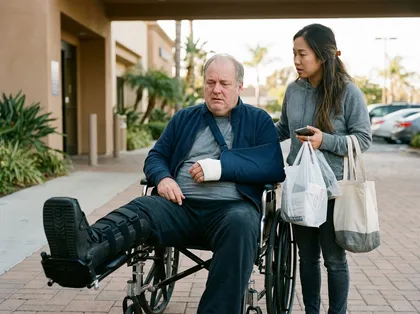
What Compensation Can You Recover Through an Uninsured Motorist Claim?
A UM claim can pay for two categories of losses, namely economic (financial) and non-economic (personal):
- Medical Bills: Emergency room care, surgery, imaging, physical therapy, and specialist visits.
- Lost Wages: Income you missed while recovering from your injuries.
- Future Earning Capacity: Income you may lose if your injuries limit your ability to work long-term.
- Pain and Suffering: Compensation for physical pain and emotional harm caused by the crash.
- Loss of Enjoyment: Compensation for activities, hobbies, or daily routines your injuries prevent you from doing.
California follows the pure comparative fault rule established in Li v. Yellow Cab Co., 13 Cal. 3d 804 (1975). Under this rule, you can still recover compensation even if you share some responsibility for the accident. Your percentage of fault reduces your total recovery. For example, if a jury or arbitrator finds you were 20% at fault, your recovery is reduced by 20%, but you are not barred from recovering the remaining 80%.
This rule matters because your insurer may argue that you were jaywalking, distracted, or otherwise at fault to reduce what it must pay. Even so, the burden is on the insurer to prove your fault and its extent.
California UM Claim Deadlines
Specific deadlines apply to regular pedestrian accident claims against other parties, with California law generally establishing two years to sue for personal injury (CCP § 335.1), three years to sue for property damage (CCP § 338), and six months to present a claim to a liable public entity (GOV § 911.2). Different time limits apply to UM claims, and they instead focus on how long you have to preserve your right to UM benefits.
Deadlines for Claims Involving an Unknown Hit-and-Run Driver
When the at-fault driver or vehicle cannot be identified, California Insurance Code § 11580.2(b) imposes additional notice requirements. You or your representative must:
- Report the accident to the appropriate law enforcement agency within 24 hours.
- File a sworn statement with the insurer within 30 days thereafter. This statement should explain that you have a claim against a person whose identity cannot be determined. It should also establish the facts supporting the claim.
These requirements apply specifically when the owner or operator of the uninsured vehicle is unknown. They are not general deadlines for every UM claim.
The Two-Year Deadline to Preserve UM Rights
A separate two-year deadline applies to preserving the right to pursue UM benefits. Under California Insurance Code § 11580.2(i), within two years of the accident, you must take at least one of the following actions:
- File a bodily injury lawsuit against the uninsured motorist.
- Reach an agreement with your insurer over the amount due under your policy.
- Formally institute arbitration by sending a written notice to the insurer by certified mail, return receipt requested.
If you file a lawsuit against an uninsured motorist, additional rules apply before resolving that case. INS § 11580.2(c)(3) generally requires the insurer’s written consent before you settle with or prosecute an action to judgment against a person who may be legally liable. Violating that requirement can jeopardize UM coverage.
Simply notifying the insurer or opening a UM claim does not, by itself, satisfy this two-year requirement. Because the initial insurance claim and the statutory steps required to preserve UM rights differ, injured pedestrians should promptly report a potential claim and determine which deadlines apply to their circumstances.
What To Do If Your Insurer Denies Your UM Claim
If your UM claim is denied, immediately request a written explanation citing the specific policy language and facts the insurer is relying on. Some insurers look for reasons to deny valid UM pedestrian claims, including by citing policy exclusions out of context, disputing the physical contact requirement, or challenging the medical records that document your injuries.
In California, those practices carry legal consequences. When an insurer wrongfully refuses to pay a valid claim, it may be acting in bad faith. California’s Fair Claims Settlement Practices Regulations generally require that if an insurer denies a first-party claim, it do so in writing and list the reasons, referencing applicable policy provisions (Cal. Code Regs., Tit. 10, § 2695.7(b)(1)). An attorney can evaluate whether the insurer’s response complies with California law and whether a bad faith claim is warranted.
If your insurer denies your UM claim, save every piece of communication with your insurer, including claim acknowledgment letters and notices where the insurer states it may deny coverage while it continues investigating. These are sometimes called reservation-of-rights letters, meaning the insurer reserves the right to deny the claim. Additionally, save any recorded statements you gave. Send your own communications by email or certified mail so the record is complete.
In litigation, relevant nonprivileged portions of an insurer’s claim file may become available through formal discovery. However, attorney-client communications and protected attorney work product can remain confidential, so the entire claim file is not automatically discoverable.
What Should I Do Immediately After Being Hit By An Uninsured Driver As A Pedestrian?
To protect a potential UM claim, report the crash to law enforcement right away. If anyone was hurt, you should report it promptly. Contact your insurer as soon as possible, since policies differ in their notice windows. These steps can help you preserve the ability to pursue a claim for your injuries through the UM process. They can also help give your pedestrian accident lawyer the evidence needed to fight a potential denial:
- Call 911 so law enforcement can respond and generate a collision report. That document can serve as the evidentiary foundation of your UM claim.
- Get medical attention immediately, both for your health and to create a contemporaneous record of your injuries.
- Collect the names and contact information of any witnesses.
- Photograph the scene, the vehicle if it stopped, and your injuries.
- Contact your insurer promptly to report the incident.
- Send written preservation demands to any nearby businesses or agencies that may have captured the collision on camera. That footage can disappear within hours.
- Contact an attorney before giving any recorded statement to your insurer.
What Arash Law Has Recovered For Pedestrian Accident Victims
Arash Law has represented California pedestrian victims whose cases show the full range of harm an uninsured or hit-and-run driver can cause. Past case results include:
$1,000,000 — Auto Vs. Pedestrian: The defendants paid the maximum policy limits after litigation revealed previously undisclosed insurance coverage, which had been hidden for over two years. Before this discovery, the case proceeded without any identified coverage, but once the policy was uncovered, the defendants quickly tendered the available limits.
Injured as a pedestrian by an uninsured or hit-and-run driver? Arash Law’s uninsured motorist accident attorneys can help you. Our team has recovered over $1 billion for California injury victims. Call (888) 488-1391 for a free case evaluation, available 24 hours a day.
Past results do not guarantee future outcomes. Every case is different, and results depend on the specific facts and evidence involved.
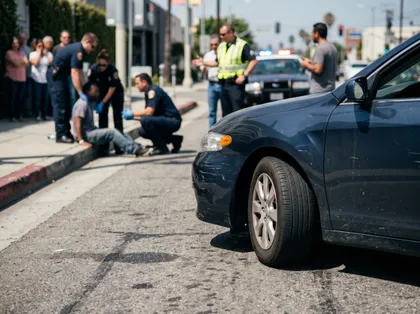
Frequently Asked Questions About Pedestrian Accidents And Uninsured Drivers in California
Being hit by an uninsured driver can leave California pedestrians with serious injuries, unexpected medical expenses, and uncertainty about where compensation will come from. Though UM coverage may apply, it is subject to specific coverage limits, procedural requirements, and deadlines. The following frequently asked questions explain how it may apply after a pedestrian accident, who may be responsible for paying your losses, how health insurance can affect your claim, and the time limits you should keep in mind when pursuing compensation.
What is Not Covered Under UM Coverage?
UM coverage generally does not cover losses unrelated to bodily injury or qualifying damage to the insured vehicle. For example, it typically does not cover theft, vandalism, mechanical breakdowns, normal wear and tear, or damage to personal belongings. It also generally does not apply when the uninsured driver was not at fault for the accident.
In California, uninsured motorist property damage (UMPD) is also limited to qualifying damage to the insured vehicle. Other types of vehicle damage may fall under collision or comprehensive coverage.
Who Pays When an Uninsured Driver Hits You in California?
Your own UM policy is typically the primary source of recovery if you carry that coverage. If you do not have UM coverage, you may be able to sue the at-fault driver directly in court. Collecting a civil judgment from an uninsured driver who lacks assets is often difficult in practice. Your health insurance or Medical Payments (MedPay) coverage can pay medical bills in the meantime, though your health insurer may seek reimbursement from any eventual settlement through subrogation.
Will Filing a UM Claim Raise My Insurance Premiums?
No. California insurance regulations generally limit an insurer’s ability to raise your rates solely because you filed a UM claim when you were not principally at fault for the accident. Still, the exact protections depend on your policy and circumstances. Ask your insurer in writing how it will treat a UM claim, and consult an attorney if you receive an adverse rating action.
Can I Use Health Insurance if an Uninsured Driver Hits Me?
Yes. Your health insurance can pay your medical bills regardless of who caused the crash. Keep in mind that your health insurer may have a right of subrogation, meaning it can seek reimbursement from any UM settlement or judgment you later receive. This is one reason coordinating your claim with an attorney early can protect more of your ultimate recovery.
What Happens if the Driver Who Hit Me was Underinsured, Not Fully Uninsured?
You may be able to seek benefits from underinsured motorist (UIM) coverage if it’s part of your auto policy. It generally applies when the at-fault vehicle’s applicable liability limit is lower than your applicable UIM limit. The at-fault liability limits must first be exhausted by judgment or settlement, and proof of payment must be submitted to your UIM insurer. However, UIM coverage does not apply merely because your damages exceed the other driver’s liability limit. Your insurance carrier’s maximum liability is generally reduced by amounts paid by or for legally liable parties.
Talk To Arash Law About Your California UM Pedestrian Claim
UM pedestrian claims are among the most complex personal injury matters in California. They involve your own insurer, INS requirements, strict evidence preservation windows, and deadlines that can cut off your rights permanently. You should not navigate that alone.
Arash Law has recovered over $1 billion for California injury victims. Every personal injury case is handled on a contingency fee basis, meaning you owe no attorney’s fees unless we recover compensation for you, consistent with California’s written fee agreement requirements under Business and Professions Code § 6147.
Our team is available 24 hours a day to review the facts of your case, explain your options under California law, and help you understand what the UM process actually involves. Call Arash Law at (888) 488-1391 for a free case evaluation.
Make ’Em Pay, Call AK.
Sources
California Insurance Code § 11580.2: Mandatory uninsured/underinsured motorist coverage; physical contact requirement for hit-and-run UM claims; UM preservation deadline; UIM exhaustion requirement. California Legislature.
https://leginfo.legislature.ca.gov/faces/codes_displaySection.xhtml?sectionNum=11580.2.&lawCode=INSCalifornia Code of Civil Procedure § 335.1: Two-year statute of limitations for actions involving injury to, or death of, an individual caused by the wrongful act or neglect of another. California Legislature.
https://leginfo.legislature.ca.gov/faces/codes_displaySection.xhtml?sectionNum=335.1.&lawCode=CCPCalifornia Code of Civil Procedure § 338: Three-year statute of limitations for actions involving injury to real or personal property. California Legislature.
https://leginfo.legislature.ca.gov/faces/codes_displaySection.xhtml?sectionNum=338.&lawCode=CCPGovernment Code § 911.2: Six-month deadline for presenting an administrative claim to a public entity in California. California Legislature.
https://leginfo.legislature.ca.gov/faces/codes_displaySection.xhtml?sectionNum=911.2.&lawCode=GOVCal. Code Regs., tit. 10, § 2695.7(b)(1): Fair Claims Settlement Practices Regulations governing written denial content requirements, including the obligation to state reasons and reference applicable policy provisions. California Department of Insurance.
https://www.insurance.ca.gov/01-consumers/130-laws-regs-hearings/05-CCR/fair-claims-regs.cfmLi v. Yellow Cab Co., 13 Cal. 3d 804 (1975): California Supreme Court decision establishing the pure comparative fault rule.
Disclaimer
The information on this page is for general educational purposes and does not constitute legal advice. No attorney-client relationship is formed by reading or relying on this content. If you were injured, consult a licensed California personal injury attorney about your specific situation. Arash Law — (888) 488-1391.