TL;DR: Auto insurance helps California drivers meet financial responsibility requirements and can protect against crash-related costs. Liability insurance covers losses caused by an insured driver, while UM/UIM, MedPay, collision, and comprehensive coverage address other risks. Minimum limits may not cover a serious crash, and driving uninsured can restrict recovery for pain and suffering.
Auto insurance is important in California because it can protect you from the financial costs of a crash and help you meet the state’s financial responsibility requirement. Depending on the policy, coverage may pay for injuries or property damage caused by an insured driver and help cover losses involving you, your passengers, or your vehicle.
One serious car accident can cost far more than the repair bill. Medical care, missed work, vehicle damage, and claims from others can create expenses that far exceed what many drivers could pay on their own.
California requires drivers and vehicle owners to show financial responsibility. Most people meet this requirement through auto liability insurance. However, meeting the legal minimum is only one part of protecting yourself. Your coverage, limits, and deductibles affect your financial protection after a crash. They also determine what options you have if another driver caused your injuries.
Key Facts About Auto Insurance in California
- California’s standard minimum liability limits are 30/60/15. For policies issued or renewed on or after January 1, 2025, the minimum limits are $30,000 for injury or death per person, $60,000 for injury or death to two or more people per accident, and $15,000 for property damage under California Vehicle Code § 16056.
- California allows other financial responsibility options. The California Department of Motor Vehicles (DMV) also recognizes a $75,000 cash deposit, qualifying self-insurance, or a $75,000 surety bond as alternatives to a standard liability insurance policy.
- Low-cost insurance has different liability limits. The California Low Cost Automobile Insurance Program (CLCA) offers lower-cost liability coverage to qualified drivers. Its limits are $10,000 for bodily injury to one person, $20,000 for bodily injury per accident, and $3,000 for property damage.
- UM/UIM coverage must be offered. California insurers must offer uninsured and underinsured motorist coverage with auto liability policies, and declining requires a written waiver.
- Being uninsured can limit injury compensation. California’s Proposition 213 can prevent certain uninsured drivers and vehicle owners from recovering non-economic damages, including pain and suffering.
Table of Contents

Why the Minimum Liability Insurance Requirements May Not Be Enough
California’s minimum liability insurance requirements may not cover all losses from a serious crash. Higher insurance limits may provide more financial protection for medical expenses, lost income, or property damage, especially in serious crashes.
For standard auto policies issued or renewed on or after January 1, 2025, California generally requires at least:
- $30,000 for injury or death to one person.
- $60,000 for injury or death to more than one person in one accident.
- $15,000 for property damage.
These are commonly called 30/60/15 limits. Before 2025, the standard minimum limits were 15/30/5.
A serious injury may involve emergency care, surgery, rehabilitation, and months away from work. Damage to a newer vehicle can also exceed the $15,000 property damage limit.
Drivers should review what their policy covers, its limits, and what costs they could still face after a serious crash. California car accident lawyers can review which insurance policies may apply when available coverage does not fully cover the losses.
What Types of Auto Insurance Coverage Are Available in California?
California drivers can choose from liability, UM/UIM, MedPay, collision, and comprehensive coverage. Each protects against different financial risks after a crash. Liability insurance is the most common way to meet California’s financial responsibility requirement. UM/UIM must be offered, while MedPay, collision, and comprehensive coverage are optional under state law.
| Coverage Type | What It Covers | Required in California? |
|---|---|---|
| Liability | Pays for covered injuries or property damage an insured driver causes to others. | Usually used to meet financial responsibility requirements. |
| UM/UIM | Helps with bodily injury losses caused by uninsured or underinsured drivers. | Must be offered; may be rejected or reduced in writing. |
| MedPay | Pays covered medical expenses for you and passengers regardless of fault. | Optional |
| Collision | Pays for covered damage to your vehicle from a collision. | Optional under state law |
| Comprehensive | Pays for covered non-collision losses such as theft, fire, vandalism, or flood. | Optional under state law |
A lender or leasing company may require collision and comprehensive coverage even though California’s financial responsibility laws do not require it. Policy terms, exclusions, deductibles, and limits can also vary.
What Does Liability Insurance Cover?
Liability insurance can pay for covered injuries and property damage you cause to other people in a crash. It generally does not cover your own injuries or damage to your vehicle.
California generally uses a fault-based system for car accidents. A driver who causes a crash may be responsible for the resulting injuries and property damage. How much an insurer pays depends on the policy limits and terms.
- Bodily Injury Liability: Can cover costs such as another person’s medical bills, lost wages, and other damages when an insured driver causes injury.
- Property Damage Liability: Can pay for damage an insured driver causes to another person’s vehicle or other property.
What Happens if Damages Exceed Your Liability Limits?
If covered damages exceed your liability limits, the insurer generally will not pay more than the applicable policy limit. The responsible driver may remain personally liable for amounts that exceed available coverage.
For example, if a driver has a $30,000 bodily injury limit and causes a crash that results in $80,000 in damages to one person, the policy generally pays no more than $30,000 under that coverage.
Whether the driver must personally pay the remaining amount depends on the facts and applicable law. Drivers with assets to protect may choose liability limits higher than California’s minimum requirements.
Why UM/UIM Coverage Is Important
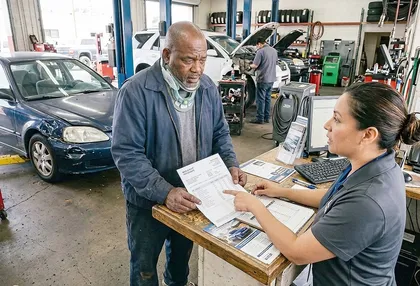
Having uninsured/underinsured motorist (UM/UIM) coverage is important because it can help cover bodily injury losses when an at-fault driver has no insurance or does not have enough liability coverage. The Insurance Research Council estimated that 20.4% of California motorists were uninsured in 2023, or about one in five.
California insurers must offer uninsured motorist coverage with an auto liability policy. Policyholders may reject or reduce the coverage in writing under Insurance Code § 11580.2.
Depending on the policy, UM/UIM coverage may include:
- Uninsured Motorist Bodily Injury (UMBI): Can cover injuries to you and your passengers when an uninsured driver is at fault.
- Underinsured Motorist (UIM): May apply when the at-fault driver’s bodily injury limits are lower than your applicable UIM limits. The at-fault driver’s available bodily injury coverage generally must be exhausted first.
- Uninsured Motorist Property Damage (UMPD): Can cover vehicle damage caused by an identified uninsured driver. California’s standard UMPD limit is $3,500. Your UMPD coverage may work differently if you also carry collision coverage.
If you and your insurer disagree about whether you are entitled to recover damages from an uninsured or underinsured driver, the issue generally goes to arbitration. Arbitration can also determine the amount of those damages under California Insurance Code § 11580.2(f).
How MedPay Can Help After an Accident
Medical Payments (MedPay) can help pay covered accident-related medical expenses for you and your passengers, regardless of who caused the crash. Depending on the policy, MedPay may cover:
- Ambulance transportation.
- Emergency room care.
- Hospital treatment.
- Surgery.
- Rehabilitation.
- Medical equipment.
MedPay may cover eligible expenses before fault is determined and generally has no deductible. It may therefore help cover medical bills while the at-fault driver’s insurer investigates or evaluates a bodily injury claim. MedPay is optional and generally provides narrower benefits than PIP coverage available in some other states.
Collision and Comprehensive Coverage Protect Your Vehicle
Collision and comprehensive coverage can help pay for damage to your own vehicle, but they cover different types of losses.
Collision coverage generally pays for covered crash-related damage to your vehicle. It may apply if:
- Another driver hits your vehicle.
- Your vehicle collides with another car or object during the crash.
- You lose control while trying to avoid a collision.
- Your vehicle rolls over.
A deductible usually applies. If another driver caused or contributed to the crash, you may still be able to use your own collision coverage while the insurers investigate fault. Your insurer may then seek reimbursement from the responsible party or that party’s insurer.
If your insurer recovers money from another party, you may receive some or all of your deductible back, although reimbursement is not guaranteed.
Comprehensive coverage protects against many losses that do not result from a collision. It may cover:
- Theft.
- Vandalism.
- Fire.
- Flooding.
- Hail or wind damage.
- Falling trees or other objects.
- Contact with an animal.
Neither coverage is required under California’s financial responsibility laws. However, a lender or leasing company may require both while you finance or lease the vehicle.
Collision and comprehensive coverage may also leave a gap after a total loss if you owe more on the vehicle than it is worth. Guaranteed Asset Protection (GAP) coverage may help pay some or all of the difference between the insurance payment and the remaining loan or lease balance, depending on its terms.
What Happens If You Drive Without Insurance or Other Financial Responsibility in California?
Driving without the required financial responsibility can create problems even if you did not cause the crash. You may face state penalties, and being uninsured can also limit the compensation you can recover.
You May Face Penalties for Driving Uninsured
California requires drivers to show financial responsibility, which most people do by carrying auto insurance.
If you drive without the required financial responsibility, possible consequences include:
- Fines or a traffic citation.
- Suspension of your driver’s license.
- Suspension of the vehicle’s registration.
- Vehicle impoundment in some situations.
These penalties can apply separately from any injury claim you may have after the crash.
Being Uninsured Can Reduce What You Recover
California’s Proposition 213 can prevent certain uninsured drivers and vehicle owners from recovering non-economic damages, even when another driver caused the accident.
Non-economic damages include losses such as:
- Pain and suffering.
- Emotional distress.
- Physical impairment.
- Disfigurement.
- Loss of enjoyment of life.
However, being uninsured does not automatically eliminate your entire injury claim. You may still be able to recover economic damages, such as medical expenses, lost income, and property damage, to the extent another party was responsible for the crash.
For someone seriously injured in a crash, losing the right to seek pain-and-suffering damages can make a major difference in the value of the claim.
A DUI Conviction May Create an Exception
There is a limited exception when the driver who caused the crash was convicted of driving under the influence (DUI).
If you were an uninsured owner or operator and the at-fault driver was convicted of DUI in connection with the crash, you may still be able to seek non-economic damages.
The exception does not apply to every uninsured person involved in a DUI crash. Whether it applies depends on your role in the accident and the specific facts of the case.
Important Deadlines After a California Car Accident
For most California car accident injury claims, you have two years from the date of the injury to file a lawsuit. However, some claims have much shorter or different deadlines.
An open insurance claim usually does not pause the filing deadline. The insurer may still be investigating the crash or negotiating a settlement when your time to sue expires. This is why knowing when it may be too late to make an insurance claim is different from knowing how long you have to file a lawsuit.
Other time limits may include:
- Government Claims: If a public entity may be responsible, such as for a dangerous road, traffic signal, or government vehicle, shorter deadlines can apply.
- Initial Claim: You generally must present an injury claim within six months of the incident that caused the claim to be made.
- Late-Claim Request: If you miss the initial six-month deadline, limited relief may be available. The application must generally be made within one year of when the claim accrues, usually on the date of the accident.
- After a Rejection: If the public entity sends a proper written rejection notice, you generally have six months from the date the notice is delivered or mailed to file a lawsuit.
- No Proper Rejection Notice: A different lawsuit deadline may apply if the entity does not send a proper written rejection notice.
- Claims Involving Minors: The deadline for many private injury claims may be paused while the injured person is under 18. However, this usually does not extend the six-month deadline for a government claim.
- Property Damage: Claims for damage to a vehicle or other personal property generally have a 3-year statute of limitations.
- Uninsured Motorist Claims: California law generally requires individuals to take one of several formal actions within 2 years of the crash. These include filing suit against the uninsured driver, reaching an agreement with the insurer, or initiating arbitration proceedings.
- Unknown Hit-and-Run Drivers: UM claims involving an unidentified driver have special requirements. California law generally requires physical contact with the unknown vehicle, a report to the appropriate law enforcement agency within 24 hours, and a sworn statement to the insurer within 30 days.
Failing to meet an applicable deadline can affect your ability to recover compensation even when an insurance claim is still open. Because one accident can involve several deadlines at the same time, identify which rules apply early rather than relying on the insurer’s timeline. Evidence can also disappear quickly, so preserve any available photos, videos, records, and other evidence as soon as possible after a crash.
If you were injured in a California crash and are unsure which insurance coverage or deadline applies, Arash Law can review your situation. Call (888) 488-1391 for a free case evaluation. The firm’s hotline is available 24 hours a day, 7 days a week.
What Arash Law Has Recovered in Insurance-Related Cases
Insurance issues can affect how much coverage is available and whether an injured person receives the benefits owed under a policy. Arash Law has handled cases involving disputed coverage, policy-limit payments, and UM/UIM claims. Among our published case results are:
$2,500,000 — Car Accident: A speeding driver struck the vehicle while the client was parked on the side of the road. Arash Law initially settled the claim within the defendant’s policy limits, but the insurer did not pay the settlement on time. Our team pursued the insurer and ultimately recovered $2.5 million.
$1,000,000 — Hit-and-Run Recovery: A rideshare driver was injured when another driver struck the vehicle and fled. The claim involved litigation over underinsured motorist coverage and was resolved for the maximum policy limits one week before arbitration.
Past results do not guarantee future outcomes. Every case is different, and results depend on the specific facts and evidence involved.
Frequently Asked Questions About Auto Insurance in California
California drivers often have questions about what their auto insurance covers after a crash. These FAQs address several common coverage issues that may affect drivers, passengers, and vehicle owners.
What If I Lend My Car To Someone And They Cause An Accident?
Your auto policy may cover someone who has permission to drive your vehicle and who causes an accident, but coverage depends on the policy and the circumstances. In many cases, the vehicle owner’s insurance applies first, while the driver’s own insurance may provide additional coverage.
Exclusions, household-driver rules, and other policy terms can change the result. If you regularly allow someone else to drive your vehicle, check whether your insurer requires that person to be listed on the policy.
Do I Need Medpay If I Already Have Health Insurance?
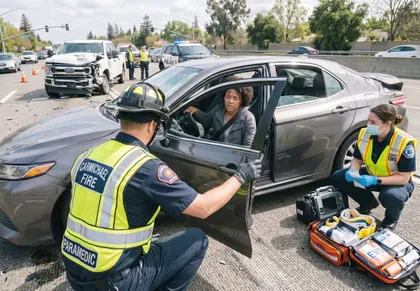
MedPay can still be useful even if you have health insurance. It may help pay covered accident-related medical expenses, including deductibles, co-pays, or other eligible costs, up to the MedPay limit.
It may also cover passengers in your vehicle. How MedPay works with health insurance depends on the policies involved, so drivers should review the terms of both coverages.
Do I Need Um/Uim Coverage If I Have Health Insurance?
Health insurance does not replace UM/UIM coverage because the two protect against different losses. Health insurance primarily helps pay for medical treatment. UM/UIM coverage may provide compensation for other covered losses caused by an uninsured or underinsured driver, such as lost income and pain and suffering.
UM/UIM can therefore provide protection that health insurance alone does not. The amount and availability of benefits depend on fault, policy limits, and the terms of the coverage.
What Is The Difference Between A Policy Limit And A Deductible?
A policy limit is the most an insurer will generally pay for a covered loss or claim, subject to the policy terms. A deductible is the amount you may have to pay toward a covered loss before certain insurance benefits apply.
For example, collision coverage might have a $1,000 deductible, while liability coverage could have a $30,000 bodily injury limit per person. Each affects your policy differently.
Can More Than One Auto Insurance Policy Apply After A Crash?
Yes. Depending on the circumstances of the accident, more than one insurance policy may provide coverage.
Possible sources include:
- The at-fault driver’s liability insurance
- Your own UM/UIM or MedPay coverage
- A commercial policy
- Rideshare coverage
More than one policy may be needed when the available coverage under a single policy does not fully cover the losses.
How Often Should I Review My Auto Insurance Coverage?
Check your auto insurance yearly and after big life changes. This helps you see if your coverage and limits still fit your needs.
Review your policy if you:
- Buy or lease a vehicle
- Add a household driver
- Move
- Change your driving habits
- Face a big financial shift
You can check your liability limits, deductibles, UM/UIM coverage, MedPay, collision, and comprehensive coverage when you renew your policy.
Talk to Arash Law About Insurance Issues After a California Crash
A serious crash may involve several insurance policies and coverage limits. Identifying which coverage applies can affect the amount available for an injury claim.
Arash Law represents people injured in California traffic accidents. Depending on the case, our attorneys may review insurance policies, coverage limits, claim correspondence, collision reports, and medical records to identify possible sources of recovery.
Arash Law handles personal injury cases on a contingency-fee basis. Attorneys’ fees are collected only if there is a recovery. Case costs may apply, and the fee arrangement is explained during the consultation.
Call Arash Law at (888) 488-1391 for a free case evaluation. The firm’s accident hotline is available 24 hours a day.
Arash Law. Make them pay, call AK.
Sources
California Department of Insurance (CDI) — Automobile Insurance Guide. Explains California auto insurance coverage, liability limits, MedPay, collision, comprehensive, UM/UIM coverage, and optional protections. https://www.insurance.ca.gov/01-consumers/105-type/95-guides/01-auto/auto101.cfm
California Legislative Information — Vehicle Code § 16020. Establishes California’s requirement for drivers and vehicle owners to maintain evidence of financial responsibility. https://leginfo.legislature.ca.gov/faces/codes_displaySection.xhtml?lawCode=VEH§ionNum=16020
California Legislative Information — Vehicle Code § 16056. Sets the minimum bodily injury and property damage liability amounts that apply to standard policies issued or renewed on or after January 1, 2025. https://leginfo.legislature.ca.gov/faces/codes_displaySection.xhtml?lawCode=VEH§ionNum=16056
California Legislative Information — Insurance Code § 11580.2. Governs uninsured and underinsured motorist coverage, written waivers, arbitration, and certain claim requirements. https://leginfo.legislature.ca.gov/faces/codes_displaySection.xhtml?lawCode=INS§ionNum=11580.2
California Legislative Information — Civil Code § 3333.4. Establishes Proposition 213’s restrictions on non-economic damages for certain uninsured vehicle owners and operators. https://leginfo.legislature.ca.gov/faces/codes_displaySection.xhtml?lawCode=CIV§ionNum=3333.4
California Legislative Information — Code of Civil Procedure § 335.1. Establishes the general two-year statute of limitations for personal injury and wrongful death actions based on another person’s wrongful act or neglect. https://leginfo.legislature.ca.gov/faces/codes_displaySection.xhtml?lawCode=CCP§ionNum=335.1
California Legislative Information — Code of Civil Procedure § 338. Establishes the general three-year statute of limitations for claims involving damage to personal property. https://leginfo.legislature.ca.gov/faces/codes_displaySection.xhtml?lawCode=CCP§ionNum=338
California Legislative Information — Code of Civil Procedure § 352. Addresses tolling for minors and certain persons lacking legal capacity, and explains that this tolling does not apply to qualifying claims against public entities or employees. https://leginfo.legislature.ca.gov/faces/codes_displaySection.xhtml?lawCode=CCP§ionNum=352
California Legislative Information — Government Code § 911.2. Generally, claims involving death, personal injury, or injury to personal property must be presented to the public entity within six months after the cause of action accrues. https://leginfo.legislature.ca.gov/faces/codes_displaySection.xhtml?lawCode=GOV§ionNum=911.2
California Legislative Information — Government Code § 911.4. Allows an application for permission to present certain late government claims and generally requires the application to be filed within one year after the cause of action accrues. https://leginfo.legislature.ca.gov/faces/codes_displaySection.xhtml?lawCode=GOV§ionNum=911.4
California Legislative Information — Government Code § 945.6. Sets the deadlines for filing a lawsuit after a government claim is rejected, including the six months following proper written notice of rejection and a different period when proper notice is not given. https://leginfo.legislature.ca.gov/faces/codes_displaySection.xhtml?lawCode=GOV§ionNum=945.6
California Department of Insurance (CDI) — California’s Low Cost Automobile Insurance Program. Explains eligibility and coverage available through California’s state-sponsored low-cost auto insurance program. https://www.insurance.ca.gov/01-consumers/105-type/95-guides/01-auto/lca/
Insurance Information Institute (III) — Facts + Statistics: Uninsured Motorists. Provides Insurance Research Council estimates of uninsured motorist rates by state, including California’s 2023 estimate. https://www.iii.org/fact-statistic/facts-statistics-uninsured-motorists
Disclaimer
The information on this page is for general informational purposes only and does not constitute legal advice. Reading this page does not create an attorney-client relationship. Past case results do not guarantee a similar outcome. Insurance coverage depends on the policy terms, applicable limits, and the facts of the claim. Laws and insurance requirements may also change. Consult a qualified California personal injury attorney about the coverage, deadlines, and legal rules that apply to your situation. Arash Law, (888) 488-1391.