TL;DR: After a bike accident in California, avoid admitting fault or making statements such as “I didn’t see you” or “I think I was going too fast.” You should also avoid saying “I’m fine” before you know the extent of your injuries. A simple expression of sympathy, such as “I’m sorry,” is generally inadmissible as an admission of liability. However, a statement of fault made with it may still be used as evidence.
After a bike accident in California, avoid admitting fault or making statements such as “I think I was going too fast.” You should also avoid saying “I’m fine” before you know the extent of your injuries. Although a simple expression of sympathy, such as “I’m sorry,” is generally not admissible as an admission of liability under California Evidence Code (EVID) § 1160, any statement of fault made with it may still be used as evidence.
Your words can also affect how an insurer evaluates the severity of your injuries. Saying you are “fine” before you have been medically evaluated may later be compared with your treatment records or symptoms. Statements about speed, fault, or what you think happened may also be used during the investigation of your claim.
For that reason, it is generally safer to stick to basic facts, avoid admitting fault, and avoid making assumptions about your injuries. What you say in the hours and days after the crash can become part of the evidence considered when disputes over liability and damages arise.
Key Legal Facts to Know About What You Say After a Bike Accident
- Expressions of sympathy, such as “I’m sorry,” are generally inadmissible as an admission of liability. However, statements of fault made with them may still be used as evidence (EVID § 1160).
- Comments such as “I’m fine” or “I’m only a little sore” may later be compared with your medical records, symptoms, and treatment if the insurer disputes the severity or cause of your injuries.
- A driver involved in a motor vehicle crash resulting in injury or death generally must submit a written report to the California Highway Patrol (CHP) within 24 hours. If the crash occurred within a city, the report may be made to either the CHP or the city’s police department under California Vehicle Code (VEH) § 20008.
- A personal injury claim against a public entity generally must be presented within six months after the claim accrues or arises (such as the day of the bike crash) under Government Code (GOV) § 911.2.
- You generally have two years from the date of injury to file a personal injury lawsuit against a private party under Code of Civil Procedure (CCP) § 335.1.
- You generally have three years to file a lawsuit for damage to a bicycle or other personal property under CCP § 338(c)(1).
Table of Contents

Never Admit Fault or Apologize at the Scene
A simple expression of sympathy, such as “I’m sorry,” is generally inadmissible as an admission of liability under EVID § 1160. However, that rule does not protect statements of fault made with an apology. For example, saying “I’m sorry, I wasn’t paying attention” may provide evidence of fault.
An admission of fault can affect your case because California follows a pure comparative negligence system. Under it, you can still pursue a bicycle accident claim, even if you’re up to 99% responsible for the crash. However, your percentage of fault generally reduces your potential recovery. For example, if a cyclist has $100,000 in damages and is found 10% at fault, the recoverable damages would be reduced to $90,000.
Other statements that may be used as evidence when evaluating fault include:
- “I didn’t see the stop sign.”
- “I turned too early.”
- “I wasn’t paying attention to the light.”
- “I’m not wearing my glasses or contacts.”
- “I was talking on the phone.”
- “I was in a rush.”
Insurers and courts may consider these statements. However, final fault assessments still depend on the available evidence, which may include police reports, photographs, witness statements, and physical evidence from the scene. To protect a potential compensation claim, state only what you know with certainty and allow the investigation to address the rest.
Never Say “I’m Fine” or Downplay Your Injuries
Avoid telling an adjuster, driver, or anyone at the scene of a bike accident that you are “fine” or “just a little sore” if you are not yet sure about your condition. After a bicycle crash, stress and adrenaline can affect how you perceive pain. Some injuries may not be obvious right away. For example, concussion symptoms can appear hours or days later, and other injuries may also become more noticeable over time.
If you tell an adjuster, “I think I’m okay, just a little sore,” that statement may become part of the claim record. The insurer may later use it to argue that your injuries were minor, pre-existing, or unrelated to the bicycle accident. This can be especially important if you have not yet received a medical evaluation.
Among the important things to do after a bicycle-car accident is to describe your symptoms accurately and seek appropriate medical care. If you are unsure about your condition, you can say that you do not yet know the full extent of your injuries and plan to seek medical evaluation. If you are experiencing symptoms, describe them accurately without minimizing or exaggerating them.
Prompt medical evaluation can create records documenting your symptoms and injuries after the bike accident. A delay in seeking care may also give an insurer a basis to question whether the crash caused an injury.
Don’t Say, “Let’s Handle This on Our Own.”
Do not agree to handle a bike accident privately when a motor vehicle is involved, and someone is injured. Instead:
- Contact law enforcement when appropriate to document the incident.
- Get the driver’s name, contact information, license plate number, and insurance information.
- Do not accept cash at the scene.
- Do not agree to settle the claim on the spot.
It may be tempting to exchange information and move on, especially if the driver seems cooperative, but that can make it harder to document what happened.
For crashes involving injury or death, VEH § 20008 generally requires the driver of the motor vehicle involved to submit a written report to the CHP within 24 hours. If the crash occurred within a city, they may also file a report with the local police department.
A collision report may record the parties involved, the location, witness information, and observations from the investigation. If the driver later disputes how the crash happened, that report and other evidence from the scene may help establish the facts.
Never Give a Recorded Statement Without Legal Advice
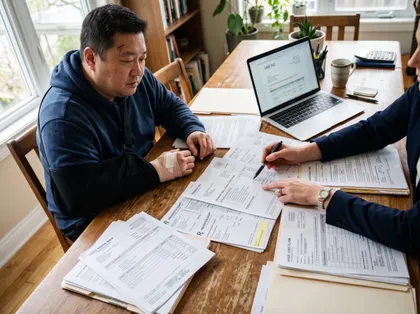
After a bike accident involving a motor vehicle, the other driver’s insurer may contact you to request a recorded statement. You generally do not need to give the other driver’s insurer a recorded statement immediately, so consider speaking with a California bicycle accident lawyer before agreeing to do so.
That’s because, during a recorded statement, an adjuster may ask questions such as:
- “About how fast were you riding?”
- “Did you see the car before it hit you?”
- “Are you feeling better today?”
Your answers may become part of the claim record and may later be considered when the insurer evaluates fault, your injuries, or the value of your bicycle accident claim. This can be especially important when your medical condition is still developing, or the circumstances of the crash are disputed.
If you do not want to give a recorded statement before seeking legal advice, you can say:
“I am not comfortable giving a recorded statement at this time. I would like to speak with an attorney first.”
Notably, the rules may differ if your insurance company requests a statement. Your policy may require you to cooperate with the insurer’s investigation, particularly if you are seeking benefits under your own coverage. Review your policy and consider getting legal advice before refusing a request from your own insurer.
What You Should Do After a Bike Accident
After a bicycle accident in California, your next steps can help protect your health and preserve important evidence for a potential injury claim. Here are a few things you can do:
- Get medical care if you are injured or develop symptoms. Some symptoms may become more noticeable after the crash. Prompt medical evaluation can also create records documenting your condition and treatment.
- Obtain the police or collision report, if one was prepared. Review it for basic information such as the parties involved, the crash location, witness details, and the report number.
- Save the driver’s information. Keep the driver’s name, contact information, driver’s license number, license plate number, and insurance details in a safe place.
- Follow up with witnesses. Preserve the names and contact information of anyone who witnessed the crash in case their accounts are needed later.
- Keep photos and videos from the crash. Save images of your bicycle, the vehicle, road conditions, traffic controls, visible injuries, and any other relevant details.
- Preserve your bicycle and other damaged items. Keep your bike, helmet, clothing, and related equipment in their post-crash condition until they have been properly documented and you have received guidance about preserving evidence.
- Keep records of your losses. Save medical bills, treatment records, receipts, wage information, and other documents related to the accident.
- Be careful when speaking with insurers. Give accurate information, but avoid guessing about the fault or the full extent of your injuries. Consider speaking with an attorney before giving a recorded statement.
- Be careful about social media. Avoid posting about the bicycle accident, your injuries, or your recovery while your claim is pending. Insurers or defense attorneys may review publicly available posts or seek relevant social media content during litigation. Even an innocent photo or comment may be taken out of context when your injuries or limitations are disputed.
What Not to Overlook If a Road Defect Contributed to Your Bike Accident
After a bike accident, it is easy to focus only on what the driver did or said. However, if a pothole, broken pavement, missing sign, poor lighting, or unsafe bike lane condition contributed to the crash, do not overlook the possibility that a city, county, or state agency may also be responsible.
To support a potential claim against a public entity, preserve evidence of the road condition as soon as possible, including:
- Photos or video of the defect and the surrounding area.
- Images of signs, lane markings, and street lighting.
- The exact location of the crash.
- Witness information, if available.
The correct filing route depends on which public entity controls the roadway. A city or county claim generally must be presented to that local public entity. For Caltrans claims, qualifying death, personal injury, and personal-property claims of $12,500 or less may be submitted directly to Caltrans. Claims over $12,500 generally go through the California Department of General Services Government Claims Program. An attorney can help identify the responsible agency and determine where the claim should be presented.
Deadlines for Bicycle Accident Claims and Lawsuits in California
California uses different deadlines for government claims and for filing a lawsuit. The applicable deadline depends on who may be responsible for the bicycle accident:
- Personal Injury Lawsuit Against a Private Party: You generally have two years from the date of injury to file a lawsuit against a private driver, business, or other non-government defendant (CCP § 335.1).
- Property Damage Lawsuit: You generally have three years to file a lawsuit for damage to your bicycle or other personal property (CCP § 338(c)(1)).
- Cases Involving Minors: For many personal injury lawsuits against private parties, the statute of limitations is generally tolled while the injured person is under 18 (CCP § 352(a)). This tolling rule does not automatically extend the government claim-presentment deadline.
If a city, county, or state agency may be responsible, you generally must complete the government claim process before filing a lawsuit. A personal injury claim against a public entity generally must be presented within six months after the claim accrues (GOV § 911.2). Different deadlines for filing a lawsuit may apply depending on how the entity responds within the next 45 days, which is generally how long it has to act on your claim (GOV § 912.4):
- If the claim is rejected in writing, you generally have six months from the date a compliant rejection notice is personally delivered or mailed to file a lawsuit (GOV §§ 913 & 945.6).
- If no qualifying written rejection is sent, you generally have two years from the date the cause of action accrued to file the lawsuit (GOV § 945.6).
Because a bicycle accident may involve a private driver, a public entity, or both, identifying the responsible parties early is important. Missing either a claim-presentment deadline or a lawsuit deadline can affect your ability to pursue compensation.
If you need help identifying which filing window you need to follow after a bike crash, consider calling (888) 488-1391 and scheduling a case review with Arash Law’s bicycle accident lawyers. Our hotline is available 24/7, and your first consultation with us is free, with no obligation to hire us afterward. If you do choose to work with us, we can help you gather time-sensitive evidence and prepare your claim within the necessary deadline.
How Arash Law Can Help Protect What You Say and Do After a Bike Accident
What you say and do after a bicycle accident can affect how an insurer evaluates your claim. Arash Law can help you avoid unnecessary statements, preserve important evidence, and handle communications while you focus on your recovery.
Our attorneys can help you by:
- Handling insurer communications. We can communicate with insurance adjusters and opposing parties, so you do not have to answer questions about fault, injuries, or settlement yourself.
- Preparing you for recorded statements. If a statement is necessary, we can explain what to expect and help you avoid guessing, downplaying your injuries, or making unclear statements.
- Preserving important evidence. We can help identify records, photos, witness information, damaged bicycle equipment, and other evidence that may support your claim.
- Reviewing fault allegations. If an insurer argues that you contributed to the crash, we can evaluate the available evidence and challenge unsupported comparative fault claims.
- Identifying other responsible parties. If a dangerous road condition, commercial vehicle, or other factor contributed to the accident, we can investigate whether another party may also be liable.
- Tracking important deadlines. We can help identify how long you have to take legal action after a bicycle accident, including shorter government claim deadlines when a public entity may be involved.
By taking over much of the claims process, Arash Law can help you avoid preventable mistakes and present your bicycle accident claim with clear, consistent documentation.
Frequently Asked Questions About Bicycle Accident Statements in California
How Soon Should I See a Doctor After a Bicycle Accident?
Seek medical care as soon as reasonably possible if you are injured, have symptoms, or are unsure about your condition after a bicycle accident. Some injuries may not be obvious right away, and prompt evaluation can help identify problems that need treatment. Medical records created after the crash can also document your symptoms, diagnosis, and treatment, which may become important evidence if the insurer later disputes whether your injuries were caused by the accident.
Should I Give a Recorded Statement After a Bicycle Accident?
You generally do not have to give the other driver’s insurer a recorded statement immediately after a bicycle accident. Before agreeing to one, consider speaking with an attorney.
Insurance adjusters may request a recorded statement as part of their investigation. Your answers can become part of the claim record and may affect how the insurer evaluates fault, your injuries, and your damages. Such statements are especially important when the crash circumstances are disputed or you do not yet know the full extent of your injuries.
What If the Driver Flees the Scene?
If a driver flees after hitting you on your bicycle, call 911 and gather any identifying details you can safely obtain, such as a license plate number, vehicle description, direction of travel, and witness information. Uninsured motorist coverage may apply in some hit-and-run cases. Still, under California Insurance Code § 11580.2, the law generally requires physical contact with the unidentified vehicle, a police report within 24 hours, and a sworn statement submitted to the insurer within 30 days. Coverage also depends on your policy.
Can I Still File a Claim if There Was No Police Report?
Yes, you may still be able to pursue a bicycle accident claim even if no police report was prepared. Other evidence can help show how the crash happened and support your injuries and losses, including photos and video, witness statements, medical records, bicycle and vehicle damage, surveillance footage, and communications with the driver or insurer. The absence of a police report may make the facts harder to document, but it does not automatically prevent you from making a claim.
What Evidence Is Most Important After a Bicycle Accident?
The most important evidence after a bicycle accident is evidence that shows how the crash happened, who was involved, and how you were injured. This may include the police or collision report, photos and video of the scene, vehicle and bicycle damage, witness statements, medical records, surveillance or dashcam footage, and records of lost income or other financial losses. Preserving this evidence early can help support your claim if the other party’s insurer raises disputes over fault, causation, or damages.
Do I Need a Bicycle Accident Attorney If I Already Spoke to the Insurance Company?
Not necessarily. You can still handle a bicycle accident claim without an attorney, even if you already spoke with the insurer. However, legal help may be useful if fault is disputed, your injuries are serious, the insurer is relying on something you said, or the claim involves significant damages.
An attorney can review what you said, assess whether any statement may affect fault or damages, and help gather supporting evidence such as police reports, medical records, witness statements, photos, video, and bicycle damage documentation. They can also take over future communications with the insurer and address any disputed statements or comparative fault arguments that arise.
What Damages Can I Recover After a Bicycle Accident in California?
You may be able to pursue compensation for both economic (financial) and non-economic (personal) losses after a bicycle accident in California. Depending on the facts of the case, recoverable damages may include medical expenses, future medical care, lost income, reduced earning capacity, bicycle and other property damage, pain and suffering, emotional distress, and loss of enjoyment of life. The amount available depends on the evidence, the severity of the injuries, the parties responsible, available insurance coverage, and any share of fault assigned to you.
Let Arash Law Handle the Insurance Conversations
What you say after a bicycle accident can affect how an insurer evaluates your claim. Arash Law can handle communications with insurance companies and opposing parties, help preserve important evidence, and advise you about statements or requests related to the crash.
Arash Law has recovered over $1 billion for injured clients. If you or someone you love suffered injuries or death in a bicycle crash in California, call our lawyers at (888) 488-1391. We are available 24 hours a day, 7 days a week.
Arash Law: Make Them Pay, Call AK.
Sources
- California Legislative Information. Evidence Code § 1160: Expressions of Sympathy and Statements of Fault After an Accident. https://leginfo.legislature.ca.gov/faces/codes_displaySection.xhtml?sectionNum=1160.&lawCode=EVID
- California Legislative Information. Vehicle Code § 20008: 24-Hour Written Report for Motor Vehicle Accidents Involving Injury or Death.
https://leginfo.legislature.ca.gov/faces/codes_displaySection.xhtml?sectionNum=20008.&lawCode=VEH- California Legislative Information. Government Code § 911.2: Six-Month Government Claim Presentment Deadline for Personal Injury Claims.
https://leginfo.legislature.ca.gov/faces/codes_displaySection.xhtml?sectionNum=911.2.&lawCode=GOV- California Legislative Information. Government Code § 913: Written Notice of Action on a Government Claim.
https://leginfo.legislature.ca.gov/faces/codes_displaySection.xhtml?sectionNum=913.&lawCode=GOV- California Legislative Information. Government Code § 945.6: Deadlines for Filing a Lawsuit After a Government Claim.
https://leginfo.legislature.ca.gov/faces/codes_displaySection.xhtml?sectionNum=945.6.&lawCode=GOV- California Legislative Information. Code of Civil Procedure § 335.1: Two-Year Statute of Limitations for Personal Injury.
https://leginfo.legislature.ca.gov/faces/codes_displaySection.xhtml?sectionNum=335.1.&lawCode=CCP- California Legislative Information. Code of Civil Procedure § 338(c)(1): Three-Year Statute of Limitations for Injury to Personal Property.
https://leginfo.legislature.ca.gov/faces/codes_displaySection.xhtml?sectionNum=338.&lawCode=CCP- California Legislative Information. Code of Civil Procedure § 352(a): Tolling of Certain Statutes of Limitations During Minority.
https://leginfo.legislature.ca.gov/faces/codes_displaySection.xhtml?sectionNum=352.&lawCode=CCP- California Department of Transportation. Submit Damage Claim: Claims Against Caltrans for $12,500 or Less and Claims Over $12,500.
https://dot.ca.gov/online-services/submit-damage-claim- California Legislative Information. Insurance Code § 11580.2: Uninsured Motorist Endorsement Requirements and Hit-and-Run Conditions. https://leginfo.legislature.ca.gov/faces/codes_displaySection.xhtml?sectionNum=11580.2.&lawCode=INS
Disclaimer
The information on this page is for general educational purposes and does not constitute legal advice. No attorney-client relationship is formed by reading or relying on this content. If you were injured in a bicycle accident, consult a licensed California personal injury attorney about your specific situation. Arash Law: (888) 488-1391.