TL;DR: A property owner can be liable for scaffold accidents in California if their negligent actions caused fall injuries, such as failing to fix or warn about unsafe conditions nearby. Injured workers or pedestrians generally have 2 years to sue, but missing this deadline can bar recovery for ER bills, surgery costs, or lost wages.
Highlights:
- Get medical care immediately and follow your treatment plan.
- Notify the property owner of the incident, and request a copy of their report.
- Take photos and video of the scaffold, missing guardrails, and nearby hazards.
- Preserve any damaged harnesses, hard hats, and other equipment.
- Collect witness contacts and note who gave instructions or was in charge of providing safe conditions on-site.
- Have counsel obtain Cal/OSHA records and quickly send a legal hold notice.
- You generally have 1 year to file workers’ comp claims and 6 months for government claims.
Tip: Stick to facts with insurers and save every photo, bill, and discharge paper.
Table of Contents
A property owner can be liable for a scaffold accident in California under certain circumstances. The answer depends on who was hurt and how the accident happened. Under California law, property owners must keep their property safe. If an owner’s negligence caused or contributed to a fall, they may be held liable. The law, however, treats victims differently.
A bystander hurt near a construction site is in a different legal position than a worker hired through a contractor. The rules governing injured workers are more complex. They may limit what a property owner owes in ways that do not apply to passersby.
When Is A Property Owner Liable For A Scaffold Accident In California?
Whether a property owner is liable for a scaffold accident in California depends on who was injured and the owner’s role in causing the accident. California law generally applies one set of rules to bystanders and visitors and another to construction workers:
- For Bystanders, Visitors, or Pedestrians: Property owners have a duty to keep their premises reasonably safe for lawful visitors. If a bystander, customer, tenant, or guest is injured by an unsafe scaffold or a dangerous condition on the property, the owner may be liable if they knew or should have known of the hazard and failed to address it.
- For Workers: If the injured person is a construction worker hired through a contractor, the Privette doctrine generally shields the property owner from liability. The law typically places responsibility for workplace safety on the contractor rather than the owner. However, there are certain circumstances in which property owners can be liable for work-related injuries on their premises:
- Retained Control Over Safety: This may apply when the owner takes charge of how the work gets done. If the owner told a crew to use old or broken gear and a worker got hurt, the owner may be held liable for the resulting injuries.
- Failure to Warn of Hidden Dangers: Owners must warn contractors about hazards that are hard to spot. If the owner knew about a hidden danger and said nothing, they can be held liable.
- Non-Delegable Duties: Some safety obligations remain with a property owner or hirer even when an independent contractor performs work. Certain statutes, regulations, contracts, or common-law duties may be non-delegable, meaning the owner can remain legally responsible despite hiring a contractor.
- Negligent Hiring: Hiring an unlicensed or uninsured contractor for risky scaffold work can make the owner liable. If the owner skipped checking for a valid license or a safe driving record, they may be legally liable.
Liability often hinges on the details of the accident. So, determining whether a property owner can be liable requires a close look at their role and the circumstances surrounding the scaffold accident. Some victims seek free advice from a scaffolding accident lawyer to determine whether pursuing a claim against the property owner is a viable option.
What To Do After A Scaffold Accident
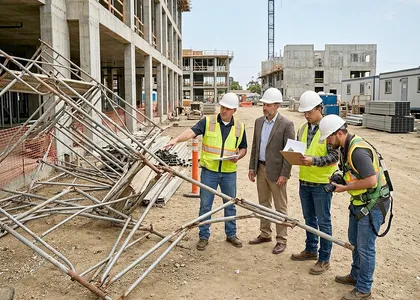
Construction sites change fast. Scaffolding is taken down, planks are replaced, and hazards are cleared, often within hours of an incident. Evidence that the owner was negligent, meaning they failed to use reasonable care, can vanish before you leave the hospital. If a scaffold accident causes you to get hurt while working on someone else’s property, you can act quickly to protect your claim by taking these steps:
- See a doctor the same day if possible, even if you feel fine. Attend all follow-up visits and follow recommended treatments (e.g., physical therapy, chiropractic care, prescription medication) until you heal.
- If you were working when you got injured, report the incident to your supervisor or the property owner. Ask that it be written down. Request and keep a copy of the written report.
- Take photos and video before anyone moves anything. Capture the broken scaffold, loose planks, missing guardrails, and nearby hazards, since early photos can be critical evidence for your claim.
- If you are a worker, keep your harness, hard hat, and any broken parts exactly as they are. Do not let the company take them back, repair them, or throw them away.
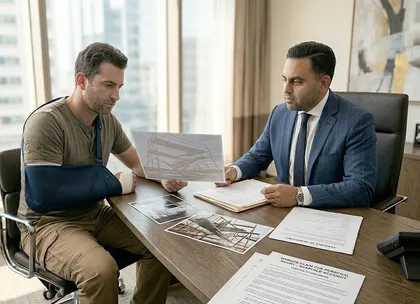
From here, consider consulting an attorney. Scaffolding accident lawyers can tell you whether the property owner may be liable for the accident. They can also obtain other crucial evidence on your behalf. For instance, they can gather Cal/OSHA inspection reports, violation notices, and accident investigation findings. They can also send a legal hold notice, a formal demand requiring the company to preserve evidence, before the crew cleans up the site.
These steps can help you gather proof of the property owner’s role on the site and what they controlled, as well as evidence of what caused the accident and the injuries you sustained. That can all help you prove the property owner’s liability and establish the validity of your claim.
Why A Third-Party Claim May Provide Additional Damages Beyond Workers’ Compensation
If you were an employee performing job duties when the scaffold accident occurred, you could seek workers’ compensation benefits. These typically pay for limited medical costs and part of your lost wages. However, they do not cover your pain, your suffering, or the emotional harm of the injury. You can only pursue those additional damages through a third-party claim against the property owner.
Employees can file a third-party personal injury claim if someone unaffiliated with their direct employer caused the accident. This claim is based on their negligence, or a failure to take reasonable care to prevent harm. The property owner is not your employer, so workers’ compensation limits do not apply here.
Damages that may be available include:
- ER visits, surgery, therapy, and future care costs.
- Full lost wages and future lost earning capacity if your injury keeps you from working the same job as before.
- The pain and suffering caused by your injury.
- The emotional distress you experienced due to the accident and your injury.
If a loved one died in a scaffold accident caused by a property owner’s negligence, California law allows eligible family members to file a wrongful death claim. Through it, they could seek compensation for related losses such as funeral costs and a loss of financial support. In some cases, these relatives may be able to pursue this claim in addition to the death benefits provided by workers’ comp.
California Deadlines For Scaffold Accident Claims
If you are pursuing an insurance claim against the property owner, the deadline will depend on the policy’s terms and notice requirements. However, if you’re filing a lawsuit, strict legal deadlines may apply. The deadline may also depend on who is liable for your scaffolding accident:
- Personal Injury Lawsuit: If a property owner is liable for your injuries, you generally have two years from the date of the accident to file a lawsuit, unless an exception applies. For wrongful death cases, the deadline generally begins to run from the date of the victim’s death.
- Workers’ Compensation: For work injuries, a formal claim must generally be filed within one year, typically starting from:
- The date of injury.
- The last temporary disability payment.
- The last date of medical treatment or other benefits.
- Government Claim: If the scaffold stood on government property, such as a public school, city hall, or state work site, the deadline is much shorter. Under California law, you have only six months from the accident to file a claim against that public agency. You can only sue if:
- The government entity rejects the claim. You have six months from the date of the denial to file suit.
- The public agency fails to respond within 45 days. You generally have two years from the date of your injury to sue.
If you miss these legal time limits, you may not be able to pursue a claim. A scaffolding accident attorney often relies on the details of the case to determine the legal deadlines that may apply.
Frequently Asked Questions About Scaffold Accident Cases
After a scaffolding accident, it is not always clear who is responsible or whether your own actions affect your right to compensation. California has its own rules on fault, bystander rights, and job-site safety that affect how a claim proceeds. If you are not sure where you stand, the answers below address the most common questions.
What If I Were Partially At Fault For The Scaffold Accident?
You can still pursue compensation. California uses a rule called “pure comparative negligence.” Under it, being partly at fault does not end your case. However, any compensation you may recover is reduced by your percentage of fault. For example, if you were 30% at fault, you can still recover 70% of your total damages.
Can A Bystander Sue The Property Owner For A Scaffolding Injury?
California law requires property owners to keep their premises safe for everyone nearby, not just workers. If you were hurt by unsafe scaffolding as a bystander, you can file a premises liability claim against the owner, even if you were not employed on the site.
Whether a claim is viable will depend on the specific facts of the incident, including whether the property owner knew or should have known about the dangerous condition and failed to take reasonable steps to address it.
What Are The Four Things Needed To Prove Negligence?
To have a valid negligence claim, you must prove four things: duty, breach, causation, and damages. Duty means the other party had a legal obligation to act safely. Breach means they failed to meet that obligation. Causation means their failure directly caused your injury. Damages means you suffered real harm, such as medical bills or lost wages.
What Is The Most Common Accident Involving Scaffolds?
Scaffold collapses and falling objects are among the most serious causes of scaffolding injuries in California. A collapse can occur when a scaffold is overloaded or built incorrectly. Falling tools or materials can injure workers and bystanders below, even when the structure stays up.
What Are The Cal/OSHA Rules For Scaffolding?
Under the California Code of Regulations, Cal/OSHA sets several rules for scaffolds. Some of the basic ones include the following:
- Employers must generally provide scaffolds for work that employees can’t safely do from the ground or on a ladder.
- Scaffolds must be constructed from wood, steel, aluminum, or other materials known for their strength and load-bearing properties.
- Scaffolds must be able to carry a specific weight depending on whether it’s intended to be light-duty, medium-duty, or heavy-duty.
- A scaffold must not be made to carry more than the required weight for its category.
- Workers must be trained to use scaffolds safely and to keep tools and materials from falling.
Who Else Can Be Liable For A Construction Site Fall?
More than one party can be responsible for a fall at a construction site. General contractors are responsible for job-site safety and can be held accountable when rules are not followed. Equipment makers can be liable if a scaffold or its parts were defective before they ever reached the site. Rental companies may also be at fault if they provided equipment that was worn out or did not meet safety standards.
Arash Law Provides Legal Support After A Scaffolding Accident In California
It’s understandable to think, “I need a personal injury lawyer,” after a scaffold accident in California. You may not be aware of what your legal options are and what losses you may pursue. AK Law helps injured victims pursue claims in construction accident and premises liability cases across California.
Our scaffolding accident lawyers can review the facts of your case and explain who may be liable. We can also tell you whether a third-party claim is available in addition to workers’ compensation.
However, if finances are a concern after an injury, you may be wondering: Do lawyers only get paid if they win? At our injury law firm, the answer is yes. We only get paid attorney’s fees if we win your case.
Call us at (888) 488-1391 to schedule your free initial consultation.