TL;DR: Left-turn collisions are the most common motorcycle accidents in California, occurring when drivers fail to see motorcycles or misjudge their speed at intersections. Riders can suffer serious injuries, medical bills, and lost income, but California’s comparative negligence rule allows recovery even if partially at fault, though fault percentage reduces the award.
Highlights:
- Left-turn collisions happen most often because drivers fail to see motorcycles or misjudge their speed due to inattentional blindness.
- Get a CHP crash report quickly and see a doctor or chiropractor soon after the crash to create solid injury records.
- Under California’s comparative negligence rule, you can still recover damages even if you’re partly at fault, though your award gets reduced by your fault percentage.
- Avoid giving recorded statements to insurance adjusters without talking to an attorney first, as they can use your words against you.
- Know your deadlines: you have two years to file a personal injury claim, but only six months if a government entity is involved.
- Lane-splitting is legal in California, but reckless lane splitting increases your fault share and reduces your compensation.
Tip: Document everything with photos, witness names, and the police report number immediately after a crash, as evidence can disappear and details fade quickly.
Table of Contents
Broadside crashes are the most common fatal and serious injury motorcycle crash type reported in California. A broadside crash means one vehicle hits the side of another. Many left-turn motorcycle crashes create this same type of impact because the turning driver crosses the rider’s path and strikes, or is struck by, the side of the motorcycle.
In 2023, SafeTREC reported that broadside crashes accounted for 31.1% of California motorcycle crashes resulting in fatalities or serious injuries. That data shows broadside crashes are the most common serious crash pattern, but it does not prove that every broadside crash involved a left turn. Left-turn collisions are one of the most common ways a broadside motorcycle crash can happen.
Left-turn crashes often occur when a driver turns across an oncoming motorcycle at an intersection, driveway, or business entrance. Under California Vehicle Code § 21801, a left-turning driver must yield to oncoming traffic that is close enough to be a hazard. If the driver fails to yield and hits a rider, that driver may be responsible for the crash.
A motorcycle crash can leave a rider with serious injuries, medical bills, missed work, and long-term pain. Understanding the crash type, the driver’s turning movement, the right-of-way rule, and the available evidence can help show who caused the collision.
Why Left-Turn Collisions Are The Most Common Motorcycle Accident
When a driver turns left and hits you, they often say, “I never saw you.” That phrase is frustrating because you were right there. It also reveals exactly why these crashes happen so often. Left-turn collisions are the most common type of motorcycle crash in California because drivers either fail to see the motorcycle or misjudge its speed.
The human brain is wired to look for large vehicles, such as cars and trucks. When a motorcycle enters a driver’s field of vision, the brain may filter it out because it takes up so little visual space. This is called “inattentional blindness,” or “looked-but-failed-to-see.” It can be an honest mistake, but it is still negligence.
Even when a driver notices a motorcycle, they often misread its speed. A motorcycle’s narrow shape makes it look farther away than it really is. That false read gives the driver confidence to turn when they should wait.
“I never saw you” is not a legal excuse. A driver who fails to see a visible motorcycle on the road has not met their duty to others. These are the common driving errors that contribute to these crashes:
- Failing to Yield: Drivers turn left across oncoming traffic without waiting for an approaching motorcycle to pass.
- Turning With a Limited View: Drivers turn left even when parked cars, trees, or large SUVs block their view of approaching traffic.
- Misjudging Speed: Drivers think they have time to complete the turn, but the motorcycle closes the gap faster than expected.
- Rushing Yellow Lights: Drivers push through a yellow light while turning, leaving the rider no room to stop.
Who Is Usually At Fault In A Left-Turn Motorcycle Accident?
The left-turning driver is often at fault if the motorcycle was close enough to be a hazard and the driver turned anyway. California Vehicle Code § 21801 requires a driver turning left or making a U-turn to yield to oncoming vehicles until the turn can be made with reasonable safety.
| Situation | Who May Be At Fault? | Evidence That Helps |
|---|---|---|
| The driver turns left across an oncoming motorcycle | The turning driver may be at fault for failing to yield. | Signal timing, dashcam video, witness statements, and impact location. |
| The driver exits a driveway or parking lot into a rider’s path | The entering driver may be at fault for failing to yield to oncoming traffic. | Business cameras, vehicle positions, and photos of the driveway. |
| The rider was speeding or lane splitting unsafely | Fault may be shared between the rider and driver. | EDR data, skid marks, video, expert reconstruction. |
| Poor road design or broken signals contributed | A public entity or maintenance contractor may share fault. | Maintenance records, prior complaints, signal logs, and photos. |
Other Frequent Motorcycle Crashes In California
California riders face several other serious crash risks beyond left-turn collisions. Many stem from driver inattention, road conditions, or road maintenance failures. These factors pose a greater risk to motorcycle riders than to drivers in enclosed vehicles. Knowing what these crash types look like can help you understand what may have caused your accident.
- Lane-Splitting Accidents: The California Vehicle Code (CVC § 21658.1) recognizes lane-splitting as riding a motorcycle between rows of stopped or moving vehicles. Although it is legal in California, it still carries risks. Drivers often change lanes without checking their mirrors, which can lead to sudden collisions.
- Rear-End Collisions: Some drivers follow too closely and cannot stop in time when traffic slows. A rear-end hit can throw a rider off the bike with great force.
- Dooring: In cities, drivers or passengers in parked cars open their doors directly into a rider’s path. There is little time to stop or turn, making these crashes hard to avoid.
- Road Hazards: Potholes, rough pavement, and road debris are far more dangerous on a bike than in a car. A minor hazard can cause a rider to lose control without another vehicle involved.
In every one of these crashes, the central legal question is the same: was another party at fault? If so, you have the right to pursue a claim for your losses. Proving who caused the crash is the core of any motorcycle injury case. Motorcycle accident lawyers rely on evidence to determine liability. These include traffic camera footage, dashcam video, and eyewitness accounts.
How California’s Comparative Negligence Rule Affects Your Claim
California follows a rule called pure comparative negligence. Under it, you can still pursue damages even if you are partly at fault, depending on the facts of your case. Your fault share reduces what you may be paid. For example, if you were 20% at fault, your award, meaning the money paid for your injuries and losses, would be cut by 20%.
Many adjusters use this rule against riders. They assume the rider was speeding or reckless before seeing any evidence. That bias can push your share of the fault up and reduce what you may recover.
Do not assume you cannot recover compensation simply because an initial report says you were at fault. Police reports provide an initial assessment, but they do not determine legal liability. That is why a thorough investigation matters. Evidence gathered after the crash may contradict the initial findings and change how fault is assigned.
Our injury law firm recovered $1 million for a motorcycle accident client who was initially marked at fault in the police report for a motorcycle-truck crash. Our investigation uncovered evidence that supported the client’s claim.
Still, every case depends on the evidence. The facts surrounding the crash, and a thorough investigation, not just the first impression of what happened.
Actions That Can Help Support Your Motorcycle Injury Claim
The steps you take after a motorcycle accident can have a significant impact on your recovery and the strength of your injury claim. Taking prompt, consistent, and well-documented actions can help protect your rights while providing clear evidence of the injuries and losses you experienced.
- Take photos of the accident scene. Capture the positions of the motorcycle and other vehicles before they are moved, along with skid marks, road conditions, traffic signs or signals, debris, visible damage, and any injuries, if it is safe to do so.
- See a doctor soon after the crash. This action creates records that can help link your injuries to the accident. If your doctor recommends physical therapy, chiropractic care, or other treatments, follow your treatment plan and attend all scheduled appointments.
- Obtain the accident report. This report is typically prepared by the California Highway Patrol (CHP) or the local police department. The accident report contains key information that can strengthen your claim. It typically includes the officer’s observations, witness statements, and details gathered at the scene.
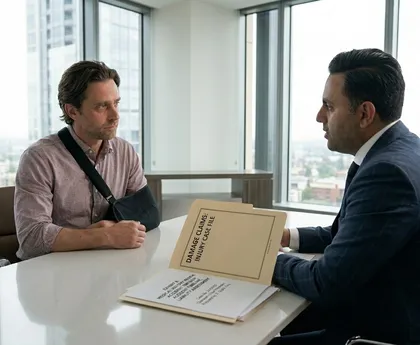
Strong records make it harder for an insurer to shift blame onto you. What you recover depends on the facts of your case, but solid proof gives those facts real weight. While you can seek free advice from a motorcycle accident lawyer online, it may help if you consult a legal team personally to discuss the specifics of your situation. A confidential consultation allows you to discuss your situation openly and receive legal guidance tailored to your case.
What Evidence Helps Prove A Motorcycle Accident Claim?
Motorcycle accident claims often depend on fast-moving evidence. Some proof can disappear within days, especially surveillance video, dashcam footage, and road-condition evidence.
Helpful evidence may include:
- Crash-scene photos and videos.
- Helmet, jacket, and motorcycle damage.
- Traffic-camera or business surveillance footage.
- Dashcam or GoPro video.
- Witness statements.
- Police or CHP crash reports.
- Medical records and bills.
- Proof of missed work and lost income.
- Motorcycle inspection or repair records.
- Road-design or maintenance records, if a road hazard contributed.
Frequently Asked Questions About Motorcycle Accident Cases
After a motorcycle crash, you likely have questions about your rights and next steps. California law has rules that affect your claim. Some of them work differently than people expect, and knowing them can protect your case.
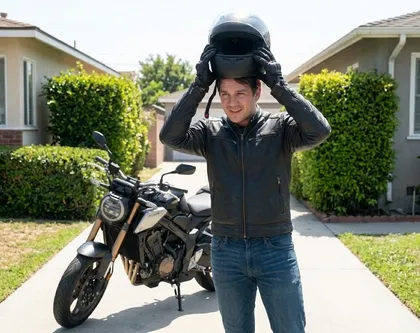
Does California Law Require Motorcycle Helmets?
Yes. California law (CVC § 27803) requires all motorcycle riders and passengers to wear a safety helmet that complies with state safety standards. If you were not wearing a helmet, the defense may argue that your head injuries were made worse as a result, potentially reducing your compensation under comparative negligence principles.
Can Lane Splitting Laws In California Change Who Is At Fault In My Motorcycle Accident?
Possibly, yes. Lane splitting is legal in California, but you must still ride safely. Reckless lane splitting puts more of the fault on you and reduces your compensation. Comparative negligence rules, which lower your recovery by your share of fault, set the final amount.
How Long Do I Have To File A Motorcycle Accident Claim In California?
For insurance claims, deadlines vary based on policy terms, so timely filing is often necessary to preserve your claim. However, if you’re considering a civil action, strict legal deadlines apply. In California, you generally have two years from the date of the motorcycle accident to file a personal injury lawsuit. If your claim involves a government entity, you must file an administrative claim within six months. Missing these legal deadlines can compromise your right to pursue compensation in court.
Does Uninsured Motorist Coverage Pay For Motorcycle Accidents?
It may, if your policy includes UM/UIM coverage and the facts meet the policy and legal requirements. Uninsured motorist coverage may apply when the at-fault driver has no insurance. Underinsured motorist coverage may apply when the at-fault driver has insurance, but not enough to cover your losses. Hit-and-run UM claims can have strict requirements, including physical contact, a police report within 24 hours, and a sworn statement to the insurer within 30 days.
Should I Give A Recorded Statement To The Insurance Company?
It is generally not recommended. Adjusters can use your words to reduce your compensation. Talk to an attorney before giving any recorded statement.
What Should I Do If I Need Legal Support?
If you find yourself thinking, “I need a personal injury lawyer,” find an injury law firm that offers a free initial consultation. This way, you can understand what your legal options are. Injury attorneys can also give legal insights that can help you make an informed decision.
Arash Law Can Provide Legal Help After A California Motorcycle Crash
If you were hurt in a California crash, waiting can cost you evidence, witness statements, and legal options. Critical proof can disappear quickly, even when you have time left to file. Our motorcycle accident lawyers can handle the legal aspects of your claim and help protect your right to pursue compensation.
Many people ask: Do lawyers only get paid if they win? At AK Law, the answer is yes. Our no-win, no-fee guarantee means you pay no attorney’s fees unless we recover compensation for you. There is no upfront cost and no financial risk.
California motorcycle accident cases have unique rules around lane splitting, helmet laws, and insurer bias. You need a lawyer who knows how those rules affect your case. Call (888) 488-1391 for your free initial consultation.