TL;DR: The most fatal types of accidents are poisoning, falls, and motor vehicle crashes, which, in total, caused 84% of preventable injury deaths in 2024. Families may file a wrongful death claim when negligence caused the death, but they must preserve evidence and meet strict filing deadlines.
Highlights:
- Identify every potentially responsible party, including property owners, employers, and contractors.
- Save scene photos, videos, and witness names before conditions change.
- Get and keep police, incident, medical, and coroner records.
- Preserve vehicles, products, and maintenance records; avoid repairs or disposal.
- Document funeral costs and the financial and household support your loved one provided.
- Ask about wrongful death and survival actions to cover different losses.
- Calendar filing deadlines: 2 years to sue, 6 months for government claims.
Tip: When speaking with insurers, stick to facts and avoid guessing while evidence is gathered.
Table of Contents
Poisoning, falls, and motor vehicle accidents are the most fatal types of accidents in the United States. Together, they represented 84% of all preventable injury-related deaths in 2024.
In this article, “most fatal” refers to the accident categories responsible for the largest number of preventable injury deaths nationwide. It does not mean that every poisoning, fall, or motor vehicle crash is more likely to cause death than every accident in another category. An accident’s severity depends on its specific circumstances.
Other notable but far less frequent accident types include the following:
- Suffocation
- Drowning
- Fires and burns
- Struck-by accidents
None of the four above individually accounted for more than about 4% of preventable deaths in 2024.
Many fatal accidents result from another person’s or entity’s negligence. For example, a drunk driver may cause a fatal crash, or a property owner may fail to fix a dangerous fall hazard. When negligence causes a fatality, eligible family members may have the right to pursue a wrongful death claim. In some cases, the deceased person’s estate may also bring a survival action to recover certain losses allowed under California law.
Which Types Of Accidents Cause The Most Fatalities?
According to the National Safety Council (NSC), 197,449 people died from preventable injuries in 2024. Poisoning, falls, and motor vehicle collisions caused 84% of those deaths, making them the leading causes of preventable fatal injuries.
Each type of accident presents different risks and may involve different legal issues. Liability depends on how the accident happened and whether another person, business, or public entity acted negligently. When negligence causes a fatal accident, eligible family members may have the right to pursue a wrongful death claim.
Where This Data Comes From: The overall accident rankings and death totals in this article come from the National Safety Council’s 2024 preventable-injury data, which are compiled from national mortality records. The driver-behavior figures come from NHTSA’s 2024 traffic-crash data. Because these organizations use different definitions and data systems, their motor vehicle totals may differ.
Accidental Poisoning
Poisoning was the leading cause of preventable injury-related deaths in the United States in 2024. It caused 75,761 deaths, representing 38% of the 197,449 preventable injury deaths the NSC reported that year.
This category includes drug overdoses and exposure to harmful substances. Common sources include:
- Prescription medications.
- Illegal drugs.
- Carbon monoxide.
- Cleaning products.
- Industrial chemicals.
- Toxic household products.
Most poisoning deaths among adults resulted from opioid overdoses. Adults ages 35 to 44 had more opioid-related deaths than any other adult age group, even though the crisis affected adults of all ages.
Not every poisoning or overdose creates a legal claim. Liability depends on how the exposure occurred and whether another person or business acted negligently. For example, negligent drug sales, unsafe products, toxic workplace exposure, or a landlord’s failure to address a known carbon monoxide hazard may create grounds for a personal injury or wrongful death claim.
Fatal Falls
Falls caused 48,308 deaths, accounting for 24% of the preventable injury deaths reported by the NSC in their 2024 report. This type of accident is also among the most common fatal accidents that can happen at home, although they can also occur in workplaces, public spaces, and other locations.
A fatal fall can happen on the same level or from an elevated surface. Although these incidents can affect people of any age, older adults face the greatest risk of serious or fatal injuries.
The age groups most affected were:
- Ages 65 to 74: 6,739 deaths.
- Ages 75 to 84: 14,527 deaths.
- Ages 85 and Older: 21,754 deaths.
Common fall hazards include:
- Wet or slippery floors.
- Loose rugs or carpeting.
- Broken stairs.
- Missing handrails.
- Poor lighting.
- Uneven pavement.
- Unmarked changes in floor height.
- Exposed wires or debris.
- Unsafe ladders or scaffolding.
- Open edges without proper barriers.
California law requires property owners to use reasonable care to keep their premises safe. If they fail to fix or warn about a dangerous condition and that failure causes a fatal fall, they may be held liable. Depending on the circumstances, liability may extend to the tenants, employers, contractors, maintenance companies, or other parties.
Motor Vehicle Accidents
 Motor vehicle crashes were the third leading cause of preventable injury-related deaths in the United States in 2024. They caused about 42,789 deaths, representing 22% of the 197,449 preventable injury deaths the NSC reported that year.
The impact of traffic crashes is especially severe among younger people. In the same year, such accidents claimed 6,859 lives among those ages 15 to 24, making them the top cause of accidental deaths for this age group.
Many fatal crashes happen because a driver fails to use reasonable care. According to the National Highway Traffic Safety Administration (NHTSA), the following driver behaviors were involved in thousands of traffic deaths in 2024:
- Alcohol-Impaired Driving: Driving while impaired reduces judgment, slows reaction time, and makes it harder to control a vehicle. Crashes involving drivers with a blood alcohol concentration (BAC) of 0.08% or higher claimed 11,904 lives.
- Speeding: Driving too fast reduces reaction time and increases the force of a crash. This driving behavior contributed to 11,288 traffic deaths.
- Distracted Driving: Looking away from the road to text, use a phone, eat, or adjust vehicle controls can cause a driver to miss critical hazards. Distracted driving claimed 3,208 lives.
- Drowsy Driving: Fatigued driving can slow reaction time, impair judgment, and even cause a driver to fall asleep behind the wheel. These crashes resulted in 644 deaths.
These dangerous driving behaviors can lead to many types of fatal crashes, including:
- Head-on collisions.
- Rear-end collisions.
- Side-impact collisions.
- Sideswipe collisions.
- Rollover crashes.
When a driver’s negligent behavior causes a fatal crash, eligible family members may have the right to pursue a wrongful death claim.
Other Types Of Fatal Accidents
The same 2024 NSC report also identified other preventable causes of fatal injuries. It recorded 7,642 deaths from suffocation, 4,201 from drowning, and 3,155 from fires and burns.
- Suffocation
- Fatal suffocation accidents can occur when unsafe conditions, defective products, or negligent supervision prevent a person from breathing.
- Infants, young children, older adults, and people with certain disabilities face a higher risk.
- Depending on the circumstances, liability may involve unsafe products, inadequate supervision, defective equipment, or dangerous workplace conditions.
- Drowning
- Drowning accidents can occur in swimming pools, lakes, oceans, bathtubs, and other bodies of water.
- These incidents may result from missing pool barriers, broken gates, inadequate supervision, or negligent boating.
- Property owners, boat operators, schools, childcare providers, or other responsible parties may face liability.
- Fires And Burns
- Fatal fires and burn injuries may result from defective products, faulty wiring, gas leaks, or missing safety equipment.
- Property owners must use reasonable care to maintain safe premises, including required fire safety measures.
- Depending on the cause of the fire, landlords, manufacturers, contractors, or other responsible parties may be held liable.
When Does A Fatal Accident Become A Wrongful Death Case?
An accidental death may support a wrongful death claim when another party caused it through negligence or another legally wrongful act. In a negligence-based case, the family generally must prove:
- The defendant owed the deceased a legal duty.
- The defendant failed to act with reasonable care.
- The defendant’s conduct was a substantial factor in causing the death.
- The surviving family suffered legally recognized losses.
Some wrongful death claims rely on other legal theories instead of negligence. Depending on the circumstances, these may include negligence per se, strict liability, vicarious liability, or an intentional wrongful act.
California Code of Civil Procedure section 377.60 identifies the people who may bring a wrongful death action. Eligible claimants may include the surviving spouse, registered domestic partner, children, certain heirs, and specified dependents. The deceased person’s personal representative may bring the action on their behalf.
Wrongful death lawyers can evaluate the claim and determine whether it meets California’s legal requirements. The lawyer can identify all potentially liable parties, gather evidence, and pursue the compensation available under California law.
Who Can File A Wrongful Death Claim In California?
California law limits who may bring a wrongful death claim. The right to file belongs to the relatives and dependents identified in California Code of Civil Procedure section 377.60.
More than one eligible family member may participate in the same wrongful death lawsuit. Eligible claimants may include:
- The surviving spouse.
- The surviving domestic partner.
- The deceased person’s children.
- The deceased person’s grandchildren, if a child of the deceased has also died.
- Other people who would inherit under California’s intestate succession laws, if the deceased person left no surviving children or other direct descendants.
- A dependent putative spouse, the putative spouse’s children, and stepchildren. Parents may qualify without dependency when they are entitled to inherit under California’s intestate succession laws.
- A dependent minor who lived in the deceased person’s household for the previous 180 days and received at least half of their support from the deceased.
What Compensation May Be Available After A Fatal Accident?
The compensation available after a fatal accident depends on the type of legal claim. Eligible family members may recover damages through a wrongful death claim. In some cases, the deceased person’s estate may also pursue a separate survival action.
If the fatal accident happened on the job, the deceased worker’s dependents may instead be entitled to workers’ compensation death benefits. A civil court claim may go hand in hand with a workers’ compensation claim, depending on how and where the accident occurred.
Civil Court Claims
Civil court claims are lawsuits filed against the at-fault party responsible for causing the fatal accident. Civil claims related to fatal accidents include wrongful death claims and survival actions.
The key distinction between the two is who receives the recovery: a wrongful death claim is brought by eligible surviving family members for their personal losses, while a survival action belongs to the deceased person’s estate for losses incurred prior to death.
Unlike workers’ compensation, civil claims require proving fault but can result in broader compensation.
Wrongful Death Claim
A wrongful death claim seeks compensation for the losses that the eligible surviving family members suffer. Recoverable damages may include:
- Funeral and burial expenses the claimant paid or owes.
- Lost financial support that the deceased would likely have provided.
- Lost household services the deceased would likely have performed.
- Lost gifts or other expected financial benefits.
- Loss of love, companionship, comfort, and care.
- Loss of protection, guidance, and moral support.
Survival Action
A survival action is separate from a wrongful death claim. It allows the deceased’s estate to recover certain losses that the deceased could have claimed if they had survived.
In a survival action, the deceased person’s estate may generally recover economic losses incurred before death, including:
- Medical expenses.
- Lost earnings.
- Property damage.
California law generally does not allow the estate to recover the deceased person’s:
- Pre-death pain and suffering.
- Disfigurement.
Qualifying survival actions filed from January 1, 2022, through December 31, 2025, may still recover these damages under the temporary exception in California Code of Civil Procedure § 377.34.
Eligible claimants may pursue both a wrongful death claim and a survival action when the claimant meets the legal requirements for each claim.
Workers’ Compensation Death Benefits
When a fatal accident happens in the course of employment, the deceased worker’s dependents typically pursue workers’ compensation death benefits rather than a civil claim against the employer. Workers’ compensation does not require proof of fault, but it also does not compensate for pain and suffering or loss of companionship. Benefits generally include:
- A statutory burial allowance to cover funeral expenses.
- Weekly death benefit payments to a surviving spouse, registered domestic partner, or minor children, based on the worker’s average earnings and the number of dependents.
- Continued benefits for a set period or until a dependent child reaches adulthood, depending on dependency status.
Because workers’ compensation is generally the exclusive remedy against an employer, dependents usually cannot also sue the employer for wrongful death. However, a civil claim may still be available against a negligent third party — such as a subcontractor, equipment manufacturer, or driver — who contributed to the fatal workplace accident.
When pursuing both a third-party civil claim and a workers’ compensation death benefit claim, special rules apply. The workers’ comp insurer may hold a subrogation lien against the proceeds of a third-party settlement to reimburse for the death benefits it paid. An experienced law firm that handles both types of claims can manage them simultaneously to minimize lien reductions and maximize the total net recovery for surviving dependents.
| Claim Type | Who Files | Fault Required? | What It Covers |
|---|---|---|---|
| Wrongful Death | Eligible surviving family members | Yes | Lost support, funeral costs, loss of companionship/guidance |
| Survival Action | Deceased’s estate | Yes | Pre-death economic losses (medical bills, lost earnings, property damage) |
| Workers’ Compensation | Surviving dependents (spouse, children) | No | Burial allowance, weekly dependency payments |
How Long Do Families Have To File A Wrongful Death Lawsuit?
California generally gives eligible family members two years from the date of death to file a wrongful death lawsuit. Different deadlines apply when a California government entity may be responsible. Before filing a lawsuit, the family generally must follow the California Government Claims Act.
The process typically includes these deadlines:
- Present a government claim within six months after the wrongful death claim arises. If the six-month deadline has passed, the claimant may apply for permission to present a late claim. The claimant must generally file the application within a reasonable time, not exceeding one year after the wrongful death claim arises.
- The public entity generally has 45 days to accept or reject the claim. The parties may extend this period through a written agreement.
- If the public entity sends a written rejection that complies with Government Code § 913, the claimant generally has six months from the date the notice was personally delivered or mailed to file a lawsuit.
- If the public entity does not send a written rejection notice that complies with Government Code § 913, the claimant generally has two years from the date of death to sue.
These rules commonly apply when a fatal accident involves:
- A government vehicle.
- An unsafe public road.
- A dangerous public building.
- The negligent conduct of a government employee.
Families with questions about filing deadlines or their legal rights should consider seeking advice from an attorney of their choice as soon as possible. Waiting too long may affect their ability to pursue a claim.
How Can Families Protect Important Evidence?
Families can protect important evidence by preserving records, physical items, and other information related to the fatal accident as soon as possible. An accident attorney can also help by sending preservation letters that prevent other parties from destroying or erasing important evidence.
Examples of essential evidence include:
- Photos and videos of the accident scene.
- Police and incident reports.
- Medical and coroner records.
- Witness names and contact information.
- Damaged vehicles or defective products.
- Property inspection and maintenance records.
- Employment records, when relevant.
- Available surveillance or dashcam footage.
- Medical bills, funeral expenses, and other related documents.
Why Legal Guidance Matters After A Fatal Accident
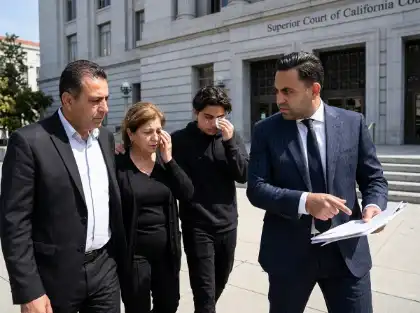 Legal guidance can help families understand their rights, protect important evidence, and pursue the compensation available under California law. An attorney can also manage the legal process while the family focuses on honoring their loved one and supporting one another.
Depending on the circumstances, a fatal accident lawyer may help:
- Investigate how the fatal accident occurred.
- Identify every person or entity that may be legally responsible.
- Preserve and gather important evidence before it is lost.
- Work with experts to establish liability and the family’s damages.
- Handle communications and negotiations with insurance companies.
- Meet important filing deadlines and court requirements.
- Negotiate a settlement or represent the family at trial when necessary.
Arash Law has represented families and victims in cases involving the very types of preventable accidents discussed above, including life-threatening falls and motor vehicle crashes. For example:
- Catastrophic Fall (Elevator Shaft): Our client fell four stories down an elevator shaft, sustaining a severe traumatic brain injury, broken ribs, a fractured jaw, and other internal and orthopedic injuries. Our team secured a $11,250,000 settlement for him, structured as a $500,000 lump-sum payment and $33,000 a month for the rest of his life.
- Head-On Collision: Our client was involved in a catastrophic head-on collision after the at-fault driver fell asleep behind the wheel. The case was resolved in less than six months, resulting in the recovery of the full policy limits of $1,280,000.
- Wrongful Death (Distracted Driving): A distracted driver caused a fatal crash that took the life of a church volunteer. In addition to recovering the at-fault driver’s maximum policy limits, we secured a private donation to our client’s church as part of the settlement, bringing the total recovery to $1,500,000.
Past results do not guarantee future outcomes. Every case is unique, and the compensation available depends on its specific facts, evidence, insurance coverage, and applicable law.
Frequently Asked Questions About Fatal Accidents In California
Fatal accidents often leave families with important legal and financial questions. The answers below explain some of the most common questions about wrongful death claims, insurance coverage, comparative fault, and other issues under California law.
Can Our Family Recover Punitive Damages In A Wrongful Death Claim?
California generally does not allow punitive damages in a wrongful death claim. However, the deceased person’s estate may seek punitive damages through a survival action when the underlying claim supports them. The estate must prove by clear and convincing evidence that the defendant acted with malice, oppression, or fraud. A personal representative or qualified successor in interest brings the survival action on behalf of the estate.
Do Survival Actions Have The Same Filing Deadline?
Not necessarily. A survival action continues a legal claim that belonged to the deceased person before death, so its deadline may depend on the type of underlying claim and when it arose.
Under CCP § 366.1, a survival action must be filed before whichever of the two below occurs later:
- The filing deadline that would have applied to the underlying claim (2 years for personal injury claims) if the deceased person had lived.
- 6 months after the victim’s death.
What’s The Deadline Of Filing For Workers’ Compensation Death Benefits?
Dependents generally have 1 year to begin proceedings for workers’ compensation death benefits in California. No claim can also be brought more than 240 weeks (about 4.6 years) from the date of the injury.
Does Auto Insurance Cover The Full Cost Of A Fatal Crash?
Not always. California’s minimum liability limits of $30,000 per person and $60,000 per crash may not cover all legally recoverable losses after a fatal collision.
Families may seek compensation from other available sources, such as additional insurance policies or other liable parties. A wrongful death lawsuit can also pursue available damages, but the total recovery may still depend on the available insurance coverage and other assets.
Can I File A Claim If My Loved One Was Partially At Fault?
Yes. California follows a pure comparative fault rule. Eligible family members may pursue a wrongful death claim even when the deceased person shared responsibility for the accident.
The court reduces the recoverable damages by the deceased person’s percentage of fault. For example, a finding of 20% fault would generally reduce the award by 20%.
Do We Need A Lawyer If The Police Found The Other Driver At Fault?
Not necessarily, but having an attorney can still make a difference. A police officer’s fault-finding does not bind an insurer or determine civil liability, and the traffic collision report itself is generally not admissible as evidence at trial.
An attorney can gather additional evidence, identify every liable party, calculate the family’s damages, negotiate with insurers, and, when necessary, present the strongest possible case in court.
Contact Arash Law After A Fatal Accident
Arash Law, also known as AK Law, represents families in wrongful death cases involving crashes, falls, unsafe products, and other preventable incidents. Our attorneys can investigate the accident, preserve evidence, and identify each potentially responsible party. We can also calculate the family’s losses and handle communications with insurers and defense attorneys.
Our firm handles wrongful death cases on a contingency-fee basis. Clients don’t have to pay the attorney’s fees unless we recover compensation on their behalf. Call us at (888) 488-1391 to discuss your family’s legal options.