TL;DR: Surveillance footage can help support a claim by showing whether a school injury came from a fall, a fight, faulty equipment, or something else. It can also show whether staff were present and whether supervision was inadequate. In California, families of a child injured at a private school generally have 2 years to take legal action against the school, but they may have only 6 months to file a formal written claim with the school district if the injury occurred at a public school.
Yes, surveillance footage can support a school injury claim. It can often provide objective, time-stamped evidence of the cause of the injury. A camera on campus can capture the precise moment the harm occurred, how long it took for a staff member to arrive on the scene, and whether the area was a blind spot that the school knew about. Those details, including sequence, timing, and supervisory failure, are among the factors California courts may weigh when evaluating a school’s liability for a child’s injuries.
Surveillance footage can be particularly helpful for establishing the circumstances surrounding bullying or fighting incidents. According to the National Center for Education Statistics (NCES), approximately 19% of U.S. students ages 12–18 reported being bullied at school during the 2021–22 academic year. Among students who experienced bullying, 37% reported incidents in hallways or stairwells. In these areas, surveillance footage may help document confrontations and school staff responses.
In California, parents or legal guardians of the injured child may be eligible to file a personal injury claim against the school for failing to prevent the bullying or fighting that led to the harm. When footage exists, it can document exactly what happened and whether supervision was present, making it the difference between a provable claim and a he-said-she-said dispute.
Table of Contents

Can School Surveillance Video Help Prove What Happened After A Serious Injury, Bullying Incident, Student Fight, Campus Fall, Or Fatal School Incident In California?
School surveillance footage can help establish what happened during a serious injury, bullying incident, student fight, campus fall, or fatal school incident in California. Recordings may reveal the sequence of events, staff responses, hazardous conditions, and other details relevant to determining liability.
California Education Code § 44807 requires public school teachers to hold students strictly accountable for their conduct on playgrounds, during recess, and on the way to and from school. Surveillance footage may help determine whether staff exercised reasonable care in supervising students and whether their actions or omissions contributed to a student’s injury.
Depending on the incident and camera coverage, school surveillance footage may provide evidence of:
- Serious Injuries: Recordings may show how an accident occurred, who was present, and whether staff responded to the injured student.
- Bullying Incidents: Footage may document physical harassment, repeated confrontations, or staff responses to incidents involving students.
- Student Fights: Video may establish when an altercation began, who participated, and whether supervising adults intervened.
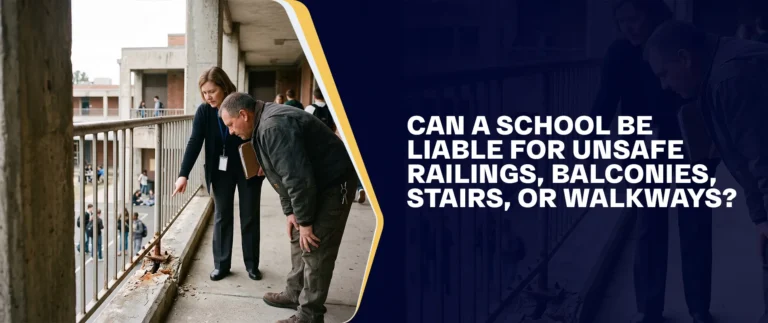
- Campus Falls: Cameras may capture slippery surfaces, obstacles, damaged walkways, or other conditions that contributed to a fall.
- Fatal School Incidents: Recordings may help grieving families understand the circumstances surrounding their child’s tragic death and whether preventable safety or supervision failures contributed to it.
When a school incident results in a student’s death, surveillance footage may help clarify what happened and whether negligence contributed to the death. Under California Code of Civil Procedure (CCP) § 377.60, eligible surviving family members may pursue a wrongful death claim when another party’s wrongful conduct caused the loss. Recordings, witness statements, and school records may help families understand how the incident occurred and establish potential liability.
Key Facts About School Injury Claims and Surveillance Evidence in California
- Parties generally must authenticate surveillance recordings before introducing them into evidence to establish how a school injury occurred. (Evidence Code §§ 1400–1401)
- Parents generally have the right to inspect qualifying education records within 45 days of requesting access, including certain school surveillance recordings involving their child. (34 C.F.R. § 99.10)
- California law requires public school teachers to hold students accountable for their conduct on playgrounds, during recess, and on the way to and from school, making supervision relevant to injury claims. (Education Code § 44807)
- Families generally must present personal injury claims against California public school districts within six months of the injury, subject to applicable exceptions. (Government Code § 911.2)
- Personal injury lawsuits against private schools generally have a two-year filing deadline, although exceptions and tolling rules may extend or change that period. (Code of Civil Procedure § 335.1)
How Can Video Evidence Support a School Bullying Claim?
California Education Code § 234.1 requires school districts to adopt policies that prohibit bullying, harassment, and intimidation. Video evidence, combined with student complaints, disciplinary records, and witness statements, may help determine whether the school recognized warning signs and responded appropriately.
For example, a student may suffer injuries after falling during a hallway fight following repeated bullying incidents reported to school staff.
Surveillance footage could show earlier confrontations, how the fight started, what caused the student to fall, and whether supervising adults intervened. When combined with documented complaints, these recordings may help establish whether the school knew of the danger and failed to take reasonable precautions.
Footage showing bullying does not automatically establish school liability. The claim must still satisfy the applicable legal requirements, including proof that the school’s negligence contributed to the student’s injuries.
School injury attorneys may combine surveillance footage with witness statements, incident reports, maintenance records, and supervision schedules to evaluate liability. They may also use it to support other types of evidence, such as witness testimony, and tackle any disputes over fault that may arise.
How to Preserve and Obtain School Injury Evidence in California
School surveillance footage and other records can help families understand how an injury occurred and whether school staff responded appropriately. However, schools may overwrite recordings, while other important evidence may become harder to obtain over time.
Preserving Evidence After a School Injury
If your kid gets hurt at school, promptly ask the school to preserve evidence related to their injury. Depending on the incident, families should seek to preserve:
- Surveillance Footage: Recordings from before, during, and after the incident, including footage from nearby cameras.
- Incident Reports: School reports documenting what happened, who was involved, and how staff responded.
- Witness Information: Names and contact details of students, teachers, or others who witnessed the incident.
- Bullying Complaints: Previous reports, emails, or disciplinary records that may show whether school staff knew about recurring harassment.
- Maintenance Records: Inspection logs, repair requests, and photographs of hazards that may have contributed to a campus fall.
- Medical Records: Emergency treatment reports, diagnoses, medical bills, and other documents showing the student’s injuries.
Families can send a written preservation request identifying the incident date, location, and relevant evidence. Schools may have legal duties to preserve evidence when litigation becomes reasonably foreseeable.
Preserving these records early can help attorneys reconstruct the incident and evaluate whether the school’s actions contributed to the injury.
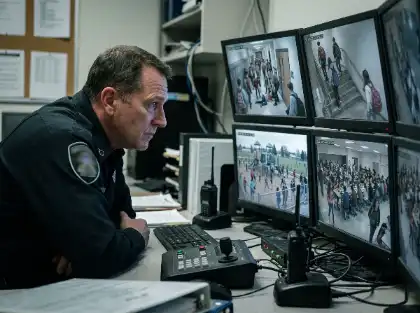
Getting Access to School Surveillance Footage
Parents may request access to footage involving their child under the Family Educational Rights and Privacy Act (FERPA). Under 34 C.F.R. § 99.10, schools generally must allow parents to inspect qualifying education records within 45 days of a request.
Under 34 C.F.R. § 99.10(e), schools cannot destroy qualifying education records while a parent’s request to inspect them remains outstanding. Families should submit requests promptly and keep written confirmation. However, this protection applies only to records covered by FERPA, not every surveillance recording.
Not every surveillance recording qualifies as an education record, and schools must protect other students’ privacy. That means parents do not always have the right to receive a copy. Depending on the footage, the school may offer supervised viewing or limit access to portions involving their child.
What If the School Claims Campus Police or Security Recorded the Video?
Under 34 C.F.R. § 99.8, records created and maintained by a school’s law enforcement unit for law enforcement purposes are excluded from FERPA’s definition of education records. If a public school claims this exclusion applies to footage captured by campus security or school police, FERPA generally does not restrict disclosure of qualifying law enforcement unit records. However, other laws or exemptions may still limit access.
In California public schools, these recordings may instead be requested under the California Public Records Act or obtained through formal legal subpoenas during litigation.
Using Evidence to Establish the School Injury Timeline
Surveillance footage, witness statements, incident reports, and other records can help reconstruct what happened before, during, and after a school injury. Together, this evidence may establish when a dangerous situation developed, what school staff knew, and how they responded.
Different types of evidence can help establish the timeline:
- Before the Incident: Earlier bullying complaints, maintenance records, and surveillance footage may reveal warning signs or unsafe conditions.
- During the Incident: Video recordings, witness statements, and incident reports may show how the injury occurred and whether staff intervened.
- After the Incident: Medical records, staff reports, and communications with parents may document the school’s response and the student’s injuries.
For example, footage may show a student falling during a hallway fight, while earlier bullying complaints establish that staff knew about previous confrontations. Combined with witness statements and medical records, this evidence may help determine whether the school failed to take reasonable precautions.
A clear timeline can help attorneys evaluate negligence, identify gaps in the evidence, and determine whether the school’s actions contributed to the student’s injuries.
Attorneys handling school injury claims may help families request records, preserve evidence, and assess potential liability.
Need Help Obtaining School Surveillance Footage After an Injury?
Arash Law’s child injury attorneys can help families preserve surveillance footage, gather school records, and investigate potential negligence after an injury at school.
Call (888) 488-1391 for a free initial consultation about your legal options.
California Deadlines for School Injury Claims
California has different filing deadlines for public and private school injury claims. Families generally have six months to present a government claim against a public school district. Personal injury lawsuits against private schools generally have a two-year deadline, subject to exceptions.
Public School Claims: The Six-Month Deadline
Families generally must present a written government claim to the responsible public school district within six months after a personal injury or the death giving rise to a wrongful death claim, subject to applicable exceptions.
If the school district fails to take action or send a formal written notice within 45 days, the claim is deemed denied by operation of law under Government Code § 912.4. In those situations, claimants generally have two years from the date of the injury to file a civil lawsuit under Government Code § 945.6(a)(2), unless the district provides a legally sufficient rejection notice. A rejection notice that complies with Government Code § 913 generally triggers a six-month lawsuit deadline, making it critical to track district notices with an attorney.
Private School Claims: The Two-Year Deadline
Families generally have two years from the injury date to file a personal injury lawsuit against a private school under CCP § 335.1. Eligible surviving family members generally have two years from the date of death to file a wrongful death lawsuit, subject to applicable exceptions.
Do Filing Deadlines Change for Injured Minors?
Yes. Under CCP § 352(a), California generally pauses the statute of limitations for many personal injury claims while the injured person is under 18. That means underage victims generally have until their 20th birthday to file a personal injury case against a private entity.
However, this protection does not automatically extend the six-month deadline for presenting a government claim against a public school district.
If a family misses the six-month deadline, Government Code § 911.4 may allow a late-claim application, generally within one year of the injury. Under § 911.6, the district must grant a qualifying application when the injured child remained a minor throughout the original claim period. Other statutory requirements still apply, and families should act promptly.
If the school board denies your late-claim application (or fails to act on it within 45 days), you do not immediately file a standard personal injury lawsuit. Instead, under Government Code § 946.6, you must petition the superior court for an order relieving you from the claim requirement. This court petition must be filed within six months of the denial. If the court grants the petition, you then have 30 days to file the formal lawsuit.
Frequently Asked Questions About School Video Evidence in California
Do I Need an Attorney to Get the Video?
No. Parents can request qualifying surveillance footage under FERPA without hiring an attorney. However, an attorney can help identify relevant recordings, send preservation requests, and address disputes over access.
An attorney may also request school records, investigate potential negligence, and, when appropriate, pursue additional evidence through legal procedures.
Can Surveillance Footage Hurt My Child’s Claim?
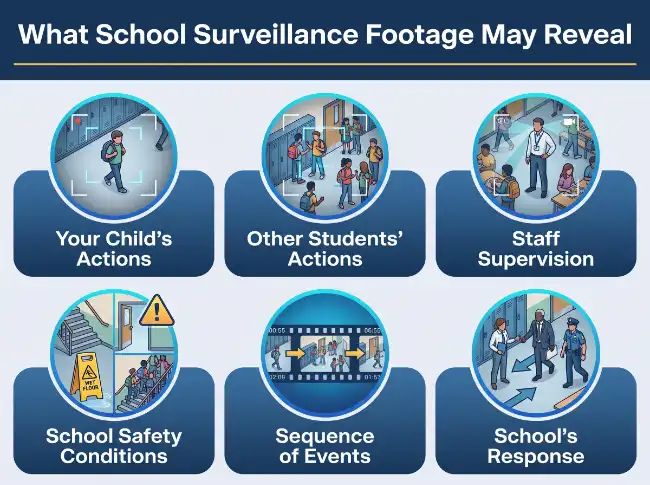 Yes, it can. Footage may show how the injury actually happened, including conduct by your child, such as breaking a school rule, starting or joining a fight, or ignoring a warning. It may also show staff acting with reasonable care or responding promptly.
In California, a child’s own share of fault can reduce the compensation recovered, although children are generally held to the standard of a child of similar age and maturity.
What Happens If the School Already Deleted the Footage?
Your school injury claim may still move forward without surveillance footage. Witness statements, medical records, incident reports, and prior complaints may help establish what happened and whether the school acted negligently.
If the school destroyed footage it had a legal duty to preserve, a court may consider appropriate remedies. Depending on the circumstances, remedies could include discovery sanctions or instructions concerning missing evidence.
Can the School Refuse to Show Me the Video Because Other Students Are in It?
Not necessarily. Under FERPA, parents generally have the right to inspect surveillance footage that qualifies as their child’s education record, even when other students appear.
The school may limit access to portions involving other students or offer supervised viewing instead of providing a copy. Under 34 C.F.R. § 99.10, schools generally must provide access to qualifying education records within 45 days of a request.
What Evidence Can Support the Claim If There Is No Video?
School incident reports, witness statements, medical records, prior bullying complaints, and maintenance records may help support a school injury claim in the absence of surveillance footage.
Families may also request public school supervision schedules and other administrative records under the California Public Records Act. However, privacy protections and other exemptions may limit access to certain information.
What Is a Government Claim and Why Does It Matter for a Public School Injury?
A government claim is a formal notice that families generally must present to the responsible public school district before filing a personal injury lawsuit. Under Government Code § 911.2, families typically have six months from the date of injury to present a claim.
Missing this deadline can prevent recovery, although California law allows late claims in certain circumstances. Strong surveillance evidence does not eliminate the filing requirement.
Arash Law Can Handle Your Child’s School Injury Claim
School surveillance footage can provide important evidence of how your child suffered injuries, whether staff intervened, and whether unsafe conditions contributed to the incident. However, schools may routinely overwrite recordings, making early evidence preservation essential.
Arash Law’s experienced school injury lawyers can help families request surveillance footage, preserve school records, investigate potential negligence, and pursue compensation. We handle school injury cases on a contingency fee basis, meaning you pay no attorney’s fees unless we recover compensation on your behalf. The case costs that may still apply, as well as other terms, depend on your fee agreement.
If your child suffered injuries in a school accident, bullying incident, or campus fight, contact us to discuss your legal options.
Call (888) 488-1391 to schedule a free initial consultation.
Sources
- California Code of Civil Procedure § 335.1: Two-year statute of limitations for personal injury actions. California Legislative Information. https://leginfo.legislature.ca.gov/faces/codes_displaySection.xhtml?sectionNum=335.1.&lawCode=CCP
- California Code of Civil Procedure § 352: Tolling exceptions for minors. California Legislative Information. https://leginfo.legislature.ca.gov/faces/codes_displaySection.xhtml?sectionNum=352.&lawCode=CCP
- California Code of Civil Procedure § 377.60: Eligibility of specific surviving family members to file a wrongful death claim. California Legislative Information. https://leginfo.legislature.ca.gov/faces/codes_displaySection.xhtml?sectionNum=377.60.&lawCode=CCP
- California Education Code § 234.1: Duty of schools to adopt qualifying anti-bullying policies. California Legislative Information. https://leginfo.legislature.ca.gov/faces/codes_displaySection.xhtml?lawCode=EDC§ionNum=234.1.
- California Education Code § 44807: Duty of public school teachers to hold students accountable for conduct on playgrounds, during recess, and on the way to and from school. California Legislative Information. https://leginfo.legislature.ca.gov/faces/codes_displaySection.xhtml?lawCode=EDC§ionNum=44807.
- California Evidence Code §§ 1400–1401: Authentication in writing is required for it to be introduced into evidence. California Legislative Information.
https://leginfo.legislature.ca.gov/faces/codes_displaySection.xhtml?sectionNum=1400.&lawCode=EVID
https://leginfo.legislature.ca.gov/faces/codes_displaySection.xhtml?sectionNum=1401.&lawCode=EVID- California Government Code § 911.2: Six-month deadline for presenting a claim against a public entity, including a school district. California Legislative Information. https://leginfo.legislature.ca.gov/faces/codes_displaySection.xhtml?sectionNum=911.2.&lawCode=GOV
- California Government Code § 911.4: Requirements to apply to file a late claim against a public entity. California Legislative Information. https://leginfo.legislature.ca.gov/faces/codes_displaySection.xhtml?sectionNum=911.4.&lawCode=GOV
- California Government Code § 911.6: Public entity considerations for late-claim applications filed by minors. California Legislative Information. https://leginfo.legislature.ca.gov/faces/codes_displaySection.xhtml?sectionNum=911.6.&lawCode=GOV
- California Government Code § 912.4: 45-day period for a public entity to act on a presented claim; deemed rejection upon inaction. California Legislative Information. https://leginfo.legislature.ca.gov/faces/codes_displaySection.xhtml?sectionNum=912.4.&lawCode=GOV
- California Government Code § 913: Requirements for written rejection notices personally delivered or mailed by public entities to claimants.
https://leginfo.legislature.ca.gov/faces/codes_displaySection.xhtml?sectionNum=913.&lawCode=GOV- California Government Code § 945.6(a)(2): Two-year deadline for filing a lawsuit against a government entity when a written notice is not provided under Government Code § 913. California Legislative Information. https://leginfo.legislature.ca.gov/faces/codes_displaySection.xhtml?sectionNum=945.6.&lawCode=GOV
- California Government Code § 946.6: Instructions for claimants whose late-claim applications are denied. California Legislative Information. https://leginfo.legislature.ca.gov/faces/codes_displaySection.xhtml?sectionNum=946.6.&lawCode=GOV
- Family Educational Rights and Privacy Act (FERPA), 20 U.S.C. § 1232g / 34 C.F.R. Part 99: Parent right to inspect and review student education records within 45 days of a written request. U.S. Department of Education. https://studentprivacy.ed.gov/ferpa
- California Public Records Act, Government Code § 7920.000 et seq.: Public right to request administrative records from California public agencies, including school districts. California Legislative Information. https://leginfo.legislature.ca.gov/faces/codes_displaySection.xhtml?sectionNum=7920.000.&lawCode=GOV
- National Center for Education Statistics (NCES): Data on student bullying victimization and incident locations (hallways/stairwells) from the School Crime Supplement. https://nces.ed.gov/programs/coe/indicator/a10/bullying-electronic-bullying
Disclaimer
The information on this page is for general educational purposes and does not constitute legal advice. No attorney-client relationship is formed by reading or relying on this content. If you were injured, consult a licensed California personal injury attorney about your specific situation. Arash Law: (888) 488-1391.