TL;DR: Parents usually have six months to file an injury claim against a California public school district. Reporting bullying or an injury to school staff does not replace this legal step. A school review or insurance claim also does not automatically extend the deadline. Special rules apply to minors, late claims, wrongful-death cases, and childhood sexual assault.
Parents generally have 6 months from the date of injury to file a government claim against a California public school district. Government Code § 911.2 sets this deadline for most injury claims against public agencies.
This rule may apply when a child suffers harm from bullying, student fights, poor supervision, or unsafe school grounds.
Parents must usually file this claim before they can sue the district. An ongoing school review or talks with an insurance company do not pause this deadline.
California provides special rules for some injured children. However, families should not assume that their child’s age gives them more time to file.
Table of Contents

How Long Do Parents Have to Bring a Claim After a Child Is Seriously Injured at a California Public School?
When a child is seriously injured at a public school in California due to the school’s negligence, parents must file a claim within six months. The time often starts on the date of the injury. It may start later if the injury or its cause could not have been found sooner.
These claims may arise from:
- Poor supervision during recess, lunch, or school activities.
- Bullying or student fights that staff failed to address with reasonable care.
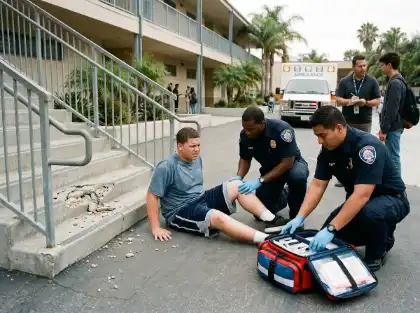
- Broken playground equipment, unsafe stairs, or damaged walkways.
- A crash involving a school bus or district vehicle.
- Unsafe conditions at school events or sports activities.
An injury on school grounds does not automatically make the district responsible. Parents must show how the school’s actions, or failure to act, caused the harm.
Key Facts About Suing a California Public School District
- Reporting bullying does not replace a government injury claim. Parents must still file a separate claim after reporting bullying to seek compensation from the district.
- Parents may apply to file a late claim. Parents usually have up to one year to file a late claim, with limited exceptions (Government Code § 911.4).
- A rejection notice can affect the lawsuit deadline. Parents generally have six months to sue after the district mails or hand-delivers a written rejection notice, or two years without one (Government Code § 945.6).
- Childhood sexual assault claims follow different filing rules. Code of Civil Procedure §§ 340.1 and 340.11 provide special deadlines and exceptions for childhood sexual assault.
When Does the Six-Month Deadline Start?
The deadline usually starts when the child suffers the injury. However, some claims may be filed later if the injury or its cause could not reasonably have been discovered sooner.
Government Code § 901 ties the starting date to the applicable rules governing the legal claim.
For example, a child might sustain an injury that doctors do not discover immediately. The date the family first knew or reasonably should have known about the injury and its cause may affect the deadline.
These rules depend on the facts. Parents should not assume that finding new records or learning more about an injury always restarts the filing period.
Does the Six-Month Deadline Apply to Injuries Caused by Bullying?
Yes. Parents generally have six months to file a government claim when a public school’s negligence contributes to a bullying injury.
Schools must take reasonable steps to supervise students. However, a district is not automatically responsible for every fight or act of bullying.
A claim may depend on what school staff knew, how they responded, and whether their actions led to the injury.
For example, a student may report repeated threats to a teacher. If staff ignored a known danger, and the child later got hurt, their unresponsiveness could support a claim.
What if the Bullying Happens Over Several Months?
Bullying often involves several events rather than one incident. Each event may cause a different injury, with its own claim deadline. Under Government Code § 901, the date a legal claim begins helps set the filing period.
For example, a child may suffer an injury during a fight in February. More bullying may occur in May. The latter incident does not automatically restart the deadline for the February injury.
Some claims may involve ongoing conduct or injuries discovered later. The law may treat these situations differently based on the facts.
Parents should not wait for repeated bullying to become more serious before checking the filing deadline. An earlier injury may have its own six-month time limit.
What Does California Law Require Schools to Do About Bullying?
 California Education Code § 234.1 requires public school districts to adopt rules addressing certain forms of bullying and harassment.
These rules must include a mechanism for reporting and reviewing complaints. Staff who witness covered bullying must also step in when they can do so safely.
Some reports fall under California’s Uniform Complaint Procedures (UCP). These rules cover bullying tied to protected traits, such as race, religion, sex, or disability.
Families usually have six months to file a covered UCP complaint. The time may start when the conduct occurred or when they first learned about it. Some cases may qualify for more time.
However, a UCP complaint and a government injury claim serve different purposes. The first addresses certain school rule violations. The second is a step toward seeking compensation for injuries.
Both deadlines can run simultaneously. Filing a UCP complaint does not automatically pause or extend the six-month government injury claim deadline.
A school injury attorney can review the incident, claim records, and time left to file.
Can Parents File a Claim While the School Investigates an Injury?
Yes. Parents generally do not need to wait for the school to finish its review before filing a government injury claim.
A district may interview students, speak with staff, review video, or hold meetings with parents. These steps can take weeks or months.
For example, parents may report a bullying injury in January. The school might still be reviewing the complaint in April. That review does not automatically give the family more time to file.
Parents should keep records of the school’s response while tracking the separate legal deadline. Even if the school has not reached a decision, parents may start preparing their claim.
What Evidence Should Parents Keep When Bullying Causes an Injury?
Parents should report bullying promptly and save records of what happened, especially records that help show what school staff knew before the injury.
Useful evidence includes:
- Written Complaints: Reports, incident dates, and the names of staff who received them.
- School Messages: Emails, letters, texts, and meeting notes.
- Witness Details: Records of who saw the bullying or the child’s injury.
- Medical Records: Treatment notes, bills, photographs, and counseling records.
- Earlier Incidents: Reports of past threats, fights, or injuries.
School records can help show whether the staff was aware of earlier risks. Medical records may show the child’s injuries, symptoms, and care needs.
Parents can ask the district to preserve video, incident reports, and other records. However, they should not delay filing while gathering all the documents.
What Can Recent California School Incidents Teach Parents?
Recent school incidents show why families may need clear answers about safety and school reports. They do not prove that a district broke the law.
-
Death at Benjamin Franklin High School in Los Angeles
ABC7 reported that on September 30, 2026, a 17-year-old student died after a fall from a fourth-floor balcony. The fall took place at Benjamin Franklin High School in Highland Park.
According to ABC7’s report, the family said he was being bullied. In an October 8 statement, the LAPD said that, at this preliminary stage, detectives had not identified evidence establishing a connection between the bullying allegations and the student’s death, as reported by KTLA.
-
Injury at Woodrow Wilson High School in Long Beach
On August 20, 2026, a student suffered a puncture wound during first-year orientation. NBC Los Angeles reported that another student caused the injury.
School staff gave first aid and called paramedics. The student was taken to the hospital, and police said the injury was not life-threatening.
Neither case proves that a school district was at fault. Still, parents should check claim deadlines while officials review how the incident happened and who may be at fault.
A school injury lawyer can help you understand what to do if your child gets hurt at school.
How To File a Government Injury Claim Against a School District
Parents must submit a written claim to the responsible public school district by a method permitted by law. Government Code § 910 lists the details a claim must include. Section 915 explains how families can send it.
Parents can follow these steps:
- Find the right district. Confirm which public agency ran the school or activity.
- Gather the facts. Record the date, place, events, injuries, and involved staff, if known.
- Prepare the claim. Include the required contact details and information about the losses. Different amount rules apply to claims over $10,000.
- Send the claim properly. Follow Government Code § 915 and any lawful district filing rules.
- Keep proof. Save copies of the claim, delivery records, and any reply.
The law allows claims to be sent to certain district officials or the school board. A district may also accept claims online if it has approved that method.
Telling a teacher, principal, or school nurse about the injury does not automatically count as filing a government claim.
Parents should also keep track of any insurance claims. Speaking with the district’s insurer does not replace the required government filing.
What if the District Says the Claim Is Late or Missing Information?
A district may reject a claim because it was filed late or lacks the required details. California law sets rules for how districts must raise these problems.
Under Government Code § 910.8, a district generally has 20 days to send notice of certain claim defects. Section 911 may prevent the district from raising those defects if it fails to give proper notice.
Government Code § 911.3 also addresses late claims. When a late claim arrives without a late-claim application, the district generally has 45 days to give the required notice.
Failing to give that notice may prevent the district from using the late-filing defense. However, these rules have exceptions, including when the claim lacks required address information.
A district’s failure to object does not always fix a late or incomplete claim. Parents should review any filing problem before assuming the claim can proceed.
What Happens After the School District Receives the Claim?
A public school district generally has 45 days to act on a claim under Government Code § 912.4.
The district may accept the claim, reject it, or take no action. Both sides may also agree in writing to extend the response period.
If the district does not act on time, the law usually treats the claim as rejected. The next deadline depends on whether the district sends a proper written rejection notice.
| District Response | Usual Lawsuit Deadline |
|---|---|
| Proper written rejection notice | Six months after the district mails or hand-delivers the notice. |
| No proper written rejection notice | Two years from when the claim arose, in most cases. |
Government Code § 945.6 sets these time limits.
The six-month lawsuit period does not automatically start after 45 days of silence. Parents should save every notice and record that the district sends. A government claim is also not a lawsuit. Families must still file the court case within the time allowed by law.
Can Insurance Talks Extend the Lawsuit Deadline?
No. Insurance talks do not automatically extend the deadline to file a claim or lawsuit. The district’s insurer may request records, review medical bills, or discuss a settlement. These steps do not replace the formal claim process.
For example, an adjuster may keep reviewing the case after the district rejects a claim. That review does not stop the time to sue.
Parents should track the legal deadline even when the insurer continues to discuss payment.
What Happens if Parents Miss the Six-Month Claim Deadline?
Parents who miss the first deadline may ask the district for permission to file late. Government Code § 911.4 requires families to apply within a reasonable time. The limit is usually one year after the claim begins.
The application must explain the delay and include the proposed claim.
California law allows relief in some cases involving mistakes, serious health problems, or an injured minor. However, parents must meet the rules that apply to their situation.
What Special Late-Claim Rules Apply to Children?
Government Code § 911.6 gives injured minors special protections when they miss the first six-month deadline. The district must grant an otherwise timely late-claim request if the child remained under 18 during the full six-month period.
A child who turned 18 during that time may also qualify. However, the application must meet extra time limits.
These protections do not automatically remove the usual one-year deadline.
Under Government Code § 911.4(c), certain periods may be excluded when counting that year. These include some cases involving mental incapacity or a child under juvenile court care.
Being under 18 alone does not stop the one-year clock.
What if the District Denies a Late-Claim Request?
If the district denies a late-claim application, the family may seek relief from a Superior Court under Government Code § 946.6. The court request usually must be filed within six months after the district denies the application or the law treats it as denied.
Under Government Code § 911.6, a school district generally has 45 days to grant or deny a late-claim application. If the district does not respond, the law usually treats the application as denied on the 45th day. A written agreement may extend this period.
The family then has six months from that denial to petition the Superior Court under Government Code § 946.6. This deadline can begin even if the district never sends a written denial. Parents should not wait indefinitely for a response.
If the court grants relief, the family generally has only 30 days from the court’s order to file the lawsuit.
Government Code § 946.6(f) sets this deadline. Court relief does not mean the family can wait to file.
If you are unsure of your next step, a personal injury lawyer can evaluate your case and determine your next steps.
Call Arash Law at (888) 488-1391 for a free case evaluation.
Do Parents and Children Have the Same Filing Deadlines?
Not always. Parents and children may have different legal claims after the same school injury.
The child’s claim may cover pain and suffering, as well as other losses. Parents may also have claims for certain expenses they paid because of the injury.
California courts have recognized that parents and children may both have rights involving a child’s medical expenses. However, they cannot recover the same expenses twice.
The child’s late-claim protections do not automatically protect a parent’s separate claim. Parents should check which losses belong in each claim before filing.
Can Parents Wait Until Their Child Turns 18 to Sue?
Generally, no. A child’s age does not usually pause the lawsuit deadline for claims against public school districts. California Code of Civil Procedure § 352(b) excludes covered government claims from the usual rule that gives minors more time to sue.
Government Code § 945.6 generally controls the lawsuit deadline after the district handles the government claim.
Parents do not need to wait until their child turns 18. A court may appoint an adult to represent the child’s interests during the case.
What if a Child Dies Because of a School-Related Injury?
Parents generally have six months to present a wrongful-death claim when a public school district’s negligence causes their child’s death. The deadline usually begins on the date of death under Government Code § 911.2.
A wrongful-death claim belongs to eligible family members. It is different from a claim for injuries the child suffered before death.
The special rules for injured minors do not automatically extend the deadline for parents’ wrongful-death claims.
A separate survival claim may also apply. Families should identify each claim and its deadline before filing.
Are the Deadlines Different for Public and Private Schools?
Yes. Public school districts and private schools follow different rules. The type of school and the person or group at fault help determine the deadline. Private schools usually follow different rules.
| School Type | Usual Rule |
|---|---|
| Public school district | File a government injury claim within six months. A separate deadline applies to a lawsuit. |
| Private school | File a personal injury lawsuit within two years, in most cases (Code of Civil Procedure § 335.1). |
| Charter school | Check who runs the school and which law applies. |
A child’s age may extend the time to sue a private school. Parents should check which rules apply rather than assuming the deadline has been extended.
Do Childhood Sexual Assault and Federal Civil Rights Claims Follow the Same Deadline?
Not always. Some school injury cases follow special rules because of the type of harm or the law involved. California has separate rules for covered childhood sexual assault claims. Federal law may also apply when bullying or harassment violates a student’s civil rights.
Childhood Sexual Assault Claims
Covered childhood sexual assault claims under Code of Civil Procedure §§ 340.1 and 340.11 are exempt from the usual government claim requirement.
For covered assaults on or after January 1, 2024, California generally sets no civil filing time limit.
For earlier assaults, § 340.11 generally allows a lawsuit by the later of these periods:
- Within 22 years after the person turns 18.
- Within five years after the person discovers certain later mental harm caused by the assault.
Senate Bill 577 changes the second period to three years starting January 1, 2027. Other rules and limits may apply, especially to claims against public agencies.
Families should review the dates and facts to find which rules apply.
Federal Civil Rights Claims Involving Bullying
Some bullying cases may also involve federal civil rights laws.
For example, Title IX may apply to serious sex-based harassment at schools that receive federal funds. Certain acts by public school officials may also give rise to claims under 42 U.S.C. § 1983.
These federal claims generally do not require the same filing steps as government claims. However, they have their own time limits and legal requirements.
Not every bullying injury gives rise to a federal claim. Families may have both state and federal claims, each with different rules.
Frequently Asked Questions About California Public School District Injury Claims

Does Reporting Bullying to the Principal Count as Filing a Government Claim?
No. Telling the principal about bullying or an injury does not automatically count as filing a government claim. Parents usually must send a separate written claim to the district through an approved method. A school report may help show when staff learned about a problem. However, it does not replace the legal filing step.
Can Parents Sue a Public School Teacher Instead of the District?
Yes, in some cases. However, suing a teacher does not automatically avoid the government claim deadline. Government Code §§ 950.2 and 950.6 apply claim rules and lawsuit deadlines to many claims against public school workers. The rules depend on what happened and whether the employee acted within their job duties.
Can Parents File a Claim if Another Student Injured Their Child?
Yes, when the facts support a claim that the school district failed to use reasonable care. For example, staff may have been aware of earlier threats but failed to respond before a student fight broke out. Parents generally must still file the government injury claim within six months. The fight alone does not prove that the district was negligent.
How Much Does It Cost to Hire a School Injury Attorney?
Many school injury attorneys work on a contingency fee basis. Parents usually pay no attorney fees upfront. Instead, the lawyer receives an agreed share of the money recovered through a settlement or court award.
If the case brings no payment, parents usually owe no attorney fees under this arrangement. However, they may still need to pay certain case costs. The written fee agreement explains the attorney’s share and who pays those costs.
Consult With Arash Law About Your Child’s School Injury Claim
Bullying, student fights, poor supervision, and unsafe school grounds can cause injuries. Parents may have a claim when a public school district’s negligence contributes to the harm their child faces.
California usually gives families six months to file a government injury claim. School complaints, district reviews, and insurance talks do not automatically extend that deadline.
Arash Law’s California school injury attorneys can review the facts, identify who may be responsible, and check the filing deadlines.
The firm handles eligible injury claims on a contingency fee basis. Attorney fees and case costs depend on the written agreement.
Call (888) 488-1391 for a free case evaluation. Our team is available 24 hours a day, seven days a week.
Sources
- California Government Code § 901. When a claim’s filing period begins.
https://leginfo.legislature.ca.gov/faces/codes_displaySection.xhtml?lawCode=GOV§ionNum=901.- California Government Code § 911.2. Government injury claim deadlines.
https://leginfo.legislature.ca.gov/faces/codes_displaySection.xhtml?lawCode=GOV§ionNum=911.2.- California Government Code §§ 911.4 and 911.6. Late claims and protections for minors.
https://leginfo.legislature.ca.gov/faces/codes_displaySection.xhtml?lawCode=GOV§ionNum=911.4.- California Government Code § 946.6. Court relief and the 30-day lawsuit deadline.
https://leginfo.legislature.ca.gov/faces/codes_displaySection.xhtml?lawCode=GOV§ionNum=946.6.- California Government Code § 945.6. Deadlines after claim rejection.
https://leginfo.legislature.ca.gov/faces/codes_displaySection.xhtml?lawCode=GOV§ionNum=945.6.- California Government Code §§ 910.8, 911, and 911.3. Claim defects and notice rules.
https://leginfo.legislature.ca.gov/faces/codes_displaySection.xhtml?lawCode=GOV§ionNum=911.3.- California Code of Civil Procedure § 352. Lawsuit deadlines involving minors.
https://leginfo.legislature.ca.gov/faces/codes_displaySection.xhtml?lawCode=CCP§ionNum=352.- California Code of Civil Procedure §§ 340.1 and 340.11. Childhood sexual assault claims.
https://leginfo.legislature.ca.gov/faces/codes_displaySection.xhtml?lawCode=CCP§ionNum=340.11.- California Senate Bill 577 (2026). Changes to childhood sexual assault filing rules.
https://leginfo.legislature.ca.gov/faces/billNavClient.xhtml?bill_id=202520260SB577- California Education Code § 234.1. School bullying policies.
https://leginfo.legislature.ca.gov/faces/codes_displaySection.xhtml?lawCode=EDC§ionNum=234.1.- California Department of Education. Discrimination and bullying complaints.
https://www.cde.ca.gov/re/di/eo/complaint.asp- U.S. Department of Education. Title IX and Sex Discrimination.
https://www.ed.gov/laws-and-policy/civil-rights-laws/title-ix-and-sex-discrimination- U.S. Court of Appeals for the Ninth Circuit. Civil Rights Law.
https://www.ca9.uscourts.gov/guides-resources/researching-appeal/civil-rights-law/- Los Angeles Police Department. Franklin High School Death Investigation Update, October 8, 2026.
https://www.lapdonline.org/newsroom/lapd-provides-update-on-franklin-high-school-death-investigation-nr26209al/- ABC7 Los Angeles. Franklin High Student Death, Medical Examiner Findings, October 7, 2026.
https://abc7.com/post/franklin-high-student-fell-fourth-floor-balcony-died-suicide-la-county-medical-examiner/19919192/- NBC Los Angeles. Student Injured at Woodrow Wilson High School, August 20, 2026.
https://www.nbclosangeles.com/news/local/student-injured-in-assault-at-high-school-in-long-beach/3931868/Disclaimer
The information on this page is for general educational purposes and does not constitute legal advice. No attorney-client relationship is formed by reading or relying on this content. If you were injured, consult a licensed personal injury attorney about your situation. Arash Law: (888) 488-1391.