TL;DR: California wrongful death claims after fatal school incidents depend on evidence of negligence, causation, and legally recognized family losses. Parents and other eligible relatives may seek compensation for funeral expenses, lost support, and loss of companionship. Families generally have two years to file a lawsuit, but claims against public school districts typically require a government claim within six months. Early evidence preservation and identifying the responsible parties can help protect their legal options.
Families may have the right to pursue a wrongful death claim after the heartbreaking loss of a child in a school-related incident involving negligent supervision, unsafe campus conditions, preventable violence, or another party’s wrongful conduct. Depending on the circumstances, a public school district, a private school, an employee, a contractor, or another responsible party may be held legally accountable.
Losing a child is devastating. When that loss happens at school, where parents trust their children will be protected, grief can come with painful questions. Families may wonder whether someone knew their child was in danger, whether warning signs were overlooked, or whether reasonable precautions could have prevented the tragedy.
California law requires schools to exercise reasonable care in supervising students and protecting them from foreseeable harm. When a fatal incident raises concerns about bullying, unsafe facilities, or inadequate supervision, a wrongful death claim may provide a path toward answers, accountability, and financial support for the surviving family.
Table of Contents

What Legal Options May Families Have After a Fatal School Incident Involving Alleged Bullying, a Fight, Negligent Supervision, Unsafe Campus Conditions, or Emergency Response Failures?
A wrongful death lawyer can help California families pursue a lawsuit when a student’s passing results from another party’s negligence or wrongful conduct. Depending on what happened, a claim may involve the school, its employees, a transportation provider, or other potentially responsible parties.
Fatal incidents can also leave families and communities searching for answers about student safety. For example, the tragic death of a student at Franklin High School in Highland Park has raised questions about student safety (ABC7 Los Angeles). However, concerns about student safety do not necessarily mean that a school or another party bears legal responsibility.
To establish a wrongful death claim, eligible family members generally must prove the following:
- Duty of Care: The responsible party had a legal obligation to exercise reasonable care toward the student.
- Breach of Duty: The party failed to meet that obligation through an action or omission.
- Causation: The failure caused or substantially contributed to the student’s death.
- Damages: Surviving family members suffered losses recognized under California law.
Not every fatal school incident establishes legal liability. A claim requires evidence showing that someone failed to meet an applicable duty and that the failure contributed to the loss.
Key Facts About Fatal School Injury Claims in California
- Families may have legal options. California law allows eligible surviving relatives to pursue wrongful death claims when another party’s legally actionable conduct causes a loved one’s death. (CCP § 377.60)
- Schools have responsibilities toward student safety. Public school districts must exercise reasonable care in supervising students and protecting them from foreseeable harm.
- Bullying reports deserve serious attention. Repeated threats, harassment, or physical aggression may raise liability questions when school officials knew or should have known about the danger and failed to respond reasonably.
- Public school claims have shorter deadlines. Families generally must present an administrative government claim within six months after a wrongful death claim accrues, typically the date of the death. (Gov. Code § 911.2)
- Evidence can help families find answers. School communications, prior complaints, surveillance footage, witness statements, and incident reports may help establish what happened.
- The law recognizes certain family losses. Eligible survivors may seek compensation for funeral expenses, lost financial support, and the loss of companionship, care, and guidance.
When Can Bullying Lead to a Wrongful Death Claim Against a California School?
Bullying may become grounds for a wrongful death claim when repeated threats, harassment, or physical aggression contribute to a student’s death, and evidence shows that school officials failed to respond reasonably to a foreseeable danger.
For children experiencing ongoing bullying, school can become a place of fear rather than safety. Some may struggle to speak up because they worry about retaliation or feel that reporting the behavior will make matters worse.
When a child tells a teacher or administrator that they are being threatened, intimidated, or physically harmed, those concerns deserve serious attention. A school’s response may become particularly relevant if a fatal incident follows earlier warnings about the student’s safety.
Understanding Causation When Bullying Is Followed by Student Suicide
Losing a child to suicide is heartbreaking, and families may be left with painful questions about what their child experienced, whether warning signs were recognized, and whether more could have been done to help.
Suicide is complex and may involve multiple contributing factors. When a student has experienced bullying before their death, an investigation may examine earlier complaints, the school’s response, and other relevant circumstances. As reflected in Vallejo City Unified School District v. Superior Court (2026), questions about a school’s alleged negligence and whether its actions contributed to a student’s death require careful legal consideration.
Each case must be evaluated based on its specific circumstances, without making assumptions about causation or responsibility.
How Can a School’s Failure to Address Bullying Contribute to Wrongful Death Liability?
Schools may need to take reasonable protective measures when they become aware of credible threats or repeated aggression involving students.
In a bullying-related wrongful death investigation, the following circumstances may help establish whether the school failed to meet its responsibilities:
- Repeated Bullying Complaints: School officials received reports of threats, harassment, or physical aggression before the fatal incident.
- Prior Physical Confrontations: Earlier fights or assaults may have alerted staff to an escalating safety concern.
- Inadequate Supervision: Staff failed to provide reasonable oversight despite knowing that a student faced a foreseeable danger.
- Unaddressed Safety Concerns: Administrators did not take reasonable protective measures after receiving credible warnings.
- Failure to Follow Up: Earlier complaints were not adequately investigated, or the school’s response did not reasonably address the reported danger.
These circumstances do not automatically establish liability. A wrongful death claim generally requires evidence connecting the school’s negligent actions or omissions to the student’s death.
Why Are Earlier Bullying Reports Important in a Wrongful Death Case?
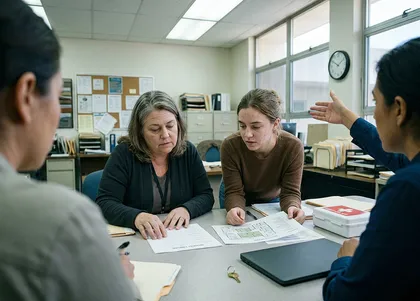
Earlier complaints may help establish whether school officials knew, or reasonably should have known, that a student faced a serious risk of harm.
Emails, incident reports, text messages, screenshots, witness statements, and records of meetings with administrators may show what concerns were raised and how the school responded.
For example, if parents had repeatedly reported threats or physical assaults involving their child, those communications may help establish the school’s awareness of a potential danger. Investigators would also examine whether reasonable intervention could have prevented the fatal incident.
Prior complaints alone do not prove that a school caused a student’s death. The available evidence must establish an actionable failure and a connection between that failure and the resulting loss.
Warning Signs That a Child May Be Experiencing Bullying
Some children openly describe being bullied, while others may struggle to explain what they are experiencing. Parents and caregivers can watch for changes that suggest a child may need additional support.
Possible warning signs include:
- Fear of Attending School: A child becomes reluctant to attend certain classes or expresses concern about particular students.
- Unexplained Injuries: Bruises, damaged belongings, or recurring physical complaints appear without a clear explanation.
- Changes in Behavior: A child becomes withdrawn, anxious, or noticeably distressed after school.
- Threatening Communications: Hostile messages or intimidation appear in texts, group chats, or social media.
- Repeated Reports of Aggression: A child describes being pushed, threatened, cornered, or physically confronted.
These signs do not necessarily mean bullying is occurring. However, they may provide an opportunity to ask questions, offer reassurance, and seek appropriate help before a situation becomes more serious.
Experiencing Bullying? You Don’t Have to Face It Alone.
If you’re being bullied, threatened, or harassed at school, or you’re a parent concerned about your child’s safety, help is available. Students can reach out to a trusted adult, while parents can document incidents and report concerns to school officials. No child should have to face bullying alone or feel afraid to go to school.
Helpful Resources
- StopBullying.gov – Get Help Now: Guidance for students and families dealing with bullying.
- California Department of Education: Information about bullying prevention and school safety.
- Call or text 988: Free, confidential crisis support for anyone experiencing emotional distress or a mental health crisis.
If someone is in immediate physical danger, call 911.
How Can Parents Report Bullying and Seek Protection for Their Children?
California schools have procedures for reporting bullying, harassment, and safety concerns. Following these procedures can help families seek protection, document the school’s response, and preserve evidence if serious harm occurs.
- Reporting Bullying: Parents and students can submit written complaints to a teacher, principal, or designated school official. Include incident details, previous complaints, and supporting evidence. Keep copies and request updates on protective measures.
- Filing a Formal Complaint: Bullying or harassment involving protected characteristics may qualify under California’s Uniform Complaint Procedures (UCP). Complaints generally must be filed within six months. Schools typically have 60 days to investigate, with a 30-day appeal period for qualifying decisions. Other complaints follow local school procedures.
- Preserving Evidence: If bullying results in serious injury or loss of life, earlier reports may help establish whether school officials knew of the danger. Preserve messages, incident reports, witness information, and school responses. Surveillance footage should also be preserved promptly.
- Pursuing a Wrongful Death Claim: If a school district’s negligence contributed to a student’s death, eligible family members may pursue a wrongful death claim. Claims against public school districts generally require filing an administrative claim with the government within 6 months of the student’s passing. A proper written rejection generally triggers another six-month deadline to file a lawsuit.
These are separate legal processes. Filing a bullying complaint does not replace a government claim or extend wrongful death filing deadlines.
If a child faces immediate danger, seek emergency assistance rather than waiting for a school investigation.
When May a California School Be Responsible for a Student’s Death?
School-related wrongful death claims are not limited to bullying. Fatal incidents may involve dangerous property conditions, inadequate supervision, transportation accidents, or other failures involving student safety.
The circumstances must establish that a responsible party breached an applicable legal duty and that the breach caused or contributed to the loss.
Unsafe School Buildings and Campus Conditions
Unsafe school facilities may contribute to fatal injuries involving hazardous conditions, such as:
- Damaged or unstable railings.
- Unsafe stairways, balconies, or elevated walkways.
- Broken steps or hazardous walking surfaces.
- Defective playground equipment.
Under California Government Code Section 835, a public entity may be liable for dangerous property conditions if the statutory requirements are met. This may involve proving that an employee created the hazard or that the district knew, or reasonably should have known, about it and had sufficient time to respond.
A fatal fall alone does not establish negligence. Liability depends on the property’s condition, available safety measures, and the circumstances surrounding the incident.
Student-on-Student Violence and Campus Security Failures
A school may face wrongful death liability when negligent supervision or inadequate security contributes to a fatal fight, assault, school shooting, or other violent incident.
Investigators may examine:
- Previous Threats: Whether school officials received credible warnings about potential violence.
- Prior Confrontations: Whether earlier fights or assaults revealed an escalating safety risk.
- Supervision and Security: Whether reasonable protective measures were in place.
- School Responses: How staff addressed complaints and whether appropriate steps were taken.
- Available Evidence: What surveillance footage, incident reports, and witness statements reveal.
Schools are not automatically liable for another person’s violent actions. A family must establish that the school owed the student a duty of care, failed to take reasonable protective measures, and that the failure contributed to the student’s death.
School Sports, Playgrounds, and Field Trips
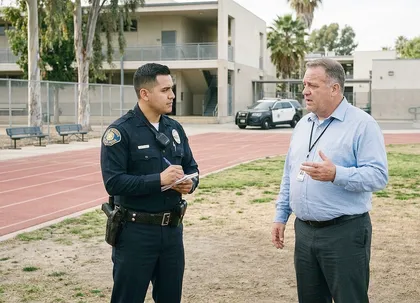
Sports, physical education (PE) classes, playground activities, and field trips involve different levels of supervision and physical risk.
A fatal incident during these activities may raise questions about unsafe equipment, inappropriate activities, inadequate supervision, or failure to respond reasonably to an emergency.
Schools are not automatically liable because an injury occurs during recreational or educational activities. A legal claim depends on the circumstances and evidence of negligence.
Public school districts may have additional legal protections for qualifying incidents occurring during field trips or off campus (California Education Code § 35330(d)).
Education Code § 44808 generally limits district responsibility for students outside school property, subject to exceptions involving transportation, school-sponsored activities, and other circumstances. Whether these provisions apply depends on the facts of the case.
School Bus and Transportation Accidents
School transportation accidents may involve negligent driving, inadequate vehicle maintenance, or unsafe transportation practices.
Some school districts operate their own buses, while others use private transportation companies. If a school bus gets in an accident, identifying the operator and other potentially responsible parties will become important because different legal procedures may apply.
Investigators may examine driver conduct, vehicle maintenance records, training, transportation agreements, and other drivers’ actions.
Emergency Response Failures
When a student suffers a serious injury or medical emergency at school, families may want to know whether assistance was requested promptly and whether appropriate procedures were followed.
Emergency call records, staff communications, witness statements, and medical documentation may help establish the response timeline.
A delay does not automatically prove negligence. A claim requires evidence that a responsible party failed to meet an applicable duty and that the failure caused or worsened the outcome.
Families Can Speak With Arash Law About Their Legal Options
When a child dies in a school-related incident, families may be coping with grief while also facing questions about investigations, school records, and legal responsibilities.
You do not have to resolve every question before speaking with an attorney. Arash Law can review the circumstances, discuss what evidence may be available, and help determine whether the facts support a wrongful death claim.
Our team approaches these conversations with sensitivity to what families are experiencing. The purpose of an initial consultation is to help you understand your options, without making assumptions about what happened.
Call (888) 488-1391 for a free initial consultation. Families can also learn more about California wrongful death claims through Arash Law’s wrongful death practice area.
Who May Be Held Responsible for a Fatal School Incident?
Liability may involve a school district, private school, individual employee, contractor, or another party whose legally actionable conduct contributed to the student’s death.
Potentially responsible parties may include:
- Public School Districts: May face liability under applicable California laws involving employee negligence or dangerous public property conditions.
- Private Schools: May be responsible for negligent supervision, unsafe premises, or other actionable failures.
- Teachers and Administrators: May face individual liability for their own negligent conduct when the law and evidence support the claim.
- Transportation Providers: May be responsible for negligent driving, vehicle maintenance failures, or unsafe transportation operations.
- Other Individuals or Organizations: May face liability when their conduct independently satisfies the requirements of a legal claim.
California Government Code Section 820 generally addresses public employee liability. Section 815.2 addresses circumstances in which a public entity may be liable for employees’ conduct within the scope of employment.
Families must establish the legal basis for holding each defendant responsible. In civil cases, the required facts generally must be proven by a preponderance of the evidence, meaning they are more likely than not true.
How Does Liability Differ Between Public, Private, and Charter Schools?
Public and private schools may both face wrongful death claims. However, the legal procedures can differ.
| School Type | Potential Liability | Important Legal Distinction |
|---|---|---|
| Public schools | Negligent supervision, dangerous property conditions, and qualifying employee conduct | Requirements for government claims generally apply. |
| Private schools | Negligent supervision, premises hazards, and other actionable failures | Ordinary civil filing rules generally apply. |
| Charter schools | Depends on the school’s legal structure and the responsible entity | Public entity status must be evaluated on an individual basis. |
California courts have recognized distinctions regarding charter schools and public entity status, including in Wells v. One2One Learning Foundation (2006).
Families should not assume that every charter school follows the same claim procedures as a traditional public school district. Identifying the school’s legal organization and the parties responsible is an important first step.
Who Can File a Wrongful Death Claim After a Fatal School Incident?
Parents and certain legal guardians may pursue a wrongful death claim after losing a child in a school-related incident caused by another party’s negligence or wrongful conduct.
Under California law, eligible claimants may include:
- Surviving Parents: Parents may generally file a wrongful death claim after losing their minor child.
- Legal Guardians: A child’s legal guardian may qualify to file a wrongful death claim when the child’s parents are deceased, and the statutory requirements are met. Guardianship alone does not automatically establish standing.
- Other Qualifying Relatives: Certain family members may be eligible depending on the child’s family circumstances and California’s inheritance laws.
Eligible claimants generally must participate in a single wrongful death lawsuit rather than file separate actions against the same defendant for the same loss.
Parents do not need to prove that their child earned an income to pursue qualifying damages. California law recognizes losses involving love, companionship, comfort, care, and the parent-child relationship.
How Long Do Families Have to File a Wrongful Death Claim in California?
California wrongful death lawsuits generally must be filed within two years under Code of Civil Procedure Section 335.1. However, claims involving public school districts usually require an earlier administrative government claim.
These deadlines can be especially difficult to manage while families are grieving. Understanding the distinction may help protect their legal options.
| Claim Type | General Deadline | What Families Should Know |
|---|---|---|
| Wrongful death or personal injury lawsuit | Two years | Missing the applicable deadline may bar the lawsuit. |
| Property damage lawsuit | Three years | Property damage cases generally follow a separate filing period. |
| Death or personal injury claim against a government entity | Six months | An administrative claim generally must be presented before filing suit. |
Legal basis: California Code of Civil Procedure § 335.1, § 338, and California Government Code § 911.2.
The Six-Month Government Claim Deadline for Public Schools
Families pursuing a wrongful death claim against a public school district generally must file an administrative claim within six months of their loved one’s passing. This claim is a required step before filing a lawsuit.
If the district formally rejects the claim in writing, families generally have an additional 6 months to file a lawsuit under Government Code Section 945.6. Different deadlines may apply without a proper rejection notice. Failure to meet these requirements may bar the claim.
If the government claim deadline has passed, California allows limited exceptions for late government claims. Under Government Code Sections 911.4 and 911.6, families may apply for permission to file late, generally within one year of their loved one’s passing. If denied, they may seek relief from the court under Section 946.6.
Relief is not guaranteed, and strict deadlines apply. Families should seek legal guidance promptly, especially because the student’s own surviving legal claims may have different filing deadlines.
What Evidence Can Help Families Understand What Happened?
Evidence can help families establish the sequence of events, identify potentially responsible parties, and determine whether preventable failures contributed to a student’s death.
The most relevant records depend on whether the incident involved bullying, violence, unsafe premises, transportation, or another safety concern.
| Evidence | What It May Help Establish |
|---|---|
| Bullying complaints and school reports | Whether earlier threats or aggression were reported. |
| Emails and school communications | What concerns were raised and how officials responded. |
| Surveillance footage | The sequence of events surrounding the incident. |
| Witness statements | What students, teachers, or others observed. |
| Campus maintenance records | Whether hazards existed and whether the school had notice. |
| Emergency response records | When assistance was requested and provided. |
| Medical and counseling records | Relevant injuries, treatment, and documented health concerns. |
| Transportation records | Vehicle operations, maintenance, and responsible parties. |
Steps Families Can Take to Preserve Evidence
Families do not need to investigate on their own. However, preserving information already available to them may help protect important evidence.
- Keep copies of school communications and incident notices.
- Write down the known timeline and identify potential witnesses.
- Preserve relevant emails, texts, photographs, and screenshots.
- Request preservation of school surveillance footage and incident records.
- Maintain available medical, counseling, and investigative documentation.
- Consult a California attorney about additional evidence and claim requirements.
Families should avoid drawing conclusions while investigations remain ongoing. An attorney may help identify records that require formal requests or legal procedures to obtain.
Evidence preservation differs from filing a lawsuit. Delays in securing records may weaken the available proof even when a legal deadline has not expired.
Speak With Arash Law About Your Family’s Legal Options
After losing a child in a school-related incident, families may have questions about the school’s responsibilities, earlier safety concerns, and whether legal action is possible.
Arash Law helps California families evaluate potential wrongful death claims. Our team can review the circumstances, identify relevant evidence, and explain the available legal options.
You do not need to have every document or answer before reaching out.
Call (888) 488-1391 for a free initial consultation.
What Compensation May Be Available After a Fatal School Incident?
California wrongful death law allows eligible surviving family members to seek compensation for certain financial and personal losses when another party is legally responsible for a loved one’s death.
No amount of money can replace a child or ease the full weight of a family’s grief. Compensation may, however, help address financial burdens and recognize the loss of the relationship, care, and companionship that families expected to share with their loved one.
Under California Code of Civil Procedure Section 377.61, recoverable damages may include:
- Funeral and Burial Expenses: Reasonable costs associated with funeral services, burial, and related arrangements.
- Lost Financial Support: Financial contributions the deceased person would reasonably have provided to surviving family members.
- Lost Household Services: The value of qualifying household assistance and services the deceased person would have contributed.
- Loss of Love and Companionship: The absence of the affection, comfort, and meaningful relationship the family shared with their loved one.
- Loss of Care and Protection: The support and assistance the deceased person would have provided.
- Loss of Guidance and Moral Support: The training, guidance, encouragement, and support that formed part of the family relationship.
When a family loses a child, financial damages require careful evaluation based on the child’s circumstances and the available evidence. California law also recognizes qualifying losses involving companionship, affection, and care, even when the child did not earn an income.
Although these losses can be deeply painful, grief, sorrow, and mental anguish are generally not separately recoverable as wrongful death damages under California law.
In some circumstances, families may also pursue a separate survival action for qualifying losses their child sustained before passing away. This type of claim differs from wrongful death and has its own legal requirements.
Frequently Asked Questions About Fatal School Incidents in California
Can a Family Sue a School District After a Student’s Death Following Repeated Bullying?
Yes. A family may pursue a wrongful death claim when evidence establishes that the school district’s legally actionable failure contributed to the student’s death.
Earlier bullying complaints, threats, or physical confrontations may help establish whether school officials knew about a foreseeable danger. However, families must also prove that a breach of duty caused or contributed to the loss.
What if Parents Reported Bullying but the School Did Not Stop It?
A school may face liability if officials failed to respond reasonably to reported bullying and that failure contributed to a student’s death. Earlier complaints may become important evidence in a wrongful death investigation.
Written reports, school responses, witness accounts, and incident records can help establish whether officials knew about a serious safety concern and responded reasonably.
The continuation of bullying after a complaint does not automatically establish negligence. Liability depends on the school’s conduct and its connection to the resulting harm.
Can Parents Sue if Another Student Was Involved in Their Child’s Death?
Yes, depending on the circumstances. Another student’s involvement does not automatically eliminate potential liability for negligent supervision or another actionable failure.
The family must establish that the school or another defendant had an applicable duty and that a breach of that duty contributed to the death.
Can a Family Sue After a Fatal Fall From a School Building?
Yes, if the facts support a valid claim involving dangerous property conditions, negligent supervision, or another actionable failure.
An investigation may examine railings, balconies, walkways, maintenance records, supervision, and the events surrounding the fall.
A fatal fall alone does not establish that school property was defective or that anyone acted negligently.
Does an Ongoing Criminal Investigation Delay a Wrongful Death Lawsuit?
No. A criminal investigation does not automatically extend California’s civil wrongful death filing deadlines.
Criminal and civil proceedings follow separate processes. Code of Civil Procedure Section 340.3 provides special limitations rules for certain claims involving felony convictions, but those provisions do not apply to every criminal investigation or potential defendant.
Families should protect applicable civil deadlines even while a criminal investigation continues.
Can Parents Pursue a Wrongful Death Claim Against a Private School?
Yes. A private school may face wrongful death liability when its negligence or wrongful conduct causes a student’s death.
Private school claims generally follow ordinary civil filing procedures rather than the government claim requirements applicable to public school districts.
What if a Family Cannot Afford a Wrongful Death Attorney?
Families may be able to obtain legal representation through a contingency fee agreement, under which the attorney’s fees depend on a recovery.
California Business and Professions Code Section 6147 requires that qualifying contingency fee agreements be in writing and identify the applicable fee percentage and other required terms.
Families should ask about the attorney’s fees, litigation costs, and their financial obligations before signing an agreement.
Related Case Result: $2,350,000 Pedestrian Accident Settlement
Arash Law secured a $2.35 million settlement for a 13-year-old girl who suffered a traumatic brain injury after being struck by a car near her high school. Although the police report initially blamed the student, our team obtained evidence showing that the driver was aware that students frequently crossed the intersection and admitted he should have braked sooner.
The settlement followed years of medical treatment and disputes over liability and insurance coverage.
This was a pedestrian injury case, not a school negligence or wrongful death case. However, the result illustrates the importance of investigating disputed liability when a student is seriously injured.
Past results do not guarantee future outcomes. Every case depends on its unique facts and circumstances.
Source: Arash Law — Case Results
Families Deserve Compassionate Support and Clear Answers
Losing a child in a school-related incident can leave a family facing both profound grief and difficult unanswered questions.
Some families may want to know whether earlier bullying complaints were taken seriously. Others may be concerned about unsafe school conditions, inadequate supervision, or how an emergency was handled. These concerns deserve a careful examination of the available facts, without assumptions or premature conclusions about fault.
Arash Law helps California families understand their legal rights and evaluate potential wrongful death claims. Our team can review the available information, explain the applicable procedures, and discuss whether the circumstances may support legal action.
If your family has lost a child in a school-related incident, call Arash Law at (888) 488-1391 for a free case evaluation. We are available to listen to your concerns and help you understand your possible next steps.
Sources
- ABC7 Los Angeles — Franklin High School Student Death. Reporting on the student’s death and family concerns about bullying. https://abc7.com/post/franklin-high-student-fell-fourth-floor-balcony-died-suicide-la-county-medical-examiner/19919192/
- California Department of Education — Uniform Complaint Procedures. Official guidance on complaint procedures involving qualifying discrimination, harassment, intimidation, and bullying concerns. https://www.cde.ca.gov/re/cp/uc/index.asp
- StopBullying.gov — Get Help Now. Federal guidance for students and families seeking assistance with bullying, cyberbullying, and immediate safety concerns. https://www.stopbullying.gov/resources/get-help-now
- California Courts — Ask a Government Agency to Pay You. Information about presenting claims against government agencies and applicable filing deadlines. https://selfhelp.courts.ca.gov/civil-lawsuit/government-claim
- California Courts — Jury Service Glossary. Official definitions of legal concepts, including the standard of proof used in civil cases. https://courts.ca.gov/courts/jury-service/jury-service-glossary
- California Court of Appeal — Vallejo City Unified School District v. Superior Court (2026). Judicial decision addressing school district liability and statutory protections in litigation involving alleged bullying and a student’s death.
https://www4.courts.ca.gov/opinions/archive/A173303.PDF- California Government Code Section 835. Statutory requirements governing public entity liability for dangerous conditions of public property. https://leginfo.legislature.ca.gov/faces/codes_displaySection.xhtml?sectionNum=835.&lawCode=GOV
- California Code of Civil Procedure Section 377.60. Statutory provisions identifying individuals who may bring a wrongful death claim. https://leginfo.legislature.ca.gov/faces/codes_displaySection.xhtml?sectionNum=377.60.&lawCode=CCP
- California Code of Civil Procedure Section 377.61. Statutory provisions governing damages in wrongful death actions. https://leginfo.legislature.ca.gov/faces/codes_displaySection.xhtml?sectionNum=377.61.&lawCode=CCP
- California Education Code Section 35330. Statutory provisions governing school field trips and excursions, including limitations on school district liability. https://leginfo.legislature.ca.gov/faces/codes_displaySection.xhtml?lawCode=EDC§ionNum=35330.
- California Education Code Section 44808. Statutory provisions governing school district responsibility for student safety off campus, including applicable exceptions. https://leginfo.legislature.ca.gov/faces/codes_displaySection.xhtml?lawCode=EDC§ionNum=44808
- California Government Code Section 911.2. Statutory requirements concerning deadlines for presenting government claims involving death or personal injury. https://leginfo.legislature.ca.gov/faces/codes_displaySection.xhtml?sectionNum=911.2.&lawCode=GOV
Disclaimer
This content is provided for educational purposes only and does not constitute legal advice. Every school-related injury or wrongful death claim depends on its specific circumstances, applicable California law, and available evidence. Reading this content or contacting the firm does not create an attorney-client relationship.
Past case results do not guarantee future outcomes. Families should consult a licensed California attorney about their individual circumstances, possible legal rights, and applicable deadlines.
Arash Law — (888) 488-1391.