TL;DR: In most head-on collisions, the driver who crossed the center line usually bears fault, but proving it requires solid evidence like skid marks, witness accounts, and black box data. Severe injuries, medical bills, and insurance disputes follow quickly, while your deadline to file a lawsuit is generally 2 years from the date of the accident.
Highlights:
- Report the crash to police or CHP within 24 hours if anyone is injured or killed.
- File the DMV SR-1 within 10 days if anyone is injured or killed, or if property damage exceeds $1,000.
- Photograph lane markings, skid marks, debris, vehicle positions, and nearby signage.
- Get names, contact details, and brief statements from witnesses at the scene.
- Preserve dashcam, surveillance, and cellphone videos before they are overwritten.
- Keep both vehicles unaltered and promptly request EDR (black box) downloads.
- File a government claim within 6 months if a road condition may be involved; file a personal injury lawsuit within 2 years.
Tip: Write down a same-day timeline (what you saw, felt, and did) and stick to confirmed facts when speaking with insurers.
Table of Contents
A driver who crosses into oncoming traffic and causes a head-on collision is usually at fault. A driver may also be at fault if they violate a traffic law and that violation causes the crash. However, liability depends on the facts of the collision. Investigators may also consider whether another driver, a vehicle defect, or a dangerous road condition contributed to the crash.
Determining fault is not always simple. Head-on crashes can move vehicles and scatter evidence away from the point of impact. That can make it harder to determine which driver crossed into the wrong lane. Investigators review police reports, witness statements, physical evidence, and crash data to determine what happened. This evidence can help show which driver left their lane and why.
You may still have the right to seek compensation even if the other driver disputes fault. California follows a pure comparative negligence system, which allows injured victims to recover damages even when they share some responsibility for the crash.
California follows a fault-based auto insurance system rather than a no-fault system. This means the driver who caused a collision may be responsible for the other party’s resulting damages, usually through liability insurance up to the available policy limits. Because fault affects who may cover damages, insurers and attorneys closely examine the evidence surrounding a head-on crash.
Who Is Usually Legally Responsible For A Head-On Collision?
In most head-on collisions, investigators first look at the driver who entered oncoming traffic or drove the wrong way. However, fault depends on why the vehicle left its lane and whether another factor contributed.
A driver may enter opposing traffic because they:
- Lost control while driving too fast for road conditions, such as taking a curve too quickly or failing to adjust for rain, fog, or ice.
- Drifted across the center line because of distraction, drowsiness, impairment, or failing to stay in their lane.
- Drove while impaired by alcohol or drugs. That can affect judgment, reaction time, and vehicle control, increasing the risk of entering oncoming traffic.
- Tried to pass another vehicle without enough visibility, space, or time to return to their lane safely.
- Swerved to avoid a hazard, such as debris, another vehicle, an animal, or an object in the roadway.
- Drove the wrong way on a road, such as entering an exit ramp or traveling against traffic.
- Lost control of the vehicle due to reckless driving, sudden acceleration, or another unsafe action.
- Had a sudden medical emergency, such as a sudden heart attack, stroke, seizure, or loss of consciousness, resulting in an unexpected physical incapacitation behind the wheel. Under California law, a sudden medical emergency can be raised as an affirmative defense to avoid liability for negligence.
These actions can place a driver in the path of oncoming traffic, leading to a head-on collision. However, investigators must review the facts to determine whether another driver, vehicle defect, or road condition also contributed.
Other Parties That May Share Fault In A Head-On Collision
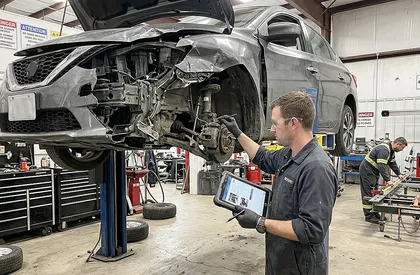
Although the driver who entered oncoming traffic is often the primary party investigated, other parties or entities may also share responsibility, depending on the cause of the crash.
Other potentially responsible parties may include:
- Another Driver: A driver may share fault if their actions forced another vehicle into opposing traffic. Such incidents may happen when a driver:
- Makes an unsafe lane change or merge.
- Cuts off another vehicle.
- Drives aggressively, causing another driver to lose control of their vehicle.
- Causes a chain-reaction crash, even without direct collision with the affected vehicle.
- Vehicle Manufacturer or Parts Supplier: A manufacturer, parts supplier, or other company may be responsible if a defective vehicle component contributed to the collision. Examples may include:
- Defective brakes that prevent a driver from stopping.
- Steering system failures that cause a vehicle to leave its lane.
- Defective tires that result in a sudden loss of control.
- Other vehicle defects contribute to the crash.
- Repair Shop or Maintenance Provider: A mechanic or maintenance company may share liability if improper repairs or inadequate maintenance caused a vehicle failure. That may happen when they:
- Fail to repair a braking or steering issue.
- Incorrectly install vehicle components.
- Fail to identify a dangerous mechanical problem during service.
- Government Entity Responsible for Road Conditions: A public entity may be responsible if a dangerous roadway condition contributed to the crash. Potential issues may include:
- Missing or inadequate warning signs.
- Unsafe roadway design.
- Missing center barriers or guardrails.
- Poor lane markings or confusing traffic controls.
Claims against government entities require proving that the roadway condition met California’s legal requirements for a dangerous condition of public property.
- Employer or Commercial Trucking Company: The employer may share legal responsibility if the driver who crossed into oncoming traffic was operating a commercial truck or delivery vehicle, or was driving as part of their job duties.
In some head-on collisions, more than one party may share responsibility. California follows a comparative negligence system, meaning each party’s percentage of fault may affect the amount of compensation an injured person can recover.
What Evidence Helps Prove Liability In A Head-On Crash?
Evidence that can help prove fault in a head-on crash includes crash scene evidence, vehicle data, witness statements, police records, and expert reviews. A head-on collision attorney can help gather and review this evidence to support your claim.
This evidence can show which driver entered oncoming traffic, whether another factor caused the crash, and who may be responsible.
| Evidence | How It Can Help Prove Liability |
|---|---|
| Dashcam, surveillance, or cellphone videos | These may show how the crash happened, including whether a driver crossed the center line, drifted into another lane, made an unsafe maneuver, or reacted to a hazard. |
| Skid marks, tire marks, and debris patterns | These may help identify the point of impact, braking attempts, and the path each vehicle traveled before the collision. |
| Vehicle damage and final resting positions | These can help determine the direction of travel, the angle of impact, and whether a vehicle entered opposing traffic. |
| Photos from the crash scene | These may preserve important details such as vehicle positions, road conditions, lane markings, traffic signs, and visible hazards before the scene changes. |
| Police reports and investigation records | These may include officer observations, driver statements, witness information, and details about possible traffic violations. A police report does not automatically determine legal fault, but it may provide useful evidence. |
| Witness statements | These can help confirm what happened before the collision, including whether a driver was speeding, distracted, impaired, or leaving their lane. |
| Event Data Recorder (EDR) data | If a vehicle is equipped with an EDR and the crash triggered a recording, the available data may include speed, brake status, throttle input, restraint information, and other crash-related details. |
| Vehicle inspection and maintenance records | These may help determine whether a defective part, improper repair, or mechanical failure contributed to the crash. |
| Medical records and bills | Document the injuries caused by the collision and the financial losses related to treatment. |
| Accident reconstruction analysis | Experts may combine physical evidence, vehicle damage, EDR data, and scene measurements to reconstruct the collision and identify contributing factors. |
Because head-on collisions often involve severe impacts, important evidence can be lost over time. Vehicles may be repaired, skid marks may disappear, and electronic data may become harder to obtain. Preserving available evidence soon after the crash can help establish how the collision occurred and who may be responsible.
How Fault Is Determined In A California Head-On Collision
Liability in a head-on crash depends on whether a driver acted carelessly and caused the collision. Investigators, insurers, and courts review evidence to determine what happened.
They may review traffic violations, witness statements, crash reports, vehicle data, and other records.
To prove negligence, all four elements must exist:
- Duty of Care: Every driver must drive safely and follow traffic laws.
- Breach: The driver failed that duty, such as by crossing the center line or driving while impaired.
- Causation: The driver’s actions caused the crash and your injuries.
- Damages: You suffered losses, including medical bills, lost wages, property damage, and pain and suffering.
California also recognizes a rule called negligence per se. Under California Evidence Code Section 669, breaking a law may create a presumption of negligence. The presumption may apply if all of the following are true:
- A person violated a law.
- The violation caused the injury.
- The injury resulted from the type of harm the law was designed to prevent.
- The injured person belonged to the group the law was intended to protect.
The presumption applies only if all statutory requirements are met. If it arises, the person who violated the law may rebut it by showing that they acted as a reasonably prudent person seeking to comply under similar circumstances.
Two California Vehicle Codes (CVC) may apply in some head-on crashes:
- CVC § 21650 generally requires that vehicles be driven on the right half of the roadway, subject to exceptions allowed by law.
- CVC § 21651(b) prohibits driving on the wrong side of a divided highway. A violation may support a negligence per se claim if legal requirements are met.
Even if the other driver broke a traffic rule, they may argue you share some fault. California’s comparative negligence rules determine how shared fault affects your recovery.
A head-on collision attorney can help preserve evidence, review crash reports and vehicle data, identify responsible parties, and address fault disputes.
What Happens If Both Drivers Share Fault?
One driver may cross the center line, but the other driver may also contribute to the crash. This may include speeding, driving inattentively, or failing to take reasonable evasive action when there was enough time and opportunity to do so. Under California’s pure comparative negligence rule, you may still recover compensation if you share some fault. However, your recovery is reduced by your percentage of fault.
For example, if your total damages are $100,000 and you are 20% at fault, you could recover $80,000.
In a shared-fault head-on collision claim, the parties and insurance companies may review evidence to determine each driver’s responsibility. Common disputes may involve:
- Witness Statements: Parties might dispute what witnesses saw or whether their statements support one side of the story.
- Injury Claims: Questions may arise about whether the crash caused the injuries, how serious they are, or if past conditions played a role.
- Crash Scene Evidence: Vehicle positions, skid marks, damage patterns, and other evidence may be interpreted differently when determining fault.
- Settlement Discussions: Insurance companies may evaluate settlement offers based on the evidence, injuries, and estimated fault percentages.
Strong evidence, such as photos, witness statements, vehicle data, and medical records, can help show how the crash happened. It can also support a fair assessment of fault.
What Compensation Can You Recover After A Head-On Collision?
If another party caused your head-on collision, you may recover compensation for the losses the crash caused. The available damages depend on your injuries, financial losses, the available insurance coverage, and the facts of your case.
Compensatory Damages
Compensatory damages aim to compensate you for the losses you suffered because of the crash. Depending on the facts of your case, you may pursue compensation for:
- Medical expenses, including future treatment and rehabilitation.
- Lost wages and reduced earning capacity.
- Property damage.
- Physical pain and suffering.
- Emotional distress.
- Loss of enjoyment of life.
- Other accident-related financial losses.
If you share some fault for the collision, California’s pure comparative negligence rule may reduce your compensation by your percentage of fault.
Punitive Damages
Punitive damages do not compensate you for your losses. Instead, a court may award them to punish a defendant whose conduct showed malice, oppression, or fraud under California Civil Code § 3294. They are available only in limited cases and require proof that meets California’s legal standards.
For example, punitive damages may be available if a driver acted with conscious disregard for the safety of others, such as in some drunk driving cases where the evidence supports that finding.
Wrongful Death Damages
If a head-on collision causes a person’s death, eligible family members may bring a wrongful death claim under California law. Recoverable damages may include:
- Funeral and burial expenses.
- The financial support the deceased would have provided.
- The value of lost household services.
- The loss of the deceased’s love, companionship, comfort, care, assistance, protection, affection, society, and moral support.
In some cases, the decedent’s estate may also bring a separate survival action to recover damages permitted by California law.
Workers’ Compensation Benefits
If a head-on collision happened while you were performing your job duties, you may qualify for workers’ compensation benefits regardless of who caused the crash. Workers’ compensation may cover the following:
- Medical treatment for work-related injuries.
- Temporary disability benefits.
- Permanent disability benefits.
- Supplemental job displacement benefits.
- Death benefits for eligible dependents if the collision is fatal.
You may also have a separate personal injury claim against a negligent third party, such as another driver or a vehicle manufacturer. Workers’ compensation generally does not prevent you from pursuing a third-party claim when someone other than your employer or a co-worker caused the collision.
Reporting Rules And Legal Deadlines For California Car Accidents
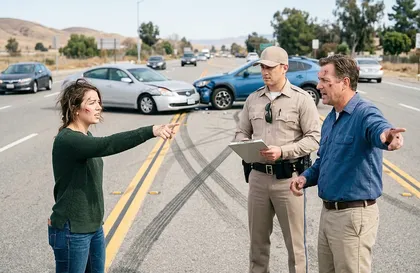
Evidence is not the only thing on a short timeline. California law sets two types of deadlines after a crash: reporting deadlines and lawsuit deadlines. Failing to submit a required DMV SR-1 report can result in suspension of your driving privilege. Missing an applicable lawsuit deadline can bar your claim, although tolling rules or a different deadline may apply in some cases.
These deadlines in head-on collision cases can move faster than you expect. Speaking with car accident lawyers early may help you understand which deadlines apply to your situation.
California sets these key deadlines:
- Police or CHP Report (24 Hours): California Vehicle Code Section 20008 generally requires the driver to make or arrange a written report within 24 hours if the crash injured or killed anyone. The report goes to the CHP or, if the crash occurred within a city, to either the CHP or the city police department.
- DMV SR-1 Form (10 Days): File an SR-1 with the DMV within 10 days if anyone was injured or killed or if damage to any one person’s property exceeded $1,000. Failing to file can result in a suspended driver’s license.
- Personal Injury Lawsuit (2 Years): California Code of Civil Procedure Section 335.1 gives you two years from the crash date to file a personal injury lawsuit.
- Government Claim (6 Months): If a government entity caused the crash, you must file an administrative claim within six months, as set by California Government Code § 911.2(a).
- If the agency rejects your claim, you generally have six months from the date it mails or personally delivers the rejection notice to file a lawsuit.
- If the agency does not send a written rejection notice, you may have up to two years from the date of the accident to file suit.
In some cases, you may also request permission to file a late claim.
- Wrongful Death Lawsuit (2 Years): If a person dies in the crash, the surviving spouse, domestic partner, children, or other persons authorized by California law generally have two years from the date of death to file a wrongful-death lawsuit. If a public entity may be responsible, you generally must first present an administrative claim within six months. A written rejection may then start a separate six-month deadline for filing the lawsuit.
In head-on collision cases, evidence degrades quickly while your deadlines keep running. Skid marks fade, witnesses become harder to reach, and dashcam footage gets overwritten. Contacting a lawyer early lets you address both at once.
Why Legal Representation Matters For Proving Fault In A Head-On Collision Case
Head-on collisions are one of the types of car accidents that often involve catastrophic injuries and complex liability issues. Legal representation may help protect your claim and preserve important evidence.
Car accident lawyers who handle head-on collision cases can:
- Gather evidence, such as police reports, witness statements, vehicle damage, and crash data.
- Preserve vehicle data, damaged parts, photos, and other important records.
- Document and evaluate medical expenses, lost income, property damage, and other potentially recoverable losses.
- Help file claims and lawsuits within the required time limits.
After identifying potentially at-fault parties, lawyers can handle insurance disputes involving fault, coverage, and claim value.
Every case depends on its facts and evidence. Past results do not guarantee a similar outcome. However, prior recoveries may show how legal representation can help injured clients pursue compensation.
For example, Arash Law recovered $6,000,000 for a client whose wife died in a head-on collision due to a drunk driver’s action. The driver crossed double yellow lines on a two-lane highway. The defense disputed coverage and liability, but Arash Law obtained the maximum available policy limits.
In another case, the firm also recovered $1,280,000 for a client who suffered serious injuries after a driver fell asleep and caused a head-on collision. The case settled within 6 months, and we recovered the full policy limits.
Frequently Asked Questions About Fault In Head-On Collisions
After a head-on crash, you may have questions about fault, liability, insurance coverage, and your legal options. These common questions address issues that may affect your California head-on collision claim and when legal guidance may be helpful.
What If A Tire, Steering Part, Or Brake Failure Caused The Crash?
A driver may not be the only responsible party if a mechanical failure caused the crash. Liability may extend to a manufacturer, parts supplier, repair facility, maintenance company, rental company, or another responsible party. An attorney can help preserve the vehicle, review inspection records, and investigate whether a defect or an improper repair contributed to the accident.
Does The Police Report Officially Decide Who Is At Fault?
No. A police report does not determine legal fault. California Vehicle Code Section 20013 generally prevents parties from using covered traffic collision reports as evidence at trial. However, investigators and attorneys may use the report to identify witnesses, statements, photographs, and other information they can obtain through admissible sources.
If the report contains errors or missing details, a lawyer can help. They can gather more evidence, including witness statements, crash data, and expert analysis.
Does An Insurance Company’s Fault Determination Decide My Case?
No. When an insurance company assigns fault after a head-on collision, that decision reflects the insurer’s own claims-handling process, not a legal or court determination of fault. Insurance adjusters review the police report, damage patterns, and statements from those involved. Still, they work on behalf of an insurance company and may weigh evidence differently than a court would. An insurer’s determination of fault can affect whether it pays a claim, denies it, or disputes liability, but it does not bind a court and is not the final word on legal responsibility.
What If The Other Driver Was Forced Into My Lane By A Third Vehicle?
The driver who crossed the center line is not always at fault if another driver caused them to enter opposing traffic. A driver who makes an unsafe lane change, cuts off another vehicle, or causes another driver to lose control may share responsibility. An attorney can review the actions of the involved drivers, examine the evidence, and determine whether a third party may be liable.
Can A City Or Government Agency Be At Fault For A Head-On Crash?
Yes, in some cases. Unsafe road conditions may contribute to a head-on crash. Examples include poor lane markings, missing barriers, inadequate warnings, or dangerous construction zones. If a dangerous condition on public property caused the crash, you may have a claim under California Government Code Section 835 if legal requirements are met. A government claim generally must be filed within six months of the injury. An attorney can help determine whether a public entity may be responsible and whether you meet the required deadlines.
How Does The Other Driver’s Lack Of Insurance Affect My Head-On Collision Claim?
If the at-fault driver is uninsured, your own UM coverage may apply. California auto liability policies generally include UM bodily-injury coverage unless it was validly rejected or reduced in writing, so review the policy and any signed waiver. An attorney can review your policy, communicate with insurers, and identify possible sources of compensation for medical bills, lost income, and other losses.
Talk To A Lawyer About Your Head-On Collision Case
Head-on collision claims may involve disputes over fault, evidence, insurance coverage, and damages. The attorneys at Arash Law handle head-on crash cases throughout California and can help investigate the collision, review evidence, and identify potentially responsible parties.
Arash Law (also referred to as AK Law) handles personal injury cases on a contingency fee basis. Clients generally do not pay attorney fees unless the firm recovers compensation on their behalf.
California law sets deadlines for filing injury claims. Call us at (888) 488-1391 to discuss your head-on collision case and learn what legal options may apply.