TL;DR: You can sue a property owner if you fall in a driveway, provided their negligence caused your injury. They may be liable for your injuries and losses if they knew or should have known about a hazard and failed to fix or warn of it. Injured visitors, delivery drivers, and even some trespassers may recover medical bills, lost wages, and pain and suffering. Homeowners insurance may cover these claims.
Highlights:
- Show the homeowner knew or should have known about the driveway hazard through inspection.
- Photograph the driveway, hazard, and surrounding area immediately before anything is moved or cleaned.
- In most cases, the claim is filed against the homeowner’s insurance policy, not the person directly.
- California gives injured people two years from the date of the fall to file a lawsuit under the statute of limitations.
- Get a medical evaluation immediately after falling to document injuries linked to the fall.
- Even partial fault on the injured person’s part doesn’t bar them from recovering damages under comparative negligence rules.
Tip: Stick to the facts about the hazard’s condition and how long it likely existed rather than guessing whether the owner saw it.
Table of Contents
Yes, you can sue someone if you fall in their driveway. Under California premises liability law, you can sue if a property owner’s negligence caused the injury. This law holds property owners responsible for keeping their land reasonably safe. Negligence may exist if the property owner or another person controlling the driveway created the dangerous condition, knew about it, or should have discovered it through reasonable care, and failed to repair it, protect against it, or provide an adequate warning.
A driveway fall can lead to medical expenses, missed work, and other financial losses. That kind of accident can be stressful, and it is worth understanding what the law requires to seek compensation. Whether a lawsuit succeeds depends largely on whether the property owner or another person controlling the driveway created the hazard, knew about it, or should have discovered it through reasonable care. The injured person’s conduct may also affect the amount recoverable under California’s comparative negligence rule.
Understanding Homeowner Liability For Driveway Falls In California
Homeowner liability for a driveway fall is a question of negligence. This means the owner failed to use reasonable care to prevent injury. California Civil Code Section 1714 requires property owners to keep their property reasonably safe. When an owner knows or should have known about a hazard and fails to address it, they may be liable for resulting injuries.
This law makes every person legally responsible for harm caused by failing to use ordinary care. For homeowners, that means checking for unsafe conditions and fixing them before someone is hurt.
To build a strong driveway fall claim, you must prove four elements:
- Duty of Care: The property owner owed you a duty to keep the premises reasonably safe.
- Breach: The owner knew or should have known about the dangerous condition (constructive notice) and failed to fix it or warn you about it.
- Causation: The dangerous condition was a substantial factor in causing your fall.
- Damages: You suffered injuries or other compensable losses as a result.
Establishing that the property owner had “notice” of the hazardous condition is a crucial component of demonstrating negligence. Notice comes in two forms:
- Actual Notice: This happens when a worker or property owner was directly aware of the risk.
- Constructive Notice: This may arise when the dangerous condition existed long enough that a property owner using reasonable care should have discovered and addressed it.
Who Can Be Liable For A Driveway Fall?
The homeowner is not always the only responsible party. Liability may also involve a tenant, landlord, property manager, business, homeowners’ association, contractor, or government entity.
Responsibility often depends on who controlled the driveway, maintained it, created the hazard, or had the authority to repair it. More than one party may share liability.
Common Hazards That Lead To Driveway Injuries
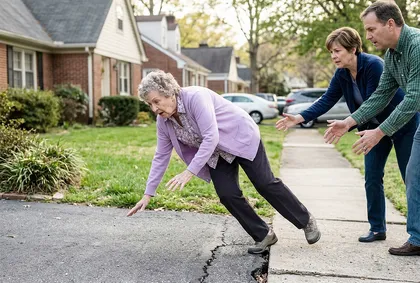
Most driveway claims trace back to a few upkeep problems. Cracks, spills, poor drainage, and dim lighting are not random. When ignored, these issues put visitors at risk and can expose the property owner to a lawsuit.
Here are the most common driveway hazards:
- Cracked or Uneven Concrete/Asphalt: Broken or raised pavement creates hard-to-spot trip hazards.
- Oil, Antifreeze, or Fluid Spills: Leaked fluids coat the surface, making it slick and contributing to many driveway accidents.
- Algae, Moss, or Poor Drainage: Algae or moss can form on wet, shaded driveways, creating a slippery surface.
- Poor Lighting: A dark driveway hides cracks and spills, so visitors may not see a hazard in time.
Concrete is hard and unforgiving. A fall can break bones, injure the head, or damage the spine. Some injuries require weeks or months of medical care, rehabilitation, or other treatment.
These accidents can occur on a neighbor’s driveway, in a business parking lot, or even on government property.
Even when a hazard exists, the injured person’s actions can affect the outcome of the case. A slip-and-fall lawyer can help you avoid mistakes that could harm your case.
What Happens If I Am Partially At Fault?
Being partially at fault for a fall does not automatically eliminate your right to sue. California allows injured people to seek compensation even when they share fault for the accident.
California uses pure comparative negligence. This means your compensation gets reduced by your share of fault. But it doesn’t prevent you from recovering. Negligence, in this context, means failing to use reasonable care. California’s Supreme Court set this rule in Li v. Yellow Cab Co., 13 Cal. 3d 804 (1975).
For example, if you’re a delivery driver who was looking at your phone when you tripped on an obvious oil spill the homeowner had ignored, the court may find you 20% at fault. You may still pursue 80% of your total damages (the financial compensation for your losses).
Many injured people search online for free advice from a driveway accident lawyer, hoping to get a quick answer about fault. Fault depends on the specific facts of the case. It depends on the surface condition, whether any warning was given, and what the injured person was doing at the time.
Because fault can be shared, injured people should act quickly after a fall. What you document and preserve in those first hours can shape how much responsibility falls on each side. Knowing what to do after a slip-and-fall accident is a practical place to start.
Steps To Protect Yourself In Case Of A Fall On Someone Else’s Property
If you slip and fall on someone else’s property, the steps you take right away shape how a claim is handled. Prioritize your health. Then, document what happened, stay calm, and do not admit fault.
- Document the Scene Immediately: Photograph the driveway, the hazard, and the area around it. Do this before anything is moved.
- Seek Medical Attention: Even if you feel fine, go to a nearby hospital or clinic. Prompt medical records are critical to verify that your injuries are a direct result of the accident.
- Report the Incident: Notify the landlord, manager, or property owner right away. Also, you will need their name and phone number if a claim is filed later.
- Obtain Witness Information: Get the names, addresses, and phone numbers of anybody who may have witnessed your fall.
- Do Not Speculate or Admit Fault: Keep the conversation factual. A statement such as “I wasn’t looking” may be used as evidence of comparative fault. A simple expression of sympathy is treated differently from an admission of fault under California Evidence Code section 1160.
Many people may avoid pursuing a driveway fall claim out of concern for a neighbor or family member’s finances. Manyhomeowners’s insurance policies may cover legal costs and damages if the homeowner is responsible for the injury. Coverage depends on the policy’s limits and exclusions. The claim is still against the responsible property owner, even if the insurance company handles the case and pays the settlement.
Many policies also include Medical Payments to Others coverage, which may pay reasonable medical expenses for an injured person on the property, without requiring proof of negligence. This coverage is limited and often excludes the insured, household residents, and injuries arising from business activities.
What Compensation Can I Seek After A Driveway Fall?
Depending on the injuries and available evidence, compensation may include:
- Medical bills and future treatment costs.
- Lost wages and reduced earning ability.
- Pain, suffering, and emotional distress.
- Rehabilitation and assistive-care expenses.
- Other losses caused by the fall.
The amount depends on the severity of the injuries, available insurance, shared fault, and the strength of the evidence.
Frequently Asked Questions About Driveway Fall Claims
Driveway fall claims raise questions that don’t always have clear answers. The outcome depends on who was on the property, what the owner knew, and whether a real hazard was present. Whether a claim succeeds often comes down to what the owner knew and whether the hazard was one they should have predicted.
What Happens If I Fall In A Driveway And The Homeowner Doesn’t Have Insurance?
This doesn’t eliminate your potential claim; it just changes the way you could get compensation. If you can show that a homeowner was careless (for example, by ignoring a known hazard), you can still sue them directly for your medical bills and lost income.
That said, collecting from a person can be harder than collecting from an insurance company. Some homeowners have little to collect from, and certain assets are protected by law. Some homeowners may offer to pay you directly over time to avoid a lawsuit, especially for smaller amounts. It’s smart to have a lawyer review any such agreement.
You can also use your own health insurance to cover medical bills in the meantime. Just note that your insurer may ask to be repaid from any settlement you later receive.
How Long Do I Have To File A Driveway Fall Lawsuit?
In California, you generally have two years from the date of the fall to file a personal injury lawsuit. Different deadlines may apply when the injured person is a minor, the defendant leaves California, or the claim involves government property. Waiting too long may prevent you from recovering compensation.
Can I Sue If I Fall In A Driveway While I Was Working As A Delivery Driver?
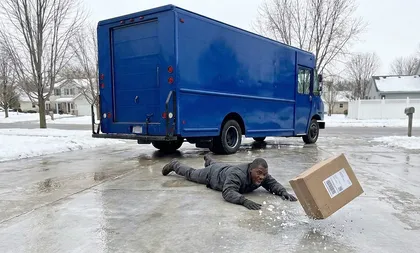
Yes. Property owners generally owe delivery drivers and other foreseeable visitors reasonably safe driveways and pathways. Falls, in general, are a real workplace hazard. In 2024, 844 workers died in occupational incidents involving falls, slips, or trips. The Bureau of Labor Statistics also reported 479,480 nonfatal cases involving falls, slips, or trips that resulted in days away from work during the combined 2023–2024 reporting period. These figures cover occupations and work locations broadly, not only driveway falls involving delivery drivers.
So if you’re a delivery driver who got injured because a homeowner did not address a dangerous condition on their property, you may have a civil case against them — separate from any workers’ comp claim through your employer.
Data Transparency Note: The fatality figure covers 2024. The nonfatal injury data covers the combined 2023–2024 reporting period and includes workplace falls, slips, and trips across all occupations and locations, not just driveway falls involving delivery drivers.
Does Homeowners Insurance Cover Driveway Slip And Fall Claims?
Most homeowner’s policies include personal liability coverage. This can cover a visitor’s injuries on your property, including those from driveway falls. Many also include Medical Payments coverage (MedPay), which covers a visitor’s bills up to a set limit regardless of fault. When an incident occurs, property owners typically contact their insurer to determine which coverage applies.
Can A Trespasser Sue If They Fall In A Driveway?
California does not automatically bar trespassers from bringing injury claims. Whether an owner may be liable depends on factors such as foreseeability, the condition of the property, and the trespasser’s own conduct.
Can I Sue If I Fall On Government Property?
Possibly. A public entity is not liable merely because a fall occurred on government property. You must show that a dangerous condition caused the injury and that the entity created it or had enough time to discover and fix it.
You generally must file a government claim within six months of the fall. The entity usually has 45 days to respond.
If the claim is formally denied, you generally have six months from the rejection notice to file a lawsuit. If no proper rejection notice is sent, you may have up to two years from the date of the fall.
What Should I Do If I Need A Personal Injury Lawyer?
Look for California attorneys who handle personal injury and premises liability cases (injuries on someone else’s property). Many offer free case reviews, so you can share your facts at no cost. Before that meeting, gather what you have: photos of the driveway, your medical records, and names of any witnesses.
Contact A Skilled California Lawyer For Your Case
If a property owner failed to fix a known hazard and you were hurt, California law gives you the right to seek compensation. That right has a deadline. The sooner you contact an attorney, the higher your odds of preserving important evidence.
The firm’s attorneys focus on personal injury cases across California. If you reach out, they can review your situation, explain your options, and determine how they can help. Arash Law works on a contingency fee basis. You owe no attorney fees unless you recover compensation.
Call Arash Law at (888) 488-1391 to schedule a free consultation. This meeting can help you understand your rights and decide your next step in your slip-and-fall case.