TL;DR: Yes, you can report a hit-and-run the next day. “The next day” does not necessarily mean California’s 24-hour reporting period has expired because the deadline generally runs from the time of the collision. If more than 24 hours have passed, report the crash anyway. A late report may affect certain uninsured motorist claims, but it does not automatically eliminate every possible claim.
Reporting a hit-and-run one day after it happens is still possible in California, though it’s best to act quickly rather than wait. Under California Vehicle Code § 20008, when a collision results in injury or death, drivers typically have a 24-hour window from the time of the incident to file a written report with law enforcement. Keep in mind that if you’re pursuing an uninsured motorist claim involving a driver who wasn’t identified, additional or different reporting requirements may come into play.
Just because it’s “the next day” doesn’t automatically mean the 24-hour window has closed. What actually counts is how many hours have elapsed since the accident occurred. If that timeframe is still under 24 hours, a report involving injuries could still meet the deadline. And even if more than 24 hours have already gone by, it’s still worth filing a report rather than assuming the opportunity has passed.
Key Facts About Hit-and-Run Reporting in California
- 24-Hour Police Report Deadline: California Vehicle Code §20008 requires the driver of a vehicle involved in an injury or fatal crash to report to local police or the CHP within 24 hours; passengers, pedestrians, and cyclists should also report promptly.
- The Next Day May Still Be Timely: If fewer than 24 hours have passed since the collision, the report may still fall within the deadline.
- 10-Day DMV SR-1 Deadline: Drivers generally must file an SR-1 within 10 days if the crash caused injury, death, or more than $1,000 in property damage to any one person.
- UM Claims Have Additional Requirements: Certain uninsured motorist claims involving an unidentified driver generally require a law enforcement report within 24 hours and a sworn statement to the insurer within 30 days.
- Physical Contact Usually Matters for UM Coverage: California Insurance Code § 11580.2 generally requires physical contact with the unidentified hit-and-run vehicle for a bodily injury claim involving an unknown driver.
- Insurance Policies Have Their Own Notice Rules: Auto policies generally require prompt notice of an accident, but the timing and wording vary by policy.
Table of Contents

What Happens if You Report a Hit-and-Run the Next Day in California?
Reporting a hit-and-run the next day may still be timely in California. “The next day” does not automatically mean more than 24 hours have passed.
For example, if a crash happened at 8:00 p.m. on Monday and you reported it at 10:00 a.m. Tuesday, only 14 hours have passed. If the crash caused injury or death, that report may still be within the 24-hour period under Vehicle Code § 20008.
If more than 24 hours have passed, report the crash anyway. A late report may affect certain legal or insurance requirements, particularly an uninsured motorist claim involving an unidentified driver, but it does not automatically eliminate every possible claim.
A Police Report and an SR-1 Are Separate
The 24-hour law enforcement report should not be confused with California’s DMV reporting requirement.
Under Vehicle Code § 16000, a driver generally must submit an SR-1 report to the Department of Motor Vehicles (DMV) within 10 days if the collision caused injury, death, or more than $1,000 in property damage to any one person.
These reports serve different purposes. Filing a police report does not replace the SR-1, and filing an SR-1 does not replace a required police report or satisfy the separate requirements for an unidentified-driver uninsured motorist claim.
What to Do If You Did Not Report the Hit-and-Run Immediately
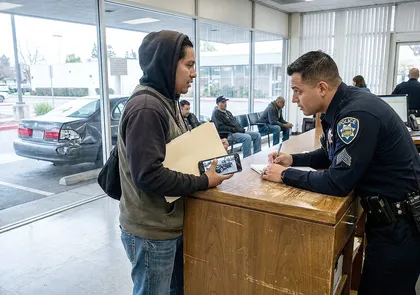
If you waited until the next day or longer, act promptly rather than assuming you missed your chance to report the collision. The immediate goal is to document what happened, preserve available evidence, and meet any deadlines that have not yet expired.
- File the police report. Contact the appropriate local law enforcement agency as soon as possible. If the agency accepts your type of collision report online, you may be able to submit the report electronically. Report the crash even if more than 24 hours have passed. If you have questions about how to report a hit-and-run accident, a lawyer can walk you through the process.
- Seek medical care if you are injured. Some symptoms may become noticeable hours or days after a collision. Medical records can document your symptoms, diagnosis, treatment, and when you sought care.
- Preserve available evidence. Photograph your vehicle, visible injuries, debris, and the crash location if possible. Check nearby homes, businesses, and parking areas for surveillance cameras. Save contact information for witnesses.
- Notify your insurer promptly. Auto policies generally contain notice and cooperation requirements. Provide accurate basic information about the collision, but do not guess about details you do not remember.
- Be careful with recorded statements. Your insurer may request additional information or a recorded statement. Cooperate with policy requirements, but avoid speculating about fault, injuries, speed, or facts you are uncertain about. If liability or coverage is disputed, consider getting legal advice before providing a detailed statement.
Delays can also make evidence harder to recover. Surveillance video may be overwritten, witnesses may become more difficult to locate, and damaged property may be repaired or discarded.
Arash Law has recovered over $1 billion for injured Californians. If a driver hit you and fled, and you did not report the crash immediately, our attorneys can review how the delay may affect your options. Call (888) 488-1391 for a free case evaluation.
How a Late Report Can Affect Uninsured Motorist Coverage
A late report can be especially important when the hit-and-run driver is never identified, and you need to rely on uninsured motorist (UM) coverage.
If you carry applicable UM coverage, it may help compensate you for bodily injury losses caused by an unidentified hit-and-run driver, subject to California law and your policy terms.
California Has Special Rules for Unidentified Drivers in a Hit-and-Run
Under California Insurance Code § 11580.2, you generally need physical contact to file a UM bodily injury claim against an unidentified driver. If you swerved to avoid a car that never actually touched you, that usually won’t count.
Contact doesn’t have to be direct, though. If an unidentified vehicle hits another car or object, which then hits you, this can still qualify.
For claims involving an unidentified driver, the law also generally requires:
- A police report within 24 hours: You need to report the accident to law enforcement within this window.
- A sworn statement within 30 days: You’ll typically need to submit a sworn statement to your insurer explaining your claim.
- Formal action within two years: You generally must take a formal step within two years, like filing a bodily injury lawsuit, settling on a payout amount, or starting UM arbitration.
This is part of why reporting late can still hurt you, even if the police will accept a report after 24 hours have passed.
In addition to these legal requirements, your insurance policy may have reporting rules of its own, separate from the ones above. Talking to hit-and-run accident attorneys can help you figure out exactly which rules apply to your case.
What Arash Law Has Recovered for Victims of Serious Traffic Crashes
When evidence is thin and insurers push back, the outcome of a case often turns on the legal strategy and persistence of the attorneys involved. Our case results page illustrates what is possible when a firm commits to maximum recovery.
$10,000,000 — Pedestrian Accident: A client suffered serious injuries after being run over by a speeding vehicle. Arash Law secured both a life-changing financial recovery and best-in-class medical care.
Past results do not guarantee future outcomes. Every case is different, and results depend on the specific facts and evidence involved.
Frequently Asked Questions About Hit-and-Run Reporting in California
What If More Than 24 Hours Have Already Passed?
Report the hit-and-run anyway. Missing the 24-hour period may affect certain requirements, particularly an unidentified-driver UM claim, but you should not assume that every insurance or legal option is automatically unavailable.
The report may also help create an official record and give investigators information they can use to identify the fleeing driver.
Can My Insurance Deny My Claim If I Wait to Report a Hit-And-Run?
A delayed report can create coverage problems, especially because unidentified-driver UM claims have specific statutory reporting requirements.
For other policy notice requirements, however, a late report does not necessarily defeat coverage on its own. The effect of the delay depends on the type of claim, applicable law, policy terms, and circumstances.
What If I Didn’t Get The License Plate Of The Hit-And-Run Driver?
Not getting the full license plate does not necessarily prevent police from investigating the crash. Preserve any information you do have, including:
- Partial Plate Information: Record any letters or numbers you remember.
- Vehicle Description: Note the color, make, model, body type, damage, stickers, or other distinctive features.
- Witness Information: Save the names and contact information of anyone who saw the crash.
- Photos or Video: Check for dashcam footage and nearby home, business, parking lot, or security cameras.
Write down what you remember as soon as possible while the details are still fresh.
Will My Insurance Rates Go Up If I File A Hit-And-Run Claim?
Under California law, insurers generally cannot raise your rates for a crash that was not your fault. An uninsured motorist claim is a claim you file with your own insurer when the at-fault driver is unidentified or uninsured. Filing one after a hit-and-run should not trigger a rate increase. If your insurer tries to raise your premium anyway, you have the right to dispute it.
What Should I Do if The Driver Who Hit Me Left a Fake Note?
Preserve the original note, photograph it, and promptly report the incident to law enforcement. False or unusable information may still provide evidence that can be compared with surveillance footage, witness statements, or vehicle information.
Can I Make a Hit-and-Run Claim If I Was Riding a Bicycle?
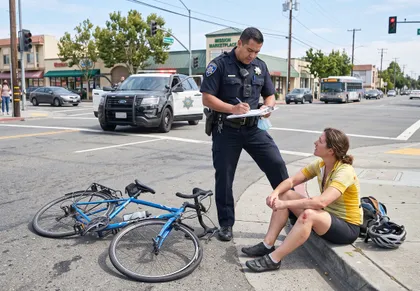
Potentially. If you qualify as an insured under an auto policy with uninsured motorist coverage, that coverage may apply to bodily injuries suffered while riding a bicycle.
Whether coverage applies depends on the policy and the facts of the collision. If the driver is unidentified, California’s physical-contact and reporting requirements may also apply.
Talk to Arash Law About Your California Hit-and-Run Claim
Reporting a hit-and-run the next day does not automatically make the report late. If fewer than 24 hours have passed, you may still be within California’s 24-hour reporting period. Even if more time has passed, report the collision as soon as possible rather than assuming you no longer have a claim.
Arash Law handles complex hit-and-run and uninsured motorist claims across California. The firm can review the timing of your report, available evidence, insurance coverage, and other facts that may affect your options. Arash Law has recovered over $1 billion for clients and handles most personal injury matters on a contingency fee basis.
Call (888) 488-1391 now for a free case evaluation. Arash Law. Make them pay. Call AK.
Sources
California Vehicle Code §20008. Injury/Death Accident Report. California Legislative Information. leginfo.legislature.ca.gov/faces/codes_displaySection.xhtml?sectionNum=20008.&lawCode=VEH
California Department of Motor Vehicles. Report of Traffic Accident Occurring in California (SR-1). California DMV. dmv.ca.gov/portal/dmv-virtual-office/accident-reporting
California Insurance Code §11580.2(b). Uninsured Motorist Coverage. California Legislative Information. leginfo.legislature.ca.gov/faces/codes_displaySection.xhtml?sectionNum=11580.2.&lawCode=INS
California Code of Civil Procedure §335.1. Two-Year Statute of Limitations. California Legislative Information. leginfo.legislature.ca.gov/faces/codes_displaySection.xhtml?sectionNum=335.1.&lawCode=CCP
California Government Code §911.2. Government Claims Deadline. California Legislative Information. leginfo.legislature.ca.gov/faces/codes_displaySection.xhtml?sectionNum=911.2.&lawCode=GOV
National Highway Traffic Safety Administration. California Office of Traffic Safety Annual Report, FY2023. NHTSA. nhtsa.gov/sites/nhtsa.gov/files/2024-05/ca%20fy23%20annual%20report-tag.pdf
Disclaimer
Past results do not guarantee future outcomes. Every case is different. The information on this page is for general educational purposes and does not constitute legal advice. No attorney-client relationship is formed by reading or relying on this content. If you were injured, consult a licensed California personal injury attorney about your specific situation. Arash Law, (888) 488-1391.