TL;DR: Yes, you can sue for emotional distress after a car accident in California if another driver’s negligence or intentional act caused severe mental harm. Victims, including uninjured bystanders and close family members, must prove conditions like PTSD and file a lawsuit within 2 years.
Highlights:
- You can sue for emotional distress after a car accident in California.
- Two main legal grounds: Negligent Infliction (NIED) and Intentional Infliction (IIED).
- Seek compensation for conditions like PTSD, anxiety, and depression after the crash.
- Gather medical records, expert testimony, and personal journals to support your claim.
- File within 2 years of the accident to avoid losing your right to sue.
- Direct victims and bystanders may file for NIED if they witness the crash.
Tip: Focus on clear documentation of symptoms and the emotional impact on your life.
Table of Contents
In California, you can sue for emotional distress after a car accident. In limited and severe situations, you can file a lawsuit even if the crash did not physically injure you. These civil cases can help you seek accountability from the party whose negligence caused you real mental and emotional pain.
Depending on the situation, you may file an emotional distress lawsuit for:
- Intentional Infliction of Emotional Distress (IIED): The at-fault party consciously and deliberately caused a car accident, resulting in emotional distress for the victim.
- Negligent Infliction of Emotional Distress (NIED): The at-fault party’s negligent or reckless actions led to a crash, leading the victim to experience emotional distress.
Medical records and expert testimony are effective pieces of evidence that can support your case. You can seek compensation for fear, grief, and psychological conditions such as depression and anxiety.
Legal Grounds For Suing For Emotional Distress After A Car Accident
Negligence often forms the legal basis for emotional distress lawsuits after car crashes in California. The type of distress matters too, whether it’s NIED or IIED. To sue, you must show that your distress significantly impacted your daily life and well-being.
Negligence And Liability
In California, negligence plays a key role in proving someone’s liability. Injured victims must show that the at-fault party’s actions caused the accident and their emotional distress. To establish negligence in a car accident claim, you must prove these elements:
- Duty of Care: The defendant had a duty to take reasonable steps to keep others safe.
- Breach of Duty: The defendant did not meet this duty. For example, they broke traffic laws.
- Causation: The defendant’s actions led directly to the car accident.
- Damages: The accident resulted in emotional distress.
Emotional Distress
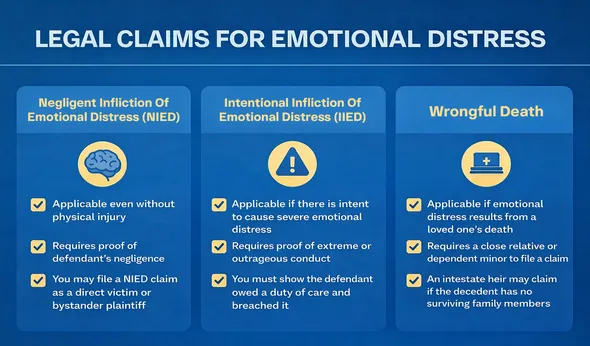
In a California car accident case, you can sue for two types of emotional distress: IIED and NIED. The classification usually depends on the at-fault party’s behavior. Regardless of the type you’re dealing with, emotional distress may include:
- Acute Stress Disorder: Signs of this condition often appear soon after the accident. Symptoms include anxiety, intrusive thoughts, and a reduced sense of reality.
- Post-Traumatic Stress Disorder (PTSD): Symptoms can last for months or years. You may experience emotional numbness, flashbacks, and nightmares.
- Anxiety Disorders: You might experience panic attacks, persistent worry, and increased stress sensitivity.
- Depression: Symptoms include changes in eating, sleep issues, and thoughts of self-harm.
- Grief and Bereavement: Losing a loved one can cause deep emotional pain. You might feel sorrow, struggle to sleep, and have trouble processing your loss.
- Fear or Phobias: You may develop specific fears. For example, you may start avoiding driving or riding in a vehicle.
NIED
An NIED case in California arises when a car accident victim experiences emotional distress due to the at-fault party’s carelessness. A plaintiff can file one even when there’s no physical injury. “Direct victim” and “bystander victim” are two categories under this claim type.
To qualify for a direct victim claim, you must show the defendant acted negligently and that you experienced severe emotional distress as a result. For a bystander NIED claim, you must satisfy these elements:
- Negligence: The defendant’s negligent behavior caused the accident.
- Close Relationship: You, the bystander, must have a close connection with the injured victim. Spousal and parental relationships qualify under this component.
- Proximity: You must have observed the car crash firsthand.
- Serious Emotional Distress: Witnessing the crash must have caused you extreme emotional distress.
IIED
You can file an IIED case if the at-fault party intentionally caused your car accident. For example, a road rage incident involves someone making deliberate threats and striking your vehicle. Similarly, you can sue for a hit-and-run accident since the driver intentionally left the scene.
In addition to the four elements of negligence, you must prove the following to establish an IIED lawsuit:
- Extreme and Outrageous Conduct: The defendant acted in a way that a civilized society sees as deplorable. Insults and threats alone are often insufficient. However, serious and persistent harassment may qualify.
- Intent or Recklessness: The defendant’s actions were reckless and caused serious emotional pain. They may have also intended to cause such distress.
- Causation: The defendant’s actions were a direct cause of your emotional suffering.
- Severe Emotional Pain: You experienced serious emotional harm that no reasonable person can bear. This condition may include anxiety, depression, or nightmares.
Emotional Distress As Part Of Negligence Damages Vs. Standalone NIED/IIED Cases
Some victims sue for the emotional distress caused by a physical injury. In this case, it’s considered part of the non-economic damages they seek in a larger personal injury case. Conversely, they can file standalone NIED and IIED lawsuits if they weren’t hurt in a crash but still experienced emotional distress.
Emotional Distress Due To Wrongful Death
You can sue for emotional distress after a loved one dies in a car crash. Losing companionship can cause deep emotional pain. For example, a parent may feel grief if their child dies in a car accident due to someone’s negligence. In this case, they can file a lawsuit for emotional distress.
Under California law, the following parties may file a wrongful death claim:
- A surviving spouse or registered domestic partner.
- Children and grandchildren, including adopted, step, and biological children.
- Dependent minors who lived with the deceased for at least six months before the victim’s death and are not the decedent’s lawful offspring.
If the deceased has no surviving relatives among those listed above, California law allows intestate heirs to file a wrongful death claim. Examples include:
- Siblings
- Aunts or uncles
- Nieces or nephews
- Grandparents
Wrongful Death Vs. Survival Action: What Family Members Can Pursue
Eligible surviving family members who lose a loved one in a car accident can seek damages through a wrongful death claim. If the victim sustained further injuries and losses before they passed, an estate representative can pursue a survival action.
Proving Emotional Distress After A Car Accident

To prove emotional distress after a car crash in California, you’ll want to gather evidence like medical records and expert evaluations. Personal testimonies and journals can also back up your claim. Use the following checklist as a guide to what evidence to collect, arranged from high to low priority:
- Notes from your doctor or therapist
- Records of your diagnosis and treatment plan
- A timeline of your consistent symptoms
- Third-party witness statements
- Work impact documentation
- Daily personal logs or journals
For emotional distress linked to physical injuries, gather your medical records and photos of your wounds. You may need to collect invoices and notes from your doctor, surgeon, or chiropractor. Also, consider asking these medical professionals to testify. They should have treated physical injuries and can vouch for their impact on your mental health.
If you’re in treatment for emotional trauma, gather evaluations from your therapist or psychologist. Also, include any medical diagnoses, such as anxiety or PTSD.
Challenges Of Proving Emotional Distress After A Car Accident
One of the biggest challenges in proving an emotional distress lawsuit is establishing its value. Emotional pain isn’t as visible as physical injuries, and it doesn’t come with a receipt. You’ll need solid documentation to justify the amount of compensation you’re seeking. Expert testimony from medical professionals can help. They can show how serious and real your emotional distress is.
Other common difficulties you may encounter include:
- Obtaining records from licensed mental health providers.
- Consistently recording how emotional distress affects your daily life and well-being.
- Demonstrating the intensity and duration of your emotional anguish.
- Linking your mental health issues to the accident.
- Sorting out insurance disputes over emotional distress claims after car accidents.
- Proving to judges and insurance companies that emotional pain differs for each person.
Factors That May Affect Your Emotional Distress Case
The severity and duration of your emotional distress can impact your lawsuit in California. To evaluate these factors, courts look at how serious your symptoms are and how long you’ve been experiencing them. They also consider the extent to which your emotional distress impacted your life.
Here’s a quick look at each of these factors:
- Severity: Serious conditions, such as PTSD, may affect your compensation for mental distress. Another thing to think about is how mental discomfort affects your daily tasks, work, and social life.
- Duration: Generally, long-lasting emotional distress may affect your compensation more than transient distress. Prolonged suffering often requires therapy, medicine, or other methods to control emotional anguish, all of which may factor into your damages.
- Impact: California courts consider the impact of emotional anguish on your quality of life. That includes whether the crash strained your relationships or left you with a diminished sense of fulfillment. Damage calculations may also account for physical health problems due to emotional distress.
What Reduces Emotional Distress Compensation?
Comparative fault can reduce your potential compensation in a California emotional distress lawsuit. Essentially, if you’re injured but share some blame for the accident, a court will assign you a percentage of fault. It will then reduce your compensation by that amount. Other factors that can affect your potential damages include:
- Treatment Gaps: Delays or breaks in care may suggest that your emotional distress isn’t as severe as claimed.
- Pre-Existing Conditions: Prior mental or emotional issues may complicate your claim. The other party’s defense attorneys may argue that these caused your emotional distress, not the crash.
- Inconsistent Statements: Inconsistencies between your claimed suffering, your behavior, and your medical records can undercut your case or past statements.
Frequently Asked Questions (FAQs) About Suing For Emotional Distress

If you’re dealing with mental health challenges after a car accident, you’re not alone. Many victims search online for guides on coping or seek free advice from a car accident lawyer. Below are questions people commonly ask about emotional distress cases after a California car crash.
How Much Compensation Can I Get For Emotional Distress?
In California, emotional distress compensation varies based on the severity of your injuries. You could receive a lower settlement for short-term sleep issues. Conversely, you can demand more compensation for severe conditions such as car accident PTSD.
The calculation method used can also affect how your damages are determined. For example, some insurers use the multiplier method, which assigns a number based on the severity of your distress and multiplies it by your economic losses. Keep in mind this is an insurance negotiation tool, not a legal standard. Not all carriers use the same approach.
What Is The Legal Definition Of “Severe Emotional Distress”?
California law defines severe emotional distress as a kind of suffering that is so extreme or long-lasting that no one expects a reasonable person to endure it. As such, mild or brief distress doesn’t count. However, you may be able to sue if you experience symptoms such as:
- Suffering
- Anguish
- Fright or horror
- Nervousness
- Grief
- Anxiety
- Worry
- Shock
- Humiliation
- Shame
Can I Still Sue For Emotional Distress Even If I’m Not Physically Injured?
Yes. However, you must prove that the distress is severe. You must also show that someone’s intentional or negligent actions caused it. Evidence may include medical records from your psychiatrist or healthcare provider, documenting the extent of your distress.
Are Emotional Distress Damages Taxable In California?
Depending on the nature of your emotional distress, your damages may or may not be taxable in California. If a physical injury caused it, the Internal Revenue Service (IRS) will generally exclude those damages from taxation. That’s because they pay for the losses you incurred in a car crash.
However, compensation for emotional distress unrelated to a physical injury may be taxable. The same goes for punitive damages. In California, courts only award them in rare cases where the at-fault party acted with gross negligence or intentional recklessness. Since punitive damages punish the defendant rather than compensate the victim for their losses, they are taxable.
How Long Do I Have To File An Emotional Distress Lawsuit In California?
In California, the statute of limitations for an emotional distress lawsuit is two years from the date of the accident. This limit applies to both NIED and IIED cases. Missing this deadline can bar you from pursuing compensation.
Some exceptions may extend the state’s statute of limitations. For example, the deadline for injured minors only starts when they turn 18, meaning they have until their 20th birthday to file.
Consult A Legal Professional About Recovering Compensation From Emotional Distress
Physical injuries aren’t the only losses you can seek compensation for in a California car accident. Anxiety behind the wheel or fear of riding in a vehicle can be just as real and debilitating as a broken bone. However, seeking mental anguish compensation can be challenging. If you’re thinking, “I need a personal injury lawyer,” we’re here to assist.
Arash Law’s car accident lawyers can guide you through the legal process and help gather evidence for your claim. By now, you may be asking, “Do lawyers only get paid if they win?” You only pay our attorneys if they recover compensation for you. Since we work on a contingency fee basis, you do not need to pay our attorneys up front. Instead, we only charge legal fees if we win or settle your case.
Let us handle your case so you can focus on recovering from your mental distress. Contact AK Law at (888) 488-1391 to schedule your free, no-obligation initial consultation.