TL;DR: Insurance companies handle parking lot accidents by investigating evidence, assigning fault under comparative negligence, and applying available coverage. Drivers, passengers, and pedestrians face reduced payouts when fault is shared, while strict California timelines and documentation gaps can affect claim decisions, payment timing, and overall recovery.
Highlights:
- Report the accident promptly to trigger the claims process timeline.
- Document vehicle damage, scene conditions, and visible injuries immediately.
- Collect witness names and, when available, nearby camera footage.
- Track insurer deadlines, such as the 15-day acknowledgment and the 40-day decision.
- Submit complete records early to avoid delays in claim evaluation.
- Confirm whether your claim is first-party or third-party.
- Review policy limits to understand potential payment gaps.
Tip: Keep all communication in writing and save timestamps to support your claim timeline.
Table of Contents
Insurance companies handle parking lot accidents by investigating evidence, assigning fault, and applying the correct coverage. In California, specific laws set deadlines for when insurers should acknowledge, accept, deny, and pay claims after a settlement.
Adjusters assess the victim’s losses, speak with witnesses, and review available surveillance footage. They use this information to decide fault and determine who pays for repairs, lost wages, and medical treatment. Knowing how your rights work under California law can help you make more informed decisions as you go through the parking lot accident claims process.
How Do Insurance Companies Determine Fault In Parking Lot Accidents?
Insurers determine fault by analyzing right-of-way rules, driver behavior, and property conditions at the time of the collision. They check driver statements against physical evidence, such as vehicle damage and parking stall markings. This task helps them identify who acted carelessly and caused the accident.
Adjusters consider basic facts and common parking lot scenarios to inform their decisions. These help them match real-world behavior with the evidence they collect.
Here are common parking lot accident scenarios and what adjusters review:
| Scenario | What Usually Happens | What Adjusters Look At |
|---|---|---|
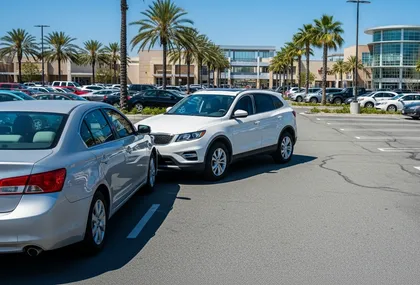
| Backing Out Vs. Through Lane | The driver backing out of a parking space fails to yield to moving traffic. | Point of impact, vehicle position, lane markings, and video footage. |
| Two Cars Reversing | Both drivers may share fault. | Angle of impact, timing of movement, and witness statements. |
| Stop Sign Inside A Lot | A driver who ignores a stop sign may be at fault. | Signage, driver statements, camera footage, and right-of-way. |
| Pedestrian In A Walkway | Drivers fail to give pedestrians the right of way. | Crosswalk markings, visibility, speed, and witness accounts. |
| Dooring Accident | A driver opens a door into moving traffic. | Door position, distance from lane, timing, and nearby vehicles. |
| Hit-And-Run | One driver leaves the scene. | Damage pattern, surveillance footage, and the witness’s details. |
Adjusters then apply California’s comparative fault system to finalize the claim. They assign fault percentages to each party based on the evidence.
Your compensation depends on your share of fault. For example, if your damages are $10,000 and you are 20% at fault, you would receive $8,000 after the reduction.
Step-By-Step California Insurance Claim Process After A Parking Lot Accident
The insurance claims process for parking lot accidents follows a structured timeline under California’s Fair Claims Settlement Practices Regulations. These rules require insurers to handle vehicle damage assessments and injury claims promptly. They also set deadlines for claim acknowledgment, investigation, and payment.
Here is how insurers handle parking lot accident claims:
Claim Acknowledgment
Insurance companies begin reviewing your case as soon as you report the accident. The insurer must confirm receipt of your claim within 15 calendar days. At this stage, they open the file. Then, they assign an adjuster to gather basic accident details.
This adjuster typically conducts these assessments by:
- Contacting you to confirm the claim.
- Requesting initial information and documents.
- Starting evidence collection.
Investigation And Evidence Review
After acknowledging the claim, adjusters investigate how the accident occurred. They collect evidence and review all parties involved, not just the drivers. This step focuses on building a clear picture of the accident.
Insurers typically review:
- Damage patterns on each vehicle.
- Statements from drivers, pedestrians, and other witnesses.
- Photos and surveillance footage of the accident.
- Any available incident or police reports.
They also identify everyone affected, including:
- Pedestrians.
- Drivers and passengers.
- Employees working nearby.
Fault Determination And Shared Responsibility
Adjusters evaluate each person’s actions to determine fault. They review reports, photos, witness statements, and any available footage. They apply traffic rules and basic safety standards, even in parking lots, to decide who caused the accident.
Fault determines who pays for damages and injuries. In some cases, one person or entity is fully at fault. In others, more than one party may share responsibility. In such situations, adjusters assign fault percentages to each person. They divide responsibility based on each person’s actions and adjust compensation accordingly.
Claim Decision
Adjusters complete the investigation and examine all required information. Afterward, the insurer must decide whether to approve or deny the claim.
At this stage, the insurance company:
- Assesses all collected evidence
- Confirms coverage under the policy
- Approves or denies the claim based on its findings
In California, insurers must make this decision within 40 calendar days of receiving complete documentation.

Damages Assessment And Payment
Adjusters first calculate the total value of your losses after approving the claim. They check documents such as repair estimates from auto body shops and medical records from doctors, therapists, chiropractors, and other healthcare professionals. This step helps them measure the financial impact of the accident based on clear records.
After completing this assessment, adjusters proceed to payment. They issue a settlement based on their findings and policy limits. They have a duty to send payment within 30 days of approving the claim.
At this stage, they:
- Present a settlement amount.
- Explain what the payment covers.
- Issue payment within the required timeframe.
How Insurance Companies Handle First-Party Vs. Third-Party Claims
Insurance companies handle parking lot accident claims differently depending on whose policy applies. After they determine fault, they decide whether your claim falls under your own coverage or another party’s insurance. This distinction impacts how insurers handle claims. It also affects payment speed and the evidence needed.
Here are the two main types of claims:
- First-Party Claims: You file this claim under your own insurance policy, such as collision or MedPay coverage. Your insurer reviews your medical costs and other losses based on your policy terms. This process may move faster because you have a direct contract with your insurer. You may need to pay a deductible for vehicle repairs.
- Third-Party Claims: You file this claim against the at-fault party’s insurance. That insurer reviews fault, damages, and coverage before making a decision. They rely heavily on evidence to confirm liability. This process may take longer because adjusters must comprehensively assess each claim and may raise disputes you’ll have to resolve.
California Claim Deadlines For Parking Lot Accident Claims
California law requires insurers to adhere to strict timelines for handling claims, even for parking lot accidents. The Fair Claims Settlement Practices Regulations outline clear rules. They help keep the process on track and make sure you stay informed.
Under these rules, insurers must:
- Acknowledge your claim within 15 days after you report it.
- Provide claim forms or instructions within 15 days.
- Accept or deny your claim within 40 days after receiving complete information.
- Send written updates every 30 days if the investigation is still ongoing.
The 40-day decision period starts only after the insurer receives proof of claim. If the insurer can’t decide within that time, they must explain the delay in writing. They should also keep providing updates. These deadlines keep your claim on track. They also make sure you get updates along the way.
How Insurance Covers Parking Lot Accidents
Insurance for parking lot accidents varies by fault, damages, and policy terms. The type of coverage affects how your claim progresses and which costs are covered.
The common types of insurance that may apply to your situation include:
- Liability Coverage: Pays for damage or injuries caused to others. You’ll likely file a claim against another driver’s liability coverage if you sustained losses in a parking lot accident.
- Collision Coverage: Covers repairs to your car regardless of fault, minus your deductible.
- Medical Payments (MedPay): Covers immediate medical costs for you and your passengers.
- Uninsured Motorist (UM/UIM): Applies to uninsured motorist claims and hit-and-run cases where the other driver is nowhere to be found.
- Property Owner’s Insurance: May cover your losses after parking lot accidents caused by unsafe property conditions. Examples include poor lighting or hidden stop signs.
Understanding these coverage types shows how insurance companies deal with parking lot accidents, step by step. You can also identify which policy applies to your situation and how insurers pay your losses.

How Policy Limits Affect Parking Lot Accident Claims
Insurance companies apply policy limits as a “cap” on what they will pay. Even if your injuries are severe, the insurer is not legally required to pay more than the at-fault party’s selected limit.
For example, suppose your medical bills total $50,000. However, the at-fault driver has a $15,000 limit. The insurer will only pay $15,000. In these cases, your own UM/UIM coverage or health insurance must cover the remaining costs.
What Happens When Costs Exceed Insurance Policy Limits
Insurance companies still follow the same process when damages exceed policy limits. However, payments stop at the maximum coverage amount.
When costs exceed the threshold, several options may be available:
- UM/UIM Coverage: Your own policy can help cover the remaining costs.
- Health Insurance: This coverage can cover medical treatment not paid for by auto insurance.
- Medical Liens: Some providers treat injuries without upfront payment. They are paid only from a future parking lot accident settlement.
- Other Liable Parties: In some cases, a property owner’s insurance may apply if unsafe conditions contributed to the accident.
Insurance companies can seek reimbursement if they have already paid part of your medical costs. Understanding policy limits helps you see how insurance companies handle payment in parking lot accident claims. It also helps you prepare for situations where coverage may not fully cover your losses.
What To Do If An Insurer Delays Your Parking Lot Accident Claim
You can take clear steps to address the delay and keep your claim moving. Taking action also creates a record that supports your position if issues continue.
If your claim gets delayed, you can:
- Document the Delay: Keep copies of emails, letters, and call notes. Record dates when you submitted documents and when the insurer responded.
- Request a Written Status Update: Ask the insurer for a written explanation of the delay. California rules require insurers to provide updates if the claim is still under review.
- File a Complaint: You can submit a formal complaint regarding unfair claims settlement practices with the California Department of Insurance (CDI). The CDI reviews insurer conduct and may follow up on your claim.
How To Avoid Parking Lot Accidents
Drivers and pedestrians can reduce the risk of parking lot accidents by staying alert and following basic safety habits. Parking lots have tight spaces, limited visibility, and frequent pedestrian movement. Staying aware of your surroundings can help prevent untoward incidents and reduce the likelihood of an insurance claim.
To help you avoid accidents, follow these safety tips:
- Drive at a Low Speed: Move slowly through parking lanes. It gives you time to react to cars and pedestrians.
- Watch for Pedestrians and Other Vehicles: Drivers should look for people walking between cars, especially near entrances and crosswalks. Similarly, pedestrians should stay alert while walking so they can more easily spot vehicles and slip hazards such as puddles.
- Check Surroundings Before Moving: Look both ways before pulling out of a parking spot, entering a through lane, or crossing.
- Use Mirrors and Cameras: Rely on mirrors and backup cameras to improve visibility when reversing.
- Follow Signs and Markings: Pay attention to arrows, stop signs, and lane directions.
- Stay Focused: Avoid using your phone and other distractions while driving or walking through the lot.
- Park Carefully: Choose spaces with good visibility and avoid tight spots that increase collision risk.
- Give the Right of Way: Doing so can keep everyone’s movements predictable and prevent accidents. For instance, drivers must yield to vehicles in the main lanes when backing out of a parking space.
These steps help you stay safe and reduce the chance of dealing with insurance after a parking lot accident.
How Can A Parking Lot Accident Lawyer Help Build Your Claim?
The insurance process can be overwhelming, leading many to realize, “I need a personal injury lawyer.” A legal professional can help you navigate the insurance process and build a strong claim. They will organize your claim and present your losses.
Here is how parking lot accident lawyers strengthen your claim:
- Gather photos, videos, and witness statements to support your account of the incident.
- Examine damage patterns and scene details to confirm your version of the crash.
- Handle calls, emails, and document requests from the insurance company.
- Help you keep your statements consistent throughout the claims process.
- Review evidence to assign fault accordingly.
After establishing the facts, a lawyer focuses on how insurers value and process your claim. They will:
- Organize repair estimates, medical records, and proof of expenses.
- Present your medical costs, lost income, and other losses clearly.
- Prepare and submit required insurance documents on time.
- Track deadlines set by insurance rules to keep your claim active.
- Assess settlement offers and respond with supported amounts.
You can seek free advice from a parking lot accident lawyer to better understand your options. You can prepare your claim and respond effectively during the insurance process.
Frequently Asked Questions
Many people ask questions after parking lot accidents that cause injuries or create insurance challenges. These answers explain how insurance companies handle common issues so you can better understand what to expect.
Why Do Insurance Companies Deny Parking Lot Injury Claims?
Insurance companies deny claims when the evidence does not clearly support liability or coverage. Adjusters review fault, medical records, and policy terms before approving a claim. They can deny a claim if fault is unclear, injuries lack documentation, or the loss falls outside coverage. Clear records and consistent statements help support your claim.
Does My Deductible Apply In A Parking Lot Accident?
Yes, your deductible applies if you use your own collision coverage for repairs. The deductible is the amount you pay before insurance covers the remaining cost. If another driver is at fault, their liability coverage may pay instead. In some cases, your insurer can recover your deductible later through reimbursement.
Will My Insurance Rates Go Up After A Parking Lot Accident?
Rates might go up if you are mostly at fault and the insurer uses a surcharge plan. Insurance companies review fault, claim history, and the severity of the damage when adjusting premiums. California law limits increases if you are not mainly at fault. Multiple claims in a short time can still affect your policy.
Do Insurance Companies Check Parking Lot Cameras?
Yes, insurance companies study available camera footage when it helps clarify what happened. Adjusters can ask for security or dashcam footage to confirm vehicle movement, timing, driver behavior, and property conditions. Nearby footage can support or clarify statements, even if it does not fully capture the crash.
Talk To Arash Law About Your Parking Lot Accident Claim
Insurance companies follow a process when handling parking lot accidents. Each claim can involve different facts, coverage issues, and fault questions. Our parking lot accident lawyers can review your case and explain how insurance applies to your situation.
Some people worry about legal costs and ask, “Do lawyers only get paid if they win?” At AK Law, the answer is yes. Our team works on a contingency fee basis, which means you do not pay upfront. Legal fees depend on the outcome of your case.
Our accident attorneys offer a free initial consultation. During this conversation, you can ask questions about fault, coverage, deadlines, and possible outcomes. Clear guidance can help you respond to insurers with confidence and keep your claim on track.
Call us at (888) 488-1391 today!