TL;DR: Rain-related car accident injury claims in California require proof that another driver’s negligence caused your injuries and documented losses. Rain reduces traction and visibility, but liability depends on speed, distance, and evidence such as police reports and medical records. Deadlines apply: 2 years for lawsuits and 6 months for government claims.
Highlights:
- Seek medical care immediately, even if symptoms seem mild.
- Notify the at-fault driver’s insurance company as soon as possible.
- Collect and store photos of the accident scene and injuries.
- Request and review the police report for details on road and weather conditions.
- Keep detailed records of medical treatments, bills, and lost wages.
- Be accurate but avoid speculating when communicating with insurers.
- File a claim within 2 years or 6 months for government-related claims.
Tip: Stick to the facts when talking with insurance adjusters to avoid complications in your claim.
Table of Contents
In California, injury claims after a rain-related car accident work the same way as other car accident claims. You must show that another driver acted negligently, prove your injuries and losses, and file a claim with the appropriate insurance company. Rain does not excuse unsafe driving. Drivers must adjust their speed, distance, and behavior to wet conditions.
Rain often increases the likelihood of crashes by reducing traction and visibility. However, the legal focus stays on driver behavior, evidence, and damages. This guide explains how fault is evaluated, how insurance claims work, and what compensation may be available after a rainy-weather crash.
Step-By-Step: How A Rain-Related Injury Claim Works In California
Rain-related injury claims follow the same legal framework as other California car accident claims. You must prove another driver acted negligently and caused your injuries. The claim moves through medical treatment, reporting, investigation, fault evaluation, damage calculation, and resolution through settlement or lawsuit.
Understanding the process can make a complex situation more straightforward to manage. Below is a precise sequence of how most rain-related injury claims move forward in California:
- Evaluation of Fault — The insurer analyzes driver behavior, speed, following distance, and compliance with California’s safety laws. They determine whether a driver failed to adjust to wet road conditions and assign a percentage of responsibility if more than one driver shares fault.
- Assessment of Damages — Medical bills, lost income, property damage, and other documented losses are totaled. Future treatment needs and reduced earning capacity may also be considered in the calculation, provided they are supported by evidence.
- Negotiation or Lawsuit — The parties negotiate a settlement after they review liability and damages. If the insurer denies responsibility or offers inadequate compensation, filing a lawsuit may be necessary to resolve the dispute.
Why Do Rainy Roads Make Car Accidents More Severe?
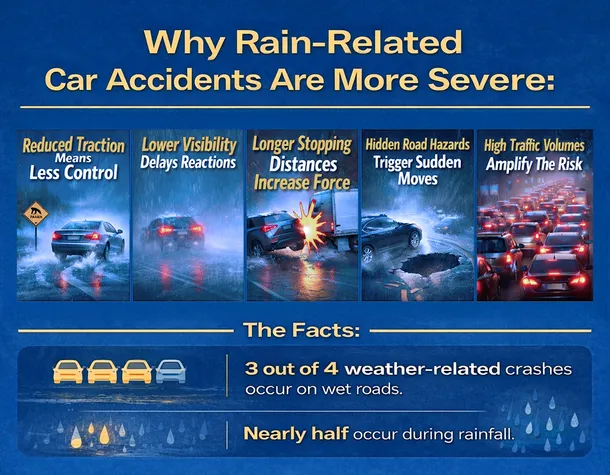
Rain increases crash severity by reducing traction, visibility, and stopping distance. Drivers are more likely to lose control and react more slowly in wet conditions. Higher speeds on California freeways amplify impact force. When drivers fail to adjust to slick roads, collisions often result in more serious injuries.
In California, even light rain may contribute to a collision. After long dry spells, which are common in many parts of the state, rain can mix with oil and dust on the roadway, creating especially slick surfaces.
Below are a few reasons why rain-related car accidents can be more severe:
- Reduced Traction Means Less Control — Water creates a thin layer between the tires and the pavement, reducing grip. Vehicles can slide or hydroplane, which limits steering and braking control. On high-speed California roads like freeways and expressways, a brief loss of traction can lead to stronger, higher-energy collisions.
- Lower Visibility Delays Reactions — Rain, glare, and spray from other vehicles can blur a driver’s view of the road. They could make lane markings, brake lights, and signals harder to see. They could also obscure other accident hazards, such as a crossing pedestrian or a vehicle stopped at an intersection. As a result, drivers may only notice and react to dangerous conditions at the last second. That delay can turn a near-miss into a hard impact.
- Longer Stopping Distances Increase Force — Cars need more distance to stop on wet pavement. In heavy California traffic, where drivers often travel close together, reduced stopping distance increases the risk of rear-end solid crashes.
- Hidden Road Hazards Trigger Sudden Moves — Standing water can hide potholes, debris, or uneven pavement. California storms can also leave mud or debris on roads near hillsides or construction zones. When drivers suddenly swerve or brake to avoid these hazards, the resulting crashes can occur at unsafe angles and with greater force.
- High Traffic Volumes Amplify the Risk — Many California drivers commute on busy highways and multilane arterials. When rain hits busy roads, one driver’s mistake can quickly involve several vehicles, increasing the overall severity of the impacts.
Due to these risks, California law requires drivers to adjust. The Basic Speed Law in the California Vehicle Code requires drivers to travel at a speed that is safe for current conditions, not just the posted limit. A driver who speeds, tailgates, or fails to adapt in the rain can be found negligent.
Wet road crashes are not rare events. Most weather-related accidents happen on wet pavement and during rainfall. National data shows that about three out of four weather-related crashes occur on wet roads. Nearly half happen while rain is actively falling. Every year, thousands of people lose their lives in these conditions, and hundreds of thousands suffer injuries.
In short, wet roads increase impact severity by taking away control, time, and space. When drivers fail to adjust, collisions tend to be more severe and cause more serious injuries.
Rear-End Injury Accidents In Heavy Rain
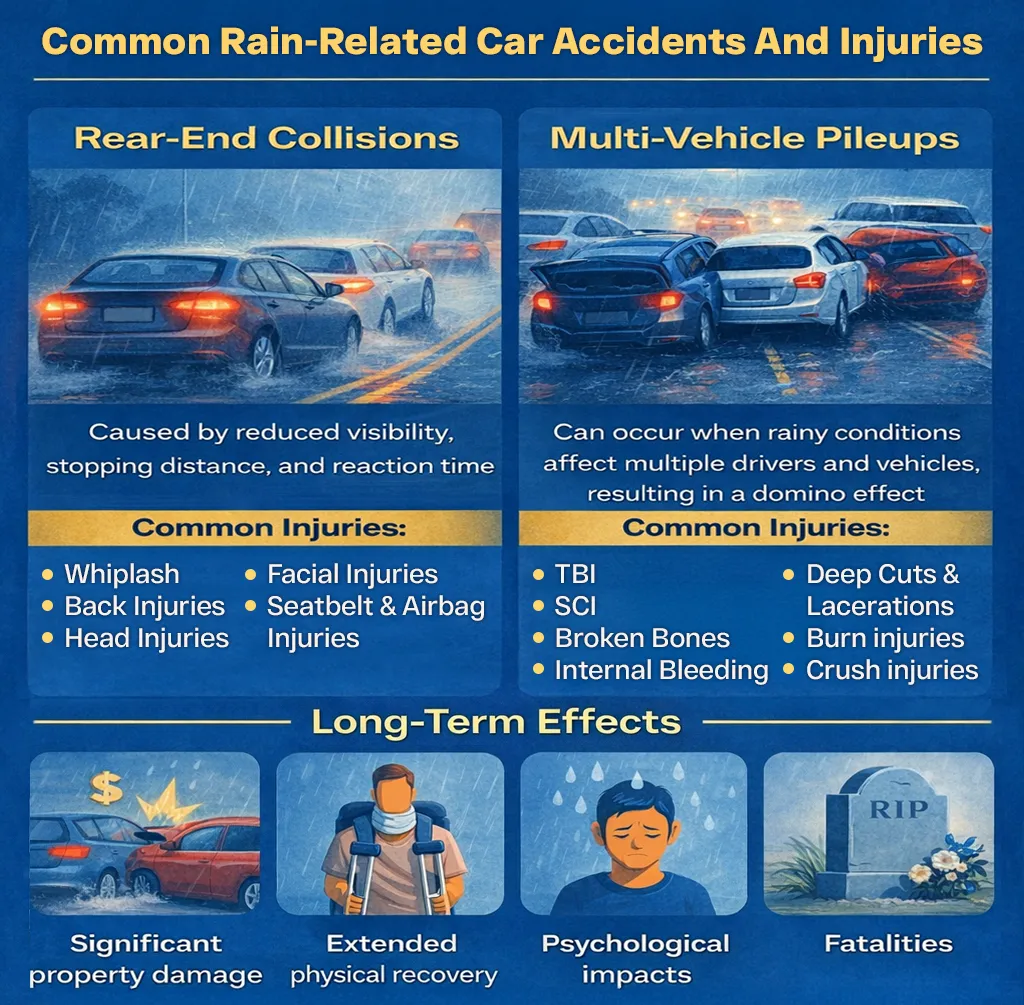
Rear-end crashes are common in heavy rain because vehicles need more distance to stop. Drivers who follow too closely or fail to reduce speed create dangerous conditions. Wet pavement reduces braking power and increases impact force. Even low-speed rear-end collisions can cause significant physical injuries.
When traffic slows suddenly, the driver behind may not have enough time or traction to avoid hitting the car in front. Rain also makes some normal driving habits risky. For example, safety experts warn that using cruise control on wet roads can reduce a driver’s ability to react quickly. Since braking takes longer in the rain, even a slight delay can lead to a collision.
Many people think rear-end crashes are “minor” because they often happen at lower speeds. However, the human body still absorbs the impact of these collisions. That sudden force can strain the neck, back, and head, sometimes leading to chronic pain that lasts weeks or longer.
Common injuries from rear-end crashes include:
- Whiplash — A fast back-and-forth motion of the neck that can strain muscles and ligaments.
- Back Injuries — Sprains, disc injuries, and spinal strain from the impact.
- Head Injuries — Concussions or more serious brain injuries if the head hits a hard surface, like a wheel, windshield, or dashboard.
- Facial Injuries — Cuts or fractures from airbags or shattered glass.
- Seatbelt & Airbag Injuries — Bruising or internal strain from the force of safety restraints.
One tricky part about these injuries is that they do not always show up right away. You might feel fine at the scene, then notice stiffness, headaches, or soreness a day or two later. Getting checked by a medical professional soon after a crash helps protect your health and creates a record of your condition if you need to file a claim later on.
Multi-Vehicle Pileups During Storm Conditions
Storm conditions increase the risk of chain-reaction collisions involving multiple vehicles. Reduced visibility and longer stopping distances leave drivers little time to respond. Several drivers may share fault depending on their actions. These crashes often produce more severe injuries due to impacts from multiple directions.
Big crashes involving several cars often start with a single minor problem in the rain. One driver brakes hard, another slides on wet pavement, and suddenly multiple vehicles are involved. These chain-reaction collisions are more likely during storms because drivers have less control and less time to react.
Figuring out who is legally at fault in a pileup is rarely simple. More than one person may share responsibility, depending on what each driver did before the crash.
For example:
- The front driver may share fault if their brake lights were not working or they stopped abruptly without an apparent cause.
- The rear driver could be responsible if they were following too closely or driving too fast in wet conditions. Drivers must leave enough space to stop safely in the rain.
- A third party may play a role in some cases. Poor construction zone markings, unsafe road conditions, or a lack of warnings about hazards can contribute to a crash.
Every pileup has its own story. Investigators usually examine vehicle damage, road conditions, and driver behavior to determine liability.
When several cars collide, the human body can take multiple hits from different directions. That can make injuries more serious than in a two-car crash. Some injuries appear right away, while others take time to show symptoms.
Injuries seen in multi-vehicle crashes often include:
- Traumatic brain injuries
- Spinal cord injuries
- Broken bones
- Internal bleeding
- Whiplash
- Deep cuts & lacerations
- Burn injuries
- Crush injuries
Since symptoms can appear later, it is wise to seek medical care after a pileup, even if you feel okay. A medical record also helps connect your injuries to the crash if you later need to pursue a claim.
Long-Term Effects Of Rain-Related Crash Injuries
Rain-related crash injuries can lead to physical, financial, and psychological harm. Bodily injuries may require ongoing treatment. Victims may face mounting medical bills and reduced income. Psychological effects can affect daily life and long-term well-being. Each type of harm may support different categories of damages in a California injury claim.
A serious crash in the rain does not always end when the vehicles involved stop moving. Its effects may continue long after crews clear the scene. Injured victims and their families may even deal with ongoing medical issues, missed work, and significant life changes.
Here are some of the long-term impacts rain-related crashes can bring:
- Injuries can range from mild to life-changing. Some people sustain soreness or minor fractures, while others face brain injuries, spinal damage, or internal injuries that require long-term care. In multi-car crashes, people caught between vehicles often suffer more severe harm because they absorb multiple impacts.
- High-speed crashes can be deadly. Collisions on freeways or highways can generate extreme force. Even with modern safety features, some crashes cause fatal injuries. Emergency crews in California also navigate heavy traffic and complex scenes, which can slow access to victims.
- After a rain-related car accident, some victims experience psychological impacts, such as anxiety, fear of driving in the rain, or post-traumatic stress disorder (PTSD). Symptoms of these conditions may persist for months or even years.
- Rain-related crashes can often result in severe structural damage, especially if cars get sandwiched in multi-vehicle pileups. Many are declared total losses by insurers. Debris or secondary impacts can also damage cars, even in the absence of a collision.
Ultimately, a rainy-day crash can have ripple effects. What starts as a moment on a wet road can turn into months of recovery, repairs, and adjustments for the people involved. That is why taking injuries seriously and documenting losses early can matter if a claim becomes necessary.
What To Do After A Rain-Related Car Accident In California
The steps you take after a rain-related crash directly affect your injury claim. Prompt medical care creates documentation linking injuries to the accident. Organized records strengthen your position with insurers. Careful communication and preserved evidence help establish how weather and driver behavior caused the crash.
Consider these practical steps:
- Follow Up On Medical Care — See a doctor if you have not already. Some injuries show symptoms later, and medical records help connect your injuries to the crash.
- Organize Your Records — Keep copies of medical bills, repair estimates, prescriptions, and receipts for crash-related expenses.
- Save Photos & Evidence — If you took pictures at the scene or of your injuries and vehicle damage, store them in one place.
- Request & Review the Police Report — This document often contains essential details about road and weather conditions.
- Be Mindful When Speaking With Insurers — Provide accurate information, but avoid guessing or speculating about fault.
Rain-related crashes often raise questions about visibility, speed, and road conditions. Detailed documentation helps show how the collision happened and how it affected you.
How Injury Compensation Is Evaluated In Weather-Related Cases
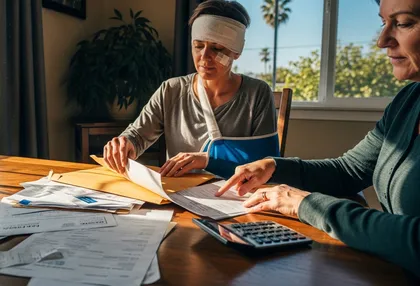
Compensation in weather-related cases depends on proving negligence and documented losses. California law focuses on driver conduct, not the weather itself. Insurers examine evidence, medical records, and fault percentages. The value of a claim reflects injury severity, financial losses, and comparative responsibility.
In simple terms, a claim looks at four questions:
- Did the other driver owe you a duty to drive safely?
- Did they fail to act reasonably under the conditions?
- Did their actions cause your injuries?
- Did you suffer measurable losses?
Good documentation helps answer these questions. It is smart to keep records of medical visits, treatment plans, time missed from work, and out-of-pocket costs. Obtaining evidence can also help you address disputes raised by insurance companies, as they also study the details of the crash. They often review:
- The speed at which vehicles were traveling.
- What drivers and witnesses said.
- The police report.
- Reported weather and road conditions.
Additionally, California follows a pure comparative negligence rule. This principle allows you to recover damages even if you share some fault. The court reduces your compensation by your percentage of responsibility.
For example, suppose you were partly at fault for driving too fast in the rain. However, another driver ran a red light without headlights. Both of you may share blame. If you were found 40% responsible, you could still recover 60% of your proven damages.
The key idea is that partial fault does not automatically block a claim. What matters is showing how each driver’s actions contributed to the crash.
Who May Be Held Liable For Weather-Related Accidents?
Liability depends on how individuals or entities respond to unsafe weather conditions. Drivers must adjust speed and distance in the rain. Government agencies may share fault for dangerous road conditions. Commercial drivers and employers face higher safety obligations under California law.
Potentially liable parties in rain-related car accidents include:
- Other Drivers — Many rain-related crashes happen because drivers fail to adjust. Common examples include:
- Driving too fast for conditions.
- Following too closely.
- Not using headlights in low visibility.
- Making unsafe lane changes.
- Driving on worn tires.
- Driving distracted.
- Government Agencies — A public agency may share fault if unsafe road conditions contributed, such as poor drainage, poor maintenance, or missing hazard warnings. Claims against government entities in California have shorter deadlines.
- Commercial Drivers & Employers — Commercial drivers and their companies must follow higher safety standards. Poor vehicle maintenance, unsafe scheduling, or weak training can create liability.
In short, the weather may set the stage for a car accident. However, people and organizations are responsible for how they respond to it.
How The Insurance Claim Process Works After A Rain Crash
Rain crash claims typically begin with an insurance investigation and fault evaluation. Adjusters review documentation, assess liability, and calculate damages. Clear evidence of negligent driving strengthens your position during settlement negotiations.
A typical claim may involve:
- Investigation — The insurer reviews police reports, photos, witness statements, and medical records.
- Fault Evaluation — They decide who was responsible and whether weather or driver behavior played a bigger role.
- Damage Review — They look at medical bills, lost wages, and vehicle damage.
- Negotiation — If liability is accepted, settlement talks may begin.
Insurance companies may sometimes offer reduced payouts by arguing that the accident happened due to the weather. Clear evidence of driver negligence can make a difference.
What Types Of Compensation May Be Available?
California law allows injured people to recover financial and non-economic damages after a rain-related crash. Compensation may include medical expenses, lost income, property damage, and pain and suffering. The total value depends on documentation, injury severity, and long-term impact.
Depending on the facts, compensation may include:
- Medical Expenses — These can include emergency care, hospital visits, medications, physical therapy, chiropractic care, and other treatment related to the injury.
- Future Medical Care — Some injuries require ongoing treatment, follow-up visits, or rehabilitation. A claim may consider expected future costs when medical records support these losses.
- Lost Income — If your injuries forced you to miss work, you may seek recovery for lost wages.
- Reduced Earning Ability — When injuries affect your ability to work the same job or hours as before, you may claim loss of earning capacity.
- Property Damage — This covers repair or replacement of your vehicle and other damaged property.
- Pain & Suffering — These damages relate to physical pain, discomfort, and the overall impact the injury has on daily life.
The value of a claim depends on clear documentation, the seriousness of the injuries, and how the crash affects your work and personal life. No two cases are identical, and outcomes depend on the specific facts of each case.
When It May Help To Speak With A Lawyer

Not every car accident claim needs a lawyer. However, rain-related crashes can get complicated fast, especially when injuries, multiple drivers, or insurance disputes are involved. Many people seek free legal advice from an accident lawyer when they feel unsure about their rights or the claim process.
People often realize, “I need a personal injury lawyer,” when:
- Their injuries are serious and not getting better. If they are still in pain, going to appointments, or dealing with lasting symptoms, their claim may involve more than basic medical bills.
- There is confusion about who caused the crash. Rainy-weather accidents often lead to disagreements over speed, visibility, and safe driving. A lawyer can help review what happened.
- Several cars were involved. Multi-vehicle crashes can involve multiple insurance companies and mixed fault, making them hard for victims to sort out on their own.
- A city or public agency might be involved. If poor drainage, road hazards, or missing signs played a role in the crash, special claim rules and shorter deadlines may apply.
- The insurance company is giving them a hard time. Delays, denials, or low settlement offers can leave victims feeling stuck or pressured.
Talking to a lawyer does not mean you have to file a lawsuit. Many consultations help you understand your options, timelines, and what steps make sense for your situation. Having clear information can bring peace of mind.
Rain-Related Car Accident FAQs
The answers below explain key legal points you should know after a crash in rainy weather in California.
How Long Do You Have To File A Claim In California?
Deadlines matter in injury cases. In California, victims must generally file a personal injury lawsuit within two years of the crash. This time limit is known as the statute of limitations.
Some exceptions may apply. If a government agency may be responsible, the timeline can be much shorter. You must file a government claim within six months.
Missing a deadline can limit your options, even if your injuries are serious.
Can I Still Recover Damages If Bad Weather Contributed To My Accident?
Yes, you may still recover damages even if bad weather contributed to the crash. Rain, fog, or slick roads do not eliminate a driver’s duty to exercise care. They must slow down, maintain adequate distance, and adjust to road conditions. If another driver failed to drive safely in poor weather, you may be eligible to seek compensation.
California uses a comparative fault system. If the court determines that another driver shares responsibility, you may recover damages based on that driver’s percentage of fault. A lawyer can review the crash details, examine the evidence, and explain how weather and driver conduct may affect your claim.
Why Is Collecting Evidence Essential After A Rainy Accident?
Evidence can be crucial for supporting your claim, making it vital to collect it as soon as possible after an accident. Rain can wash away skid marks, debris, and other road signs within hours. Surveillance footage may also get deleted within days or weeks, depending on retention settings. If you act fast, you can preserve photos, witness names, and crash reports that document what happened.
Strong evidence helps prove that another driver failed to adjust to wet road conditions. Insurance companies may blame the weather to deny responsibility. Clear proof can show that careless driving caused your injuries.
Injured In A Rain-Related Car Accident? Speak With A Lawyer
Heavy rain can turn an ordinary drive into a serious accident. You may experience neck pain, back injuries, broken bones, or a head injury. Medical bills can add up quickly. You may also miss work and lose income.
Our California rain accident lawyers can review your case and explain how the law applies. A lawyer may help collect crash reports, review evidence, and communicate with insurers, depending on the case. You can focus on your recovery while our team works to protect your rights and seek compensation for your losses.
If your concern is, “Do lawyers only get paid if they win?” At Arash Law, we work on a contingency fee basis, meaning we only get paid legal fees if we win your case or secure a settlement.
Call AK Law now at (888) 488-1391 to discuss your rain-related car accident in a free case review.