TL;DR: Tree trimmers fall more often than workers in many other professions, with falls being the leading cause of injury and death. On average, 33 tree trimmers die annually from falls. The risk remains high despite improved safety measures.
Highlights:
- Tree trimming is one of the deadliest jobs in the U.S., with falls being the primary hazard.
- Injuries often result from falls while climbing, using ladders, or operating aerial lifts.
- Falls may also be caused by faulty equipment, such as ropes or ladders, or unsafe working conditions.
- Injuries include brain trauma, spinal cord damage, fractures, and internal injuries.
- California workers may pursue workers’ compensation or a third-party claim for recovery.
- Fall prevention strategies include proper gear inspections and pre-climb checks for hazards.
Tip: Ensure all fall protection gear is regularly inspected and properly used to minimize risks.
Table of Contents
Tree trimmers fall far more often than workers in many other professions in the United States. The Occupational Safety and Health Administration (OSHA) data show that falls are the leading cause of death and injury in tree trimming. From 2011 to 2017, 232 tree trimmers and pruners died from falls, resulting in an average of 33 deaths per year.
Falls continue to rank as a primary hazard in tree care work. According to the OSHA Preliminary Initial Regulatory Flexibility Analysis 2020 report, falls to a lower level accounted for nearly 45% of fatalities in the industry during the study period.
Injured workers may have the right to pursue compensation after a fall. They could file either a workers’ compensation or a third-party claim. Their eligibility depends on the cause of the unsafe condition that resulted in their injury. Ultimately, understanding your legal options is key to seeking damages such as medical costs, lost income, and other related losses.
Tree Trimmer Fall Statistics: What Federal Data Shows
To understand why tree trimmers fall so often, it is essential to look at the Bureau of Labor Statistics’ (BLS) Census of Fatal Occupational Injuries (CFOI). Tree trimming often ranks among the ten most dangerous jobs. Annual figures change, but this trend remains clear.
Here are a few other insights into this industry from existing federal data:
- Fatality Trends: Tree care workers suffer fatal injuries at a rate significantly higher than the average U.S. worker.
- Nonfatal Injuries: Exact yearly counts of nonfatal falls for tree trimmers are hard to isolate from broader BLS data. However, its reports show that falls, slips, and trips result in thousands of lost workdays in landscaping and related trades.
- Updated Trends: CFOI data confirms that falls from height remain the biggest safety risk for tree workers. These incidents involve ladders, aerial lifts, or tree canopies. The likelihood of falls remains high, even with tree trimmers using improved safety equipment.
How Common Are Tree Trimmer Falls In California?
Tree service accidents occur regularly throughout California. Demand for tree trimming remains high in densely populated areas such as Los Angeles, the Inland Empire, and the Bay Area. Here, landscaping and fire prevention efforts require year-round maintenance. However, the combination of tall palms, dense oaks, and steep terrain creates unique tree-cutting hazards for local workers.
When a tree-trimming fall occurs, the physical impact is often catastrophic. BLS employment data show that California has a large number of tree trimmers and pruners. As a result, the state sees a higher volume of these incidents than most other regions. Victims often require emergency care, diagnostic imaging, surgery, and long-term rehabilitation.
Types Of California Tree Trimming Accidents That Lead To Falls
Tree-trimming work often happens at dangerous heights. Workers climb trees, use lifts, and work on ladders while handling tools. A fall can happen in seconds when support fails or when equipment does not work as expected. OSHA reports show that fatal tree-care falls have occurred at heights ranging from 15 to 150 feet.
Common types of tree trimming fall accidents include:
Falls From Trees Or Tree Limbs
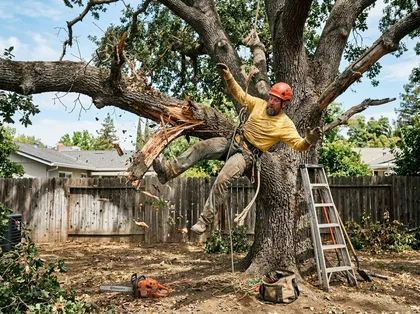
Many falls happen while a worker climbs or moves around the tree. Workers often depend on branches for support, but a weak or dead limb may break without warning. Balance may shift during cutting, especially when the branch’s weight changes.
These falls can also occur when:
- A worker slips while moving between branches.
- A tie-in point fails during repositioning.
Falls From Aerial Lifts
Aerial lifts help workers reach high areas, but they can still pose safety risks. A falling branch may strike the bucket, causing it to move suddenly. The lift may also tip if the operator places it on unstable ground or allows it to shift during use.
In some cases, a mechanical issue affects the lift’s control. Sudden movement inside the bucket can throw a worker off balance.
Falls From Ladders
Ladders are common for lower tree work or areas near structures. A fall may occur when the ladder is unstable or when the worker shifts weight too far to one side. Using a damaged ladder or placing it on uneven ground can also increase the risk.
A worker may also lose balance while climbing or reaching for a branch. Even a short fall from a ladder can lead to serious injury.
Falls Linked To Fall Protection Failures
Fall protection systems aim to prevent falls, but they can fail in certain situations. A rope may break, or a harness may not hold if worn or used incorrectly. Some workers accidentally cut their own lines while trimming. In other cases, the anchor point fails when the branch cannot support the load.
When any part of the system fails, the worker has little protection from a fall.
Who Can Be Liable For A Tree Trimming Fall In California?
Liability in a tree-trimming fall depends on the relationship between the worker, the employer, and the property owner. California law allows for recovery through several channels. However, specific legal doctrines often limit who an injured victim can sue in court.
The Privette Doctrine: Limits On Property Owner Liability
California law generally protects property owners from liability if they hire an independent contractor and one of their employees gets injured. Under the Privette doctrine, the hirer hands over workplace safety to the expert contractor.
However, there are narrow exceptions where a property owner can be held liable:
- Retained Control: If the owner exercised control over the work and that control “affirmatively contributed” to the injury.
- Concealed Hazards: If the owner knew of a hidden danger on the property that the contractor could not have discovered.
- Non-Delegable Duties: In rare cases involving specific safety regulations.
Third-Party Liability
Beyond the employer and property owner, other parties may be responsible:
- Equipment Manufacturers: If a climbing rope, harness, or aerial lift fails due to a design or manufacturing defect.
- Government Entities: If the accident happened on public land due to poorly maintained infrastructure or unaddressed hazards.
What Injuries Do Tree Trimmers Suffer After Falls?
Falls from trees often cause serious, life-changing injuries. The body takes a strong impact when a worker falls from a height. Victims may require emergency care, imaging, surgery, and rehabilitation depending on injuries. Recovery can take months or even years.
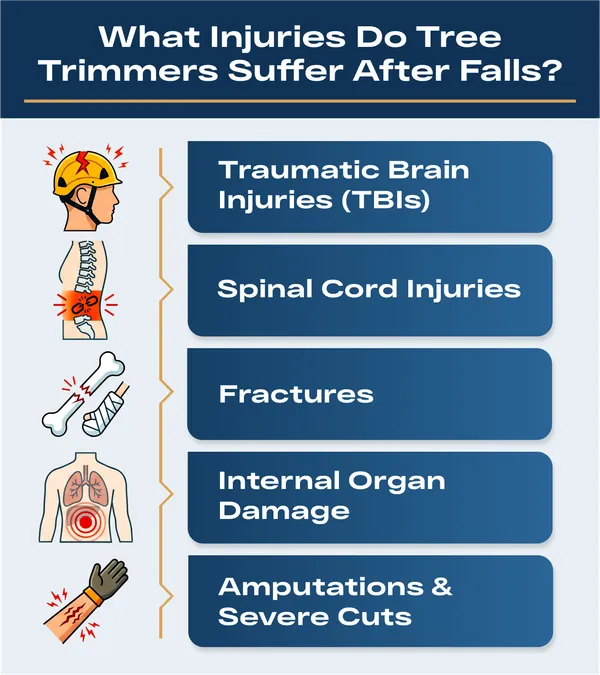
Here are some injuries victims may suffer after a tree-trimming fall:
- Traumatic Brain Injuries (TBIs): A strong impact to the head can cause a concussion or brain bleeding. A hard hat can reduce the risk, but it cannot prevent all brain injuries. Victims may experience memory loss, headaches, or difficulty focusing. These symptoms can affect their ability to work and manage daily tasks.
- Spinal Cord Injuries: Spinal injuries can cause chronic pain or paralysis. Some victims lose movement or sensation in parts of the body. Spinal damage can affect independence and require long-term care.
- Fractures: Falls often break bones in the arms, legs, ribs, or pelvis. Some fractures require surgery and physical therapy. Severe fractures can limit movement and delay a return to work.
- Internal Organ Damage: Internal injuries may not present with immediate symptoms. However, they can become life-threatening without treatment.
- Amputations & Severe Cuts: These injuries often require surgery and long-term rehabilitation. The loss of a limb can change the type of work a victim can perform.
After initial treatment, some victims continue to deal with back pain and limited movement. Many turn to chiropractic care to help manage pain and improve mobility during recovery.
The effects of tree-climbing accidents go beyond physical pain. Many workers find themselves unable to return to their high-intensity jobs, leading to financial distress. The emotional toll of a permanent disability can also impact the victim’s mental health. Family members may also be affected if they have to help provide long-term care.
The type and severity of your injury can affect your legal claim. Severe injuries often lead to higher medical costs and long-term care needs. These factors can increase the value of a workers’ compensation or personal injury case.
How Can Employers And Crews Prevent Tree-Trimming Falls?
In California, employers are legally responsible for providing work conditions free from fall risks. Tree trimming safety, in particular, requires strict adherence to Cal/OSHA standards, including the presence of a Qualified Tree Worker (QTW). The Department of Industrial Relations defines a QTW as someone who, through training and experience, has demonstrated the ability to perform tree work safely.
If an employer fails to comply with rules like these and an employee is injured, the employer could be liable.
Prevention strategies include:
- Conducting a pre-climb inspection to identify structural weaknesses in the tree.
- Maintaining a “two-means-of-attachment” rule whenever a worker is using a chainsaw in a tree.
- Ensuring all fall protection gear is inspected daily for wear or chemical damage.
What Are The Options For Recovering Compensation After A Tree Trimming Fall?
Injured workers in California have several options for financial recovery. The most common option is workers’ compensation. In some cases, a tree trimmer can also file a personal injury claim if a third party contributed to their fall. In limited situations, they can pursue both claims simultaneously.
California Workers’ Compensation Benefits
California employers must carry workers’ compensation insurance. This system is “no-fault,” meaning you can receive benefits without having to prove who caused your tree-trimming fall. However, this state-mandated insurance offers limited benefits. It typically covers:
- Medical Expenses: All necessary doctor visits, surgeries, and prescriptions.
- Temporary Disability: Payments to cover lost income while you are unable to work.
- Permanent Disability: Compensation if the fall results in a lasting physical impairment.
- Supplemental Job Displacement: Vouchers for retraining if you cannot return to tree-trimming work.
Under the California Labor Code, workers’ comp is usually the “exclusive remedy” against an employer. However, some exceptions may apply. For instance, you may be able to sue your employer in civil court if they failed to carry workers’ comp insurance.
Third-Party Personal Injury Claim
If someone other than your employer caused the tree-trimming accident, you can file a third-party personal injury case. This type of claim allows you to seek non-economic damages, which are not available through workers’ compensation.
A third-party claim includes compensation for:
- Lost Wages & Future Earnings: Income lost during recovery, including reduced ability to earn in the future.
- Medical Expenses: Costs for emergency care, hospital stays, follow-up treatment, and rehabilitation related to the fall.
- Pain and Suffering: Physical pain and emotional distress caused by the accident.
- Loss of Enjoyment of Life: Limitations on hobbies, daily activities, or time with family that victims experience after the accident.
- Disability or Impairment: Compensation when injuries affect movement, strength, or the ability to work.
- Scarring or Disfigurement: Compensation for visible injuries that affect appearance and confidence.
What Are The Deadlines For A California Tree-Trimming Fall Claim?
California law imposes strict deadlines for filing a claim after a tree-trimming fall. These time limits, called the statute of limitations, differ based on the case type. Missing the one that applies to your case can bar you from pursuing compensation altogether. However, certain exceptions can shorten or extend these deadlines.
The filing period differs depending on the type of case:
- Personal Injury Lawsuit: You generally have two years from the date of the accident to file a lawsuit.
- Claims Involving Government Property: You usually need to file a claim with the government agency within six months. This step is mandatory before filing a lawsuit.
- Workers’ Compensation Claim: You should provide notice to your employer within 30 days. From here, you must file the official claim within one year.
Deadlines can pass quickly, especially when you’re focused on your physical recovery. If you find yourself thinking, “I need a personal injury lawyer!”, it may be time to consult one. They can review your legal options before time runs out.
When To Seek Legal Help For A Tree Fall Accident

If you have a serious injury from a tree-trimming fall, consider getting legal help. Early guidance can help protect your rights and prevent mistakes when dealing with insurance or claims. You can also consider legal representation if the cause of your tree-trimming fall is unclear or if someone else might be at fault.
Contact a lawyer who handles tree-trimming accidents if:
- The injury requires surgery, long-term care, or prevents you from working.
- Another party, such as a property owner or contractor, may have caused the fall.
- Equipment failure or unsafe conditions contributed to the accident.
- An insurance company delays, denies, or reduces your claim.
- The opposing party disputes fault or blames you for the incident.
- You are unsure whether to file for workers’ compensation, a personal injury claim, or both.
If you’re aiming to move forward with clarity and protect your claim, you may be seeking free advice from a tree-trimming accident lawyer by searching online. However, if any of the above situations apply, consider contacting an attorney to discuss and potentially handle the case. They can assess your unique situation and explain your legal options.
Tree Trimming Falls And Injury Claims FAQs
After tree-trimming falls, accident victims often have legal questions about job status, liability, and insurance coverage. The answers can affect how a claim moves forward and what options may be available after an injury.
What Do BLS CFOI And OSHA Data Actually Show About Tree Trimmer Fatalities?
The data shows that tree trimming is one of the deadliest jobs in the U.S. Falls are the leading cause of death. They account for nearly half of all industry fatalities.
What Is The Most Common Cause Of Death In Tree Care?
Falls are the most common cause of death in tree care work. Data from OSHA and the Bureau of Labor Statistics show that falls to lower levels account for a large share of fatalities among tree trimmers and pruners. These incidents often involve workers falling from trees, ladders, or aerial lifts.
Can I File Workers’ Compensation And A Third-Party Lawsuit At The Same Time In California?
Yes. If your employer has insurance, you can collect workers’ comp benefits while simultaneously suing a third party who contributed to the accident. Examples include a machine manufacturer or a negligent property owner. Workplace accident lawyers can help review the facts of the case and identify all possible sources of financial recovery.
What If My Employer Did Not Carry Workers’ Compensation Insurance?
If your employer did not carry workers’ compensation insurance, California law gives you other options. You can file a civil lawsuit against your employer. You may also seek benefits from the Uninsured Employers Benefits Trust Fund (UEBTF).
What If I Sustain An Injury As An Independent Contractor?
Independent contractors may not qualify for workers’ compensation. However, they can file a personal injury claim if another party caused the accident. Property owners, general contractors, and equipment providers may be liable for unsafe conditions. Misclassification can also affect the claim. Some workers labeled as independent contractors may actually qualify as employees under California law.
Contact A California Tree Trimming Accident Lawyer Today!
A tree-trimming fall can affect your health, income, and daily life. Legal guidance can help you understand your options and identify who may be responsible. A lawyer can also help you pursue the maximum compensation allowed by law.
Our tree-trimming accident lawyers at Arash Law can:
- Investigate the cause of the fall and identify all liable parties.
- Manage communication with insurance adjusters.
- Gather expert testimony from arborists and safety engineers.
- Track and meet all filing deadlines to preserve your right to sue.
- Negotiate a settlement that covers your long-term medical needs and lifestyle changes.
After an accident, some people ask, “Do lawyers only get paid if they win?” Our lawyers work on a contingency fee basis. That means you don’t have to pay our attorneys unless you receive compensation. Contact AK Law at (888) 488-1391 for a free initial consultation. Our legal team can explain how California negligence and workers’ compensation laws apply to your situation.