TL;DR: After a fall at Target, you may sustain injuries like bruises or fractures. Report the incident, seek medical care, and gather evidence. If the store’s negligence caused the fall, you can pursue a premises liability claim. Injured employees can file for workers’ comp benefits.
Highlights:
- Seek medical care immediately after a fall, even without visible injuries.
- Document the hazard, including photos, videos, and witness statements.
- Report the incident to Target and ask for an official accident report.
- Preserve evidence like surveillance footage by sending a “preservation of evidence” letter.
- File a premises liability claim within California’s 2-year statute of limitations.
- Gather medical records and other evidence to strengthen your case.
Tip: Focus on documenting all evidence and following medical advice to support your claim.
Table of Contents
If you fall at Target, you may sustain injuries, such as bruises, fractures, and head trauma. As a result, you might incur losses such as medical bills, lost wages, and pain and suffering. Under California’s premises liability law, you may be eligible to pursue compensation for them if someone’s negligence caused your fall.
State law requires property owners to take reasonable steps to keep visitors safe. Their obligation includes addressing risks, such as wet surfaces and cracked floors, to prevent fall injuries. As such, stores like Target may be liable if they neglected this duty, resulting in your accident.
After getting injured at Target, consider following these steps to support your claim:
- Report the incident.
- Obtain witness statements.
- Get medical care.
- Document the hazard.
What To Do Immediately After Falling At Target
Your first step after a fall at Target should be to seek immediate medical care, even if you don’t feel any pain. A timely medical evaluation can reveal injuries that may not appear right after the incident. A healthcare professional, such as a surgeon, chiropractor, or therapist, can also provide documentation to back up your claim.
Another essential step after your accident is to gather as much evidence as you can, including:
- Witness Statements: Get the contact details and testimonies of anyone who observed the mishap. For example, you can ask Target’s management about which employees were working at the time, as they may have witnessed your fall.
- Photos and Video Footage: Send a “preservation of evidence” letter to the Target store’s management. This letter demands that the store retain all relevant, unedited footage of the accident. Since many surveillance systems overwrite data within days or weeks, it is essential to send this letter promptly. In the letter, request the specific timeframes and, if possible, footage from multiple camera angles.
- Medical Records: Get copies of your medical invoices and any costs associated with your injury.
- Incident Report: Notify the store’s management or employees of the incident as soon as you can. Ask them to complete a fall accident report and provide a copy for your files. By doing this, you gain an official record of the occurrence. This piece of evidence can be helpful in the claims procedure.
Causes Of Fall Accidents At Target
Wet, slippery floors are among the most common causes of falls in California, particularly slips and falls. At Target, these hazards can result from spilled liquids, improper cleaning procedures, and rain. However, other conditions can contribute to such accidents. These causes may include the following:
- Obstructed aisles or products dropped to the ground.
- Uneven or damaged flooring.
- Poor or dim lighting.
- Broken or faulty equipment.
Furthermore, various types of falls can often happen at Target, such as the following:
- Slip-and-fall incidents often occur on wet surfaces or from spills.
- Trip-and-falls involve tripping risks, such as extension cords, cracked floors, or loose carpets.
- Stairway or escalator falls happen due to faulty steps or handrails.
Potential Injuries From A Target Fall Accident
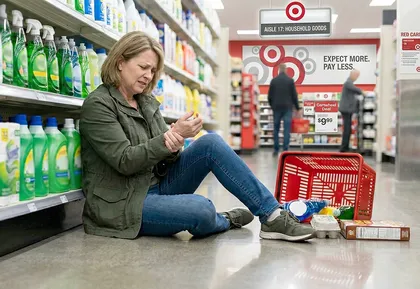
From minor bruises to severe head trauma, a wide range of injuries can result from falls in Target stores in California. Your medical expenses can vary depending on the severity of your condition. Some of the common ones associated with Target fall accidents include:
- Cuts and bruises
- Sprains and strains
- Broken bones
- Head and brain injuries
- Spinal cord injuries
- Soft tissue injuries
Some of these injuries, like brain and spinal cord injuries, may result in long-lasting effects, such as cognitive impairment or permanent disability. These accidents may also have a psychological impact and cause emotional trauma, such as anxiety, depression, and post-traumatic stress disorder (PTSD). You may require specialized treatment for these conditions.
Your Legal Rights After A Fall At Target
In California, you have the right to seek compensation for your injuries and losses if you fall on someone else’s property. That includes the locations of major retail chains, such as Target. All property owners must maintain safe environments for visitors. Businesses that welcome customers are no exception. However, state law requires you to prove that negligence caused your fall.
In other words, you can file a premises liability claim if you can demonstrate that Target knew or should have known about the hazard that injured you. If you can establish negligence, you can seek compensation for your losses, such as the medical bills you incurred due to your injuries.
For Target employees, injuries you sustain while working can qualify you for the store’s workers’ compensation benefits.
Understanding Premises Liability In California
Under California’s premises liability law, property owners like Target must take reasonable precautions to keep lawful visitors safe. This requirement includes preventing foreseeable hazards. If Target fails to fix dangerous conditions and someone gets hurt, it may face legal responsibility for the victim’s injuries and losses.
To comply with this legislation, they must implement the following fall prevention measures:
- Proper maintenance of floors, shelves, aisles, and displays.
- Immediate cleanup of spills, leaks, and other slip hazards.
- Repair of defective conditions, such as uneven tiles or torn carpeting.
- Maintenance of adequate lighting in all store areas.
- Consistent adherence to safety rules and procedures.
Proving Negligence In A Target Fall Accident Case
To have a valid premises liability claim, you must prove that Target’s actions or inaction directly caused the fall and your injuries. This step is crucial to proving negligence, as the chain isn’t automatically responsible for falls that occur in its stores.
California law puts the burden of proof on victims, meaning you must demonstrate four key elements:
- Duty of Care: Target had an obligation to keep you safe.
- Breach of Duty: The store didn’t fulfill this obligation.
- Causation: The breach directly caused your fall.
- Damages: Your injuries resulted in medical expenses and other losses.
For example, suppose Target employees mopped up a spill. However, they forgot to put up a sign to warn customers. As a result, a shopper slipped, fell, and hit their head. The shopper had a concussion and had to be hospitalized for a few days. During this time, they could not work.
Showing that Target breached its duty of care can be particularly challenging. You’ll need to demonstrate that the store knew about the fall hazard through:
- Actual Notice: It was directly aware of the hazard but failed to fix it promptly.
- Constructive Notice: It should have known of the hazard through reasonable inspections.
These requirements imply that just sustaining injuries in a Target fall accident isn’t enough. There must also be proof that the store had an opportunity to address the risk but didn’t do so.
Identifying The Responsible Parties For A Fall At Target
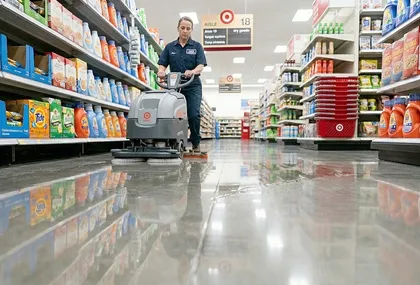
In a California Target fall case, the store or its employees are usually responsible. For instance, staff may have known about the hazard and neglected to fix it or warn customers of the danger. However, other parties may also be liable for a Target fall accident.
These include the following:
- Third-Party Maintenance Contractors: They may be liable if their action or inaction causes an accident. Examples include leaving soap residue on the floor and neglecting to clean up a spill.
- Product Vendors: They may be accountable if their activities cause a tripping hazard. Leaving goods in the aisle and displaying products in a way that obstructs your path are examples of such careless actions.
- Property Owners: If Target is a mall tenant, the landlord or property management company may be liable for mishaps in public spaces, such as a parking lot or sidewalk.
Notably, multiple parties can share fault under California’s pure comparative negligence law. That includes injured victims who contributed to the accident. Though you can still seek damages in this scenario, your percentage of fault may reduce the compensation you may receive.
To illustrate, consider this scenario. Despite the presence of visible warning signs, you still ran through the store without paying attention. You were also texting a friend when you slipped on a wet floor and fell. After filing a lawsuit, the court found you 20% at fault for your actions. In this case, you can only get 80% of the total damages.
Navigating The Claims Process After A Fall At Target
After you report your fall to Target, gather evidence, and treat your injuries, you can begin preparing a premises liability claim. You can kickstart the process by taking these steps:
- Keep all gathered evidence in a safe place.
- Identify and estimate the value of your damages.
- Draft the demand letter.
A demand letter details the accident, lays out evidence of the other party’s potential fault, and specifies the amount of compensation you’re requesting. The claims process usually begins after you submit this document. Afterward, the following events usually occur:
- The store’s management or insurer receives your demand letter.
- The insurer responds with either a settlement offer or a denial of the claim. If the amount offered covers your damages, you may choose to accept it.
- If Target’s insurance carrier rejects your claim, you can contest its decision and ask about its reasons for the denial. Include your supporting evidence in the appeal.
- Settlement negotiations may begin if you reject the insurer’s initial offer or successfully appeal a claim denial. During this time, claims adjusters may dispute the amount you’re seeking or the facts of your case. You may have to file a lawsuit in civil court if these issues can’t be resolved. However, your claim will be settled if you accept a payout.
- If the claim proceeds to a trial, a judge or jury will decide on the at-fault party and compensation amount.
Anticipating Common Defenses Target May Use
An open-and-obvious hazard is a common defense that Target may use to dispute fall injury claims. In other words, the store may argue that a reasonable customer would have avoided the risk. This argument suggests that Target might not be solely responsible for the accident.
Other defenses the store may use are as follows:
- Comparative fault, such as the visitor running or being on the phone.
- Causation disputes. For example, Target’s insurer may argue that your injuries were caused by pre-existing medical conditions, not the fall.
Understanding these arguments emphasizes why evidence collection matters, as strong evidence can help counter many of these defenses.
Recoverable Damages In A Target Fall Accident Claim
In a California Target fall injury claim, recoverable damages include the costs associated with your injuries and losses. These can range from medical expenses to emotional pain. Generally, what you can seek in a claim depends on how the fall affected your life.
Economic damages refer to actual financial losses and may include:
- Medical expenses for emergency care, doctor visits, and physical therapy.
- Lost wages for missed work due to your injuries or recovery time.
- Loss of your ability to earn income in the future.
- Rehabilitation costs for services like physical therapy or ongoing treatment.
- Out-of-pocket costs for medical visits or hiring help with daily tasks during recovery.
Meanwhile, non-economic damages address the emotional and psychological toll of an accident, such as:
- Pain and suffering
- Emotional distress
- Loss of quality of life
- Loss of companionship
Filing A Workers’ Compensation Claim After A Fall At Target
You can file a workers’ compensation claim if you work at Target and are hurt while performing your duties. Workers’ comp benefits are intended to help you get treated for your work-related injury or illness. It partially reimburses income lost while recovering and helps you get back to work. Workers’ compensation benefits do not pay for an employee’s pain and suffering.
If you get hurt at work as an employee of Target, follow these recommended steps:
- Prioritize getting medical help immediately after the slip and fall accident
- Report the accident and your injury to your manager or supervisor within 30 days.
- After learning about your injury, Target must provide a DWC-1 claim form within one business day.
- Fill out the form and send it back to your employer.
- Target must send the form to its insurance carrier, which must confirm receipt of the claim within 14 days.
Although you have up to 30 days to report the injury to your employer, it is best to notify them as soon as possible to start the claims process.
Target collaborates with Sedgwick, a third-party administrator managing its workers’ compensation claims. This means you’ll interact with a Sedgwick representative about your claim rather than a human resources employee from Target.
Frequently Asked Questions (FAQs) About Falls At Target
After a fall, seeking compensation from large retailers like Target can be confusing. You may be seeking free advice from Target slip-and-fall attorneys to gain clarity on your situation. However, you may already share similar concerns with victims of similar incidents. This section covers some of the most common legal questions about these incidents.
Can I Sue Target For A Fall Injury?
Yes, you can sue Target for a fall injury as long as you can show that the store’s negligence directly caused the accident. If Target knew or should have known about the hazard but failed to address it, you may have a case against it. However, you’ll typically start seeking compensation by filing an insurance claim first.
Generally speaking, you only need to file a lawsuit if you’re unable to reach an out-of-court settlement. However, many personal injury claims settle without a trial. One reason is that lawsuits often take up too much time and effort, with no guarantee of success.
Now, if you were an injured employee who received workers’ comp benefits for your injuries, you generally cannot sue your employer for negligence anymore.
How Do I Prepare For A Fall Accident Claim?
Preparing a Target fall claim in California often starts with getting medical care and gathering evidence. You must notify management and obtain a copy of the incident report. Take photos and videos of the hazard that caused your fall, such as a puddle or uneven floor.
You can also collect contact information from witnesses. Their accounts of the fall can help support your version of events. Additionally, see your doctor afterward, follow their orders, and get a copy of your medical documents. If you’re filing the claim yourself, contact Target’s customer service and submit your injury claim.
Is It Hard To Win A Target Fall Case?
A Target fall accident case can be challenging to win, especially if there are no witnesses or proof of negligence. Additionally, because Target is a large corporation, you will likely face an experienced legal team that will evaluate your case. If there’s a possibility that the accident was partially or fully your fault, you may have difficulty seeking compensation.
Still, you must show that the at-fault party was aware of the hazard and failed to take action. One way to improve your chances is to gather as much evidence as you can. That way, you more clearly demonstrate the at-fault party’s negligence.
How Much Is A Target Fall Case Worth In California?
Several factors affect the value of a California Target fall case, such as the severity of your injuries. Damages for cuts and bruises often differ from the losses victims incur after breaking their hip, for example. Other factors that can affect your case’s worth include the following:
- Treatment duration.
- Available evidence of the fall.
- Proof of income loss.
- Whether your case resolves through settlement or litigation.
How Long Do I Have To File A Target Fall Lawsuit In California?
California’s statute of limitations typically allows you to file a fall lawsuit within two years from the accident date. If you miss this deadline, you may lose the right to take legal action and seek damages.
There are exceptions to this deadline:
- If the injured person is a minor, the two-year clock pauses, or tolls, until they turn 18. Afterward, they have until their 20th birthday to file a lawsuit.
- Some injuries aren’t immediately apparent following a fall accident. In this case, the statute of limitations may only start when you discover the injury or reasonably should have discovered it.
Contact Our Lawyers After A Target Fall Accident
After falling at Target, you may sustain injuries that impact your health, well-being, and overall quality of life. Though you can seek compensation for these losses, filing a personal injury claim against a large corporation can be challenging to do on your own.
In these cases, you may be thinking, “I need a personal injury lawyer.” Arash Law’s team of attorneys can review your fall and explain your rights under California law. If you have a case, we can help you pursue compensation by negotiating settlements and representing you in court, if necessary.
If you’re wondering about how much these services cost, you may be asking, “Do lawyers only get paid if they win?” Under our contingency fee arrangement, you pay us only if we obtain compensation for you. In other words, if there’s no settlement or court award, you don’t owe us legal fees.
If you or a loved one fell and got hurt at Target due to someone else’s negligence, reach out to our personal injury lawyers. At AK Law, we offer free initial consultations to review your case. Call us at (888) 488-1391 to get started.