TL;DR: Hydroplaning car accidents occur when water on the road causes a vehicle to lose traction. Drivers speeding in the rain or with worn tires may be at fault. Injury risks include broken bones and head trauma. Liability can extend to vehicle owners, manufacturers, or government agencies.
Highlights:
- Hydroplaning occurs when a vehicle loses traction on wet roads.
- Factors contributing to hydroplaning include speed, tire condition, and road conditions.
- Injuries may include whiplash, concussions, fractures, and internal injuries.
- Negligence can lead to liability for hydroplaning accidents, including speeding or poor tire maintenance.
- California’s comparative negligence law may apply, allowing for shared fault in accidents.
- Product liability can apply if defective tires contribute to the accident.
Tip: Always preserve evidence, including tire condition and road conditions, to support your case.
Table of Contents
Hydroplaning accidents happen when a car loses traction on a wet road and begins to skid or slide. Rain, flooding, or water runoff can create a layer of water on the pavement. If a vehicle’s tires cannot push it away quickly enough, they can glide on that layer rather than gripping the pavement. The driver can then lose control, and a crash can occur.
Multiple factors can contribute to hydroplaning car accidents, such as:
- Motorists driving too fast for the weather or road conditions.
- Worn-out or damaged tires that cannot grip the road in the rain.
- Flooded roads, such as those with unrepaired potholes, can cause vehicles to lose traction.
- Oil slicks and other hazards make pavements more slippery.
Since drivers aren’t the only parties who may be responsible for these incidents, identifying who is at fault can be challenging. Law enforcement officers, personal injury lawyers, and claims adjusters often consider the evidence and the circumstances surrounding the hydroplaning accident when assessing liability.
What Causes Hydroplaning Accidents That Lead To Injury?
Hydroplaning car accidents are more likely to occur on wet or slick roads. Here, they’re often caused by:
- Poor Tire Condition — Worn-out or underinflated tires cannot properly channel water away. Design defects, like low tread, uneven wear, or damage, can also make it harder for a tire to grip the road.
- Road Conditions — Smooth roads, oil slicks, and worn pavement become very slippery when it rains. Water can also collect in low spots and potholes. Even a small amount of standing water can cause a driver to lose traction and control.
- High Speeds — Hydroplaning risk often increases around 35+ mph, especially when the above factors are present. The faster a vehicle travels, the harder it is for tires to push water away and stay in contact with the road.
When a car hydroplanes and crashes, the force of the resulting impact can injure its occupants. Even in a single-car accident, drivers and passengers may get hurt. Collisions with other vehicles, especially at high speeds, can result in even more severe injuries, including:
- Whiplash or spinal trauma from sudden jolts.
- Concussions or brain injuries from hitting the steering wheel or dashboard.
- Fractures and broken bones from collisions.
- Internal injuries from crushing accidents or rollovers.
Hydroplaning accidents that cause injuries often result in costly medical bills, lost wages, and property damage. That makes it essential to determine liability in these cases. You could pursue compensation for your losses once you identify who may be at fault for the crash.
When Is A Driver Liable For A Hydroplaning Injury Crash?
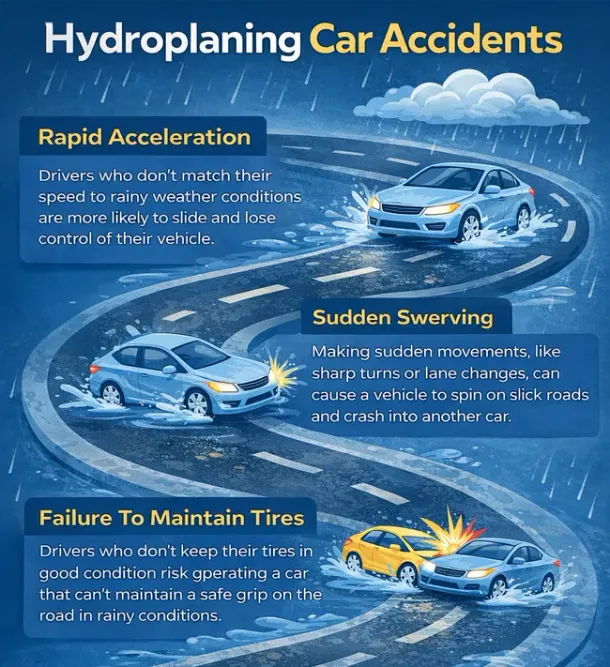
According to the Federal Highway Administration (FHWA), 75% of weather-related accidents occur on wet pavement each year. Meanwhile, 47% happen during rainfall. Still, negligence can be a factor in these incidents. Specifically, drivers must still adjust their driving to stay safe on wet roads. Here are some situations where they may face liability after a hydroplaning crash:
- Rapid Acceleration — If a driver speeds up too quickly or drives too fast for the conditions, the tires may not clear the water in time.
- Sudden Swerving — When a car loses traction, sharp turns or sudden lane changes can cause it to slide further. Swerving on a wet road increases the chance of spinning out or crashing into another vehicle.
- Failure to Maintain Tires — Drivers are expected to regularly inspect their tires before getting behind the wheel. That’s especially true if they know they’ll be driving in adverse weather. If they fail to do so, they risk causing a hydroplaning car accident by continuing to use tires that cannot effectively provide traction.
When Negligence Per Se Applies To Hydroplaning Crashes
In some cases, the driver can be liable just because their violation of the law caused the accident. For instance, they may exceed the posted speed limit while it’s raining, breaking the California Vehicle Code’s speed laws. A statutory violation such as this can create a presumption of negligence.
Car accident lawyers often consult accident reconstructionists to get more context on what may have occurred. These experts analyze skid marks, vehicle speeds, and road conditions to determine the likely cause of the hydroplaning car accident.
Comparative Negligence In A Hydroplaning Car Accident
Many factors can cause a hydroplaning crash. As a result, California’s pure comparative negligence rule may apply. This law can hold multiple individuals or entities accountable for an accident.
To illustrate, suppose a driver made a sudden lane change, hydroplaned, and collided with another vehicle. However, the road their car slipped on was only slick because it had multiple potholes with standing water. A local government agency responsible for street maintenance may also be liable for the accident.
If an injured driver is up to 99% at fault for the crash, they could similarly share fault under pure comparative negligence. They can still pursue compensation in this scenario. However, a court can reduce their damages by the percentage of responsibility attributed to them.
For example, suppose Driver A was speeding. However, Driver B was distracted and stopped unexpectedly at an intersection. As a result, Driver A suddenly swerved to avoid them, hydroplaned, crashed, and sustained injuries. In this case, both drivers could be found at fault. If a court finds Driver A 30% liable for speeding, it could reduce their total damages by that percentage.
Can Worn Tires Increase Liability In A Rain Accident?
In many cases, rain-related crashes occur when a driver speeds or makes sudden movements on wet roads. However, worn tires can also influence car accident liability in California, especially if they contribute to a hydroplaning collision.
When water builds up on the road, a car’s tires can lose contact with the pavement, as if they were hovering in midair. That could result in a complete loss of traction. This situation can occur if the vehicle owner failed to maintain or replace their tires when necessary.
This negligence could be considered a violation of the California Vehicle Code’s minimum requirements for tires. Tires must have at least 1/32 inch of tread in any two adjacent grooves. Otherwise, they’re considered “bald tires.” Driving with them can result in a traffic ticket.
Drivers who don’t comply with these laws can put the safety of other road users at risk by increasing the likelihood of hydroplaning. As such, they could be liable for a rain-related car accident.
When Can Product Liability Apply?
Sometimes, defective tires contribute to a hydroplaning collision. In these cases, a tire manufacturer or distributor may be partially responsible. California’s product liability law can hold these parties accountable if they produce or sell malfunctioning products that injure consumers.
To pursue a product liability claim, you don’t need to prove that a manufacturer or distributor was negligent. Instead, you only need to demonstrate that the tires you used were defective and injured you. For example:
- A flawed tire design or poor manufacturing that prevents proper water dispersion could give rise to a liability claim.
- A tire that wears out prematurely could contribute to the accident, even if the driver did nothing to damage it.
Getting free accident lawyer advice after a hydroplaning accident could help you identify if product liability laws apply to your case.
Are Commercial Drivers Held To Higher Safety Standards?
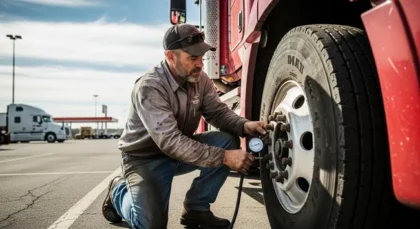
Yes, commercial drivers are subject to stricter safety regulations compared to non-commercial drivers. The Federal Motor Carrier Safety Administration (FMCSA) enforces these rules to ensure the safety of both the trucking industry and other road users. This higher standard particularly applies in conditions where hydroplaning is more likely, such as in rainy weather.
Here’s what you need to know:
- Speed & Vehicle Control — Commercial drivers must adjust their speed when driving on wet or slippery roads. This action is necessary to maintain control, especially when driving larger vehicles.
- Vehicle Condition — Tires, brakes, and other critical systems must be maintained regularly to prevent skidding or loss of traction.
- Training for Wet Conditions — Commercial drivers receive training on handling vehicles during downpours, avoiding hydroplaning, and performing emergency maneuvers safely.
- Hours of Service Limits — Fatigue can increase accident risks in wet conditions, so CDL drivers have strict daily and weekly driving limits to stay alert.
- Inspections & Oversight — Law enforcement routinely checks whether commercial vehicles comply with safety regulations. They may monitor drivers, such as truckers, more closely during adverse weather.
These higher safety standards are designed to protect both commercial drivers and other road users traveling in rainy conditions. Not following these rules can increase the risk of liability for truck drivers and their companies in hydroplaning incidents.
How An Accident Lawyer Proves Hydroplaning Negligence
In most hydroplaning accidents, negligence determines liability and often forms the basis for claims in California. To help injured victims pursue compensation, rain accident lawyers help them demonstrate that these four elements of negligence were present during the crash:
- Duty — The responsibility of drivers and other parties to act with reasonable care on the road.
- Breach — Failure to meet that standard of care, such as speeding, distracted driving, or ignoring hazardous conditions.
- Causation — A direct link between the negligent actions and the hydroplaning accident or injuries.
- Damages — Actual losses suffered by the victims, including injuries, medical costs, or property damage.
In proving these elements, accident lawyers may identify the negligence of one or more of the following parties:
- The Driver of the Vehicle That Hydroplaned — They may lose control if they fail to keep their tires in good condition or adjust their speed to wet roads.
- Other Motorists — Following too closely, making sudden lane changes, failing to use signals, or driving recklessly can cause them to crash into vehicles that hydroplane.
- Government Agencies — They may be liable for failing to maintain roads with standing water, poor drainage, potholes, or missing warning signs.
- Vehicle Owners or Operators — Bald or worn tires, low tire pressure, broken brakes, or other maintenance problems can increase the risk of hydroplaning. Owners or operators may be held responsible if they fail to inspect vehicles for these issues, leading to an accident.
- Tire Manufacturers or Distributors — Companies that make or sell defective tires can be liable for accidents. Tires with poor tread, design flaws, or other problems that reduce traction can increase the risk of hydroplaning and crashes.
- Transportation Companies or Instructors — These companies generally have to provide proper driver training. Failing to do so or ignoring safety standards can lead to accidents. They can be held accountable if their neglect contributes to a crash.
To support claims and demonstrate these parties’ negligence, rain accident lawyers typically gather and present evidence, including:
- Police reports and eyewitness statements.
- Vehicle damage patterns and traffic camera footage.
- Weather, road, and visibility records.
- Vehicle acceleration and braking data.
Insurance Issues In Hydroplaning Injury Claims
Liability insurance generally covers hydroplaning crashes if another driver’s negligence caused the accident. California drivers must carry liability coverage to pay for injuries and property damage they cause. However, insurers often dispute fault in rain-related collisions, which can complicate the claims process.
- Potentially Liable Parties — Determining liability in rain-related car accidents can be complex. Multiple parties, such as other drivers or tire manufacturers, could be involved. Government agencies or maintenance contractors may also be liable in some cases. That can lead to disputes over which insurance policy actually applies.
- Unavoidable Accident Argument — Insurers may argue that hydroplaning was an act of God and therefore no one is responsible. However, bad weather alone does not excuse unsafe driving. If a driver failed to slow down, maintain their tires, or respond reasonably to conditions, they may still be liable.
If you encounter these insurance issues, you may think, “I need a personal injury lawyer.” An attorney can gather evidence of your crash and identify who may be responsible to help you address these disputes.
Other Insurance Options For Hydroplaning Accident Victims

Your own policy may provide limited financial protection, but it does not automatically cover every loss tied to a hydroplaning crash. The specific benefits available depend on the types of coverage you chose when you purchased your policy. In some cases, a victim’s own auto policy may apply, including:
- Collision Coverage — This type of insurance covers damages to the victim’s own vehicle, regardless of fault.
- Medical Payments (MedPay) Coverage — MedPay can help with medical expenses, such as urgent care, surgery, physical therapy, and chiropractic treatments. It may apply without victims having to prove who caused the accident.
- Uninsured/Underinsured Motorist (UM/UIM) Coverage — UM/UIM coverage may apply if the at-fault driver lacks insurance or has insufficient coverage. However, drivers aren’t required to carry this insurance benefit. Though insurers must offer it, you can reject it in writing. That said, UM/UIM coverage can only apply if it’s part of your auto policy.
Frequently Asked Questions (FAQs) About Hydroplaning Car Accidents And Liability
Many questions arise when a victim sustains injuries in a hydroplaning car accident. Below are answers to common concerns about these incidents.
What If Another Driver Hydroplanes And Hits My Car?
If another driver hydroplanes and hits your car, they may be liable. However, you must prove that they were negligent. That means showing that the driver didn’t take reasonable precautions, like:
- Slowing down to adjust to wet road conditions
- Keeping their tires in good condition
- Maintaining a safe following distance
However, if factors like defective tires or poor road conditions caused the hydroplaning, liability may shift. For this reason, car accident lawyers handling rain-related incidents carefully consider all available evidence.
Is Hydroplaning An At-Fault Accident In California?
In California, hydroplaning may be considered an at-fault accident in limited situations. Every driver must use reasonable care to stay safe. In rainy weather, that means slowing down and being extra careful. If a driver was speeding, following too closely, or driving aggressively in bad weather, they may be partly or wholly at fault.
Is It My Fault If My Car Hydroplanes?
If your car hydroplanes because you were driving too fast for wet roads or not maintaining your tires, you may be considered at fault. The law expects drivers to adjust their speed and use caution in the rain. In a single-car hydroplaning crash, the driver is often responsible, especially if no other vehicle or hazard contributed to the accident.
Consult A Lawyer After A Hydroplaning Car Accident
If you have reason to believe that someone else’s negligence caused a hydroplaning car accident and your injuries, you may have the right to seek compensation for your medical bills, lost income, and emotional distress. However, it can be challenging to pursue a personal injury claim while physically recovering from the crash.
Our rain accident lawyers at Arash Law are here to help. We can analyze your case and help you identify potentially liable parties. If you have a valid claim, we can help you communicate with insurers and negotiate a settlement on your behalf.
If you’re wondering how much these services might cost you, you may be asking, “Do lawyers only get paid if they win?” The answer is yes at AK Law. Our team works on a contingency fee basis. That means we only charge legal fees if we secure compensation for you.
To schedule a free case review, contact us at (888) 488-1391.