TL;DR: Yes, you should usually report a hit-and-run even when you see no damage. California may not require a police or a Department of Motor Vehicles (DMV) report if there is truly no injury or property damage. However, hidden damage or injuries may appear later. Reporting also matters if you may need uninsured motorist coverage for an unidentified driver.
Yes, you should usually report a hit-and-run in California, even if your vehicle appears undamaged. A clean bumper does not always mean the vehicle escaped damage, and you may not notice an injury right away.
There is an important legal distinction. If the incident truly caused no injury and no property damage, California generally does not require the 24-hour injury report under Vehicle Code § 20008 or a DMV SR-1. Still, documenting what happened can protect evidence and help if the situation changes.
Police, DMV, and insurance reporting are also separate questions. A police report may be important for a later uninsured motorist bodily injury claim, an SR-1 has its own statutory threshold, and your insurance policy may separately require prompt notice of an accident or loss.
Key Facts About No-Damage Hit-And-Run Incidents In California
- No injury or damage changes the rules. California’s 24-hour injury-report rule and DMV SR-1 generally do not apply when there is truly no injury, death, or reportable property damage.
- Property damage triggers hit-and-run duties. Vehicle Code § 20002 requires a driver involved in a property-damage collision to stop and provide the required identifying information.
- Injury crashes have a 24-hour rule. Vehicle Code § 20008 generally requires a written law enforcement report within 24 hours when a crash causes injury or death.
- The SR-1 has a separate deadline. A driver generally must file it within 10 days when someone is injured or killed, or one person’s property damage exceeds $1,000.
- Unknown-driver UM claims have extra requirements. Insurance Code § 11580.2 generally requires a law-enforcement report within 24 hours and a sworn insurer statement within 30 days for qualifying bodily injury claims.
- Hidden vehicle damage is possible. The California Bureau of Automotive Repair notes that collision repairs may require scans or calibration of affected Advanced Driver Assistance Systems (ADAS).
Table of Contents

Do You Have To Report A Hit-And-Run If There Is No Damage?
If there is truly no injury and no property damage, California generally does not require a 24-hour report under Vehicle Code § 20008 or an SR-1 report to the Department of Motor Vehicles.
California Vehicle Code § 20002 also applies specifically to a collision that results in property damage. It requires the involved driver to stop and provide identifying information. If a collision genuinely causes no property damage, injury, or death, the accident-related hit-and-run statutes generally are not triggered merely because two vehicles made contact and one driver left.
The difficulty is knowing whether the incident actually caused no harm. Vehicle damage may be hidden, and physical symptoms may appear after you leave the scene. For that reason, reporting and documenting the incident can still be a sensible step.
Why Reporting A Hit-And-Run Still Matters When You See No Damage
A collision that looks minor at the scene can turn out differently after a vehicle inspection or medical evaluation. An early record can also preserve details that become harder to prove with time.
Hidden Vehicle Damage May Appear Later
Modern vehicles can have cameras, radar, ultrasonic sensors, and other Advanced Driver Assistance Systems (ADAS) in or around bumpers, mirrors, and windshields. These systems may support automatic emergency braking, blind-spot monitoring, adaptive cruise control, and lane assistance.
The California Bureau of Automotive Repair (BAR) explains that manufacturers may require pre-scans, post-scans, and calibration after a collision when ADAS components are affected. BAR also explains that cameras, radar, and ultrasonic devices must be properly aligned to work as designed.
Scanning, inspection, and calibration can add work to a collision repair. The actual cost depends on the vehicle, the equipment involved, and what needs to be repaired or recalibrated.
A bumper with no obvious dent or scrape, therefore, does not always prove that nothing happened underneath it. Photos and a qualified vehicle inspection can help identify hidden problems.
An Injury May Appear Later
You may also feel fine immediately after the impact and notice symptoms later. Neck or back pain, stiffness, headaches, or other symptoms may not be obvious at the scene. If symptoms develop, seek appropriate medical care and explain when the collision happened and when your symptoms began.
A police report does not prove that the crash caused an injury. It can, however, help document when and where the collision occurred, as well as what was reported near the time of the event.
The absence of visible vehicle damage can be considered in an insurer’s causation analysis. An insurer may doubt that a low-impact crash caused the claimed injuries. This may happen when there’s limited evidence of the crash and symptoms start later. Visible property damage is not required for an injury to occur. Promptly documenting the crash, when symptoms began, and any medical evaluation can help establish the timeline of the claim.
Evidence Can Disappear Quickly
A hit-and-run can become harder to investigate with time. Witnesses leave, memories fade, and surveillance or dashcam footage may be deleted.
Try to preserve:
- Photos of your vehicle and the scene.
- The other vehicle’s plate number or partial plate.
- Its make, model, and color.
- Witness contact information.
- Nearby businesses, homes, or vehicles that may have cameras.
An early report does not guarantee that police will identify the driver. It does, however, create a record while the details are still fresh.
A Seemingly Minor Crash Can Become An Insurance Issue
Your auto policy may contain notice-of-loss or cooperation provisions requiring you to notify the insurer about an accident or potential claim within a reasonable or specified time. Waiting until damage or symptoms become apparent can make the insurer’s investigation more difficult.
Under California’s notice-prejudice rule, late notice does not necessarily permit an insurer to deny coverage solely because notice was delayed. The effect depends on the policy, the type of coverage, and whether the delay prejudiced the insurer.
Uninsured motorist (UM) hit-and-run claims are subject to additional statutory conditions under Insurance Code § 11580.2. For an unidentified vehicle, the statute generally requires a report to the specified law-enforcement agency within 24 hours and a sworn statement to the insurer within 30 days. Missing these requirements can create a serious coverage issue.
California hit-and-run accident attorneys can assess whether a specific policy’s terms create obligations beyond the general rule. Prompt reporting can reduce later disputes over when the collision occurred, what was reported, and whether the insurer had a fair opportunity to investigate.
Which Reports May Be Required After A California Hit-And-Run?
California has several separate reporting rules. Completing one report does not automatically satisfy the others.
| Report | When It May Apply | General Deadline |
|---|---|---|
| Injury or death report | The crash caused injury or death. | A written report is generally due within 24 hours under Vehicle Code § 20008. |
| Unknown-driver UM report | An unidentified vehicle made physical contact and caused bodily injury. | Report to the agency specified in Insurance Code § 11580.2 within 24 hours and file the sworn insurer statement within 30 days. |
| DMV SR-1 | Someone was injured or killed, or property damage exceeded $1,000. | File with the DMV within 10 days. |
| Insurance notice | Your policy requires notice of the accident or loss. | Follow the policy and notify the insurer promptly. |
The agencies also differ. Under Vehicle Code § 20008, a qualifying injury or death crash is reported to the California Highway Patrol (CHP), or, if it happened within a city, to either the CHP or that city’s police department.
The unidentified-driver UM rule is narrower. Insurance Code § 11580.2 requires a report to the city police department when a crash occurs within a city. In unincorporated territory, the report is sent to the county sheriff or the local CHP headquarters.
What If More Than 24 Hours Have Passed?
Report the hit-and-run as soon as you can. A late report does not restore a missed deadline, but it can still help create a record of the collision.
If more than 24 hours have passed:
- Contact law enforcement. Ask how to make a late report and keep proof of any earlier reporting attempt.
- Notify your insurer. Explain when the collision occurred and when you first reported it.
- Preserve remaining evidence. Save any available photos, videos, witness information, repair records, and medical documentation.
If law enforcement will not prepare an in-person collision report, ask whether you can file an online, counter, desk, or incident report instead. You can also ask for an incident, event, or call-for-service number showing that you contacted the agency. Keep any confirmation emails, screenshots, report numbers, or other proof of your reporting attempt.
A missed 24-hour report can be especially important when an unidentified driver may be treated as an uninsured motorist under Insurance Code § 11580.2. California uninsured motorist accident attorneys can review whether the missed requirement affects the available coverage.
What To Do After A Hit-and-Run With No Visible Damage In California
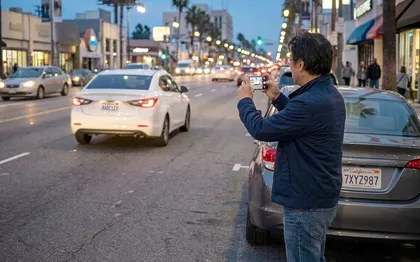
Leaving the scene can be a crime when a collision causes injury, death, or property damage. If another driver hits you and leaves, take practical steps before deciding there was no loss.
- Move to a safe location. Do not chase the fleeing driver.
- Check for injuries. Call 911 if anyone needs emergency care.
- Write down the vehicle information. Record the plate number, make, model, color, and direction of travel if you saw them.
- Photograph your vehicle and the scene. Take close and wide photos, including areas that appear undamaged.
- Get witness information. Ask for names and contact details.
- Report the incident. If an unidentified driver’s bodily injury UM claim may be involved, report the crash within 24 hours to the city police department if it happened within a city. If it happened in an unincorporated area, report it to the county sheriff or the local CHP headquarters.
- Ask about other reporting options. If police do not take an in-person report, ask about another accepted reporting method. Preserve the report number, call number, electronic confirmation, or other proof of your attempt to report the incident.
- Notify your insurer promptly. Give accurate facts without guessing about injuries, damage, or fault.
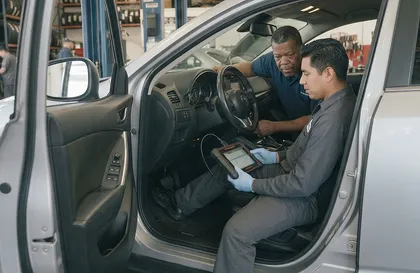
- Inspect the vehicle. If needed, have a qualified repair facility check for damage that is not visible from the outside.
If nearby businesses, homes, or vehicles have cameras, make a note of them. Video can disappear long before an insurance claim or lawsuit is resolved.
How Insurance May Cover A Hit-And-Run With No Visible Damage
The right coverage depends on whether you were injured, whether the other vehicle can be identified, and what coverage appears on your policy.
Uninsured Motorist Bodily Injury Coverage
Uninsured motorist bodily injury coverage may apply when an unidentified hit-and-run vehicle causes an injury.
For an unknown owner or operator to qualify as an uninsured motor vehicle under Insurance Code § 11580.2, the law generally requires:
- Physical contact between the unknown vehicle and the insured person or the vehicle the insured occupies.
- A law-enforcement report must be made within 24 hours to the identified agency in the statute.
- A sworn statement to the insurer within 30 days explaining that the insured has a claim against an unidentified person and stating facts that support it.
This rule is especially important when a collision initially seems harmless, but an injury becomes apparent later.
Your policy may contain other notice and cooperation requirements. The statutory 24-hour and 30-day conditions should not be confused with ordinary notice to your insurance company.
Uninsured Motorist Property Damage Coverage
California’s uninsured motorist property damage rules are different.
Insurance Code § 11580.26 generally requires actual, direct physical contact. The uninsured driver must also be identified, or the vehicle must be identified by its license number. The accident must generally be reported to the insurer or its agent within 10 business days.
If you do not carry collision coverage, uninsured motorist property damage coverage may pay for qualifying vehicle damage up to the vehicle’s actual cash value or $3,500, whichever is less.
When collision coverage is part of the policy, California law instead requires an offer of coverage that can address the collision deductible in a qualifying accident involving an uninsured vehicle.
Because identification is required under § 11580.26, this coverage may not apply when the fleeing vehicle remains completely unknown, and no plate number is obtained.
Collision Coverage
Collision coverage can often cover damage to your own vehicle even when the hit-and-run driver cannot be identified, subject to the terms of the policy and your deductible.
If further damage is discovered during repairs, the California Department of Insurance explains that the repair shop may contact the insurer regarding additional repair costs. The insurer may then inspect the newly discovered damage.
When Should You Consider A Lawyer After A Hit-And-Run With No Visible Damage?
If there is truly no injury, no property damage, and no insurance dispute, there may be no personal injury claim for an attorney to pursue.
A legal consultation may become more useful if:
- You develop symptoms after the collision.
- An inspection reveals previously hidden vehicle damage.
- An insurer disputes whether the collision caused your injuries or damage.
- An unidentified driver UM claim is involved.
- There is a dispute over compliance with a reporting or policy requirement.
- The fleeing driver is later identified, and liability or damages are disputed.
- Important video, witness, or vehicle evidence needs to be preserved.
Arash Law’s hit-and-run team may help investigate qualifying injury claims, preserve available evidence, review insurance coverage, and address disputes involving an unidentified or later-identified driver. Depending on the case, that work may include:
- Requesting available surveillance footage.
- Investigating vehicle and plate information through lawful channels.
- Reviewing UM claim requirements and insurance-policy notice provisions.
- Coordinating vehicle damage evidence when it relates to the injury claim.
- Organizing medical documentation showing when symptoms began and how the injuries progressed.
- Addressing coverage or valuation disputes through negotiation, litigation, or arbitration when applicable.
Arash Law has recovered over $1 billion for California accident victims. In one hit-and-run case, the firm represented a rideshare driver who was struck by a driver who fled the scene. The claim involved underinsured motorist coverage and ultimately resolved for the maximum available policy limits one week before a scheduled arbitration, resulting in a $1 million recovery for the client.
Past results do not guarantee future outcomes. Every case is different, and results depend on the specific facts and evidence involved.
See our case results for more examples of past outcomes. If a driver hit you and left the scene, Arash Law can review the reporting timeline, available evidence, and any applicable insurance issues. Call (888) 488-1391 for a free case evaluation.
Frequently Asked Questions About No-Damage Hit-And-Run Accidents In California
Does California’s Hit-And-Run Law Apply In A Parking Lot?
Yes, it can. Vehicle Code § 20000 states that California’s accident laws in Division 10 apply on highways and elsewhere throughout the state unless a specific provision says otherwise.
A crash in a store, apartment, office, or other parking lot can therefore fall under California’s hit-and-run laws when the collision causes property damage, injury, or death.
What If I Only Have A Partial License Plate?
Report whatever information you have. A partial plate, vehicle color, make, model, driver description, direction of travel, and witness information may help identify the vehicle.
Do not guess at missing numbers or letters. Give law enforcement and your insurer the information you actually observed and preserve any photos or video that may show the vehicle.
What If Police Say They Will Not Take A Report Because There Was No Damage?
Ask whether the agency accepts an online report, counter report, desk report, incident report, or another form of documentation for the event.
If no formal collision report is prepared, keep:
- The date and time you contacted the agency.
- The name of the agency.
- Any report, incident, event, or call-for-service number.
- Any electronic confirmation of an online submission.
- Any other information the agency gives you showing that the incident was reported or that you attempted to report it.
If you are making a bodily injury claim involving an unidentified driver, the reporting requirement under Insurance Code § 11580.2 may affect coverage. Contact the appropriate law enforcement agency promptly and keep proof of any report or attempt to report, even if an officer does not respond in person.
Should I Repair My Car Before My Insurance Company Inspects It?
Usually, give your insurer a chance to inspect and document the damage before completing repairs that could remove evidence of the collision.
The California Department of Insurance explains that an adjuster or appraiser commonly inspects the vehicle and prepares an initial estimate. If a repair shop later finds additional damage, it can contact the insurer for approval of added repair costs. The insurer may then inspect the newly discovered damage.
You may choose your own repair shop. California law does not allow an insurer to require you to use a particular shop.
What If A Repair Shop Finds Damage That Wasn’t Visible At First?
Tell your insurer and keep the shop’s photos, diagnostic results, estimates, and invoices.
Hidden damage can change the value of a property claim. It can also affect whether California’s DMV reporting threshold is met if the total property damage exceeds $1,000.
A later discovery of damage is one reason it helps to photograph the vehicle and document the hit-and-run from the start.
Will Reporting A Hit-And-Run Make My Insurance Rate Go Up?
Not automatically. California law limits when insurers may use an accident to increase a driver’s premium.
The California Department of Insurance states that an insurer generally does not surcharge a driver for an accident when the driver was not principally at fault. The effect on a specific policy depends on the facts, the insurer’s approved rating rules, and whether the driver was found principally at fault.
Reporting the incident and filing a claim are also different decisions. You can notify your insurer about a hit-and-run even if you are not yet sure whether you will seek payment for damage.
How Long Do I Have To Sue The Driver Who Hit Me?
Under CCP § 335.1, the general statute of limitations for a personal injury claim in California is 2 years from the date of the collision. If you are suing solely for property damage to your vehicle, the statute of limitations is 3 years under CCP § 338(c). These deadlines generally run from the date of the collision, although tolling or delayed-accrual rules may apply in limited circumstances. For many private personal injury claims, the filing deadline may be tolled while the injured person is a minor.
Government entity claims can have different timing rules. For example, if you were hit by a government-owned vehicle and the public entity may be responsible, you generally must present a written government claim within six months under Government Code § 911.2 before a lawsuit against the public entity can proceed.
Does Filing A Police Report Automatically Start An Insurance Claim?
No. A law-enforcement report and an insurance claim are separate. If you want your insurer to consider paying for vehicle damage or injuries, you generally need to notify the insurer separately. Likewise, filing a police report does not replace a required DMV SR-1, and filing an SR-1 does not automatically open an insurance claim.
What If My Insurer Says There Was No Damage?
You can challenge your insurer’s position by obtaining an independent inspection and, when appropriate, requesting diagnostic scans or other testing recommended for the vehicle. An absence of visible cosmetic damage does not necessarily rule out hidden vehicle damage or an injury claim. A qualified vehicle inspection and appropriate medical documentation can help evaluate whether additional damage or injury exists. Get separate medical documentation of any symptoms, no matter how minor they seem.
Consult With Arash Law About Your California Hit-And-Run Claim
A crash can raise questions even when you see no damage at first. The situation may change after an inspection, when symptoms appear, or when you review the reporting requirements in your insurance policy.
If there truly is no injury or property damage, there may be no personal injury claim to pursue. If symptoms, hidden damage, insurance disputes, or unidentified-driver coverage issues develop, Arash Law can review the collision, reporting timeline, available evidence, and possible uninsured motorist coverage.
Call (888) 488-1391 for a free case evaluation. We handle personal injury cases on a contingency fee basis, with the attorney’s fee and treatment of case costs stated in the written fee agreement.
Arash Law. Make ‘Em Pay. Call AK.
Sources
- California Bureau of Automotive Repair: Advanced Driver Assist Systems.
https://www.bar.ca.gov/arsc/newsletters/newsletter/winter-2017/advanced-driver-assist-systems- California Bureau of Automotive Repair: BAR Presents at Mobilize California Summit.
https://www.bar.ca.gov/arsc/newsletters/newsletter/fall-2022/bar-presents-at-mobilize-california-summit- California Department of Insurance: So You’ve Had an Accident, What’s Next?
https://www.insurance.ca.gov/01-consumers/105-type/95-guides/01-auto/hadaccident.cfm- California Vehicle Code § 20001: Hit-and-Run Involving Injury or Death.
https://leginfo.legislature.ca.gov/faces/codes_displaySection.xhtml?lawCode=VEH§ionNum=20001.- California Vehicle Code § 20002: Hit-and-Run Involving Property Damage.
https://leginfo.legislature.ca.gov/faces/codes_displaySection.xhtml?lawCode=VEH§ionNum=20002.- California Vehicle Code § 20008: 24-Hour Written Report for Injury or Death Crashes.
https://leginfo.legislature.ca.gov/faces/codes_displaySection.xhtml?lawCode=VEH§ionNum=20008.- California Vehicle Code § 16000: DMV Accident Reporting Requirements.
https://leginfo.legislature.ca.gov/faces/codes_displaySection.xhtml?lawCode=VEH§ionNum=16000.- California Code of Civil Procedure § 335.1: Two-Year Personal Injury Filing Deadline.
https://leginfo.legislature.ca.gov/faces/codes_displaySection.xhtml?lawCode=CCP§ionNum=335.1- California Code of Civil Procedure § 338: Property Damage Filing Deadline.
https://leginfo.legislature.ca.gov/faces/codes_displaySection.xhtml?lawCode=CCP§ionNum=338.- California Insurance Code § 11580.2: Uninsured and Underinsured Motorist Coverage, Including Hit-and-Run Requirements.
https://leginfo.legislature.ca.gov/faces/codes_displaySection.xhtml?lawCode=INS§ionNum=11580.2- California Insurance Code § 11580.26: Uninsured Motorist Property Damage Coverage.
https://leginfo.legislature.ca.gov/faces/codes_displaySection.xhtml?lawCode=INS§ionNum=11580.26- California Government Code § 911.2: Government Claim Presentment Deadline.
https://leginfo.legislature.ca.gov/faces/codes_displaySection.xhtml?lawCode=GOV§ionNum=911.2- California Government Code § 945.4: Claim Presentment Requirement Before Suit Against a Public Entity.
https://leginfo.legislature.ca.gov/faces/codes_displaySection.xhtml?lawCode=GOV§ionNum=945.4- California Department of Motor Vehicles: Report of Traffic Accident Occurring in California (SR-1).
https://www.dmv.ca.gov/portal/dmv-virtual-office/accident-reporting/- California Vehicle Code § 20000: Applicability of Accident Duties on Highways and Elsewhere in California.
https://leginfo.legislature.ca.gov/faces/codes_displaySection.xhtml?lawCode=VEH§ionNum=20000- California Insurance Code § 758.5: Consumer Choice of Automobile Repair Shop.
https://leginfo.legislature.ca.gov/faces/codes_displaySection.xhtml?lawCode=INS§ionNum=758.5- California Code of Civil Procedure § 352: Tolling During Minority or Legal Incapacity.
https://leginfo.legislature.ca.gov/faces/codes_displaySection.xhtml?lawCode=CCP§ionNum=352- California Department of Insurance: Automobile Insurance Guide.
https://www.insurance.ca.gov/01-consumers/105-type/95-guides/01-auto/auto101.cfm- Arash Law: Case Results, Including the $1,000,000 Hit-and-Run Recovery.
https://arashlaw.com/case-results/Disclaimer
Past results do not guarantee future outcomes. Every case is different. The information on this page is for general educational purposes and does not constitute legal advice. No attorney-client relationship is formed by reading or relying on this content. If you were injured, consult a licensed California personal injury attorney about your specific situation.