TL;DR: E-bike safety tips in California include knowing the bike’s class, wearing a CPSC-approved helmet, and using lights and reflectors. Riders risk head trauma, fractures, and road rash from collisions, speed, or malfunctions, with teens and inexperienced riders most vulnerable to severe injuries.
Highlights:
- Know your e-bike class and California age and helmet requirements.
- Wear a properly fitted CPSC-approved helmet every ride.
- Use front and rear lights, reflectors, and bright clothing.
- Adjust your speed to the road, traffic, and weather conditions.
- Stay alert near cars, intersections, driveways, and parked vehicles.
- Check your e-bike’s brakes, tires, battery, and chain before each ride.
- Charge and store batteries according to the manufacturer’s safety instructions.
Tip: Take photos and save damaged e-bike parts after a crash for evidence.
Table of Contents
E-bike safety tips for kids and adults include knowing the bike’s class, wearing a properly fitted helmet, and using lights and reflectors. Riders can also adjust their speed to road conditions and maintain a safe distance from cars, pedestrians, driveways, intersections, and parked vehicles.
Kids, teens, and adults can lower crash risks by:
- Staying visible.
- Avoiding distractions.
- Checking the bike’s brakes and battery before each ride.
- Following California e-bike rules.
If an accident happens due to someone else’s careless or reckless actions, you may have legal options. To support your potential personal injury claim, get medical care, report the crash, take photos, save the e-bike and damaged gear, and avoid rushing into insurance discussions before fully understanding what caused the crash.
How E-Bike Riders Can Stay Safe
You can stay safe by combining standard cycling practices with precautions unique to e-bikes. That includes wearing the right helmet, using reflectors, and avoiding distractions. Proper battery maintenance can also prevent fires, explosions, and electrical failures while navigating California traffic.
To ride your e-bike safely, try these tips:
Tip #1: Know What Type Of E-Bike You Are Riding.
California law categorizes electric bicycles into three distinct classes based on motor assistance and top speeds. Understanding these classifications is essential because they dictate where you can legally ride, age requirements, and mandatory helmet use. Knowing your bike’s class ensures you remain compliant with the California Vehicle Code (CVC) while riding.
- Class 1 E-Bikes: Assist while you are pedaling. Its maximum speed is 20mph.
- Class 2 E-Bikes: Provide motor assistance even if you are not pedaling. Its maximum speed is 20mph.
- Class 3 E-Bikes: Assist while you are pedaling. Its maximum speed is 28mph. That’s fast enough for CVC §21213 to impose stricter safety rules on them, including:
- Mandatory helmets for all riders.
- Minimum operator age of 16.
- Limits on where riders can legally use the bike.
A rider should know the class before using the e-bike in traffic, on a trail, near a school, or on a shared path. Parents should also check the class before allowing a child or teen to ride. A Class 3 e-bike can reach higher assisted speeds, and younger riders may have trouble braking and steering at those speeds.
Tip #2: Wear A Properly Fitted Helmet.
A helmet cannot prevent every injury, but it can reduce the risk of serious head injuries in a crash. Look for helmets that comply with Consumer Product Safety Commission (CPSC) requirements. Helmets with CPSC certification marks indicate they meet strict safety standards.
To ensure a proper fit, your helmet should:
- Sit level on your head, not tilted forward or backward.
- Feel snug but comfortable, without pressure points.
- Sit about two finger-widths above your eyebrows.
- Stay secure when you shake your head.
Always replace your helmet after a crash or severe impact. Even if there is no visible damage, the inner foam may be compressed, leaving it unable to provide full protection.
Wearing the right helmet is crucial for both your safety and potential claim. After a crash, the other party’s insurance company could argue that you worsened your injuries because you weren’t using a CPSC-compliant helmet or weren’t wearing one at all. Though that won’t bar your claim, a court can reduce your compensation if it finds you partially at fault for an e-bike accident.
Tip #3: Use Lights, Reflectors, And Visible Clothing.
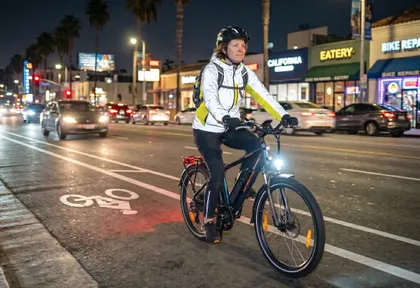
Crashes can happen when a driver does not see a rider or misjudges the rider’s speed. Lights, reflectors, and reflective clothing can help drivers, pedestrians, and other cyclists judge where the rider is going. That can be especially vital when road visibility is poor, such as at dawn or dusk, at night, and in poor weather.
E-bike riders should use:
- White front lights
- Red rear lights
- Reflectors
- Bright or reflective clothing
Aside from improving your safety, keeping yourself visible to motorists can help your claim. For example, it can prevent them from denying responsibility by saying that they didn’t see you.
Tip #4: Ride At A Safe Speed For The Conditions.
E-bikes can reach higher speeds than regular bicycles, but you should not use the highest assist level in every situation. At higher speeds, you need significantly more space to stop. Speeding also reduces reaction time for both riders and drivers. That matters near intersections, driveways, and parked cars. Instead, your speed should match the road, weather, traffic, and your experience as an e-bike rider.
Slow down near:
- School zones.
- Parks and playgrounds.
- Driveways.
- Crosswalks.
- Sidewalks and shared paths.
- Wet or sandy roads.
- Hills and curves.
- Crowded bike lanes.
Tip #5: Stay Cautious Around Cars, Intersections, And Parked Vehicles.
Some of the most dangerous e-bike crashes happen when drivers do not expect a bike to move quickly. That said, stay alert at intersections, around parked cars, and when turning, especially when vehicles are present. You can also avoid sudden, quick maneuvers so other motorists can more easily predict your movements and prevent crashes where possible.
Common e-bike crash risks include:
- Left Turns: A driver turning left may misjudge the e-bike’s speed.
- Right Hooks: A vehicle may pass and then turn right across the rider’s path.
- Dooring: A parked car door may open into the bike lane.
- Rear-End Impacts: A distracted driver may fail to stop in time.
- Driveway Exits: A reversing vehicle may not notice the rider.
When liability is unclear due to right-of-way disputes, some victims seek free advice from electric bike accident lawyers to understand their legal options.
Tip #6: Stay Focused.
Phones, food, loose bags, and headphones can reduce control and awareness. Under California law, e-bike riders are subject to the same rules of the road as other motorists. That means you could receive a ticket if distractions cause you to ride recklessly. Similar to helmet use, that could lead insurers to argue that you share fault for an e-bike crash.
To reduce distraction risks:
- Keep both hands on the handlebars.
- Avoid texting or scrolling while riding.
- If you use audio directions, keep the volume low so you can hear traffic.
- Secure bags, backpacks, and loose items.
- Avoid carrying passengers unless the bike is specifically designed for tandem riding.
Tip #7: Check Brakes, Tires, Battery, And Chain Before Riding.
A short pre-ride check can help you avoid accidents caused by brake failure, low tire pressure, or a loose wheel. Inspect your e-bike before use, especially if the bike was recently stored, rented, shared, or repaired.
Before riding, check:
- Brakes.
- Tire pressure.
- Chain or belt.
- Battery connection.
- Lights and reflectors.
- Throttle or pedal assist.
- Bell or horn.
- Seat and handlebar tightness
Stop riding and inspect the e-bike if the brakes feel weak, the throttle sticks, or the frame or wheels feel loose. A repair shop should inspect the bike before the next ride.
Tip #8: Charge And Store The Battery Safely.
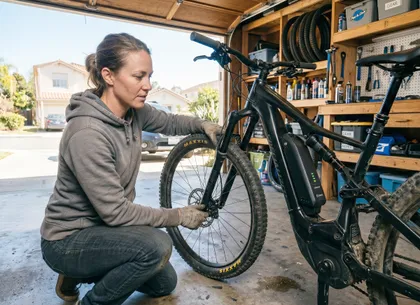
An e-bike’s lithium-ion batteries can overheat or ignite if they are damaged, incorrectly charged, or used with an incompatible charger. Ideally, stick to using e-bikes and battery packs certified to recognized safety standards such as UL 2849 (e-bike electrical systems) and UL 2271 (battery packs). Certification does not eliminate risk, but it can reduce it.
To reduce battery fire risks, this in-depth guide to electronic bikes offers the following recommendations:
- Use the charger that came with the e-bike.
- Do not charge while you are asleep or away from home.
- Do not use a swollen, leaking, hot, or damaged battery.
- Store the battery in a cool, dry place.
- Stop riding if the battery smells odd, smokes, or suddenly loses power.
If a battery fire or malfunction causes injury, save the e-bike, battery, charger, box, receipt, and manuals. An electric bike accident lawyer can use these pieces of evidence to determine whether you have a product liability claim. In these types of cases, an e-bike parts manufacturer could be liable for your injuries and losses if you can prove that a defective or unsafe product harmed you.
Tips For Parents: Teach Kids Where And How To Ride
Parents can set riding limits based on a child’s age, route, traffic exposure, and maturity. Then, they can provide clear riding rules. It can be risky to assume that a child who can ride a regular bike can safely handle a motor-assisted bike. Some riders need more practice before using an e-bike near cars, school traffic, hills, or busy intersections.
Teach young riders to:
- Wear a helmet every ride.
- Stop fully at stop signs and red lights.
- Ride in safe areas before entering traffic.
- Avoid sidewalks where local rules prohibit bicycles or e-bikes.
- Slow down around pedestrians.
- Avoid carrying passengers.
- Stay off their phones while riding.
- Tell an adult about any crash or near-miss.
What To Do After An E-Bike Accident
If you follow the above e-bike safety tips but still get into an accident, you may have legal options. In particular, you may have the right to file a personal injury claim if someone else’s negligence results in injuries and losses such as medical bills. Knowing what to do after a crash can help you support your potential claim.
In particular, you’ll want to:
-
Follow Your Doctor’s Treatment Plan: After getting immediate care for your injuries, attend follow-up appointments and follow your doctor’s advice until you recover. If you felt fine after the crash, still get medical attention.
That way, your doctor can spot hidden injuries that may have delayed symptoms. They can also create records that clearly link your injuries to the e-bike accident and justify the need for specific treatments, such as chiropractic care, to insurers.
- Gather Evidence of the Accident: Examples include photos of the scene, surveillance footage from nearby cameras, the other party’s insurance details, and witness contact information. Additionally, don’t throw away damaged e-bike parts or gear. They can serve as supporting evidence for your case.
- Communicate Carefully with Insurers: The other party’s insurance company may reach out early after an accident. When speaking with them, stick to the facts. Claims adjusters could use a simple “I’m sorry” or “I’m fine” to argue that you caused the crash or downplay your injuries, so be careful about what you say.
- Consult a Lawyer: An e-bike accident lawyer can review the available evidence of your accident to determine if you have a valid personal injury or product liability claim. If you have a case, they can also explain your next steps and guide you.
FAQs About E-Bike Safety
Below are answers to some common questions about e-bike safety and injury claims. It covers deadlines, helmet requirements, injuries, and other related concerns that injured victims often seek clarity about.
What Deadlines Apply After An E-Bike Accident In California?
Under California Code of Civil Procedure § 335.1, personal injury lawsuits must be filed within two years. However, certain exceptions apply. For example, if the victim is a minor, the two-year time limit will not start until they turn 18. Nevertheless, their parents or legal guardians can file a case on their behalf.
A much shorter government claim deadline applies if a dangerous public road, an unsafe public property condition, a public employee, a public vehicle, or a government agency contributed to the crash. If a public entity is responsible, you usually must present a government claim within six months of the injury.
Are Helmets Required For E-Bike Riders In California?
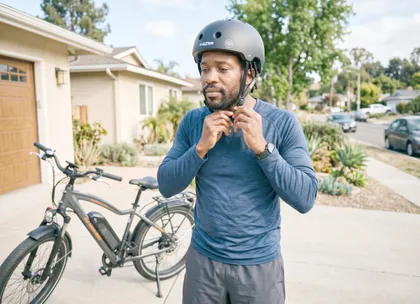
California requires riders under 18 to wear a helmet when riding an electric bicycle. Class 3 e-bike riders must wear a properly fitted helmet, regardless of age.
Even when a helmet is not required for a specific adult rider, wearing one is still a smart safety step. In a claim, the defense may argue comparative fault if a rider chose not to wear a helmet when one was required.
Can Kids Ride E-Bikes On Sidewalks In California?
Kids generally cannot ride e-bikes on California sidewalks. However, sidewalk rules vary by city. California lets cities and counties set rules for bicycle riding on sidewalks and in certain areas.
Parents should check local rules before letting a child ride on sidewalks, trails, boardwalks, parks, or school areas. Even where sidewalk riding is allowed, riders should slow down and yield to pedestrians.
What Injuries Are Common In E-Bike Crashes, And When Should I Go To The ER?
Injuries common in e-bike crashes include head trauma, facial or dental injuries, and deep lacerations or “road rash.” Fractures to arms, legs, ribs, and wrists are also common. E-bike crashes are 2.4 times more likely to result in serious injuries than traditional bike crashes because of the higher speeds.
Visit the ER if you experience any of the following:
- Loss of consciousness.
- Excessive bleeding.
- Suspicion of broken bones.
- Chest or abdominal pain.
- Deep lacerations.
How Much Do Lawyers Charge In California?
The cost of hiring an e-bike accident lawyer in California depends on the complexity of the case and the injury law firm’s fee structure. However, if you’re asking, “Do lawyers only get paid if they win?” a lot of them do. Many personal injury lawyers, such as those at Arash Law, work on a contingency fee basis. That means the attorney’s fee is paid out of the recovery if the case succeeds. Exact fee terms depend on the written agreement. Ask the lawyer to explain the contingency fee arrangement before signing.
Speak With A Lawyer After An E-Bike Accident In California
Safety steps can reduce risk, but they cannot prevent every crash. Negligent drivers, unsafe roads, defective batteries, poor maintenance, or careless businesses can still cause serious injuries. When faced with severe injuries and complex liability issues, it’s normal to think, “I need a personal injury lawyer.”
If an e-bike crash injured you or your child, our electric bike accident lawyers at AK Law can review the facts, explain potential next steps, and help you understand how California law applies. Call us at (888) 488-1391 for a free case review.