TL;DR: If you rear-end someone who didn’t use a turn signal, California law usually presumes you are at fault, but that presumption is not automatic. A lead driver’s failure to signal can contribute to the crash, shift comparative fault, and reduce liability depending on evidence, timing, traffic conditions, and each driver’s conduct.
Highlights:
- You are not automatically at fault if the lead driver didn’t have their turning signal on.
- Failure to signal can reduce the rear driver’s share of fault.
- California law requires signaling at least 100 feet before turns or lane changes.
- Comparative negligence divides fault based on each driver’s actions.
- Factors like speed, following distance, and distraction affect fault determination.
- Evidence, such as dashcam footage, can challenge the presumption of fault.
Tip: Gather evidence like witness statements and dashcam footage to strengthen your case.
Table of Contents
If you rear-end another driver in California, you are generally presumed to be at fault. Drivers should maintain a safe following distance and remain alert to changing traffic conditions. This presumption applies even when the driver ahead fails to use a turn signal.
That said, California law also requires drivers to signal before turning or changing lanes. When a lead driver does not signal, that failure can contribute to a crash and may reduce the rear driver’s share of fault. In many cases, responsibility is divided based on what each driver did or failed to do.
Am I Automatically At Fault If I Rear-End Someone Who Didn’t Signal?
No. You are not automatically at fault, but you are usually presumed to be at fault in a rear-end collision under California law. This presumption exists because drivers must maintain a safe following distance and stay prepared to stop.
However, that presumption is not absolute. If the driver ahead failed to use a required turn signal before turning or changing lanes, their conduct may have contributed to the crash. In those situations, the law may assign fault to both drivers.
A lead driver’s failure to signal can:
- Reduce the rear driver’s percentage of fault.
- Support a finding of shared responsibility.
- Influence how insurers and investigators evaluate liability.
Ultimately, fault depends on a review of all crash circumstances, including each driver’s conduct and the evidence.
California Rules For Signal Use
California law requires drivers to signal continuously for at least the last 100 feet before turning or changing lanes. This rule exists to give other drivers enough warning to react safely.
Drivers must use turn signals when:
- Changing lanes on multi-lane roads or highways.
- Making left or right turns.
- Merging into traffic.
- Exiting roundabouts.
- Entering or leaving parking spaces.
- Passing another vehicle and returning to your lane.
- Turning at intersections, even when there is no traffic signal.
Failing to signal in these situations may constitute a traffic violation.
How To Determine Fault When A Driver Fails To Signal
In rear-end crashes involving a missed turn signal, investigators and insurers look beyond the assumption that the rear driver is always responsible. They examine how each driver contributed to the collision.
Factors to consider include:
- Whether the lead driver signaled correctly.
- Whether the rear driver followed too closely.
- Speed and traffic conditions.
- Whether either driver was distracted.
- The timing of the lead driver’s turn or lane change.
These details often determine whether fault is shared.
How Comparative Fault Applies In Rear-End Accidents
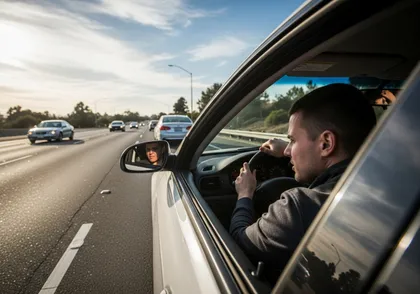
California uses a pure comparative negligence system. This rule assigns fault to each driver based on the extent to which their actions contributed to the crash. Under this system, each driver’s financial recovery is reduced by their percentage of fault.
For example, if your car repair and medical bills are $10,000, and you are 20% at fault for following too closely, you would receive $8,000.
Common rear-end scenarios where fault may be shared:
- The rear driver followed too closely or failed to brake in time.
- The lead driver made a sudden turn or lane change without signaling, regardless of whether the rear driver was maintaining a safe distance.
- The rear driver was tailgating or distracted while the lead driver stopped or turned abruptly.
Determining exactly how much fault you share can be complicated in these situations. Consider consulting a legal counsel to assess your case. They can investigate the crash and advocate for a fair assessment of fault on your behalf.
Proving Negligence In Rear-End Collisions
Failing to use a turn signal can be considered negligence because it violates a traffic law designed to prevent collisions. In these cases, this violation supports a finding of negligence per se.
However, a traffic violation alone does not automatically determine fault. Courts and insurers still evaluate:
- Whether the violation caused the crash.
- Whether the rear driver had time to react.
- Whether both drivers acted reasonably under the circumstances.
As a result, missed signals often reduce the fault rather than eliminate it.
To establish negligence, the lead driver (or their insurer) will try to show four key elements:
- Duty of Care — All drivers must operate their vehicles safely and follow traffic laws. Examples include maintaining a safe following distance and not using phones while driving.
- Breach of Duty — A breach occurs if you, as the rear driver, failed to act as a careful driver would. One major example is distracted driving, which is considered the most common cause of rear-end collisions.
- Causation — There must be a direct link between your actions and the accident. If your breach of duty led to the crash, this requirement is met.
- Damages — There must be actual harm, such as injuries or property damage, resulting from the accident.
If these elements are proven, you may be assigned more blame, even if the lead driver failed to signal.
Challenging The Presumption Of Fault In Rear-End Accidents
The presumption that the rear driver is usually at fault stems from the fact that rear-end collisions often occur when the vehicle in front is followed too closely. Statistics show that 77% of drivers intentionally tailgate other road users, resulting in a significant percentage of crashes being rear-end accidents. However, this assumption can be challenged when evidence shows the lead driver acted unsafely.
Examples that may support shared or reduced fault include:
- Sudden stopping without an apparent reason.
- Mechanical problems, like broken brake lights.
- Cutting into the lane and braking immediately.
- Created a sudden emergency with no time to react.
- Violated traffic laws that contributed to the crash.
To strengthen your case, gather evidence such as:
- Police report.
- Video footage or dashcam.
- Witness statements that verify your account.
- Expert report from an accident reconstructionist.
Challenging a presumption of fault can be difficult without legal guidance. That’s why many victims think, “I need a personal injury lawyer.” An attorney can evaluate the evidence and advocate for your best interests throughout the process.
Potential Consequences For Rear Drivers In Rear-End Crashes
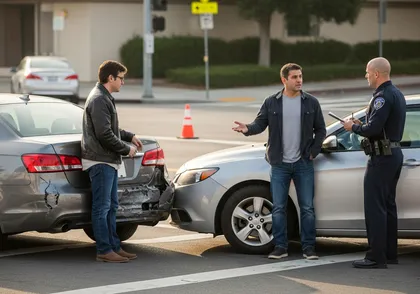
Rear-end collisions don’t just result in vehicle damage. They can bring a range of legal and financial consequences for the rear driver. Here’s what you may face, depending on the circumstances of the accident:
- Traffic Citations and Fines — The driver who rear-ends another vehicle is often cited for following too closely or unsafe speed. However, if another driver’s failure to signal contributed to the crash, they may also receive a citation.
- Points on Your Driving Record — A rear-end collision that results in a citation can add one point to your driving record. If the violation is more serious, such as reckless driving, two points may be added. Too many points in a short period can result in license suspension.
- Increased Insurance Premiums — Being found at fault in a rear-end accident may result in higher insurance premiums.
- Civil Liability — If you are found responsible for the crash, you may have to pay for the other party’s medical bills, property damage, and lost wages.
- Criminal Penalties (in Severe Cases) — If the crash involved reckless driving, DUI, or resulted in serious injury or death, criminal charges may follow. These can include hefty fines, probation, license suspension, or even jail time.
- Traffic School Requirements — Some drivers may be ordered to attend traffic school. This penalty can help keep points off their record and may be part of the consequences for certain violations.
Steps To Take After A Rear-End Accident
After a rear-end accident, specific steps can help protect your health and your legal rights. These actions may preserve evidence, support any insurance claim, and clarify fault.
- Seek Medical Care as Soon as Possible — If you have not already seen a doctor, schedule an evaluation promptly. Some injuries, including whiplash and concussions, may not appear right away. Medical records created after the crash can still play an important role in documenting injuries.
- Confirm the Accident Was Reported to Law Enforcement — If the crash involved injuries or death, California law requires a police report. If officers did not respond at the scene, you may still be able to file a report afterward. Police documentation can provide an objective record of what occurred.
- Preserve Available Evidence — Even after leaving the scene, you can still gather useful evidence. This may include photos taken at the time of the crash, dashcam footage, images of vehicle damage, medical records, and contact information for any witnesses.
- Notify Your Insurance Provider — Report the accident to your insurer if you have not already done so. Provide accurate information and supporting documentation, but avoid speculating about fault. Review your policy to understand whether the claim is being handled through your coverage or the other driver’s insurance.
- Consult an Attorney — Rear-end accident lawyers can help protect your interests and explore your options for compensation. Consider hiring one if you are facing any of the following issues:
- Disputed fault or liability.
- Serious or long-term injuries.
- Claim denial or low settlement offers.
- Multiple vehicles or shared fault.
- Uninsured or underinsured drivers.
- Complicated insurance or legal issues.
You may be worried about the costs and wondering, “Do lawyers only get paid if they win?” Arash Law lawyers work on a contingency fee basis, so you only pay attorney’s fees if compensation is obtained. In other words, no win, no fee!
Frequently Asked Questions (FAQs) About Rear-End Collisions
Many law firms offer free accident lawyer advice to help victims understand their options after an accident. One important area to know about is how fault is determined in a rear-end crash, especially when the lead driver fails to use a turn signal. Below are answers to common questions on this topic.
What If The Other Driver Claims They Used Their Turn Signal?
If the other driver claims they used their turn signal, you’ll need clear evidence to challenge their statement. Eyewitnesses, such as other drivers or pedestrians, can confirm whether a signal was actually used. Traffic or security camera footage from the area may also show what really happened. These types of evidence are often crucial for proving whether a turn signal was used.
Can I Be At Fault Even If The Lead Driver Didn’t Signal?
Yes, you can still be found at fault even if the lead driver didn’t use their turn signal. Fault may be shared if you:
- Followed too closely.
- Drove too fast for the conditions.
- Were distracted (such as texting or talking on the phone).
Drivers must maintain adequate spacing and stay alert. If both drivers contributed to the collision, investigators may assign shared fault.
Does Insurance Automatically Blame The Rear Driver?

Insurance companies may start by blaming the rear driver in a rear-end crash. However, you can challenge this by showing evidence that the front driver was at fault. You may be able to dispute fault if you can prove that the lead vehicle:
- Stopped suddenly without reason.
- Had broken or malfunctioning brake lights.
- Was illegally parked or stopped.
Consider consulting a lawyer to help investigate the crash and collect evidence. They can build a legal strategy to justify your position and address questions of fault.
What If Both Drivers Were Partially Responsible?
If both drivers share blame for the crash, California’s pure comparative fault law applies. Your percentage of fault will reduce any compensation you receive. For example, if you’re 30% at fault, you can only recover 70% of your damages.
Who Is At Fault If A Car Signals But Doesn’t Turn?
If the lead driver uses a turn signal but then doesn’t turn, and you hit them from behind, fault may be shared. The rear driver is usually blamed in rear-end crashes. However, the front driver’s failure to follow through with their signal can make them partly responsible. In these situations, the insurers and the court consider both drivers’ actions when deciding fault.
What Qualifies As An At-Fault Accident?
An at-fault accident in California is one where a driver fails to meet their duty of care and causes a crash. Duty of care means every driver must follow traffic laws and drive safely to avoid harming others. If a driver’s actions or mistakes lead to an accident, they are considered at fault and are responsible for resulting injuries or property damage.
Common reasons courts find a driver is at fault include:
- Following too closely.
- Driving under the influence.
- Speeding or violating traffic laws.
- Distracted driving (texting, eating, or using a phone).
- Ignoring traffic signals, stop signs, or yield signs.
What Types Of Compensation Can I Recover After A Rear-End Accident?
Depending on your case and available evidence, you may be able to recover damages for:
- Medical expenses.
- Treatment costs for chiropractic care and physical therapy.
- Lost wages.
- Vehicle repairs or replacement.
- Pain and suffering.
- Other out-of-pocket expenses related to the crash.
The compensation you may receive can depend on factors such as the severity of your injuries, the clarity of fault, and the available insurance coverage.
Involved In A Rear-End Accident? Seek Legal Help To Protect Your Rights
Determining fault in a rear-end accident is not always straightforward. While the rear driver is generally presumed responsible for following too closely, the lead driver may also share fault. A careful investigation is often needed to understand precisely what happened.
For minor property damage and no injuries, you can handle the insurance claim on your own. However, if there are serious injuries, significant losses, or disputes about fault, consulting a lawyer can provide guidance.
AK Law’s experienced car accident lawyers can help protect your interests throughout the process. We can assess your case, explore your legal options, and gather key evidence. We work to protect your right to a fair determination of fault so you can pursue the compensation you deserve under the law. Call (888) 488-1391 to get a free initial consultation.