TL;DR: If someone gets rear-ended into you, the driver who caused the first impact is usually liable for the chain-reaction crash and resulting injuries. Middle drivers may share fault if they follow too closely, which can reduce the amount you recover for ER visits, vehicle repairs, and lost wages.
Highlights:
- Get checked by a doctor promptly to document whiplash or delayed symptoms.
- Move to safety, then photograph every involved vehicle and damage from multiple angles.
- Report injury or fatal crashes to the police or CHP within 24 hours.
- Submit an SR-1 to the DMV within 10 days if the crash caused injury, death, or $1,000+ in property damage.
- Secure dashcam, traffic, and nearby business video before recordings get overwritten.
- Request event data recorder (black box) data to confirm braking, speed, and impact sequence.
- Notify your insurer early and keep a log of symptoms, bills, repairs, and missed work.
Tip: When speaking with insurers or police, stick to confirmed facts and save copies of everything you submit or receive.
Table of Contents
When someone rear-ends a car and pushes it into yours, the driver who caused the first crash is typically held responsible. Fault can spread, though. Each driver in the chain may bear some of the blame. These crashes can be disorienting: one moment, traffic is moving, and the next, you find yourself caught between two impacts you never caused.
These pileups unfold in seconds. However, sorting out who owes what takes time. A driver in the middle of the chain can be both a victim and partly at fault for the crash ahead. That position makes assigning blame harder than it first appears.
Understanding Chain-Reaction Rear-End Collisions In California
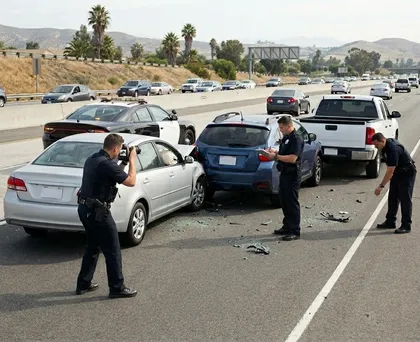
In a chain-reaction crash, three or more vehicles collide in one connected sequence. Each impact may involve a different driver and a different level of fault. That layered structure makes these crashes much harder to sort out than a simple two-car collision.
The pattern is usually the same: Car A rear-ends Car B. That force pushes Car B into Car C. In heavy freeway traffic, Car D and Car E may follow each other before everything stops. The crash grows with every vehicle added to the chain, and so does the challenge of figuring out what happened.
Car B sits in a unique position in this type of crash. The passengers inside Car B are victims. However, the driver may also be at fault for the crash with Car C. Whether Driver B bears any responsibility for the second impact depends on factors such as its speed and following distance before the crash.
What Is A Rear-End Accident?
A rear-end accident happens when one vehicle hits the back of another. These crashes can involve two cars or escalate into chain reactions and large pileups with many vehicles. Chain reactions occur when one driver brakes suddenly, and the cars behind them cannot stop in time.
What To Do If You Are The Middle Vehicle In A Pileup
What you do in the hours and days after the crash shapes your entire claim. Deadlines are strict, evidence fades fast, and injuries that feel mild at the scene can worsen. Getting medical care, reporting the crash, and gathering evidence gives you a better chance of proving what happened and recovering fair compensation. Consider these steps:
- See a Doctor Right Away: Adrenaline can hide injuries like whiplash for hours after the crash. Getting checked out right away can help document your injuries in a medical record. That may help connect your injuries to the crash.
- Document the Scene: If you are in the middle of a chain-reaction collision, prioritize safety first by moving out of active traffic if possible. Once safe, document all vehicles involved, not just the ones directly in front of or behind you. That matters since multiple impacts may have contributed to the collision.
- Report the Crash to Police Within 24 Hours: The California Vehicle Code (CVC) requires drivers to report any crash with injuries or fatalities to the California Highway Patrol or local police within 24 hours. Not reporting puts you at a disadvantage if the other driver disputes fault.
- File an SR-1 Form With the DMV Within 10 Days: California also requires you to file an SR-1 form with the Department of Motor Vehicles (DMV) within 10 days if the crash caused injury, death, or more than $1,000 in property damage. Failing to file on time may affect your license status.
- Request EDR Data Quickly: Most vehicles have an Event Data Recorder (EDR), often called a black box, that captures your speed, braking, throttle use, and the sequence of impacts in the seconds before the crash. In a disputed pileup, EDR data provides a more objective account than any eyewitness can.
- Get Camera Footage Before It Is Erased: Dashcam video, traffic camera footage, and business security recordings can all be overwritten within days. It’s understandable to think, “I need a personal injury lawyer,” in these situations. An attorney can send preservation letters to secure this footage before it disappears.
Insurers in chain-reaction cases move quickly to gather their own data. If you do the same, that can put you in a better position to counter their investigation with your own evidence. If you wait too long, the evidence you need may already be gone, and with it, your best chance at fair compensation.
Who Is Liable When A Car Gets Pushed Into Yours?
Under California law, the trailing driver is most often at fault in a rear-end collision. When these crashes involve chain reactions, the trailing driver is the driver who rear-ended the car behind you, pushing it into your vehicle. However, the middle car may also share fault, depending on how close it was to your car before the crash.
The CVC requires drivers to maintain a safe following distance between vehicles. They must keep a “reasonable and prudent” distance for the speed and road conditions. A driver who rear-ends another vehicle can be presumed to have broken this rule.
To hold any driver liable, you must establish four elements of negligence:
- Duty of Care: Every driver owes a legal duty to others to drive safely and follow traffic laws.
- Breach of Duty: The driver breached that duty, for example, by following too closely or failing to brake in time.
- Causation: That breach directly caused the crash and your injuries.
- Damages: You suffered real losses, such as medical bills, vehicle damage, or lost wages.
The middle driver is not automatically free from liability. If evidence shows they were following too closely before impact, they may be found partially liable even though another car pushed them forward. A driver who leaves enough room to stop without hitting you is generally not at fault. One who did not may carry part of the legal responsibility under California’s fault-sharing rules.
That presumption is the starting point, not the final answer. California law has specific exceptions that can change the outcome. Rear-end accident lawyers consider all available evidence to determine liability in these complex cases. Examples include traffic camera footage, black box data, dashcam videos, and witness statements.
Exceptions That Shift Liability In A Chain Reaction Crash
California law has specific exceptions that can shift blame away from the rear driver. If another driver stopped for no reason, had broken brake lights, or reversed into traffic, they may share fault. Insurers often raise these issues to reduce how much they owe:
- Sudden Stop Without Justification: If you were driving the car in front and stopped for no good reason, you may be found at fault. Stopping on a highway with no obstacle ahead, or for a hazard you could have avoided, can count as an unreasonable stop.
- Brake Light Malfunction: If a vehicle’s brake lights are broken, the driver behind receives no warning that the car ahead is slowing. This failure can create shared liability, meaning legal responsibility for the crash, for the front driver.
- Reversing Into Traffic: If you, the driver in front, caused the chain reaction because you reversed into traffic, you are typically liable (legally at fault). The law requires drivers to confirm that the path is clear before backing up.
Compensation And California’s Shared Fault Laws
Victims may file chain-reaction rear-end collision claims against multiple insurance policies due to the number of drivers involved. For example, a vehicle may rear-end you, then push you into another car, or the chain reaction may end with your vehicle being the final point of impact. California law applies different rules to determine liability, depending on how the collision occurred.
Key rules that may apply include:
- Comparative Negligence: California law assigns each driver a percentage of fault and uses that allocation to determine each insurer’s liability. Under pure comparative negligence, a court can adjust a victim’s recovery based on the assigned percentage of responsibility. For example, if a driver is assigned 20% of the fault, a judge can reduce their total recovery by that same percentage.
- Limitations for Uninsured Drivers: The law prohibits uninsured drivers from recovering non-economic damages, such as pain and suffering. However, they may still recover economic losses such as medical expenses and lost income.
In multi-defendant pileups, these rules can overlap. Small differences in fault allocation can significantly affect how compensation gets distributed. Generally, victims may pursue the following:
- Economic Damages: Medical bills, lost wages, and other financial losses. If you need treatments such as physical therapy, chiropractic care, or prescription medication, you can also include the costs of these services in the claim.
- Non-Economic Damages: These are intangible losses victims may suffer. These can include emotional distress, trauma, and pain and suffering.
In a disputed multi-defendant pileup, different rules can apply at once and affect your recovery in different ways. A small shift in fault percentages can change what you collect under each law. As these cases can be complex, some seek free advice from a rear-end accident lawyer to understand their legal options and how the circumstances may affect their potential compensation.
Frequently Asked Questions About Chain-Reaction Rear-End Crash Cases
A multi-car chain reaction crash raises questions that a single-car crash never does. Getting clear answers can help you make informed legal decisions.
Whose Insurance Do You Call If Someone Gets Rear-Ended And Pushed Into You?
Call the at-fault driver’s insurance to file your primary claim. Report the crash to your own insurer right away, too. Most policies require timely notice, and your own uninsured motorist (UM) or collision coverage may also apply. Having your insurer in the loop protects your options from the start.
What Happens If The Driver Who Caused The Pileup Doesn’t Have Insurance?
If the driver who started the crash had no insurance, you can file a claim under your own UM coverage. California law requires insurers to offer UM coverage, but you can waive it in writing. If it’s in your policy, it covers multi-car crashes the same way it covers any other collision. UM coverage can pay for your medical bills and other damages.
Can More Than One Driver Be Responsible For A Chain Reaction Crash?
Yes. California divides fault among multiple drivers based on each person’s actions before and during the crash. One driver may have started the collision, while another may have been following too closely and made it worse. Each driver is assigned a percentage of fault, and each of their insurers may share in the payment of your damages. If you’re found partially liable, your percentage of responsibility will reduce the amount you may recover.
What If The Driver Who Was Rear-Ended Was In A Borrowed Car?
In California, insurance follows the vehicle, not the driver. If the driver had the owner’s permission, the owner’s auto policy is the primary coverage for injuries and damages. If damages exceed the owner’s policy limits, the driver’s own insurance may cover the remainder, depending on that policy.
How Long Do I Have To File A Rear-End Collision Claim In California?
You generally have two years from the crash date to file a personal injury claim, and three years for property damage only. Exceptions may apply in limited scenarios. If a government entity is involved, such as a government vehicle or a road defect on a public road, you must file an administrative claim within 6 months. Missing either deadline can forfeit your right to compensation.
Do Lawyers Only Get Paid If They Win?
In personal injury cases, yes. Most personal injury attorneys in California typically work on a contingency fee basis. They only collect attorney’s fees if they win a settlement or verdict for you. If your case does not result in a recovery, you owe no attorney’s fees.
Call Arash Law For Legal Support After A Rear-End Collision In California
A chain reaction crash often involves multiple insurance companies. Each involved party has its own interests. Sorting out who owes what can get complicated fast. Our rear-end accident lawyers at AK Law can help you manage the complexities of your case. Call (888) 488-1391 to schedule a free initial consultation.