TL;DR: A traffic collision report is an official account of a crash used to evaluate liability and insurance responsibility. It protects drivers, passengers, and pedestrians by preserving officer observations, witness statements, and citations, which become critical when injuries appear later or when fault is disputed after reporting deadlines have passed.
Highlights:
- Obtain a traffic collision report from the police to document the accident.
- Ensure your injury or property damage is documented in the report.
- Gather witness statements and provide accurate details to officers at the scene.
- File an SR-1 form with the DMV within 10 days for accidents with injuries or damage.
- Use the report to support your insurance claim and injury case.
- Request a correction if there are factual errors, but not for officer conclusions.
Tip: Stick to the facts when talking to authorities and avoid making assumptions about fault.
Table of Contents
A traffic collision report is an official record of a crash. You can get a copy from the police to document what happened for insurance purposes. Doing so can also support an injury claim, especially when someone disputes fault. These reports usually detail the following:
- The names and contact information of all parties involved.
- Date and location of the incident.
- Property damage caused by the accident.
- Statements from bystanders who were present at the scene.
- Visual documentation of the vehicle’s position, skid marks, and other relevant physical evidence.
- The officer’s conclusions on what caused the crash and how it occurred.
Due to its contents, the traffic collision report helps insurers assess liability, coverage, and losses incurred. It can also be beneficial to obtain your own copy for several reasons. To begin with, it provides evidence of how an accident actually occurred. You will have proof if anyone questions responsibility for the crash or makes false claims about what happened.
What Is In A Traffic Collision Report?
A traffic collision report provides a detailed account of the incident. Its credibility is higher because it is written by an objective third party. In California, traffic collision reports may come from the California Highway Patrol (CHP) or the local police or sheriff’s department. Though the names of these documents vary by agency, they generally include the following details:
- Accident Date — This information can indicate whether the reported injuries align with the incident timeline.
- Parties Involved — Officers usually gather names, addresses, and contact information.
- Eyewitness Statements — These can provide more unbiased details about the accident from an outside perspective. Responders may also get the contact information of these witnesses.
- Injury Details — The report documents the nature and extent of visible injuries. Some symptoms may not be fully apparent at the scene. Only healthcare professionals at a medical facility can conduct a complete and accurate medical evaluation.
- Property Damage Details — The responding officer will document the visible extent of damage to the vehicles. The collision report may also include any other affected property.
- Occupant Information — The report may include the parties’ seating positions at the time of the accident. These details can answer some relevant questions, such as:
- Who was driving?
- Who are the passengers?
- Were the occupants restrained when the collision occurred?
- Tickets or Citations Issued — These may include speeding or red-light tickets. Proof of traffic violations can affect the handling of insurance claims and may help determine possible fault.
- Fault Evaluation — Based on the scene and available details, the officer may form an initial assessment of what happened. Though their conclusions can be essential for accident claims, they are not final. Additional evidence or further investigation may change them, especially if all the information was not available at the scene.

Why Should You Obtain A Traffic Collision Report?
It is crucial to have an official report of a traffic incident because it can:
- Support Injury Claims — Traffic collision reports often include relevant details that can strengthen a case. For example, back pain or whiplash may not appear until days or weeks after a collision. Without a police report, it may be harder to prove that the accident’s impact caused these injuries.
- Help Minimize Disputes — Law enforcement officers often receive specialized training to conduct objective assessments of accident scenes. As a result, their accounts of what happened are usually unbiased compared to the statements of drivers involved in a crash. If the other party challenges your account of events, the impartiality of the police report might shed light on what transpired. Still, it is possible to challenge specific accident details during further investigations.
- Assist in Determining Fault — Traffic collision reports do not definitively assign fault. However, they can provide valuable information that can help insurers or courts determine who may be responsible.
Traffic accident lawyers can use these reports when building a case for their clients. The details can also help them follow up with potential eyewitnesses. Evidence recorded in the report may further assist in determining against whom the victim can file their claim.
Incidents Where A Traffic Collision Report Is Important
Generally, you’re not required to have a traffic collision report when filing a first-party insurance claim. However, getting one can be especially critical in certain situations, such as:
- Injury-Related Accidents — A collision report helps prove that the accident caused the injury.
- Hit-and-Run Accidents — Having an official record helps when the other driver leaves the scene without providing their information. The report helps law enforcement investigate the incident. It is also essential for insurance claims, especially if you need to use your own uninsured motorist coverage.
- Multi-Vehicle Collisions — Accidents involving multiple vehicles can complicate fault assignment. A police report records what witnesses say and sets a timeline of events. These details can help address liability disputes.
In these situations, it is valid to think, “I need a personal injury lawyer to handle my case.” An attorney can obtain the collision report on your behalf. They can then use it to assist with these or other related challenges when seeking compensation.
How To Obtain A Traffic Collision Report
In California, the CHP, local police, or sheriff’s department may respond to traffic accidents, depending on the location. Here’s how you can request a copy of the report from the responding agency.
- For the CHP:
-
Complete the CHP 190 (Collision Request Form) — This form requires information such as the time, place, and type of vehicle involved. You can download it from the CHP website.
Note that these reports are provided exclusively to parties of interest. Eligible recipients involved in the accident can include:
- Drivers
- Passengers
- Property owners
-
Submit the Form and Pay a Nominal Fee — Send the completed form and documents that support your identity. Verify that you are a Party of Interest. Include a photocopy of your driver’s license or photo ID with your request. If you cannot provide these forms of identification, your CHP 190 form must be notarized. Once the CHP receives your payment and confirms your eligibility, it will mail you a copy of the report.
According to the CHP website, your insurer can get a copy of the collision report on your behalf. Other parties that can do this include, but are not limited to:
- Insurance companies
- Accident attorneys
- Coroner
- Caltrans
- Parents or legal guardians of minors involved
-
- For Other Local Authorities:
- Get the Department’s Contact Information — If responders are at the scene, note the department name and the responders’ names. Ask for the case number for your accident, if available.
- Request the Report — To request a traffic collision report, you can:
- Visit the agency’s website.
- Go to their office in person.
- Submit a request form by mail.
For example, in Los Angeles, you must complete a Traffic Collision Report Request Form or provide all the information requested on the form. You then submit the request by mail, along with a check for the applicable fee. Note that reporting procedures can vary by city or county.
If you’d like more clarification on these processes, this guide provides a more detailed breakdown of how to obtain traffic accident reports in California, including timelines, fees, and eligibility rules. You can also ask a lawyer to obtain these reports on your behalf.
How To Make Sure That There Is An Official Report Of The Collision
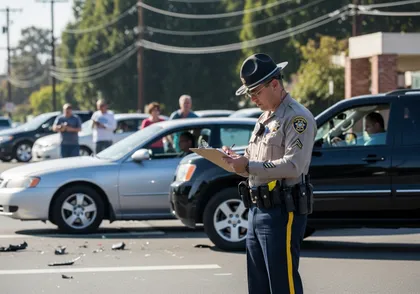
In some traffic accidents, you may have to contact the authorities before they create an official report directly. Here are some ways to make sure your accident gets documented:
- Contact the Authorities — Report the incident as soon as possible. Even if the accident seems minor, request that officers come to the scene to investigate, take photos, and write a traffic collision report. Remember to:
- Provide Accurate Information — When speaking with the authorities, give a clear and honest account of what happened. Be specific about the location, what occurred before the accident, and whether there were any injuries or property damage. Avoid speculation or assigning blame.
- Collect Evidence — While officers are assessing the accident scene, gather your own evidence. Take photos of the road conditions, vehicle damage, and visible injuries.
- File a Report After the Incident — You can file a police report after the accident if officers did not respond to the scene or you decide to notify them of the crash later on. For example, some California agencies offer online reporting for certain non-injury collisions. Check the responding agency’s website for eligibility. Additionally, you can visit the police station to report the crash in person. You may also need to report the accident to the California DMV by completing the SR-1 form. This process is legally required if the incident caused injuries, fatalities, or property damage over $1,000. You have 10 days to do this, even if a police report is already filed.
Frequently Asked Questions About Traffic Collisions
Below are some of the common concerns of victims after traffic collisions. Nevertheless, if you have any specific questions about your case, consider consulting a collision lawyer.
Why Is Filing A Prompt Car Accident Claim Important?
Filing a claim promptly is crucial due to legal deadlines. Doing so can also establish a clear timeline of events that support your case. Submitting your claim early can show that:
- The evidence you provide is fresh and credible.
- The injuries or losses you incurred are directly related to the accident.
- You meet the applicable deadlines, whether set by your insurance policy or the court.
Prompt filing also allows insurers to validate your claim early on, while the evidence is still reliable. Once verified, you may recover costs related to the accident. These can include medical bills for hospital stays, physical therapy, chiropractic care, surgery, or other treatments recommended by a physician.
Why Gather And Record Related Evidence?
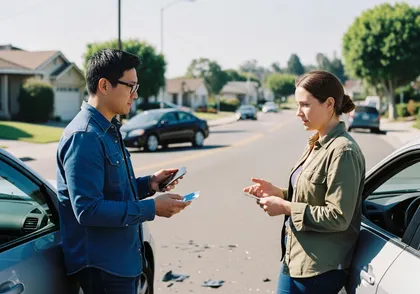
Collecting evidence after a collision can help support your claim. With the right proof, you can more clearly establish who may be responsible for the accident and the losses you suffered as a result. More importantly, evidence can provide details that aren’t usually included in accident reports, such as your full medical diagnosis or a complete breakdown of the damage your vehicle sustained.
For this reason, consider doing the following after a crash:
- Take photos of the accident scene, including traffic lights, vehicles, and any injuries.
- Get contact information for any eyewitnesses.
- Write down the insurance and driver’s license details of all drivers involved.
The evidence you provide can also assist authorities responding to the scene. Officers can include these details in their official report.
What Happens If You Don’t File A Police Report?
Failing to report accidents to the proper authorities can result in specific consequences. These may include the following:
- Depending on your policy terms, your insurance company may deny your claim if you don’t provide a police report. Ask your insurer what documentation they require and clarify whether that includes a police report.
- Without this document, disputes over who is at fault can also arise, making the claims process more challenging. It could also weaken your case when filing lawsuits against other drivers.
- There can be penalties or fines, depending on the circumstances of the accident. As mentioned, California law requires certain accidents to be reported.
Still, if you’re wondering what happens in a car accident with no police report, know that you still have options. Other pieces of evidence, such as traffic surveillance footage, eyewitness accounts, and other records, can still support a claim.
Can I Get The Police Report Changed?
You can request changes to certain factual information in a police report, such as names, addresses, license plates, or the make and model of a vehicle. However, an officer’s assessment or conclusions about the case cannot be changed. If new evidence affects these assessments, a supplemental report can be added, but the original report itself will not be completely rewritten. Consider contacting the relevant department, as correction procedures may vary.
Consider Legal Representation After A Traffic Collision
Being involved in a traffic accident can be overwhelming. Victims may need to recover from injuries while also facing potential expenses. A traffic collision report can help support a valid claim. However, if you feel overwhelmed by the process of getting one from the police, Arash Law can help.
Our team of collision lawyers can obtain this critical document, use it to build your case, and file a claim on your behalf. We can also estimate the amount you could pursue and negotiate a settlement with insurers.
If your concern is, “Do lawyers only get paid if they win?” our lawyers work on a contingency fee basis. Basically, this is a “no-win, no-fee” arrangement. Attorneys only charge for their services if they get compensation on your behalf. They also offer a free initial consultation to discuss your options.
To learn more about how Arash Law can help, call (888) 488-1391.