TL;DR: The right doctor after a car accident depends on your symptoms and injury severity. Go to the ER for severe symptoms, urgent care for non-life-threatening pain, or a primary doctor for follow-up, because hidden injuries can worsen, and early records help injured drivers and passengers prove the crash caused their condition.
Highlights:
- Track symptoms daily, including pain, dizziness, numbness, and sleep changes.
- Tell the doctor exactly when symptoms started and how they progressed.
- Get referrals for imaging or specialists if symptoms persist or worsen.
- Follow the treatment plan and attend every follow-up appointment.
- Save all records: discharge notes, test results, prescriptions, and bills.
- Take dated photos of visible injuries and vehicle damage when it is safe to do so.
- In California, note 2 years to sue, 6 months for government claims.
Tip: When speaking with insurers, stick to observable facts, avoid guessing, and keep copies of every message and document.
Table of Contents
The right doctor depends on your symptoms and the severity of your injuries.
If you have severe bleeding, trouble breathing, chest pain, loss of consciousness, serious head trauma, signs of internal bleeding, or possible broken bones, go to the emergency room or call 911. Emergency room doctors treat life-threatening injuries and order immediate tests.
If your symptoms seem less severe, urgent care may help with mild concussions, sprains, strains, minor fractures, cuts, soreness, or pain that still needs prompt attention. A primary care doctor can also examine you, track new symptoms, order tests, prescribe medicine, and refer you to specialists.
You may also need follow-up care from a specialist, such as:
- An orthopedic doctor for bone, joint, tendon, or ligament injuries.
- A neurologist for headaches, dizziness, numbness, confusion, or possible brain injuries.
- A pain management doctor for pain that does not improve.
- A physical therapist for strength, movement, and recovery.
- A chiropractor for certain neck, back, or soft-tissue complaints when appropriate.
The main goal is to get checked quickly by the provider who best fits your symptoms.
Why Should You See A Doctor Quickly After A Crash?
You should see a doctor quickly because some injuries do not show up right away.
After a crash, your body may release adrenaline. That stress response can hide pain and make you think you are fine when you are not. Hours later, you may notice headaches, neck pain, stiffness, back pain, dizziness, nausea, fatigue, tingling, abdominal pain, or trouble concentrating.
Prompt medical care does two important things. First, it protects your health. Second, it creates a clear record of when your symptoms started and what treatment you needed. Insurance companies often look closely at treatment delays and may argue that something else caused your injuries if you wait too long.
That is why many injured people seek care within 24 to 72 hours, even if they did not go to the ER at the scene.
What Injuries Can Go Unnoticed Without A Medical Evaluation?
Some crash injuries do not show up right away. A doctor can check for hidden injuries and decide whether you need follow-up care from a specialist.
Common injuries that may not show symptoms right away include:
- Concussions and Other Traumatic Brain Injuries: These injuries can cause headaches, dizziness, confusion, memory problems, light sensitivity, and fatigue.
- Whiplash: This injury often causes neck pain, stiffness, shoulder pain, headaches, and limited range of motion.
- Soft-Tissue Injuries: Sprains, strains, and deep bruising may worsen over time, leading to swelling, pain, and reduced motion.
- Back and Spine Injuries: Herniated discs, nerve compression, and other spine injuries can cause back pain, numbness, tingling, weakness, or trouble standing.
- Internal Injuries: Internal bleeding or organ damage may not cause obvious symptoms right away, but they can become dangerous very quickly.
- Emotional Trauma: Anxiety, sleep problems, and post-traumatic stress symptoms may appear after the crash and affect daily life.
A crash can also worsen an old injury. That is one more reason to get checked quickly and follow up if symptoms appear later.
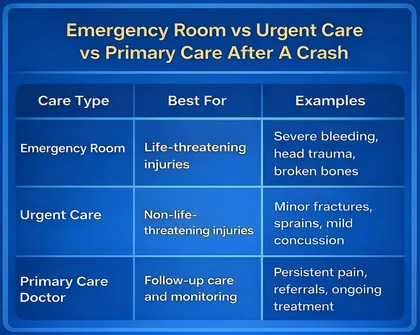
Should You Go To The Emergency Room, Urgent Care, Or Your Primary Care Doctor?
The right place depends on your symptoms. The type of doctor you see can also affect a personal injury claim because each provider documents your injuries differently. Emergency room records may show the immediate seriousness of the injury. Urgent care and primary care records may help show how symptoms developed, whether you needed follow-up care, and how long the injury affected your daily life.
Go to the emergency room if you have signs of a serious injury, such as:
- Severe bleeding
- Chest pain
- Trouble breathing
- Loss of consciousness
- Severe head pain after head trauma
- Seizures
- Repeated vomiting
- Severe abdominal pain
- Possible spinal injury
- Broken bones with visible deformity
- Severe confusion
Go to urgent care if you have symptoms that need prompt treatment but do not appear life-threatening, such as:
- Mild to moderate pain
- Minor cuts
- Sprains or strains
- Mild concussion symptoms
- Soreness that gets worse
- Minor fractures
See a primary care doctor for follow-up care, especially when:
- Your symptoms seem mild at first.
- You need monitoring over time.
- You need imaging or referrals.
- You want one doctor to manage your care.
What Specialists Might You Need After A Car Accident?
Some people need more than one doctor after a crash. The right specialist depends on your symptoms, the severity of the injury, and whether you need follow-up care after the ER, urgent care, or your primary care doctor.
Orthopedic Doctors
An orthopedic doctor treats injuries to the bones, joints, ligaments, tendons, and muscles. After a car accident, this doctor may treat:
- Broken bones
- Joint injuries
- Torn ligaments
- Shoulder, knee, or hip injuries
- Back or neck injuries involving the musculoskeletal system
An orthopedic doctor may order X-rays, MRIs, or other imaging. They may also recommend a brace, physical therapy, injections, or surgery, depending on the injury.
In a personal injury claim, orthopedic records can help show the exact diagnosis, the severity of the injury, the treatment you need, and whether you may have lasting limitations. These records also help explain missed work, movement problems, and future care needs.
Neurologists
A neurologist treats injuries involving the brain, spinal cord, and nerves. After a crash, you may need a neurologist if you have:
- Headaches
- Dizziness
- Numbness or tingling
- Confusion
- Memory problems
- Vision changes
- Signs of a concussion or traumatic brain injury
A neurologist may perform exams, review scans, order additional tests, and diagnose brain injuries or nerve damage that may not always show up right away.
In a personal injury claim, neurological records can help connect the crash to symptoms such as headaches, nerve pain, cognitive problems, and other brain or nerve issues. These records also help show why the injury affects your daily life, work, sleep, or ability to focus.
Physical Therapists
A physical therapist helps you regain movement, strength, balance, and flexibility after an injury. Physical therapy often helps people recover from:
- Whiplash
- Back injuries
- Joint injuries
- Soft-tissue injuries
- Muscle weakness or stiffness after a crash
A physical therapist may guide you through stretches, strength work, mobility training, and other exercises that support recovery.
In a personal injury claim, physical therapy records can show that your pain and limitations continued after the first doctor visit. They may also document problems with walking, bending, lifting, turning your neck, or doing normal daily tasks. That can help show how the injury affected your life over time.
Chiropractors
A chiropractor may treat certain neck, back, or soft-tissue complaints after a car accident. This type of provider often helps patients with:
- Neck pain
- Back pain
- Stiffness
- Limited range of motion
- Whiplash-related symptoms
A chiropractor may provide hands-on treatment, guided exercises, and other non-surgical care as part of a broader recovery plan.
In a personal injury claim, chiropractic records may help document ongoing pain, reduced range of motion, and the need for continued care. These records can support the timeline of your symptoms, especially when pain gets worse after the crash instead of improving right away. Chiropractic care does not replace emergency care or specialist care when those are needed, but it may be one part of your treatment.

Pain Management Doctors
A pain management doctor treats pain that lasts for weeks or months after a crash. You may need this type of doctor if standard treatment does not fully relieve your symptoms. Pain management doctors often help with:
- Chronic neck or back pain.
- Nerve pain.
- Ongoing joint pain.
- Pain that interferes with sleep, work, or daily life.
They may recommend medication, injections, nerve blocks, or other treatments to help control pain and improve function.
In a personal injury claim, pain management records can help show that the injury caused more than short-term discomfort. They may support claims involving ongoing pain, long recovery periods, repeated treatment, and lasting effects on daily life.
The right doctor depends on the injury. Some people only need one provider. Others need a team of doctors during recovery. Together, these medical records can help show what injuries the crash caused, what treatment you needed, how long recovery took, and whether you may need future care.
How Does Medical Documentation Affect A California Injury Claim?
Medical documentation can strongly affect a personal injury claim.
The California Civil Code generally allows an injured person to seek damages caused by another party’s negligence. In a car accident case, that may include medical expenses, lost income, and pain and suffering when the evidence supports the claim.
Medical records can help show:
- You suffered specific injuries in the crash.
- Your symptoms began soon after the accident or developed during recovery.
- You needed medical treatment for those injuries.
- The crash likely caused or worsened your injuries.
- Your injuries affected your daily life and ability to work.
- You may need future treatment or ongoing care.
Insurance companies do not simply accept a person’s description of pain. They look for records, exam notes, imaging, referrals, prescriptions, work restrictions, and follow-up visits. Gaps in treatment can make it easier for the insurer to argue that the injuries were minor, unrelated, or exaggerated.
This is one reason people who say “I need a personal injury lawyer” often start by gathering medical records and treatment information before speaking with Arash Law. Strong records can help a lawyer understand causation, damages, and what additional proof may still be needed.
What Mistakes Can Hurt Your Health And Claim After A Car Accident?
Some mistakes can hurt both your recovery and your injury claim. After a crash, the choices you make about medical care, follow-up treatment, and documentation can affect how well you heal and how clearly you can prove that the accident caused your injuries.
- Waiting Too Long to Get Checked: If you wait too long to see a doctor, your injuries may get worse before anyone diagnoses them. The delay can also give the insurance company a chance to argue that the crash did not cause your condition or that your injuries were not serious enough to need prompt care.
- Saying You Are Not Injured Before a Medical Evaluation: Right after a crash, adrenaline can hide pain and other symptoms. You may think you feel fine even when an injury is already developing. That is why it is risky to make a firm statement that you are not hurt before a doctor examines you. It is usually safer to say that you need a medical evaluation.
- Ignoring Follow-Up Care: The first visit does not always tell the full story. Some injuries need repeat exams, imaging, therapy, or specialist care. If you miss appointments or stop treatment too soon, you may slow your recovery and make it harder to show how serious the injury became over time.
- Failing to Document Symptoms: Your symptoms may change from day to day after a crash. Keep track of pain levels, new symptoms, missed work, physical limits, and treatment dates. This information can help your doctor understand your condition and can help support your claim.
- Assuming Only Visible Injuries Matter: Not every serious injury leaves an obvious mark. Whiplash, soft-tissue injuries, concussions, nerve damage, and emotional trauma may not show clear external signs right away. Even so, they can still cause major pain, limitations, and long-term problems, which is why prompt medical care matters.
What Steps Should You Take After A Crash If You Are Hurt?
Take practical steps that protect your health and help preserve a clear record of what happened. The goal is to get proper care, follow medical advice, and keep the information you may need later.
- Get emergency help right away if you have serious symptoms.
- Seek medical evaluation as soon as possible, even if symptoms seem mild at first.
- Follow your treatment plan and attend follow-up visits.
- Keep records of medical visits, bills, test results, and prescriptions.
- Take photos of visible injuries and vehicle damage if you can do so safely.
- Request the traffic collision report when it becomes available.
- Track missed work, daily limitations, and new symptoms during recovery.
- Do not guess about your condition before a doctor evaluates you.
Many people also seek free advice from car accident lawyers after a crash to better understand which records to keep, how insurance may respond, and which deadlines may apply.
What Are Your Rights And Deadlines In California?
California sets deadlines that can affect your right to file a claim. In many personal injury cases, you have two years from the date of the injury to file a lawsuit. If you only have property damage, you often have three years to file. If a public entity is involved, such as a city vehicle or a dangerous road condition, you usually must file a government claim within six months.
In some cases, delayed discovery may matter. That issue can come up when an injury or its cause does not become clear right away. Still, you should not assume the deadline automatically extends, because courts apply those rules on a case-by-case basis.
The safest step is to act early. That gives you more time to preserve evidence, identify insurance coverage, and find out whether special timing rules apply. If your crash involved a city bus, police vehicle, pothole, or another public road issue, your deadline may be much shorter than in a standard car accident case.
What Compensation May Be Available In A California Car Accident Claim?
The value of a claim depends on the facts, the injuries, and the available insurance.
In a California personal injury case, recoverable damages may include:
- Medical bills
- Future medical care
- Lost wages
- Reduced earning capacity
- Property damage
- Pain and suffering
- Emotional distress
- Loss of enjoyment of life
- Wrongful death damages in fatal cases
A doctor does not decide liability, but medical records can help prove the injury side of the case. They can also help show whether treatment was reasonable, necessary, and connected to the crash.

How Can An Attorney Help With Medical Documentation After A Crash?
An attorney can help connect the medical side of the case to the legal side.
That may include helping you gather records, track treatment, identify missing documentation, respond to insurance arguments about delayed care, and show how the injuries affected your life. Lawyers can also review fault evidence, policy information, and California deadlines.
Some people ask, “Do lawyers only get paid if they win?” Many personal injury firms use a contingency-fee arrangement. That usually means the lawyer’s fee is tied to a recovery, not billed by the hour upfront. You should still read the fee agreement carefully and ask questions about costs, case expenses, and how the arrangement works.
If you are comparing providers and legal help after a crash, firms such as AK Law may discuss both the treatment timeline and the evidence needed to support a claim. The key is to focus on medical care first while keeping your records organized.
Do Car Accident Lawyers Help If You Are Still Looking For The Right Doctor?
Sometimes they do.
Some injured people have trouble finding follow-up treatment after a crash, especially when a primary care doctor does not want to handle accident-related injuries. In that situation, car accident lawyers may help clients locate providers for follow-up care, explain why prompt treatment and complete records matter, and help preserve the documentation used in a personal injury claim. Lawyers do not diagnose injuries or replace medical judgment.
The right treatment path depends on the injury. A person with serious head symptoms may need urgent evaluation and may later need a neurologist. A person with ongoing neck or back pain may need follow-up care from a primary care doctor, physical therapist, chiropractor, or another specialist, depending on the doctor’s findings.
FAQs About Seeing A Doctor After A Car Accident
The questions below address common concerns after a crash, including when to seek medical care, where to go, and how treatment can affect a personal injury claim.
How Soon Should I See A Doctor After A Car Accident?
You should seek care as soon as possible. Many people get checked within 24 to 72 hours, even if symptoms seem minor, because delayed pain is common after a crash.
Can I Go To Urgent Care Instead Of The ER?
Yes, if your condition is not life-threatening. Urgent care may be appropriate for mild to moderate symptoms, while the ER is better for severe trauma, head injuries, internal injuries, or other emergencies.
What If I Felt Fine At The Scene But Hurt Later?
That can happen. Adrenaline may mask pain at first. If symptoms appear later, get evaluated promptly and tell the doctor when the symptoms began.
Do I Need A Specialist After Every Car Accident?
No. Some people only need initial care and monitoring. Others need referrals to specialists, such as orthopedists, neurologists, physical therapists, pain doctors, or chiropractors, depending on the injury.

Can Delayed Treatment Hurt My Injury Claim?
It can. Insurance companies may argue that delayed treatment indicates the injury was not serious or that it was caused by something else. Prompt care and consistent follow-up usually create stronger documentation.
What If The Crash Involved A City Vehicle Or Bad Road Condition?
You may have a claim, but special rules can apply. Claims against public entities often have shorter deadlines, so it is important to act quickly.
Get Help Understanding Your Medical And Legal Next Steps After A Car Accident
Choosing the right doctor after a crash can affect both your recovery and your injury claim. Getting medical care quickly helps protect your health, identify hidden injuries, and create records that may support your case.
If another person’s negligence caused the crash, speaking with a personal injury attorney may help you understand your options, the insurance issues involved, and the steps that may help protect your claim. AK Law can review the facts of your accident, explain what to expect, and help you understand how medical records may affect your case.
Call (888) 488-1391 for a free consultation. You pay no attorney’s fees unless there is a recovery.