TL;DR: If a car hits your child while trick-or-treating in California, call 911, get medical care, and document the scene when safe. Notify your auto insurer promptly. Your child may recover compensation even if partly at fault, though special comparative fault rules apply to young children.
If a car hits your child while trick-or-treating in California, call 911 and seek immediate medical care, even if injuries are not obvious. When safe, photograph the scene and collect information from the driver and any witnesses. Notify your auto insurer promptly to learn about available coverage and compensation options.
Halloween brings more children onto residential streets, increasing the need for drivers to slow down and stay alert. A 2019 JAMA Pediatrics study found pedestrian fatality risk was 43% higher on Halloween than on comparison evenings, with the greatest relative increase among children ages 4 to 8. Drivers who fail to use reasonable care under these conditions may be held responsible for injuries they cause.
When someone else’s negligence caused the collision, your child may be entitled to compensation for medical bills, future care, and pain and suffering. California pedestrian accident lawyers can investigate the crash, identify potentially responsible parties, and guide your family through the claim and court approval process.
Key Facts About Child Pedestrian Accidents in California
- Under California Code of Civil Procedure (CCP) § 335.1, injured parties generally have 2 years to file a lawsuit against a private driver. CCP § 352 pauses that period for children until age 18.
- Where a public entity may have contributed to the crash, a written claim may need to be presented within 6 months under Government Code (Gov. Code) § 911.2.
- Under California Civil Code §§ 3333 and 3283, a child may seek compensation for medical bills, long-term care, and pain and suffering.
- A minor’s personal injury settlement requires court approval to become binding, regardless of the amount, under Probate Code § 3500 and CCP § 372.
- For standard auto insurance policies issued or renewed on or after January 1, 2025, California’s minimum liability limits are $30,000 per person and $60,000 per accident for bodily injury, plus $15,000 per accident for property damage, under SB 1107.
Table of Contents

Immediate Steps to Protect Your Child’s Health and Legal Claim
When a car hits your child while trick-or-treating, focus on their immediate safety, getting medical care, and preserving evidence when it is safe to do so. Taking these steps may help protect your child’s health and support a potential injury claim. Acting promptly can also help preserve important details that might otherwise be lost or become difficult to obtain.
Step 1: Call 911 and Secure a Police Report
Call 911 immediately, even if the driver insists your child appears uninjured. While waiting for emergency responders, protect your child from further traffic danger. If you suspect a head, neck, or spinal injury, avoid moving your child unless they face immediate danger or emergency personnel instruct you to do so. Follow the 911 dispatcher’s instructions.
Ask responding officers whether they will prepare a collision report using California Highway Patrol Form CHP 555 or a local equivalent. Request the incident or report number and ask how to obtain a copy if one is prepared. A collision report may provide important evidence for your child’s claim.
California Vehicle Code (CVC) § 20008 generally requires drivers involved in an injury crash to submit a written report within 24 hours. The report must be submitted to the California Highway Patrol (CHP) or, if the crash occurred within a city, to either the CHP or that city’s police department. Common carrier vehicle owners or drivers have a different deadline: the 10th day of the following month. Do not let the driver persuade you that reporting the crash is unnecessary.
Step 2: Accept Medical Evaluation at the Scene
Have emergency responders evaluate your child, even if they say they feel fine or have no visible injuries. Some injuries may not be immediately apparent, and a child may have difficulty describing their symptoms. Follow responders’ recommendations for ambulance transport or further evaluation at an emergency department.
Tell medical providers how the collision occurred and describe any symptoms or changes in your child’s behavior. Follow discharge instructions, attend recommended follow-up appointments, and keep copies of medical records and bills. These records document your child’s injuries, treatment, and recovery needs.
Step 3: Collect the Driver’s Information
CVC § 20003 requires a driver involved in a crash that injures someone to give the person struck their name, current residential address, the vehicle’s registration number, and the name and address of the vehicle’s owner. The driver must also show their driver’s license on request and give reasonable assistance to anyone injured. Because your child may be too young or too hurt to ask, request this information on their behalf, and ask for the driver’s insurance information as well.
If the driver agrees, photograph their driver’s license and insurance card to record the details accurately. Otherwise, write down their name, address, driver’s license number, insurance company, and policy number. Check that the information is readable and keep it with your accident records.
A driver who leaves the scene without fulfilling their legal duties to provide identifying information and reasonable assistance may face hit-and-run charges under CVC § 20001.
Step 4: Photograph the Scene and Preserve Evidence
Once your child’s immediate medical needs are addressed, take steps to preserve evidence that may help explain how the accident happened. If it is safe to do so, or another adult can help:
- Photograph the Accident Scene: Take pictures of the road, crosswalks, traffic signals, skid marks, vehicle damage, and your child’s visible injuries. Include nearby streetlights, parked cars, and Halloween decorations that may have affected visibility.
- Keep Halloween Items: Save your child’s costume, mask, shoes, candy bag, flashlight, glow sticks, and reflective accessories. Do not wash, repair, or throw them away. Keep them in the condition they were in after the accident.
- Record Important Details: Write down the time and location of the accident, weather, lighting conditions, and anything you remember about how the collision happened.
- Collect Witness Information: Get the names and contact details of people who saw the collision or noticed the driver’s behavior beforehand.
- Preserve Photos and Videos: Save original photos and videos of the accident. Keep backup copies and avoid editing or deleting the original files.
- Request Available Camera Footage: Ask nearby residents or businesses to save any doorbell or security camera recordings that may show the collision.
Child injury attorneys can also help request the preservation of traffic camera footage, surveillance videos, and traffic signal records. Act promptly because some recordings may be deleted or overwritten.
Step 5: Notify Your Insurance Carrier
After your child receives medical care, promptly notify your auto insurer about the collision, even though your child was walking when it occurred. Depending on your policy, Medical Payments (MedPay) or uninsured/underinsured motorist (UM/UIM) coverage may apply. Ask about available benefits, required documents, and claim deadlines.
Provide accurate information and avoid guessing about fault or the extent of your child’s injuries. Keep your claim number and copies of all correspondence. If the driver’s insurer contacts you, an attorney can handle those communications and review any settlement offer or release before you sign.
Who Is Liable for a Halloween Pedestrian Accident in California?
A driver may be primarily responsible for a Halloween pedestrian accident if their failure to use reasonable care caused the collision. Factors such as distracted driving, speeding, and poor visibility may contribute to these incidents and are among the common causes of pedestrian accidents. Property owners and, in some circumstances, public entities may also face liability. Fault depends on the evidence and may be shared among multiple parties under California’s comparative fault rules.
Driver Liability and the Higher Standard of Care Around Children
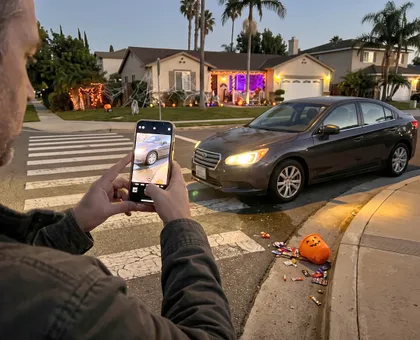
California Civil Code § 1714 requires drivers to use reasonable care to avoid injuring others. That means adjusting their driving to the surrounding conditions. On Halloween, drivers who see children trick-or-treating may need to slow down, watch carefully around parked cars, and be prepared for children to act unpredictably.
To hold a driver responsible for your child’s injuries, a negligence claim generally must establish four elements:
- Duty of Care: The driver had a responsibility to drive safely. For example, a driver approaching children crossing a residential street must use reasonable care to avoid hitting them.
- Breach of Duty: The driver failed to meet that responsibility. For example, looking at a phone instead of watching the road may constitute a breach.
- Causation: The driver’s unsafe conduct was a substantial factor in causing the injury. For example, distraction prevented the driver from noticing your child and braking in time to avoid the collision.
- Damages: Your child suffered harm because of the crash. Examples include injuries requiring medical treatment, ongoing rehabilitation needs, and pain and suffering.
A driver’s claim that your child suddenly entered the street does not automatically resolve who was at fault. CACI 412 explains that adults must anticipate children’s ordinary behavior and use greater care when dealing with them. Under CACI 402, a child’s conduct is generally measured against that of a reasonably careful child of the same age, intelligence, knowledge, and experience. Both standards matter when determining whether the driver, the child, or both contributed to the collision.
Pedestrian accident lawyers can review witness statements, available video, vehicle speed, and roadway conditions to evaluate whether the driver could reasonably have avoided the collision.
Homeowner and Property Owner Liability
A property owner may share responsibility if an unsafe condition on their property contributed to the collision. For example, Halloween decorations blocking a walkway could force trick-or-treaters into the street, or a display near a driveway could obstruct a driver’s view of an approaching child. These hazards illustrate how property conditions can contribute to pedestrian accidents in California.
Liability depends on whether the owner failed to use reasonable care and whether that failure contributed to your child’s injuries. An attorney can investigate the property’s role in the crash and determine whether the owner’s insurance provides additional coverage.
Government Entity Liability
A city, county, or state agency such as Caltrans may share responsibility if a dangerous condition on public property contributed to your child’s Halloween collision. Examples include a malfunctioning pedestrian signal that directs children to cross while approaching vehicles with a green light, or a damaged public sidewalk that forces trick-or-treaters into the path of passing cars.
Under California Government Code § 835, the claim generally must show that the dangerous condition caused the injury and created a reasonably foreseeable risk of that type of harm. It must also show that a public employee negligently created the condition or that the agency knew, or should have known, about it with enough time to take protective measures.
If your child was struck on Halloween, Arash Law offers a free case evaluation for your family’s claim. Our pedestrian accident lawyers can review the circumstances of the accident to determine what your legal options are.
Call (888) 488-1391 to speak with our team. We are available 24/7.
Who Pays the Medical Bills When a Child Is Struck?
The at-fault driver’s liability insurance may ultimately compensate your family for medical expenses, but that claim can take time to resolve. Health insurance and available MedPay may help pay bills while the claim is pending. Payment coordination depends on the applicable policies and reimbursement rules.
These policies may apply:
- At-Fault Driver’s Liability Insurance: Effective January 1, 2025, SB 1107 increased California’s minimum liability limits for standard auto policies to $30,000 per person and $60,000 per accident for bodily injury, plus $15,000 per accident for property damage.
- Medical Payments (MedPay) Coverage: Your auto policy may include MedPay, which can pay covered medical expenses regardless of fault. Depending on the policy, coverage may extend to a child injured as a pedestrian if the child qualifies as an insured person. MedPay may cover emergency room visits, hospital stays, specialist care, and rehabilitation, subject to policy terms and limits.
- Uninsured Motorist/Underinsured Motorist (UM/UIM) Coverage: Under California Insurance Code § 11580.2, California insurers must offer UM/UIM coverage.
- If the driver was uninsured, your child may qualify for uninsured motorist benefits if covered under an applicable UM policy, and the claim meets California’s legal and policy requirements.
- If the driver was insured, underinsured motorist benefits generally apply only when the driver’s liability limits are lower than your applicable UIM limits. Applicable bodily injury liability coverage generally must be exhausted through payment of settlements or judgments before UIM benefits become payable. The UIM insurer’s maximum payment is also reduced by amounts paid by or on behalf of legally responsible parties.
- Health Insurance: Your health plan may cover treatment while the injury claim is pending, subject to deductibles, co-pays, and coverage restrictions. The plan may later seek reimbursement from your child’s recovery for accident-related expenses it paid.
Medi-Cal or private health insurance may pay medical expenses, while certain medical providers may assert liens for unpaid bills. These claims can reduce the amount ultimately available for your child.
For children covered by Medi-Cal, California Welfare and Institutions Code § 14124.70 et seq. governs the state’s recovery rights. The child’s representative must generally notify the Department of Health Care Services (DHCS) within 30 days of filing a qualifying personal injury claim or action.
A child injury attorney can review available insurance coverage, evaluate medical liens and reimbursement claims, and determine whether reductions or legal limits apply. These amounts must also be properly disclosed when requesting court approval of a minor’s settlement. In serious pediatric injury cases, minimum liability insurance limits may be insufficient to cover medical expenses and other losses, making it important to identify all potentially available sources of compensation.
How California’s Comparative Fault Rule Affects Recovery
California follows a pure comparative fault rule: an injured person may recover compensation even if partly responsible for an accident, but their damages are reduced by their percentage of fault. For children, special rules apply. Children under five cannot be found comparatively negligent, so their compensation cannot be reduced on that basis. The claim must still establish that another party was legally responsible for their injuries.
For older children, fault is evaluated according to their age, intelligence, knowledge, and experience, as well as the driver’s duty to anticipate children’s ordinary behavior. Entering the street does not automatically make a child negligent.
For example, suppose an older child crosses between parked cars while trick-or-treating and is struck by a speeding driver. If a jury assigns 80% of the fault to the driver and 20% to the child, a $100,000 damages award would be reduced to $80,000.
Deadlines and Special Rules for Child Injury Settlements in California
Child injury claims in California have special legal protections, including a potentially extended filing window and mandatory court approval of personal injury settlements, regardless of the amount. These protections help safeguard the child’s interests, but each comes with requirements and exceptions.
The Standard Filing Deadline and Minor Tolling
For lawsuits against a private driver, CCP § 335.1 provides a two-year statute of limitations from the date of injury. However, CCP § 352(a) generally pauses this period while the injured person is a minor, potentially allowing them until age 20 to file suit, subject to exceptions.
That exception does not apply when a public entity shares responsibility. Families should not rely on tolling as a reason to wait; evidence degrades, witnesses move, and adjuster timelines move faster than most parents expect.
The Government-Entity Exception
If a dangerous condition on public property, such as a defective crosswalk or broken pedestrian signal, contributed to the crash, a claim against the responsible public agency generally must follow the Government Claims Act. Under Government Code § 911.2(a), a written claim must be presented within six months after the claim accrues, usually the injury date. This deadline does not pause because the injured person is a child.
Missing the six-month deadline does not necessarily end your child’s claim. Under Government Code § 911.4, an application for permission to present a late claim must be submitted within a reasonable time, no later than one year after the claim accrues. Section 911.6 requires approval of a qualifying application when the child was a minor throughout the six-month claim period.
- Where to File: For a city or county claim, file directly with the responsible local agency. For state-agency claims, the DGS/ORIM Government Claims Program generally handles submissions. However, qualifying claims against Caltrans for $12,500 or less may be filed directly with Caltrans using its designated claims process. Confirm the correct filing procedure before submitting a claim.
- If the Agency Denies the Claim: When the agency provides a written rejection notice that complies with Government Code § 913, the claimant generally has six months from the date the notice is personally delivered or deposited in the mail to file a lawsuit, subject to applicable exceptions.
- If the Agency Does Not Respond Within 45 Days: The claim is generally deemed rejected after 45 days unless the response period was properly extended. If the agency does not provide a written rejection notice that complies with Government Code § 913, the claimant generally has two years from the date the cause of action arose to file suit. A later compliant written notice may trigger a shorter six-month filing deadline.
The Minor’s Compromise: Court Approval of Your Child’s Settlement
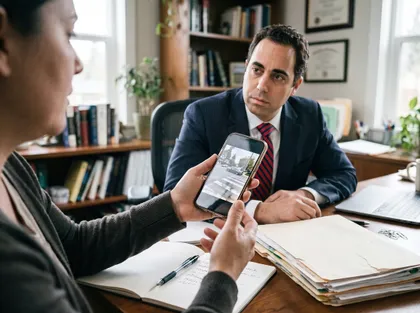
A settlement of your child’s personal injury claim requires court approval to become binding, regardless of the amount. Under California Probate Code § 3500 and Code of Civil Procedure § 372, the court reviews whether the proposed settlement serves your child’s best interests. A parent may request approval of a settlement reached before a lawsuit is filed. If a lawsuit is filed, a guardian ad litem, often a parent, represents the child’s interests.
After approval, your child’s net settlement funds are handled as the court directs. This may include a blocked account, structured settlement, or another authorized arrangement. Withdrawals from a blocked account before age 18 require a court order, while structured settlement payments follow the approved schedule.
A pedestrian accident lawyer can prepare and file the minor’s compromise petition, including the required settlement details, attorney fee disclosures, and supporting medical documentation. They can also help your family comply with the court’s instructions for protecting the funds.
What Arash Law Has Recovered for Injured Children
Arash Law has secured compensation for children who suffered serious injuries in traffic accidents and incidents involving unsafe property conditions. The case results below highlight how our attorneys have investigated hazards and challenged attempts to blame young children.
$1,250,000 (Pedestrian Accident): An insurer claimed a collision involving a five-year-old child who ran into the street was unavoidable. Expert accident reconstruction helped us establish that the crash could have been prevented, resulting in recovery of the full available policy limits.
Past results do not guarantee future outcomes. Every case is different, and results depend on the specific facts and evidence involved.
Frequently Asked Questions About Child Pedestrian Accidents in California
What If the Driver Says My Child Suddenly Stepped onto the Road?
That statement alone does not establish that your child was at fault or prevent recovery. California generally evaluates a child’s conduct against what a reasonably careful child of the same age, intelligence, knowledge, and experience would do. Drivers must also anticipate children’s ordinary behavior.
Witness accounts, available traffic signal records, vehicle speed, and video footage can help determine whether the driver could reasonably have avoided the collision. If your child is found partly responsible, compensation may still be available, but your child’s percentage of fault would reduce recoverable damages.
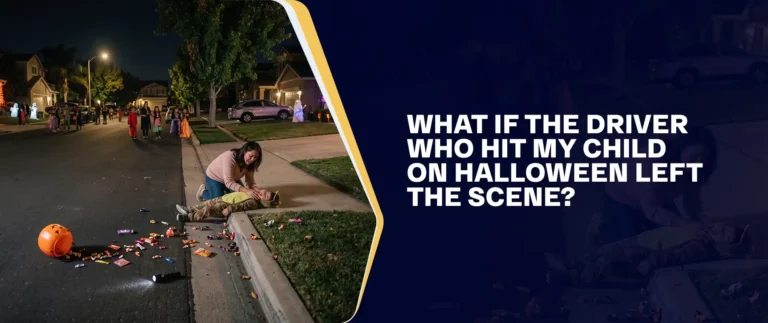
What If the Driver Who Hit My Child Fled the Scene?
Call 911 immediately and notify your auto insurer promptly. If the driver cannot be identified, your child may qualify for benefits under your policy’s uninsured motorist (UM) coverage, subject to its terms and California law.
California Insurance Code § 11580.2 generally requires physical contact between the unidentified vehicle and your child. It also requires reporting the crash to the appropriate police department, or the sheriff or CHP in an unincorporated area, within 24 hours and filing a sworn statement with your insurer within 30 days thereafter. Missing these deadlines can jeopardize coverage.
Can I Recover Money for My Child’s Future Medical Bills?
Yes. California Civil Code § 3283 allows recovery for future losses, including medical expenses that are reasonably certain to occur. If someone else’s negligence caused your child’s Halloween pedestrian accident, compensation may include reasonably necessary medical care your child is reasonably certain to need in the future, such as surgeries, therapy, rehabilitation, assistive equipment, and long-term care. Medical and financial experts can help estimate those costs. Settling before your child’s future needs are understood may leave important expenses uncovered.
Your child may also seek compensation for:
- Reduced future earning capacity.
- Pain and suffering.
- Emotional distress.
- Disfigurement.
- Loss of enjoyment of life.
Parents may seek reimbursement for reasonable accident-related medical expenses they paid or incurred on their child’s behalf. Still, the same expenses cannot be recovered twice through separate parent and child claims.
Should I Talk to the At-Fault Driver’s Insurance Company?
You are not required to speak with the at-fault driver’s insurance company without legal representation. However, you may choose to communicate directly with the insurer. Provide accurate information and avoid guessing about fault or the extent of your child’s injuries. Statements made during the claims process may be considered when evaluating liability and damages. An attorney can handle communications, respond to disputed claims, and review settlement offers or releases before you sign.
Do I Have to Pay Anything Upfront to Hire a Lawyer?
It depends on the lawyer’s fee arrangement. However, most personal injury lawyers handle child pedestrian accident cases on a contingency fee basis, meaning you generally do not pay attorney’s fees upfront. Instead, these fees are paid from the compensation recovered.
How Long Does a Minor’s Compromise Typically Take to Finalize?
The timeline varies by county and by the complexity of the settlement. Under California Rules of Court, rule 7.950.5, eligible expedited minor’s compromise petitions generally must be decided within 35 days of filing, unless a hearing is needed or the court extends the deadline for good cause. Other petitions may take longer, especially those involving extensive medical documentation, structured settlements, or disputed terms. Additional steps may be required before the settlement funds are released.
Get Help Protecting Your Child’s Rights After an Accident
Your child’s recovery is your priority. Arash Law can protect your child’s legal recovery while you focus on their medical one. That means taking every call from the opposing insurer and handling evidence preservation, deadlines, and the court-approval process a California judge must complete before settlement funds are released.
Arash Law has recovered over $1 billion for clients across California, including results in pedestrian cases in which government entities and private defendants shared liability.
Contact Arash Law for a free case evaluation. Our team is available 24 hours a day at (888) 488-1391. Tell us what happened, and we will get back to you promptly, with no obligation.
Sources
- California Code of Civil Procedure § 335.1: Two-year statute of limitations for personal injury actions. https://leginfo.legislature.ca.gov/faces/codes_displaySection.xhtml?sectionNum=335.1.&lawCode=CCP
- California Code of Civil Procedure § 352: Minor tolling and exceptions for qualifying public-entity claims. https://leginfo.legislature.ca.gov/faces/codes_displaySection.xhtml?sectionNum=352.&lawCode=CCP
- California Civil Code § 1714: General duty to exercise reasonable care. https://leginfo.legislature.ca.gov/faces/codes_displaySection.xhtml?sectionNum=1714.&lawCode=CIV
- California Civil Code § 3333: General measure of damages for harm caused by another’s wrongful conduct. https://leginfo.legislature.ca.gov/faces/codes_displaySection.xhtml?sectionNum=3333.&lawCode=CIV
- California Civil Code § 3283: Recovery for qualifying future losses. https://leginfo.legislature.ca.gov/faces/codes_displaySection.xhtml?sectionNum=3283.&lawCode=CIV
- California Government Code § 835: Public-entity liability for dangerous conditions of public property. https://leginfo.legislature.ca.gov/faces/codes_displaySection.xhtml?sectionNum=835.&lawCode=GOV
- California Government Code § 911.2: Six-month government-claim presentation deadline. https://leginfo.legislature.ca.gov/faces/codes_displaySection.xhtml?sectionNum=911.2.&lawCode=GOV
- California Government Code § 911.4: Applications for permission to present late government claims. https://leginfo.legislature.ca.gov/faces/codes_displaySection.xhtml?sectionNum=911.4.&lawCode=GOV
- California Government Code § 911.6: Grounds for granting late-claim applications, including qualifying claims involving minors. https://leginfo.legislature.ca.gov/faces/codes_displaySection.xhtml?sectionNum=911.6.&lawCode=GOV
- California Government Code § 912.4: Agency deadlines for acting on government claims. https://leginfo.legislature.ca.gov/faces/codes_displaySection.xhtml?sectionNum=912.4.&lawCode=GOV
- California Government Code § 913: Notice requirements for government-claim rejection. https://leginfo.legislature.ca.gov/faces/codes_displaySection.xhtml?sectionNum=913.&lawCode=GOV
- California Government Code § 945.6: Lawsuit filing deadlines after government-claim rejection. https://leginfo.legislature.ca.gov/faces/codes_displaySection.xhtml?sectionNum=945.6.&lawCode=GOV
- California Government Code § 946.6: Superior court relief after denial of a late-claim application. https://leginfo.legislature.ca.gov/faces/codes_displaySection.xhtml?sectionNum=946.6.&lawCode=GOV
- California Vehicle Code § 20001: Duties following an injury or fatal collision and penalties for violations. https://leginfo.legislature.ca.gov/faces/codes_displaySection.xhtml?sectionNum=20001.&lawCode=VEH
- California Vehicle Code § 20003: Driver identification and reasonable assistance requirements following an injury collision. https://leginfo.legislature.ca.gov/faces/codes_displaySection.xhtml?sectionNum=20003.&lawCode=VEH
- California Vehicle Code § 20008: Written reporting requirements for injury and fatal collisions. https://leginfo.legislature.ca.gov/faces/codes_displaySection.xhtml?sectionNum=20008.&lawCode=VEH
- California Vehicle Code § 16056: Minimum automobile liability insurance limits. https://leginfo.legislature.ca.gov/faces/codes_displaySection.xhtml?sectionNum=16056.&lawCode=VEH
- California Insurance Code § 11580.2: Uninsured and underinsured motorist coverage, including hit-and-run requirements. https://leginfo.legislature.ca.gov/faces/codes_displaySection.xhtml?sectionNum=11580.2.&lawCode=INS
- California Welfare and Institutions Code § 14124.73: Medi-Cal third-party personal injury claim notification requirements. https://leginfo.legislature.ca.gov/faces/codes_displaySection.xhtml?sectionNum=14124.73.&lawCode=WIC
- California Welfare and Institutions Code §§ 14124.70–14124.79: Medi-Cal recovery rights involving third-party personal injury claims. https://leginfo.legislature.ca.gov/faces/codes_displayText.xhtml?lawCode=WIC&division=9.&title=&part=3.&chapter=7.&article=3.5.
- California Business and Professions Code § 6147: Written contingency fee agreements and required cost disclosures. https://leginfo.legislature.ca.gov/faces/codes_displaySection.xhtml?sectionNum=6147.&lawCode=BPC
- California Probate Code § 3500: Court approval of a parent’s compromise of a minor’s disputed claim. https://leginfo.legislature.ca.gov/faces/codes_displaySection.xhtml?sectionNum=3500.&lawCode=PROB
- California Code of Civil Procedure § 372: Representation of minors in legal proceedings. https://leginfo.legislature.ca.gov/faces/codes_displaySection.xhtml?sectionNum=372.&lawCode=CCP
- Judicial Council of California. California Civil Jury Instructions (CACI), 2026 Edition. CACI Nos. 402 (Standard of Care for Minors), 405 (Comparative Fault of Plaintiff), 412 (Duty of Care Owed Children), and 3903A (Medical Expenses — Past and Future). https://courts.ca.gov/system/files/file/judicial_council_of_california_civil_jury_instructions_2026.pdf
- California Rules of Court, Rule 7.950: Petition requirements for approval of a minor’s settlement. https://courts.ca.gov/cms/rules/index/seven/rule7_950
- California Rules of Court, Rule 7.950.5: Expedited minor’s compromise procedures and applicable determination deadlines. https://courts.ca.gov/cms/rules/index/seven/rule7_950_5
- California Department of Insurance — Automobile Insurance Guide: Automobile liability, MedPay, and UM/UIM coverage. https://www.insurance.ca.gov/01-consumers/105-type/95-guides/01-auto/auto101.cfm
- California Department of General Services — File a Government Claim: Procedures for submitting claims against California state agencies. https://www.dgs.ca.gov/ORIM/File-A-Claim
- California Department of Transportation (Caltrans) — Submit Damage Claim: Filing procedures for claims involving Caltrans. https://dot.ca.gov/online-services/submit-damage-claim
- California Department of Health Care Services — Personal Injury Program: Medi-Cal reimbursement rights involving third-party claims. https://www.dhcs.ca.gov/services/personal-injury-program/
- California Department of Health Care Services — Personal Injury Lien Process: Claim notification, lien determination, and reimbursement procedures. https://www.dhcs.ca.gov/services/the-personal-injury-lien-process/
- California Department of Health Care Services — Personal Injury Frequently Asked Questions: Notification requirements, reimbursement limitations, and possible lien reductions. https://www.dhcs.ca.gov/services/personal-injury-frequently-asked-questions/
- Staples JA, Yip C, Redelmeier DA. Pedestrian Fatalities Associated With Halloween in the United States. JAMA Pediatrics. 2019;173(1):101–103. DOI: 10.1001/jamapediatrics.2018.4052. Historical analysis of pedestrian fatality risks on Halloween evenings compared with control evenings. https://pmc.ncbi.nlm.nih.gov/articles/PMC6583441/
Disclaimer
Past results do not guarantee future outcomes. Every case is different. The information on this page is for general educational purposes and does not constitute legal advice. No attorney-client relationship is formed by reading or relying on this content. If you were injured, consult a licensed California personal injury attorney about your specific situation.