TL;DR: After a rain-related car accident, injury victims should move to safety, call police, document wet roads, and seek medical care to prove fault. They must also report the crash to their insurer and file an SR-1 report to the DMV within 10 days to avoid license suspension.
Highlights:
- Move to a safe location without increasing the risk of further injury.
- Contact law enforcement and file an official police report.
- Take photos of road conditions, such as water and slippery pavement.
- Photograph vehicle damage, tire conditions, and the accident scene.
- Seek immediate medical care for any injuries, even if minor.
- Report the crash to your insurer as soon as possible.
Tip: Stick to the facts when talking to law enforcement and insurance representatives.
Table of Contents
After a rain-related car accident in California, injury victims should:
- Get to safety.
- Call the police.
- Document road conditions.
- Seek medical care.
- Report the crash to their insurer promptly.
You may also need to file a DMV SR‑1 report within 10 days if the collision resulted in injury, death, or over $1,000 in property damage.
Rain creates unique challenges for California drivers, from reduced visibility to slick surfaces that increase stopping distances. When a crash occurs during a downpour, the steps you take in the immediate aftermath are critical to protecting both your physical health and your legal rights.
Move To Safety Without Increasing Injury Risk
If your car is drivable and you’re able to do so, carefully pull over to the side of the road or another safe area away from oncoming traffic. This action helps prevent more crashes, especially on wet roads where stopping is difficult. If you can’t move your car, stay inside until it’s safe to exit or help arrives.
Switch on your hazard lights so other drivers can see the accident, especially when the rain reduces visibility. If you have road flares or reflective triangles, set them up behind your car at a safe distance. This precaution helps make your vehicle easier to spot and lowers the chance of another collision.
Check yourself, your passengers, and anyone else involved for injuries. Even if injuries seem minor, get medical attention. Some issues might not show up right away.
Call Law Enforcement Even If Weather Caused The Crash
After an accident, it is essential to contact the police. Law enforcement officers will review the scene, record the crash details, and collect information from everyone involved. They’ll then create an official police report that provides an objective account of what happened. This document can be helpful for insurance claims. For instance, it can resolve any questions about how the collision occurred and who caused it.
When speaking with officers, be clear and stick to the facts when describing the accident and any injuries. Do not admit fault or guess about what caused the crash, even if weather conditions played a role. Let the police and insurance companies decide who is responsible for the accident based on the evidence.
In addition to calling the police, California law requires you to report the accident to the DMV within 10 days if:
- Anyone was injured (no matter how slightly);
- Anyone was killed; or
- Property damage exceeded $1,000.
You must file the SR-1 form regardless of who was at fault. Failure to submit it can result in the suspension of your driver’s license, even if the accident was caused by rain or another driver’s negligence.
Document Road Conditions For Your Injury Claim
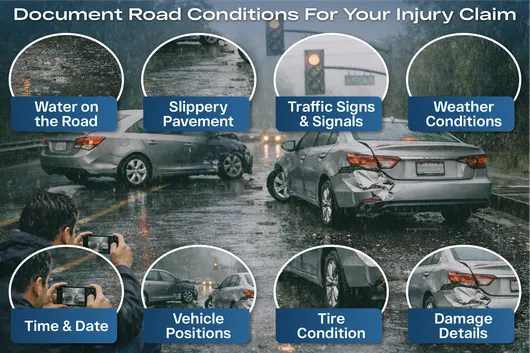
Take several photos of the road conditions at the accident scene. These images can support your case by showing key details:
- Water on the Road — Capture puddles or flooding, as standing water can reduce traction and make stopping or steering more difficult for drivers.
- Slippery Pavement — If the road looks slick from water or oil, document these areas. This evidence can show that surface hazards played a role in the crash.
- Traffic Signs & Signals — Photograph nearby traffic signs or lights, especially if rain or fog affected visibility. Zoom in on signs hidden by debris or weather.
- Weather Conditions — Snap time-stamped photos or videos that clearly show how heavy the rain was, how thick the fog was, or if there was smoke in the area. You can also take screenshots of official resources, like hourly weather updates from the National Weather Service (NWS) or Caltrans QuickMap, to confirm road closures or sensor readings during the incident.
Substantial evidence is necessary if you are pursuing personal injury compensation. Proper documentation can support your claim if the other party questions specific facts of the case or denies responsibility for the accident.
Photograph Vehicle Damage And Tire Condition
Take clear photos of all vehicles involved in the accident. Make sure the images highlight these crucial details:
- Vehicle Positions — Use wide shots to show where each vehicle ended up after the crash. This documentation can help experts reconstruct the crash and determine how it occurred, especially in cases where cars were pushed off the road or multiple vehicles were involved.
- Damage Details — Focus on specific areas that show visible impact. These photos can help explain how the collision happened and whether wet or slippery conditions contributed to it.
- Tire Condition — Take close-up photos of each vehicle’s tires. Show the tread, any visible wear, or damage. This evidence can demonstrate whether worn tires caused a driver to lose control of their vehicle or prevented them from maintaining a safe stopping distance.
- Time & Date — Make sure your photos or videos include a time-stamp, either on the image or in the file details. Doing so can help prove exactly when the accident happened, which is vital for insurance and legal records.
Seek Medical Evaluation After A Rain Accident
Seek immediate medical care if you or anyone else sustains injuries following a rain-related crash. Even if injuries seem minor, symptoms such as pain or dizziness may appear hours or days later.
A medical professional will assess your condition and provide medical treatment. The report they create can also support your insurance claim, as it will prove that your injuries came from the accident.
Keep track of any pain, headaches, numbness, or breathing problems. Take pictures of any injuries you can see. Save all receipts from hospitals or clinics, along with any instructions for follow-up visits. If there are written recommendations for physical therapy or chiropractic care, keep them as well.
Report The Accident To Insurance Carefully
In California, you must notify your insurance company about any car accident, including those caused by rain. Do so as soon as possible, as failing to report the crash immediately could affect your claim.
For example, your own benefits could help cover medical expenses and property damage. However, the contract of your auto policy may require you to report an accident within a certain time frame before your coverage steps in. That said, promptly notifying your insurer is vital.
When you contact them, only provide accurate details about what happened. Stick to the facts, such as the date, time, location, weather conditions, and how the accident occurred. Do not admit fault or make guesses about who or what caused the collision. Share any documentation you have, including police reports, photos of the scene, and medical records.
Always review your policy to understand your coverage and rights. Careful, prompt reporting and thorough documentation can support your claim and help protect your interests. If you need help with the insurance claims process, consider seeking free accident lawyer advice.
Frequently Asked Questions (FAQs) About Rain-Related Car Accidents
To learn more about weather-related car crashes and the claims process in California, check out the FAQs below.
Does Rain Make Car Accidents More Likely?
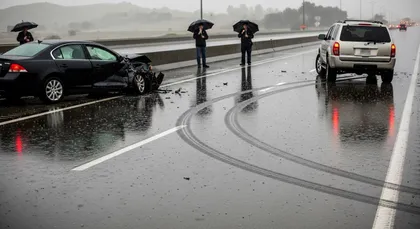
Yes, rain does increase the likelihood of car accidents. Wet roads reduce traction, making it harder to stop or control your vehicle. Rain also lowers visibility, making it difficult to see other cars, traffic signals, and signs. In heavy rain, there’s a risk of hydroplaning, where your tires lose contact with the road, potentially causing you to lose control even at lower speeds.
Who Is At Fault In A Rain-Related Crash In California?
In California, fault in a rain-related crash is determined by who acted negligently, not simply by the fact that the collision occurred during a downpour. Drivers are expected to adjust their driving behavior to match weather conditions. If they caused an accident by following another vehicle too closely, failing to use their headlights, or driving too fast in the rain, they may be found at fault for not driving safely for the conditions.
Insurance companies and law enforcement will review all evidence, including road conditions, driver actions, and any police reports, before assessing fault. Rain can be a factor, but it does not automatically excuse a driver from responsibility if they were careless or reckless.
What Evidence Best Proves Rain Made The Road Unsafe?
The strongest evidence showing that rain made the road unsafe includes:
- Clear photos or videos showing wet pavement, pooling water, or flooding at the scene.
- Weather data, such as official rainfall records and storm reports, help confirm the timing and severity of the rain.
- Evidence of a history of drainage problems, such as prior complaints or maintenance records, can show that the road was known to be hazardous during storms.
Do I Have To Talk To The Other Driver’s Insurance Adjuster?
You are not legally required to speak with the other driver’s insurance adjuster or to give them a statement after an accident. If you choose to talk to them, be cautious. Anything you say may contradict the contents of your claim, giving them legitimate reasons to dispute or deny it. It is often best to limit your communication and consult with your own insurance company or an attorney before responding.
Can I Still Recover Compensation If I Was Partly At Fault In A Rain-Related Crash?
Yes, you could still recover damages in California, even if you contributed to a rain-related crash. However, your compensation could be reduced by your percentage of fault under the state’s comparative negligence law. For example, if you are found 30% liable because you were driving too fast for rainy conditions, you can still recover 70% of your total damages.
What If The At-Fault Driver Was Uninsured?
If the other driver in a rain-related car accident is uninsured, you may be able to file a claim under your own uninsured motorist (UM) coverage. This insurance can help pay for injuries and property damage caused by an uninsured driver. If you do not have UM coverage, you could pursue a lawsuit against the at-fault driver directly. However, collecting compensation may be difficult if they lack assets.
What Is The Time Limit For Filing A Car Accident Lawsuit In California?
In California, you generally have two years from the date of the car accident to file a lawsuit for personal injury. If your claim is only for property damage, such as damage to your vehicle, the time limit is typically three years from the date of the accident.
Some exceptions may apply. For example, suppose your rain-related car accident involved a city bus. You must first file an administrative claim against the government agency responsible for operating it within six months of the crash. You can only sue if the claim is denied or if you receive no response within 45 days.
Regardless, it’s essential to learn which deadlines apply to your case. Missing them can prevent you from recovering compensation.
Schedule A Legal Consultation After A Rain-Related Car Accident
If you’ve been in a car accident caused by wet conditions, you may feel overwhelmed, frustrated, and unsure of what to do next. It’s important to report the accident to the police promptly, get medical help, gather evidence, and notify your insurer. Proper documentation is essential in pursuing compensation.
To navigate the claims process, you may be thinking, “I need a personal injury lawyer.” Arash Law provides legal representation for injured victims in motor vehicle crashes. Our skilled rain accident lawyers can help you:
- Identify all potential sources of financial recovery.
- Collect and preserve evidence of rain and road hazards.
- Handle communications and negotiations with insurance companies.
- Accurately document your injuries and financial losses.
- Seek fair compensation.
If you’re thinking, “Do lawyers only get paid if they win?” Yes, if they work on a contingency fee basis, like our legal team. You don’t pay any attorney’s fees unless your case wins or we recover compensation for you.
Call AK Law today at (888) 488-1391 for a free case review. During this consultation, we can assess your situation to determine if you may have a valid claim and explore your legal options.