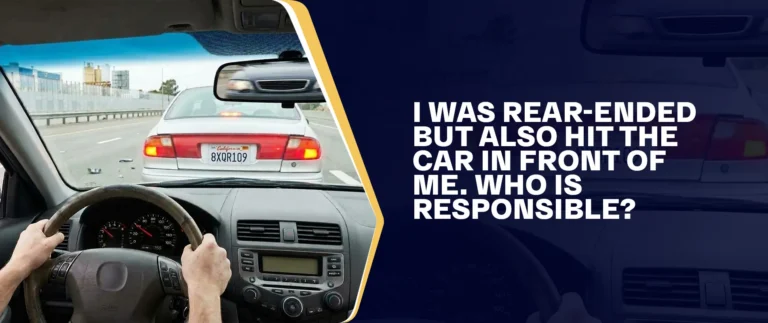
TL;DR: Liability for a rain-related car accident injury in California usually falls on the driver who fails to adjust to wet conditions. Drivers and passengers get hurt when motorists speed, tailgate, or hydroplane, and timely medical and crash evidence often affects how fault and compensation are decided.
Highlights:
- Adjust speed and following distance in rainy conditions.
- Maintain control and avoid hydroplaning by slowing down.
- Use headlights and windshield wipers for visibility.
- Document road conditions, vehicle positions, and injuries at the scene.
- File a police report with weather details and driver statements.
- Know California’s statute of limitations: 2 years for personal injury claims.
Tip: Keep detailed evidence, such as weather reports and witness statements, to support your claim.
Table of Contents
A driver who fails to adjust for rain is usually liable for a rain-related car accident injury in California. Liability often falls on the motorist who drove too fast for wet roads, followed too closely, or otherwise failed to use reasonable care in rainy conditions.
California law expects drivers to adjust to the weather. During rain, drivers should slow down, use headlights, and increase following distance. When they do not, and a crash happens, that failure can support a finding of negligence.
In wet-road collisions, fault depends on whether each driver acted reasonably under the conditions. Even if rain contributed, liability usually depends on driver behavior, not the weather itself.
How California Determines Fault In Rain Accidents
California determines fault in a rain-related crash by looking at negligence. To prove negligence, these points usually must be shown:
- The other driver owed you a duty of care.
- The driver breached that duty by acting carelessly or failing to act.
- That breach helped cause your injury.
- You suffered damages, such as medical bills or lost income.
In rainy weather, a driver’s duty of care includes adjusting to conditions. This means slowing down, using headlights, keeping a safe following distance, and paying attention to road closures or weather advisories. If a driver ignores these precautions and a crash happens, that conduct can support a finding of fault.
Rain And The “Reasonable Driver” Standard
When it rains, drivers must act as a careful, reasonable person would in the same situation. That means adjusting to the weather, not driving as if the road were dry.
If a driver hydroplanes and crashes into stopped traffic, they may be at fault if they were going too fast for the conditions or if their tires were not in good condition.
In simple terms, rain does not excuse careless driving. Drivers still have a duty to stay safe and protect others on the road.
Causation And Damages In Rain-Related Accidents
To hold someone responsible for a crash, you must show that their actions actually caused your injury. In California, this often comes down to two simple ideas:
- The collision would not have happened but for the driver’s careless actions.
- The driver’s actions were a significant factor in causing the harm.
Evidence helps show this. Useful proof can include skid marks, vehicle damage patterns, witness statements, photos or videos from the scene, weather reports, and data from a vehicle’s event data recorder. This information can show that driver behavior, not just the rain, led to the crash.
What Are Damages?
Damages are the losses you suffer because of your injuries. They can be financial or personal.
- Financial (Economic) Damages — These are the direct money losses, such as:
- Medical bills
- Lost wages
- Reduced ability to earn income
- Property loss
- Personal (Non-Economic) Damages — These relate to how the injury affects your life, such as:
- Pain and suffering.
- Emotional distress.
- Inability to have children as a result of accident-related injuries.
- Loss of an extremity.
- Loss of companionship or strain on a relationship.
In rare cases, a court may award punitive damages. These are meant to punish especially reckless behavior, not just compensate the injured person.
Does Rain Reduce Driver Responsibility?
Rain usually does not reduce a driver’s responsibility for a crash in California. Rain causes more accidents than any other weather condition, yet drivers must still adjust to it. If they do not and someone gets hurt, they can still be held liable.
Blaming the rain alone is not enough. The key question is whether the driver acted safely under the conditions. Rain, fog, or flooding does not excuse careless driving.
In most cases, fault still falls on the driver who acted negligently, such as someone who:
- Drove too fast for the weather or road conditions.
- Followed another vehicle too closely.
- Failed to use headlights or windshield wipers in the rain.
- Braked suddenly or made unsafe lane changes.
- Drove with worn tires or poorly working brakes.
In short, if a driver fails to adjust and a crash happens, they may still be responsible for the injuries that follow.
Speed Too Fast For Conditions And Injury Liability
Driving too fast for rainy conditions can make a driver legally responsible for an injury crash in California. The state’s Basic Speed Law says drivers must not travel faster than what is reasonable and safe for current conditions. That includes considering rain, visibility, and traffic.
This means the posted speed limit is not always a safe speed. In heavy rain or on slick roads, a safe speed may be much lower. For example, going 65 mph in a downpour can be considered careless, even if the speed limit is 65. Drivers have a duty to slow down when conditions get worse.
Factors that often affect liability in rain-related crashes include:
- Driving Too Fast for Conditions — A driver can be at fault if their speed is unsafe for wet or slippery roads, even if they stay within the speed limit.
- Failure to Maintain Control — Hydroplaning or skidding can lead to serious crashes. Drivers must slow down and keep their vehicles in safe condition, including using proper tires.
- Following Too Closely — Tailgating in the rain leaves less time to stop and often leads to rear-end collisions.
- Vehicle Problems — Broken wipers, bad brakes, or poor headlights can make driving in the rain more dangerous and support a finding of fault.
- Ignoring Traffic Signals or Signs — Drivers must still obey lights and signs in bad weather. Violations can lead to liability if a crash happens.
How Insurers Evaluate Speed In Rain-Related Liability Claims
Insurance companies often question whether a driver was going too fast for rainy conditions. A driver may claim they stayed within the speed limit, but insurers usually respond that the speed was still unsafe for wet roads. Because California law focuses on what is reasonable for the conditions, not just the posted limit, this back-and-forth is common and can affect how a claim is valued.
When these disagreements come up, the focus usually shifts to the driver’s choices before the crash. Insurers and investigators look at practical questions, such as:
- Did the driver slow down for the rain?
- Were the headlights on for visibility?
- Was there a safe following distance?
- Did the driver keep control of the vehicle?
It is also common for insurers to argue that the weather, not the driver, caused the crash. However, rain alone does not cause collisions. The key question is whether the driver adjusted to the conditions.
This is where clear evidence becomes essential. Strong documentation can make it easier to show what really happened.
What Evidence Proves Fault In A Rain Accident Injury Claim
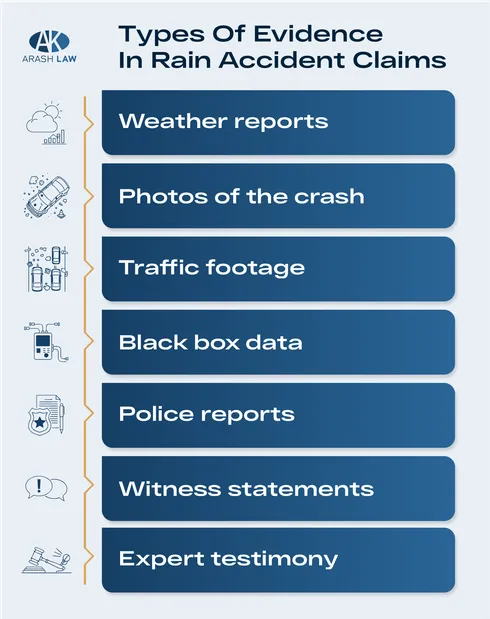
Fault in a rain-related crash does not rely on the weather itself. It depends on whether each driver acted reasonably and adjusted to the conditions. Even in heavy rain, drivers must still use care to avoid harming others. Rain accident lawyers often review the same types of evidence insurers use to decide whether a driver failed to adjust to wet conditions. Showing negligence usually depends on clear, practical evidence, such as:
- Weather Documentation — This helps show what conditions were actually like at the time of the crash. Examples include:
- National Weather Service reports.
- Radar or satellite images showing storm timing and intensity.
- Temperature and rainfall records.
- Physical Evidence — This shows how the road and vehicles were affected by the weather. For example:
- Photos of wet, flooded, or slick road surfaces.
- Vehicle positions after the crash.
- Tire tread and condition.
- Damage patterns on the vehicles.
- Skid marks or debris on the roadway.
- Digital Evidence — Shows objective data regarding driving behavior and conditions during the weather event.
- Traffic or security camera footage.
- Dashcam video.
- Phone records showing possible distraction.
- Vehicle event data recorders (black box data).
- Police Reports — An official crash report can document road conditions, driver statements, diagrams, and any citations issued. These reports often play a key role in insurers’ fault evaluations.
- Witness Statements — People who saw the crash or drove in the same conditions can describe visibility, rainfall, and driver behavior. Such statements can come from:
- Other drivers who encountered the same conditions.
- Witnesses, including pedestrians and travelers.
- Expert Testimony — Specialists can help explain how and why the crash happened. For example:
- Accident reconstructionists can analyze speed, braking, vehicle angles, and road conditions.
- Meteorologists can confirm the exact weather conditions at the time and location.
Together, this evidence helps show whether a crash truly resulted from unavoidable weather or from a driver’s failure to adjust to rainy conditions.
Comparative Negligence In Wet Road Crashes
In some rain-related crashes, more than one driver shares the blame. California uses a rule called pure comparative negligence, which simply means each person is responsible for their share of fault. Your compensation can be reduced by the percentage of responsibility you hold.
In practical terms, this means your actions before the crash matter. If you were partly careless in the rain, that can lower what you recover, even if the other driver also made mistakes.
Here is how that can look in real life:
- You were driving slightly too fast for rainy conditions.
- The other driver stopped in a flooded area without their hazard lights on.
- The court finds you 60% at fault and the other driver 40% at fault. In that situation, you could still recover 40% of your damages from the other driver.
Because insurers often try to shift more blame onto you to pay less, fault percentages can become a central point of dispute. Clear evidence can help show what each driver did before the crash.
Who Else Might Be Liable Besides Another Driver?
Sometimes a government agency can share responsibility for a crash, especially if road problems helped cause it. This can include:
- Poor drainage that leads to flooding.
- Missing or unclear road signs.
- Bad road maintenance.
Government agencies do have some legal protections, but they are not fully protected in every case. If poor road care creates dangerous conditions and someone gets hurt, the government may still be responsible. Examples of conduct that may lead to liability:
- Ignoring repeated complaints about hazardous road conditions.
- Failing to fix drainage problems that cause flooding risks.
- Not repainting lane markings, making roads hard to see in low visibility.
- Leaving potholes unrepaired, which become hidden in rainwater.
- Not posting warning signs in known foggy or icy areas.
In rainy weather, drivers may have difficulty seeing pedestrians and bikers. Because of this limitation, non-motorists must exercise caution when navigating the roadway alongside other vehicles. It is vital to cross only at designated junctions when directed by traffic signals. Pedestrians or cyclists who jaywalk, fail to yield when required, or disregard their surroundings may share partial fault for an accident.
Rain-Related Crash Patterns, Risks, And Liability Factors
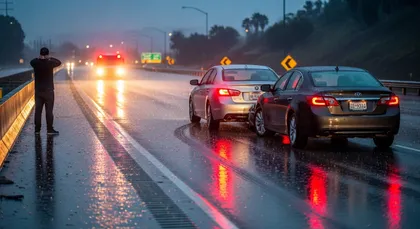
Rain makes roads more dangerous and changes how drivers must behave. Data from the U.S. Federal Highway Administration (FHWA) shows that most weather-related crashes happen on wet pavement during rainfall.
Even light rain can reduce freeway speed by 2–13%, and heavy rain can reduce safe speeds by up to 17%. Each year, thousands of people are killed, and hundreds of thousands are injured in crashes during rainfall.
Additionally, certain crash types may point to a possible fault in a rain-related car accident:
- Rear-End Accidents — Drivers who do not maintain a safe following distance on wet roads may not have enough time to stop, leading to a collision.
- Collisions at Intersections — Motorists who neglect to yield at intersections or inaccurately assess stopping distances frequently cause collisions in these areas.
- Multiple Vehicle Collisions — Heavy rain may cause loss of vehicle control, resulting in multi-vehicle collisions. Establishing liability can be complicated as numerous drivers may bear partial responsibility.
Wet roads, especially when standing water is present, increase braking distance and the risk of hydroplaning. Because of this, drivers must slow down and leave more space. Failing to adjust can become a liability factor.
Rain crashes also tend to cause serious injuries. Common examples include:
- Whiplash and neck injuries
- Broken bones
- Spinal injuries or herniated discs
- Traumatic brain injuries (TBIs)
- Internal injuries
- Facial injuries from broken glass
- Chronic pain
- Post-traumatic stress disorder (PTSD)
Clear medical records and injury documentation can help connect these injuries to the crash and support a claim.
Steps To Take Immediately After An Accident
Being involved in a car crash during rainy weather can be unsettling. Still, prompt measures can help safeguard your well-being and legal standing. If you get injured in a rain-related car accident, consider following these steps:
- Prioritize safety and seek medical assistance, even if there are no visible injuries.
- Comprehensively document the scene. Take photos of the vehicles, road conditions, and injuries. Also, document the time, location, and visibility challenges.
- Gather information from other drivers, including their insurance details. Also, obtain contact information from witnesses who saw the accident.
- Submit a police report, which should include weather information and preliminary fault evaluations.
- Notify authorities and your insurer of the accident, but refrain from acknowledging liability.
Following these steps helps reduce hazards and prepares you for recovery. In Southern California, where the weather can be unpredictable and rains may trigger chain-reaction collisions, meticulous documentation is essential. During this time, some injured people also start asking practical questions, such as “Do lawyers only get paid if they win?” as they look into how injury claims typically work.
Deadlines And Exceptions That May Affect Your Rights
In California car accident cases, several time limits can apply. Missing a deadline can limit or block your claim, so it helps to know the basics.
Here are the key deadlines under the statute of limitations:
- Personal Injury Lawsuit — 2 years from the date of the crash.
- Property Damage Claim — 3 years from the date of the crash.
- Claims Against a Government Agency — 6 months to file a government claim. If denied, you typically have 6 months from the date of the denial to file a lawsuit.
Some situations can change the regular filing deadlines in California. Common exceptions include:
- Minor (Under 18) — The time limit may not start until the injured person turns 18.
- Delayed Discovery of Injury — The deadline may begin when the injury is discovered or reasonably should have been discovered.
- Defendant Out of State — The clock may pause while the at-fault person is outside California.
- Mental Incapacity — The deadline may pause if the injured person is legally incapacitated.
Because these rules depend on specific facts, acting early helps protect evidence and keeps your legal options open. Waiting too long can risk losing the right to recover compensation.
Frequently Asked Questions (FAQs)
Here are some of the most common questions we receive concerning personal injury.
Are Drivers At Fault Liable For Weather-Related Accidents?
Yes. Drivers can still be partly or fully liable for a crash even when bad weather is involved. In California, drivers must adjust to conditions like rain or fog, or they may be found at fault. In some cases, more than one driver or even a government agency responsible for road conditions may share liability. Under California’s comparative negligence system, fault is divided based on each party’s actions. Weather may contribute to a crash, but liability usually depends on whether drivers, road authorities, or others acted reasonably under the conditions.
What Insurance Do You Need For A Car Accident In California?
California drivers must carry minimum auto insurance, but the minimum may not fully cover a serious crash. State law requires liability coverage of at least $30,000 per person, $60,000 per accident for injuries, and $15,000 for property damage. Liability pays for harm you cause to others, not your own losses. Many drivers also choose uninsured/underinsured motorist coverage to protect themselves if the at-fault driver has little or no insurance.
How Do Insurers Determine Who Was At Fault?
Insurance companies thoroughly evaluate the evidence and documentation you provide to determine who is at fault. These pieces of information include police reports, witness statements, photos of the scene, and any other relevant documentation. To reach an accident settlement, insurance adjusters will examine all available evidence, determine the damages, and negotiate with the other party’s insurer.
Can I Sue A City For A Crash Caused By A Rain-Filled Pothole?
Yes, you may be able to sue a city if a rain-filled pothole caused your crash and injuries. Rain can hide potholes under water and make them more dangerous, but cities still must keep roads reasonably safe. If a city knew or should have known a pothole became hazardous in rainy conditions and did not fix it or warn drivers, it may be liable. Claims against cities have special rules and short deadlines, so documenting the road and weather conditions is essential.
Getting Help After A Car Accident In The Rain
Rainy-weather crashes can raise tricky questions about fault, insurance, and evidence. Understanding your rights and the claims process can help you protect yourself and pursue compensation for your losses.
After a crash, many people search for free accident lawyer advice or find themselves thinking, “I need a personal injury lawyer.” Getting reliable information early can help you understand liability, evidence, and deadlines.
Arash Law handles personal injury cases across Southern California, including crashes involving hydroplaning, poor visibility, and multi-vehicle pileups. The firm offers free consultations to explain options and next steps after a rain-related crash. You can contact AK Law at (888) 488-1391 to discuss your case.