TL;DR: Yes, you may be able to sue McDonald’s for slip-and-fall injuries if the company was negligent. You must prove that McDonald’s either knew or should have known about the hazardous condition, and that it contributed to your injuries.
Highlights:
- You may sue McDonald’s if a slip-and-fall injury occurred due to its negligence.
- California law gives you two years to file a premises liability lawsuit.
- Prove McDonald’s knew or should have known about the hazard to support a case.
- Key evidence includes photos, video footage, and witness statements from the incident.
- Common injuries from slip-and-falls include fractures, head trauma, and spinal cord damage.
- If partially at fault, you can still seek compensation under California’s comparative fault rules.
Tip: Gather all possible evidence, including medical records and security footage, to support your claim.
Table of Contents
Yes, you can potentially sue McDonald’s if you slip and fall. California’s premises liability law requires businesses to keep their properties safe for visitors. If you suffer fall injuries due to unsafe conditions at a McDonald’s, you generally have two years to file a lawsuit. However, you have to pursue a personal injury claim first.
The legal path depends on whether you were a customer or an employee. Customers must prove negligence to pursue a lawsuit. Workers’ compensation laws protect injured employees. These laws provide a no-fault safety net and allow workers to receive medical care even when the fall occurs during normal job duties.
People can get minor strains and bruises in a McDonald’s slip-and-fall accident. Unfortunately, others could sustain head trauma, brain damage, and permanent disability. All these injuries can result in high medical costs and lost wages. That’s why state law allows victims to file premises liability claims against the at-fault party. However, they must demonstrate that negligence was involved.
In other words, if you slip and fall at a McDonald’s in California, you must prove that the company knew or should have known of the hazard that injured you. Your ability to establish this fact can determine:
- Your eligibility to directly pursue compensation from McDonald’s.
- Whether you need to file a claim against another party.
- If you should ultimately sue.
Understanding Premises Liability Cases Against McDonald’s
Victims can file slip-and-fall cases against McDonald’s under California’s premises liability law. Section 1714 of the state’s Civil Code requires property owners to maintain a safe environment for visitors. If they neglect to do so, the law can hold them responsible for any resulting injuries.
More specifically, property owners, such as McDonald’s, owe visitors a duty of care to prevent foreseeable accidents. They must take reasonable steps to identify and remove slip hazards from the property, including:
- Slick floors
- Crowded walkways
- Uneven surfaces
If McDonald’s fails to address these dangerous conditions or warn customers of potential risks and someone gets injured, it could be liable for the victim’s losses.
However, pursuing a slip-and-fall case against large corporations like McDonald’s can be complicated. For one, the law places the burden of proof on victims. That means that you need to show that McDonald’s knew or should have known about the slip hazard that injured you before you can even file a claim. You have to demonstrate either of the following:
- Actual Notice: Staff knew about the dangerous condition because someone reported it to them.
- Constructive Notice: McDonald’s should have discovered the hazard when conducting routine safety inspections.
For McDonald’s employees, the process differs under the “exclusive remedy” rule. This rule generally prevents workers from suing their employers for workplace accidents. Instead, the employer must provide workers’ compensation benefits. However, in some cases, a separate cleaning company or a repair contractor may create the dangerous condition. In that situation, the injured worker may file a workers’ comp claim and a third-party personal injury lawsuit.
The company’s defense attorneys or insurer might also question who is actually at fault for the slip-and-fall. For instance, they may argue that the hazard was “open and obvious,” so you should have been able to notice and avoid it. They could also point out that other parties can be liable, such as a McDonald’s franchise owner or third-party maintenance company. These disputes can affect your ability to sue McDonald’s directly.
They can also impact the amount of compensation you may receive. If you contributed to the fall or your injuries, California’s comparative fault rules will apply. These allow courts to hold multiple parties accountable for fall injuries, including the victim. Though you can still seek compensation in this scenario, you may receive an award reduced by your percentage of fault. For example, if you are 25% liable, you can only obtain 75% of your total damages.
What Is Negligence In A McDonald’s Slip-And-Fall Accident?
Negligence is the primary legal basis of personal injury claims in California. To have a valid slip-and-fall case against McDonald’s, you must prove that its actions directly led to the accident and your injuries. Under the Judicial Council of California Civil Jury Instructions, you can do so by demonstrating these essential factual elements:
- McDonald’s owned, leased, or controlled the property where the slip-and-fall occurred.
- The company negligently used or maintained this property.
- You were injured here.
- McDonald’s negligence significantly contributed to your injury and any related losses.
Proving these elements is necessary to establish grounds for a claim. To support your case, it will be helpful to gather enough evidence to show that McDonald’s was, more likely than not, negligent. Examples include security camera footage, incident reports created by staff, and witness statements.
Who Can Be Liable For A McDonald’s Slip-and-Fall?
Liability in California slip-and-fall cases depends on who controlled the property. McDonald’s may face legal liability as a franchisor if its operations management at a specific branch contributed to an accident. However, liability can also fall on its franchisees and other parties, depending on the facts of the case. Here’s a quick breakdown:
| Who Can Be Liable? | When Are They Liable? |
|---|---|
| Franchisee/Operator | Their negligence in maintaining safe conditions at their McDonald’s branch caused the slip-and-fall. |
| Landlord (e.g., a mall owner) | The injury resulted from structural defects and negligent maintenance of common areas. They can also be held liable for failure to address known and unknown hazards. |
| Maintenance Contractor | The injury occurred due to negligent maintenance that created a dangerous condition (such as a slippery floor). |
| Franchisor (McDonald’s) | It had direct control over the safety conditions at the McDonald’s branch where the slip-and-fall occurred. |
Can A Public Entity Be Partly Responsible For A McDonald’s Slip-And-Fall?
In some cases, a government agency may face partial liability for your McDonald’s slip-and-fall. That can happen if its negligence directly contributed to the hazardous condition that injured you. Courts can also assign fault to them if your slip-and-fall occurred on a government-controlled property, such as a public sidewalk, parking lot, or driveway.
How Injury Claims Against McDonald’s Are Handled
Insurance typically handles injury claims against McDonald’s. That means you don’t pursue compensation from the fast food chain directly. Its insurer will review your claim and can either accept or deny it. If you receive a rejection, you may be able to challenge it. If the insurance company accepts the claim, it may settle or proceed to litigation.
Below is a brief overview of the process:
- After receiving proof of your claim, McDonald’s insurer will investigate the slip-and-fall to verify the facts of the case.
- The insurance company determines liability and applicable coverage in accordance with California law.
- If your claim is accepted, you may receive an initial settlement offer. McDonald’s slip-and-fall lawyers can help you assess whether the offer adequately addresses your documented losses.
- Settlement negotiations begin if you reject the initial offer or if the insurer raises disputes over fault, coverage, or injury severity. This process can involve several rounds of discussion until both parties reach an agreement.
- If negotiations fail, you may file a lawsuit.
For employees, the process involves filing a DWC-1 claim form with the employer. If the workers’ comp carrier denies the claim, the case goes before a Workers’ Compensation Appeals Board (WCAB) judge rather than a standard civil jury.
How To Prove McDonald’s Had Constructive Notice Of A Slip-And-Fall Risk
Victims can demonstrate constructive notice by proving McDonald’s should have known about a hazard, even if nobody directly informed the company about it. Essentially, you must show that the hazard existed long enough that a reasonable property owner would have noticed it.
In McDonald’s slip-and-fall cases, evidence of constructive notice includes the following:
- Prior complaints
- Inspection logs
- Employee testimonies
- Surveillance timestamps
- Documentation of sticky floors
- Photos of dried spills
Types Of Evidence That Strengthen A Slip-and-Fall Case

Various types of evidence can strengthen a McDonald’s slip-and-fall case in California. These may include proof of the hazardous conditions, such as surveillance footage. You may also include medical documentation that links the owner’s negligence to your injuries. Maintenance records can also help establish that the McDonald’s store owner knew, or should’ve known, of the hazards.
Here are some of the pieces of evidence you can gather:
- Photos & Videos: Take pictures of your injuries and the scene of the accident. Document the hazardous condition that caused your fall in the McDonald’s store. Examples include poor lighting, damaged flooring, spilled drinks, or missing warning signs.
- Security Camera Footage: Many McDonald’s restaurants have security cameras. These typically cover drive-thrus, doors, kitchens, and dining areas. However, keep in mind that McDonald’s may retain security footage for a limited time. You may have to request that management save the footage. If litigation is highly likely, sending a preservation of evidence letter early can help your case.
- Witness Statements: Gather statements from bystanders who saw you slip and fall. Testimonies from McDonald’s employees can be particularly valuable. They can share their knowledge about cleaning schedules, maintenance issues, or previous incidents. However, some employees may hesitate to cooperate due to a conflict of interest.
- Incident Reports: After notifying McDonald’s staff of your fall, they can create an official record of the slip-and-fall. This report can provide insights into how the accident unfolded from a different perspective. If the police respond to the scene, they may also provide an accident report.
- Medical Records: Proper medical documentation can directly link your injuries to the slip-and-fall. These records can also help establish how the incident affected your health, emotional well-being, and overall quality of life.
Common Injuries And Their Impact On A Slip-And-Fall Claim
Injuries can directly impact the value of a claim. Sometimes, McDonald’s slips and falls only result in sprains, strains, and bruises. However, victims may sustain catastrophic injuries in more severe cases. Older adults are particularly vulnerable. Falls hospitalize over one million Americans aged 65 and older each year. In 2023, more than 114,000 of these cases came from California.
Below are some of the common injuries after a slip and fall in a McDonald’s:
- Dislocations: Joints can pop out of place after a fall. Victims may experience significant pain. Dislocations usually require medical treatment to realign the joint.
- Fractures: Broken bones can occur when you fall from a height. Victims may trip on uneven stairs at a McDonald’s. Others may slip and fall on wet floors. Some fractures heal over time. However, severe cases can result in long-term or permanent impairment.
- Lacerations: Falling onto a sharp object, such as a fork or broken glass, can cause deep cuts. These injuries often require stitches to close. Lacerations can lead to infection, permanent scarring, and nerve damage.
- Head Trauma: McDonald’s slips and falls can cause victims to hit their heads on the floor or the edge of a counter or table. The impact can lead to a traumatic brain injury. TBIs can range from concussions to brain damage.
- Spinal Cord Damage: A fall can cause the spine to compress, resulting in a traumatic injury to the spinal cord. Spinal cord injuries can lead to paralysis and other serious health problems.
Some of these injuries can result in permanent disability. Victims may benefit from rehabilitative care, including physical therapy and chiropractic treatment.
Aside from physical harm, victims may also suffer psychological issues. These include:
- Depression
- Anxiety
- Post-traumatic stress disorder
Healing from these injuries can be costly, which is why victims can factor current and future medical expenses into a McDonald’s slip-and-fall claim. Be sure to visit a doctor promptly and continue receiving care as you recover. Detailed medical records can help insurers and courts understand the severity of your injuries, as well as the necessity of the treatments you require.
What Damages Can I Recover After A McDonald’s Slip-And-Fall Accident?
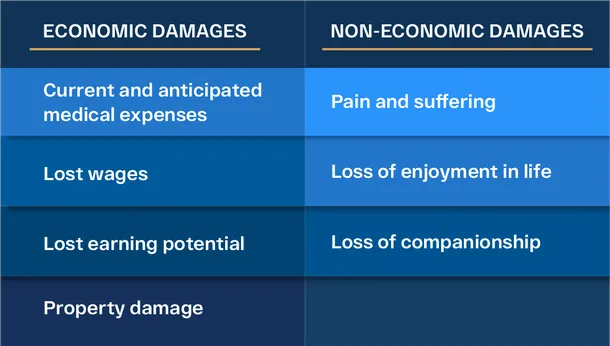
After a McDonald’s slip-and-fall accident in California, you can seek economic (financial) and non-economic (intangible) damages. These aim to compensate you for the losses you sustained. That said, the damages you include in your claim will depend on how the incident affected your life.
Economic damages can include:
- Current and anticipated medical expenses
- Lost wages
- Lost earning potential
- Property damage
Meanwhile, non-economic damages can compensate for:
- Pain and suffering
- Loss of enjoyment in life
- Loss of companionship
If you are an injured worker, workers’ compensation covers medical treatment and roughly two-thirds of your lost wages. However, it generally does not provide compensation for pain and suffering. You may only pursue those damages through a separate third-party lawsuit.
Filing Deadlines For Slip-And-Fall Cases
The filing deadline for McDonald’s slip-and-fall cases in California is generally two years from the date of the incident. Section 335.1 of the state’s Code of Civil Procedure establishes this statute of limitations. Courts will likely dismiss your case if you submit it beyond the time limit. However, exceptions may extend or shorten this deadline, depending on your situation.
The time limit for personal injury claims may change if:
- You’re a Minor: The statute of limitations pauses until you turn 18.
- Your Injuries Didn’t Show Up Immediately: The deadline may only start on the date you discovered or should have reasonably discovered them, rather than the date of your slip-and-fall.
- You’re Suing a Government Agency: You must first file an administrative claim within six months of your accident. From here, you can only sue if your claim is rejected or doesn’t receive a response within 45 days.
Frequently Asked Questions About McDonald’s Slip-And-Fall Cases
It’s common to have questions regarding your rights following a McDonald’s slip-and-fall incident. Do I have a valid case? How can I pursue damages? The answers you need depend on the specifics of your situation.
However, you may share some concerns with victims of similar accidents. Below are answers to some common questions about McDonald’s slip-and-fall cases.
What Is The Average Settlement For A Slip And Fall Injury In California?
The average settlement for a minor slip-and-fall injury in California may be thousands of dollars. Severe and catastrophic injuries may justify higher amounts. However, the exact damages you may recover will depend on your specific circumstances.
Every case is unique, making it difficult to assign a fixed value to any given injury. California slip-and-fall lawyers review the facts of a McDonald’s case to estimate potential damages.
Has Anyone Won A Personal Injury Lawsuit Against McDonald’s?
Yes, several people have sued McDonald’s and won. A “win” in this case means recovering compensation through a settlement or verdict. One notable example is Stella Liebeck. She filed a product liability lawsuit against McDonald’s after suffering third-degree burns from her coffee. In 1994, both parties in the Liebeck v. McDonald’s Restaurants (Hot Coffee) case agreed to settle out of court.
Is It Hard To Sue McDonald’s?
Yes. It’s generally hard to win slip-and-fall cases because you need to have enough evidence to prove that the property owner knew about the hazard, but failed to fix or warn you about it. Filing a lawsuit against McDonald’s can be even more complex because you need to demonstrate that the fast food chain itself was negligent, resulting in your injuries. Large corporations like McDonald’s also typically have teams of attorneys ready to protect their interests. They often contend over their share of liability. Ultimately, suing McDonald’s requires extensive preparation and resources.
How Long Does It Take To Settle A Slip-And-Fall Case In California?
Slip-and-fall cases in California that involve minor injuries can potentially reach a pre-litigation settlement within several months. Complex cases, especially those requiring litigation, can take a year or longer. The exact time for a case to settle depends on its specific circumstances.
Do I Need A Personal Injury Lawyer For My McDonald’s Slip-And-Fall Claim?

No, you are not required to hire a personal injury attorney to handle a slip-and-fall case. However, legal representation can be helpful if you’re suing a large corporation like McDonald’s. It will likely employ defense attorneys to protect its business interests, so you may want a lawyer to advocate for you as well. You may also want someone to represent you if you need to take your case to court.
Do Lawyers Only Get Paid If They Win My Slip And Fall Case?
They do if they offer contingency fees. Under this arrangement, they won’t charge for their services unless they win your case. In other words, you won’t have to pay for legal representation up front.
Should I Accept The First Settlement Offer?
Generally, you shouldn’t accept an insurance company’s initial settlement without reviewing the extent of your losses. If you sign a settlement offer, you typically give up your right to file a lawsuit. You can’t take the case to court even if you discover additional injuries later.
Can I Still Seek Compensation If I’m Partly At Fault?
Yes, you can still seek compensation even if you share fault for a McDonald’s slip-and-fall. Under California’s comparative fault rules, victims and defendants are each assigned a share of fault. The victim’s percentage of liability reduces the potential damages. For example, if the award was $50,000 and the victim was 25% liable, they may only obtain $37,500.
Can I Sue McDonald’s If There Were No Warning Signs?
Yes, a lack of warning supports a lawsuit against McDonald’s. It can demonstrate that the franchise owner failed in its duty of care by failing to inform you of potentially dangerous conditions on its property.
Seek Legal Guidance After A McDonald’s Slip-And-Fall Accident
If you sustain injuries after a slip-and-fall at McDonald’s, you may have the right to sue it directly. However, filing a case against a large corporation such as McDonald’s can present significant challenges. You might be looking for free accident lawyer advice to learn about your rights and options. Our slip-and-fall attorneys offer free initial consultations.
At Arash Law, our personal injury lawyers can tell you if you have a case and help you pursue a slip-and-fall claim. We investigate the accident, gather evidence, and handle correspondence and negotiations with insurers. If necessary, our lawyers can represent your interests in court.
We operate on a no-win, no-fee basis. That means we don’t charge legal fees unless we recover compensation on your behalf.
Call AK Law at (888) 488-1391 today to schedule a free case review.