TL;DR: When speaking with an injury lawyer, avoid guessing about fault, exaggerating your injuries, downplaying your symptoms, or leaving out prior accidents or deleted posts. In California, inconsistent statements can hurt your credibility, shift blame, and reduce the compensation an injured driver or passenger may be able to recover under comparative negligence rules.
Highlights:
- Write a short timeline of what happened while details are fresh.
- Bring photos, videos, witness names, and the police or incident report.
- Share every insurance call, letter, email, claim number, and recorded statement.
- List all symptoms and every provider, with visit dates and discharge papers.
- Preserve evidence – stop deleting or editing posts, texts, photos, or videos.
- Keep a daily journal of pain, limits, missed work, and out-of-pocket costs.
- Track deadlines: CA is often 2 years, government claims often 6 months.
Tip: If you already deleted or posted something, tell your lawyer and write down exactly what changed, when, and who can still access a copy.
Table of Contents
When speaking with your injury lawyer in California, do not guess, exaggerate, minimize, or leave out important details. If you think you may have been partly at fault, say that too. Your lawyer needs the full story, including facts that may seem unfavorable, so they can protect your rights and prepare your case properly.
That does not mean you should be careless with your words. It means you should be honest, accurate, and complete with your lawyer. Tell them about your symptoms, past injuries, medical care, insurance calls, prior statements, and anything else that could affect the case. Even details that seem harmful can help your lawyer plan the best response.
What Should You Avoid When Speaking To Your Injury Lawyer?
Almost nothing is off-limits with your own lawyer. The real problem is saying things that are incomplete, careless, or untrue. Your lawyer needs the full story, including facts that may seem unfavorable, so they can protect your rights and prepare for what the insurance company may argue.
Avoid statements like these:
- “It was my fault,” if you are assuming or drawing conclusions before all the facts are known.
- “I’m fine,” if you have not yet understood the full extent of your injuries.
- “I think I was going about 40″ when you are guessing.
- “You do not need to know about my old injury.”
- “Let’s leave that part out.”
- “I deleted the post already, so it does not matter.”
These kinds of statements can hurt your case because personal injury claims in California depend on accurate facts, medical evidence, and credibility. The state also follows a pure comparative negligence rule. That means your compensation may be reduced if the evidence shows you were partly at fault. For example, if you are found 20% responsible, you may recover 80% of your total damages.
Mistake #1: Not Telling The Full Story To Your Injury Lawyer
Some people hold back facts because they worry those details might hurt their case. That can do more harm than good. Your lawyer can deal with tough facts when they know about them, but they cannot help with something you never mentioned. Be honest about what happened and share all case-related information and documents, even if something seems small or unimportant.
Tell injury attorneys about:
- Prior accidents or old injuries.
- Gaps in treatment or missed appointments.
- Posts you made on social media about the accident.
- Recorded insurance statements.
- Criminal or traffic issues tied to the event.
- Any witness who may not help your side.
What If I Already Deleted A Post, Text, Or Photo?
Deleting evidence can hurt your case by removing important context. It can also create legal problems if the deleted material was relevant to the claim.
Here’s what you can do:
- Stop deleting, editing, or changing anything related to the incident.
- Tell your lawyer right away so they can figure out the best next step.
- If you remember what was deleted, write down as much as you can.
Preservation means keeping relevant evidence exactly as it was. The sooner your lawyer knows what happened, the better chance they have to deal with the issue and protect your claim.
Mistake #2: Guessing About Fault Or Filling In Missing Details

If you do not know something, say so. Speculating about speed, timing, distance, lighting, pain level, or who saw what can create inconsistencies that affect the credibility of your case. Once a wrong detail is recorded in a statement, medical history, or demand package, it becomes harder to fix.
Many injured drivers unknowingly damage their claims by speculating or speaking too quickly after a crash. Learning about the common mistakes people make after a vehicular accident can help you avoid preventable setbacks.
A personal injury claim depends on evidence. That includes proving the following:
- What happened
- Who caused it
- What harm followed
Your lawyer can investigate missing details through records, photos, witness statements, expert review, and other evidence. You do not help your case by guessing.
Mistake #3: Minimizing Your Injuries
People often downplay their injuries for various reasons. They want to be polite, get home, or believe the pain will go away on its own. However, saying you are fine too soon can create a record that the insurance company may later use to question your claim.
Be honest with your injury lawyer about every symptom, even if it seems minor at first. That includes:
- Headaches
- Back pain
- Numbness
- Sleep problems
- Anxiety
- Dizziness
- Any ongoing pain
Tell your lawyer right away if you went to urgent care, the emergency room, or your primary care doctor. That information helps connect your symptoms to the incident. Your lawyer may also work with medical experts to evaluate how your injuries relate to the event and how they may affect you over time.
Mistake #4: Exaggerating Injuries And Other Facts
Understating an injury is a problem; so is overstating it. If your story does not match the medical records, surveillance, phone data, work records, or social media activity, it can impact your credibility. Once credibility slips, insurers may start questioning everything else, too.
The better approach is simple. Describe what you felt, when it started, how long it lasted, what treatment you received, and what limitations you still have. Let the records support the story.
What Should You Tell Your Lawyer Right Away?
Your lawyer needs a clean factual file as early as possible. Bring the core facts first, then fill in the rest as new information comes in.
These are things your lawyer needs to know or see:
- The date, time, and location of the incident.
- A short timeline of what happened.
- Photos, videos, and witness names.
- Police or incident reports.
- Medical records and discharge papers.
- Insurance letters, emails, and claim numbers.
- Proof of missed work and lost income.
- A written list of symptoms and treatment providers.
If you’re thinking, “I need a personal injury lawyer,” the most helpful first step is to organize these facts before your consultation so your attorney can evaluate your case based on evidence rather than memory.
Is Everything I Tell My Injury Lawyer Confidential In California?
In California, the attorney-client privilege protects private conversations you have with your lawyer for legal advice. This means those communications are generally not admissible as evidence in court.
Separately, your lawyer has a legal and ethical duty of confidentiality. This is broader than attorney-client privilege and generally requires the lawyer to keep information you share private, even if it is not protected by privilege. It can also apply to information shared during an initial consultation, even if you do not ultimately hire the lawyer.
If you share the communication with other people, such as friends or co-workers, or on social media, you may lose your privilege. Your lawyer may no longer be able to protect information if you disclose it outside the attorney-client relationship.
What Evidence Matters Most Early On?
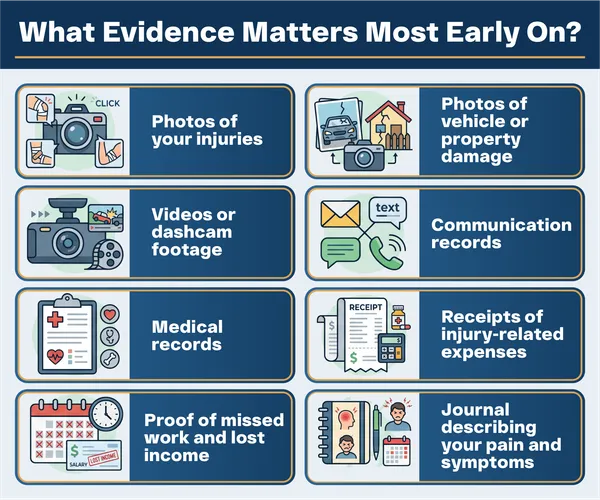
Evidence that shows how the incident occurred, demonstrates the injuries you sustained, and establishes fault is the most important to gather early on, especially if it is to disappear quickly. Surveillance footage gets overwritten. Witnesses stop answering. Phone photos get lost. Online posts get taken out of context.
Try to preserve:
- Scene photos, including your visible injuries, if any.
- Vehicle or property damage photos.
- Video or dashcam footage.
- Phone screenshots and call logs.
- Medical visit summaries.
- Receipts and out-of-pocket costs.
- Employer wage records.
- A written journal of symptoms and daily limitations.
Your injury attorney may also send preservation requests to businesses, property owners, drivers, or insurers to keep important records from being lost.
How Do Your Words Affect Fault And Compensation?
In California, shared fault does not always block a claim, but it can reduce compensation. That is why casual admissions matter. A polite apology, a bad guess, or a rushed explanation can all become ammunition for insurers arguing that you caused part of the harm.
Injured claimants usually carry the burden of proof. That means your side needs enough evidence to show what happened and why the other side is legally responsible. Clear facts help. Speculation does not. With the legal intricacies in filing a claim, it may help to seek free advice from a personal injury lawyer to understand how some of your statements can affect liability and potential compensation.
What Not To Say To Other People While Your Case Is Ongoing
Talk candidly with your lawyer, but carefully with everyone else. Do not discuss the case casually with the insurance adjuster, coworkers, neighbors, or online followers. Those statements are not protected the way lawyer-client communications are.
Be especially careful with:
- Recorded statements with the insurers.
- Text messages about fault.
- Social media captions.
- Check-ins and activity photos.
- Casual comments implying that you feel better.
- Posts that make your injuries look minor.
What Happens During The First Consultation?
A good first consultation should help you understand your options, your risks, and the next steps. It should also give you room to ask questions about the lawyer’s experience, communication style, timing, costs, and who will actually handle the case day to day. The State Bar advises consumers to ask what the lawyer will do, what the case may involve, and what the fee structure looks like.
The first consultation is also the right time to ask about what to preserve, whether you should keep speaking with the insurer, and what medical or employment records matter most right now.
What Compensation Can Be Affected By Inaccurate Or Inconsistent Statements?
Inaccurate or inconsistent statements can affect more than pain and suffering. They can also affect medical expenses, future treatment, lost income, reduced earning ability, and other parts of the claim if the insurance company argues that you were more at fault than you first reported or less injured than you later claimed. Issues involving comparative fault and credibility can affect a case’s overall value.
That is why accuracy matters from the very first call. A clear and consistent record gives your lawyer a stronger chance to present the facts properly before the defense tries to shape the story in a way that hurts your claim.
Frequently Asked Questions
It is normal for injured victims to have legal concerns when pursuing a claim. Below are answers to common questions about speaking with a personal injury lawyer in California.
Should I Tell My Injury Lawyer About Old Injuries Or Prior Claims?
Yes. Tell your lawyer about prior injuries, prior accidents, workers’ compensation claims, and any similar symptoms you had before this event. Old injuries do not automatically ruin a claim. They do, however, need to be addressed early so the defense cannot frame them as a surprise or use them to question causation.
What If I Already Spoke To The Insurance Adjuster?
Tell your lawyer exactly what happened, whether the call was recorded, and whether you signed anything. Your lawyer needs that information right away so they can assess the situation, manage future communication, and avoid further statements that may harm the case. Do not try to clean up the story on your own. Just be honest about what you said and when you said it.
Do I Need To Tell My Lawyer About My Medical Treatments?
Yes. Tell your lawyer about every provider you saw, including any chiropractor, physical therapist, specialist, urgent care clinic, or emergency room. An incomplete treatment history can create record gaps that the insurer may use to argue your injuries were minor or unrelated.
Bring visit dates, provider names, bills, and referral notes if you have them. These documents help you build a complete picture of your injuries and losses.
How Much Do Injury Lawyers Charge?
It depends on the complexity of the case and the lawyer’s fee structure. More complex cases often require more time and resources to handle, which can affect the overall legal costs. However, if your concern involves the question, “Do lawyers only get paid if they win?” Many personal injury lawyers, such as those at Arash Law, work on a contingency fee basis. Under this arrangement, you pay legal fees only if your lawyer wins or settles your case. It’s important to clarify the terms and any additional costs to avoid confusion.
Can I Change Lawyers If I Already Hired One?

Yes. California authority recognizes that a client has the right to discharge an attorney at any time, with or without cause. If you are seriously considering a switch, request your file, review the fee agreement, and determine whether you need to resolve any fee issues. A change in a lawyer can slow a case if it happens late, so do it carefully and get clear advice about timing.
What If I Already Lied Or Left Something Out?
Tell your lawyer immediately. The longer a false or incomplete statement sits in the file, the harder it becomes to correct. A lawyer can deal with difficult facts far better than surprise facts. Do not double down. Correct the record early, preserve the supporting documents, and let your lawyer decide the safest next step.
How Long Should I Wait Before Talking To A Personal Injury Lawyer In California?
It is best to talk to a personal injury lawyer as soon as possible. California sets legal filing deadlines through laws known as statutes of limitations. In most personal injury cases, you generally have two years from the date of the injury to file a lawsuit. If your claim involves a government agency or public entity, you usually must file an administrative claim within six months of the injury. Missing these deadlines can seriously affect your right to recover compensation.
Even if the statute of limitations has not run out, waiting can still hurt your case. Lawyers need time to gather records, preserve evidence, identify liable parties, and build a strong claim before important details are lost.
Talk To Our Injury Lawyers About Your Case
The most helpful thing you can share with your injury lawyer is the truth. It’s better to do this early on in your case. If you have questions about what to share, what to preserve, or what an insurer may do with your statements, our injury attorneys at AK Law can help. Call us at (888) 488-1391 for a free initial consultation.