TL;DR: If you caused an accident but someone else shared responsibility, California’s comparative fault rule allows recovery, though your share of fault reduces your payout. Evidence like photos, witness statements, and reports can help prove liability. Timely action is crucial due to legal deadlines.
Highlights:
- California’s pure comparative fault rule allows you to recover compensation even if you’re partly to blame.
- If you share fault, your compensation may be reduced according to your degree of responsibility.
- Timely action is crucial; legal deadlines may limit your ability to file a claim.
- The deadline for filing a personal injury claim in California is generally 2 years.
- Evidence like photos, videos, and witness statements can support shared fault cases.
- You may still recover compensation if another party shares responsibility for the accident.
Tip: Stick to facts and gather strong evidence to support your claim.
Table of Contents
If you caused the accident entirely on your own, you likely do not have a claim against another party. That changes if another person or entity also contributed to the accident. Many personal injury claims require proof that someone else’s negligence caused the injury. In California, you may still recover compensation when an accident was only partly your fault.
California follows a pure comparative fault rule. That means your share of fault reduces your compensation, but it does not automatically bar recovery. The key question is not just whether you made a mistake. It is whether someone else also failed to use reasonable care and helped cause what happened. If so, you may still have a claim.
What Negligence Means In A Shared-Fault Case
To recover compensation in a California personal injury case, you generally must show that another person or entity was negligent. Negligence means failing to use reasonable care under the circumstances. In plain terms, it means someone acted carelessly, or failed to act carefully, and that conduct helped cause your injury.
California negligence claims generally turn on four basic elements:
- Duty: The other person, business, or public entity owed a duty to use reasonable care.
- Breach: They failed to meet that duty.
- Causation: Their conduct was a substantial factor in causing the accident and your injuries. California’s negligence instructions also recognize that conduct can still count as a cause even when other factors contributed.
- Damages: You suffered actual harm, such as medical bills, lost income, pain and suffering, or property damage.
California’s pure comparative negligence rule does not remove the need to prove negligence. Instead, it applies when the evidence shows that more than one person contributed to the accident. In this scenario, you may still recover compensation, but your share of fault reduces your potential payout.
How Partial Fault Works In California
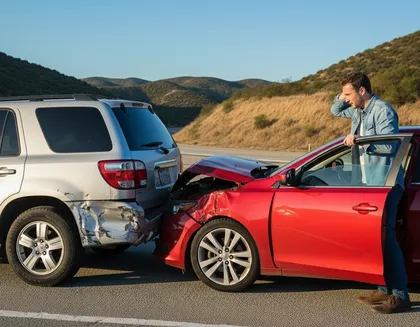
The state does not use an all-or-nothing rule in these cases. California law holds people responsible for injuries caused by their careless actions. It also recognizes that the injured person’s own conduct may have helped cause the accident. When that happens, fault can be shared, and a court can reduce the injured person’s compensation by their share of the blame.
The state follows a pure comparative negligence system. Under it, fault is divided among all those who contributed to the accident that caused the injury. If you are partly responsible for the accident, a court can reduce your payout by the percentage of fault it assigns to you.
Example:
- Total Damages: $100,000
- Your Share of Fault: 25%
- Reduced Recovery: $75,000
Even a high share of fault does not automatically block recovery in California. What matters is whether someone else also contributed to causing the injury. That means you can still pursue compensation, even if you’re up to 99% to blame.
How Is Fault Percentage Decided, And Who Decides It?
There is no fixed formula for deciding fault percentage. Courts assess liability based on the facts and evidence. They review what each party did, if they acted with reasonable care, and if their actions caused the accident. In simple terms, the question is how much each person’s actions contributed to what happened.
If the case goes to trial, the jury usually sets the percentages. They assign a share of responsibility to each party on the verdict form. The total must equal 100 percent. If there is no jury, the judge decides the case.
What Types Of Accidents Can Involve Shared Fault?
Shared fault is not limited to car accidents. It applies in many negligence-based injury cases, including:
- Traffic collisions
- Slip-and-fall accidents
- Unsafe property claims
- Some workplace accidents involving a third party
- Accidents on public property
Personal injury cases can arise from any accidents caused by one or more parties’ careless actions. That said, multiple types of incidents can involve shared fault, including car crashes, slip-and-fall cases, and work-related injuries.
The facts can vary, but the legal issue is often the same. Did someone else act carelessly, and did that help cause the injury?
Shared fault can come up in many ways. For example:
- A car suddenly stops in front of you because the driver was distracted, and you rear-end it because you were speeding.
- A store may leave a spill on the floor and then argue that you slipped on it because you were not paying attention.
- At a job site, one contractor may create a hazard while another fails to fix it or warn others about it.
In each of these situations, more than one person or business may share responsibility. Some workplace injuries may give rise to a separate claim. This claim is against the person or company that caused the harm.
What To Do Right After An Accident
Start by getting medical care as soon as you can. That way, you can protect your well-being and create records that connect the accident to your injuries. Examples include medical bills, doctors’ reports, and other records related to the injury.
Then take a few practical steps as early as possible:
- Report the incident to the right person, business, or agency.
- Take photos or video if it is safe to do so.
- Get witness names and contact information.
- Save damaged items and anything else connected to the accident.
Be careful about what you say about fault. Right after an accident, you may not know the full story. A witness may have seen more than you did. A video may show something you missed.
Do not admit fault or suggest that you were partly to blame before the facts are clear.
Even a casual statement can be used against you later. Stick to the facts, describe what happened, and let the evidence do the work. Helpful evidence often includes photos, witness statements, police reports, and medical records.
What Proof Can Help Show You Were Not Solely At Fault?
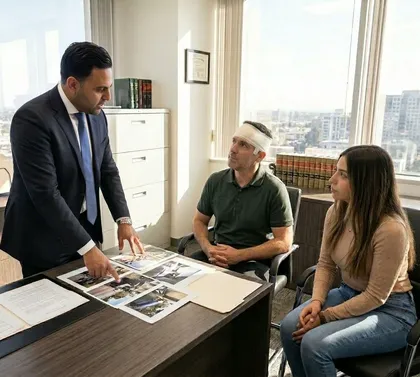
Cases where fault is shared often come down to proof. Strong evidence can show that someone else also contributed to the accident. That matters when the other side tries to place all or most of the blame on you.
The goal is not just to prove that you were hurt. It is also to show how the accident happened, who contributed to it, and why the blame should not rest solely on you.
Helpful evidence may include:
- Photos of the scene showing hazards, damage, vehicle positions, broken surfaces, spills, debris, lighting, or missing warning signs.
- Videos or surveillance footage that capture what happened before, during, or after the accident.
- Witness statements explaining what they saw and whether another person acted carelessly.
- Police reports or incident reports documenting the scene and the people involved.
- Medical records linking your injuries to the accident and documenting their severity.
- Medical bills and receipts showing the cost of treatment.
- Wage records showing lost income or missed work.
- Repair estimates or invoices showing property damage.
- Inspection logs, maintenance records, or work orders showing that a hazard existed and was not fixed.
- Messages, emails, or other communications that may show what the other party knew or did before the accident.
This evidence helps in two ways. First, it supports your injury claim. Second, it helps push back against claims that you were fully or mostly at fault.
For example, photos may show that a hazard was obvious and had not been fixed. A witness may confirm that another driver was speeding or that a property owner ignored a dangerous condition. Records like these can make it easier to show that the fault was shared, not one-sided.
The stronger your evidence, the harder it is for the other side to argue that you caused the accident by yourself or to exaggerate your share of the blame. That is why accident lawyers focus so closely on building the proof early.
What Types Of Claims Can Arise When Fault Is Shared?
Shared fault can come up in several types of injury claims. The core issue stays the same. You may still have a claim if someone else also contributed to the accident. That means you could still pursue compensation, even when the other side argues that you were partly responsible.
That issue can arise in claims such as:
- Auto Accident Claims: Another driver may have been speeding, distracted, following too closely, or making an unsafe turn, even if you are accused of contributing to the crash.
- Premises Liability Claims: A property owner may argue that you were not paying attention, while the evidence shows they failed to fix, clean, block off, or warn about a dangerous condition.
- Third-Party Claims in Workplace Accidents: A work injury may entitle an employee to workers’ compensation benefits, which are available regardless of fault. However, it may also support a separate claim against a contractor, driver, property owner, or other non-employer whose negligence contributed to the harm.
- Public Property Claims: A city, county, or other public entity may argue that you were partly to blame, while the facts show that a dangerous condition on public property also played a role.
These claims do not all follow the same process. Pursuing compensation after a car accident often begins with an insurance claim. A dangerous property case may turn on issues of notice, maintenance, and warning. Compensation for a work injury may involve both benefits and a separate third-party claim. A public property case may require a government claim before a lawsuit can be filed.
The legal path depends on who was involved, what duty was violated, and whether someone else’s negligence contributed to the injury.
Who Else May Share Responsibility?
It is not always clear who is legally responsible. In some accidents, more than one person or business shares the blame. Responsibility often falls on the entity that created the danger, controlled the area, and failed to fix or warn people about the problem.
| Responsible Party | Common Accident Types |
|---|---|
| Another driver or individual | Car crashes, motorcycle accidents, pedestrian accidents, bicycle collisions, and other incidents caused by careless driving or unsafe conduct. |
| A business | Slip-and-fall accidents at stores, restaurants, hotels, or other commercial properties, as well as crashes involving company vehicles or employees working at the time. |
| A property owner or manager | Premises liability cases, such as those involving spills, broken stairs, poor lighting, uneven walkways, inadequate security, or other unsafe property conditions. |
| A tenant who controlled the area | Accidents at leased homes, apartments, offices, retail spaces, or event venues, when the tenant was responsible for the area where the injury happened. |
| A contractor or subcontractor | Construction accidents, worksite falls, falling-object incidents, unsafe repair zones, scaffold accidents, trench accidents, and other injuries tied to worksite hazards. |
| A government agency or public entity | Accidents involving dangerous sidewalks, broken traffic signals, unsafe roads, poor street lighting, hazardous public buildings, or other dangerous conditions on public property. |
Some accidents involve more than one responsible party. For example, a slip-and-fall may involve both a property owner and a tenant. A worksite injury may involve a contractor, subcontractor, and property owner. A crash may involve a negligent driver and the employer who sent that driver out for work. That is why it is important to identify who controlled the danger, who created it, and who failed to address it.
What Losses May Still Be Recoverable?
When another person or business contributed to the accident, you could recover compensation for your financial losses and the injury’s personal impact. California law generally separates those losses into two categories: economic damages and non-economic damages.
Economic damages cover financial losses you can usually document with bills, records, or receipts. These may include:
- Medical expenses, such as emergency room visits.
- Lost income.
- Future treatment costs, such as for long-term chiropractic care.
- Property repair or replacement costs.
- Out-of-pocket expenses related to the injury.
- The cost of substitute services, such as help with tasks you cannot do while recovering.
Non-economic damages cover the ways the injury affects your daily life. These may include:
- Pain and suffering
- Emotional distress
- Inconvenience
- Loss of enjoyment of life
When a case involves more than one defendant, California law also treats these categories differently. A defendant may be responsible for the full amount of economic damages in some situations. However, non-economic damages are generally limited to that defendant’s share of responsibility.
The value of a claim depends on the losses involved, the evidence supporting them, and the division of responsibility among the parties.
When Recovery May Be Limited Or Not Available
Not every case leads to compensation. If you were entirely responsible for the accident and no one else contributed to it, you likely do not have a claim. You still must show that another person or business helped cause your injury.
Recovery can also become harder when the evidence is weak. You may believe someone else shares responsibility, but without strong proof, the other side may argue that the facts do not support your position. That can affect whether the claim succeeds and how much it may be worth.
Some cases become more difficult because they involve a different legal path than people expect. For example, a case may involve:
- Workers’ compensation and a separate third-party claim
- A government claim process before a lawsuit can be filed
- Multiple people or businesses who may share responsibility
If you are thinking, “I need a personal injury lawyer,” this is often why. When fault is disputed, proof is limited, or more than one legal path may apply, Arash Law can review the facts and help identify the right next steps.
These issues can limit recovery, delay the case, or lead to missed deadlines if they are not identified early.
How Long Do You Have To Take Legal Action?
Deadlines can cut off your right to recover, even when the facts are clear. In California, the time limit depends on the type of claim and who you are filing against. Here’s an overview of the timelines:
- Personal Injury Claim: Usually two years from the date of the injury.
- Property Damage Claim: Usually, three years from the date the damage happened.
- Claim Against a Government Agency for Injury or Damage to Something You Own: Usually, six months to file an administrative claim. If the agency denies that claim, victims have another six months from the denial to file a lawsuit in court.
The deadline often starts on the date of the injury or the date the property was damaged. In some situations, the start date may be later if the problem was not discovered right away and could not reasonably have been found earlier. Some rules can also extend the deadline, such as tolling for minors.
Cases where there is a dispute in fault can feel uncertain at first, but that does not stop the clock. You do not get extra time just because the other side denies responsibility or because the evidence is still being sorted out. If the deadline passes, you may lose the right to bring the claim at all.
Frequently Asked Questions About Shared Fault In California Accident Cases
After an accident, many victims look online for free advice from an accident lawyer. If you think you played a role in the accident, you might still have questions. For example, you may be wondering whether you can recover compensation, what proof matters, and how deadlines work.
These answers explain the basics of how shared fault can affect an injury claim in California.
Does The Rule On Shared Fault Only Apply To Car Accidents?
No. This rule applies to most negligence-based injury cases, not just traffic crashes. It also arises in unsafe property cases, such as slip-and-fall claims, some third-party workplace accidents, and incidents involving public property.
What If I Think The Accident Was My Fault, But Someone Else Made It Worse?
You may still have a claim if another person’s conduct also contributed to what happened. The key issue is whether that person acted carelessly and whether their actions helped cause the injury. Even if you made a mistake, that does not automatically mean you were the only one responsible.
What Evidence Can Help Show Someone Else Shares Responsibility?
Helpful proof includes photos, videos, witness statements, incident reports, medical records, and repair estimates. Maintenance records and other documents tied to the hazard or unsafe conduct can also support a case. The strongest evidence helps show how the accident happened, what dangerous condition existed, and why the blame should not rest solely on you.
What If The Accident Happened On Public Property?
The claim may involve a city, county, state agency, or another public entity. That means a different process applies. In many cases, you must file a government claim first before you can file a lawsuit. The deadline for doing so is often much shorter than it is in an ordinary injury case.
How Long Do I Have To Act?
That depends on the type of claim. In many California injury cases, the deadline is two years. Property damage claims often have a three-year deadline. Claims involving a government agency move much faster and require victims to file an administrative claim within six months. Because the timeline changes based on the facts, it is important not to wait too long.
Get Experienced Representation If You May Be Partly To Blame
If you were hurt in an accident and think you may be partly responsible, do not assume you have no case. In California, you may still be able to recover compensation if another person or business also helped cause what happened.
If you are wondering, “Do lawyers only get paid if they win?” our lawyers work on a contingency fee basis. That means they only get paid if they recover compensation. You don’t need to pay attorney fees up front.
When fault is disputed, small details can make a big difference. The evidence, the legal path, and the filing deadline can all affect the outcome. Arash Law can review the facts, determine what type of claim may apply, and help preserve important evidence before it is lost.
Contact us at (888) 488-1391. Our team at AK Law offers free initial consultations.