TL;DR: The leading cause of intersection accidents is driver error, including inattention, missed signals, unsafe turns, and right-of-way violations. These mistakes drive most crashes, but fault depends on the facts, and early evidence and California deadlines can affect how a claim is evaluated.
Highlights:
- Photograph signals, lane markings, vehicle positions, and intersection layout immediately.
- Document whether traffic lights were working, flashing, or out of sequence.
- Collect witness names and contact details at the scene.
- Look for nearby cameras, including dashcams, stores, buses, or traffic systems.
- Save your photos, videos, and phone data right away.
- File an SR-1 within 10 days if the crash caused injury, death, or property damage exceeding $1,000.
- Report work-related injuries within 30 days and request a DWC-1 form.
Tip: Give police and insurers accurate details, and avoid guessing about signals, speed, or right-of-way.
Table of Contents
The leading cause of intersection accidents is driver error. Inattention, distracted driving, missed traffic signals, unsafe left turns, speeding, and right-of-way violations are among the causes of these crashes. Federal research shows that driver-related mistakes play a role in most intersection collisions. Many cases involve recognition errors, such as failing to notice traffic signals, other vehicles, or changing road conditions.
That said, proving fault in an intersection accident still requires a careful review of the facts. A driver may have run a red light, failed to yield, or made an improper lane change. Still, poor visibility, a malfunctioning traffic signal, or an unsafe intersection design can also contribute to these incidents.
Understanding the exact cause of the crash is important. It impacts the evidence needed, who might be responsible, and the type of injury claim you can file in California.
Why Driver Error Is The Leading Cause Of Intersection Accidents
Driver error is the leading cause of intersection accidents. The National Highway Traffic Safety Administration (NHTSA) found that about 96.1% of intersection-related crashes involved a driver error that directly caused the crash. About 55.7% involved problems such as distraction, inattention, or failing to notice important traffic conditions.
The NHTSA study may be older, but it’s still valuable. It’s one of the few federal studies to examine intersection crashes. Plus, newer national guidance points out many of the same driver mistakes at intersections.
A driver’s mistake does not automatically determine legal fault, so each crash needs careful review. In simple terms, many intersection crashes happen because a driver misses something important.
Some intersection crashes are also part of the broader pattern of distracted driving accidents, especially when a driver misses a red light, fails to notice stopped traffic, or reacts too late to a pedestrian or turning vehicle.
NHTSA also found that poor observation was the most common driver-related problem in these crashes.
Some of the most common driver mistakes at intersections include:
- Missing a traffic light or stop sign because of distraction or inattention.
- Failing to yield while making a left turn or at a stop sign.
- Making improper lane changes near or inside the intersection.
- Driving too fast to stop safely at a yellow or green light.
- Misjudging another vehicle’s speed or distance before turning or crossing.
California’s DMV rules help show how many of these crashes happen. Some drivers try to beat a yellow light rather than stop. Others turn left on a flashing yellow arrow without yielding to oncoming traffic.
Crashes can also occur when a traffic light is out, and a driver fails to treat the intersection as a four-way stop. Federal and state crash data, including red-light-running statistics, show why these violations remain a serious problem at intersections.
What Should You Do After An Intersection Crash To Protect Your Injury Claim?
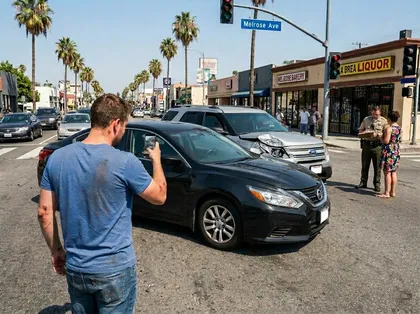
Because driver error is the leading cause of intersection accidents, the first steps after a crash should focus on safety and preserving evidence of the other driver’s wrongdoing. The evidence you collect early can help show whether the crash involved distraction, a missed signal, a failure to yield, speeding, or another traffic violation.
Focus on the scene. In an intersection crash, the layout and traffic controls can matter just as much as the vehicle damage. Try to:
- Photograph the traffic lights, arrows, lane markings, stop bars, crosswalks, debris, and vehicle positions.
- Record whether traffic signals were working, flashing, dark, or out of sequence.
- Get witness names and contact information.
- Look for dashcams, store cameras, bus cameras, or traffic cameras nearby.
- Save your own photos, videos, and phone data right away.
If you were injured while working, take a few extra steps:
- Report the injury to your employer or supervisor. In California, waiting more than 30 days to notify them can put your workers’ compensation benefits at risk.
- Ask for a DWC-1 claim form. After you report the injury, your employer should provide you with this document within one working day.
- Keep proof that you were working at the time of the crash. Save items such as your route, delivery logs, job assignments, time records, or other work-related records.
- Track your medical care and missed work. Keep records of treatment, work restrictions, and time lost from your job.
Remember that more than one claim may apply. A work-related crash can lead to two claims: a workers’ compensation claim and a separate injury claim against the driver at fault.
California also requires a DMV report in many collisions. Each driver must file an SR-1 within 10 days if anyone was injured or killed, or if property damage exceeds $1,000. That rule applies whether or not the police came to the scene.
What Evidence Matters Most When Proving What Caused An Intersection Accident?
In an intersection injury claim, evidence helps show not only that a crash occurred, but also why it happened. The goal is to identify the specific driver error that caused the crash and how it led to the injuries.
As a result, these types of evidence often matter the most:
- Scene photos and video showing signals, lane arrows, signs, skid marks, and impact points.
- Dashcam or surveillance footage showing the signal phase, speed, or turning movement.
- Witness statements from drivers, passengers, pedestrians, or nearby workers.
- Police or incident reports, if officers responded.
- Medical records linking the crash to your injuries and treatment.
- Phone records or app data, when distraction may be an issue.
- Preservation requests to stop footage or maintenance records from being deleted.
A preservation request is a written demand to keep evidence from being destroyed. This request may matter if a nearby business camera, a fleet vehicle camera, or a traffic system captured the crash.
If the crash involved a red light, a failed left turn, or a blocked view, photos of the intersection may matter just as much as photos of the vehicles. Those details can help show right-of-way violations, a traffic signal malfunction, or intersection design flaws.
What Injury Claim Options Apply After An Intersection Accident In California?
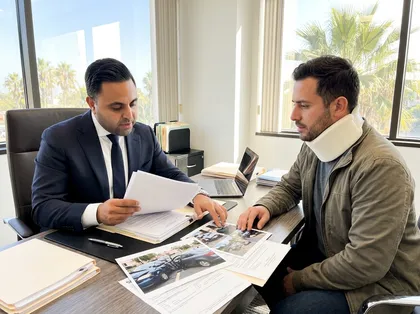
The cause of an intersection crash helps determine which claim paths may apply. A driver’s mistake may support a claim against their auto insurance. However, the facts may also point to a claim involving your own policy, a vehicle owner, an employer, or a public entity.
That said, these injury claim options may apply:
- A Claim Against the at-Fault Driver: California uses a fault-based system for auto accident claims. If another driver caused the intersection crash, the injured person can pursue a bodily injury claim through that driver’s liability coverage. This is the most common claim path when a crash happens due to driver errors, such as running a red light, failing to yield, making unsafe left turns, or changing lanes carelessly.
- An Uninsured or Underinsured Motorist Claim: If the at-fault driver had no insurance or not enough insurance, your own uninsured or underinsured motorist coverage may help cover your losses.
- A Workers’ Compensation Claim: If you were injured in an intersection accident while doing your job, you may also have a workers’ compensation claim. In California, workers’ compensation can cover job-related medical care and disability benefits, and an injured worker generally must report the injury within 30 days. A work-related crash may also involve a separate third-party claim against the driver or other party who caused it.
- A Claim Involving the Vehicle Owner or Employer: The claim may also involve the vehicle owner if the driver had permission to use the car. If the driver was working at the time of the crash, the employer may also share liability.
- A Claim Against a Government Agency: Not every intersection crash comes down to driver conduct alone. A public entity may also be liable if a dangerous intersection condition helped cause the crash, such as:
- A traffic signal malfunction
- Blocked sight lines
- Missing or confusing lane markings
- Unsafe signal timing
- Poor intersection design
- Medical Payments Coverage: Some injured people also have medical payments coverage under their own policy. This is not a fault claim, but it may help pay some medical bills while the larger injury claim moves forward.
The claim path affects who may be responsible, what insurance may apply, what evidence you need, and how quickly you need to act. That is especially important when a dangerous intersection may involve a public entity and shorter deadlines. In more complex cases, injured people turn to intersection accident attorneys to help identify all available claim paths and preserve the evidence needed to support them.
Who May Be Liable For An Intersection Accident?
Because driver error is the leading cause of intersection accidents, many personal injury claims focus on whether a driver broke a traffic rule. Liability often turns on whether a driver ran a red light, failed to yield, turned unsafely, or committed another mistake that caused the crash.
California’s DMV rules also matter at stop-controlled intersections. At a four-way stop or an uncontrolled intersection, the vehicle that arrives first has the right of way. If two road users arrive at the same time, the person on the right goes first, and drivers must still yield to pedestrians and bicyclists when required by law.
Intersection crashes do not always involve only one at-fault party. More than one driver, and sometimes a pedestrian or bicyclist, may share responsibility for what happened. California uses comparative fault rules. That means an injured person can still seek damages even if they are partly at fault. However, their recovery can be reduced in proportion to their share of responsibility.
Depending on the facts, more than one party may be responsible:
| Potentially Liable Party | When They May Be Liable | How This Party May Be Involved |
|---|---|---|
| The Other Driver | When the crash happened because the driver broke a traffic rule or drove carelessly. | Running a red light, failing to yield, speeding, or making an unsafe turn. |
| The Vehicle Owner | When the driver had the owner’s permission to use the vehicle, and caused the crash through negligent driving. | A family member or friend causes the collision while driving the owner’s car with permission. |
| The Driver’s Employer or Business | The driver was working at the time of the crash and acting within the scope of the job. | A delivery driver, service worker, or employee driving for work causes the intersection collision. |
| A City, County, or State Agency | When a dangerous intersection condition helped cause the crash. | A broken traffic signal, a blocked sight line, a missing sign, or an unsafe layout contributed to the collision. |
If you were injured while working, workers’ compensation may also apply. This no-fault insurance may cover medical treatment and disability benefits after a job-related intersection crash. If someone outside your employer caused the crash, you may also have a separate civil injury claim against that negligent third party.
Who is liable matters because more than one party may share fault. That can affect the evidence you need, the insurance policies that may apply, and the compensation you may pursue. It can also change the deadline, especially when a public entity or a work-related crash is involved.
Do Intersection Accidents Cause Serious Injuries?
Yes. Intersection accidents can cause serious injuries because they often occur where traffic paths cross. If you are wondering what type of collision is most common at intersections, T-bone crashes, also called side-impact or angle collisions, are among the most common and most dangerous.
When two vehicles collide at an angle, during a left turn, or in a side-impact crash, the force can be severe because there is often little time to brake before impact. These crashes can cause injuries such as:
- Concussions and other traumatic brain injuries.
- Neck and back injuries.
- Fractures.
- Shoulder, knee, and hip injuries.
- Chest injuries from a seat belt or steering wheel impact.
- Emotional distress after a violent collision.
Some injured people may need follow-up care. Examples include physical therapy, pain management, and chiropractic treatment. It all depends on their diagnosis and medical advice.
In a personal injury claim, the severity of the injury affects compensation. More serious injuries often lead to higher medical bills, longer recovery times, higher lost income, and a greater impact on daily life.
What Compensation Can You Seek After An Intersection Accident?
The compensation available after an intersection accident depends on the type of claim. A civil personal injury case can include a broader range of damages, while a workers’ compensation claim focuses on defined job-injury benefits under California law.
In a personal injury claim, compensation may include:
- Medical bills
- Future medical care
- Lost wages
- Loss of earning capacity
- Property damage
- Pain and suffering
- Emotional distress
- Other out-of-pocket losses
California civil damages instructions recognize both economic losses, such as medical expenses and lost earnings, and non-economic losses, such as physical pain and mental suffering.
In a workers’ compensation claim, benefits may include:
- Medical treatment for the work-related injury.
- Temporary disability benefits if you lose wages while recovering.
- Permanent disability benefits, if you do not fully recover.
- Supplemental job displacement benefits, in some cases.
- Death benefits in fatal work-related crashes.
The California Division of Workers’ Compensation explains that these are benefit categories available in accepted job-injury claims. Workers’ compensation does not provide pain and suffering damages the way a civil injury claim can.
The value of either claim depends on the proof. Strong records of fault, injuries, treatment, wage loss, and long-term effects can make a major difference in the benefits or compensation that may be recovered.
What Are The Deadlines For Filing An Intersection Accident Claim?
Under California law, most personal injury lawsuits must be filed within two years of the injury. If the case involves a city, county, or other public entity because a dangerous intersection contributed to the crash, the process is different. Generally, you must first submit a government claim within six months of the injury before you can file a lawsuit.
If the case involves a public entity, the process usually works like this:
- Identify the right agency. The claim must be filed with the relevant government entity, such as a city, county, or state agency.
- Find and complete the claim form. Many public entities have their own forms and filing instructions.
- Submit the claim on time. For injury or property damage claims, the deadline is generally 6 months from the date of the injury.
- Wait for the agency to get back to you. The government generally has 45 days to respond.
- Track the next deadline carefully. If the claim is denied, you generally have six months from the date the rejection notice was mailed to file a lawsuit. If the agency does not respond within 45 days, you generally have up to two years from the injury date to start the case.
Some exceptions and special timing rules can change the deadline:
- Delayed Discovery: If the injury or damage was not discovered right away, the clock may start when it was discovered or reasonably should have been discovered.
- Minors: If the injured person is under 18, the filing deadline may not begin until that person turns 18.
- Work-Related Crashes: If the intersection accident happened while you were working, workers’ compensation deadlines may also apply. California’s Division of Workers’ Compensation says an injured worker should report the injury right away. Waiting more than 30 days can put benefits at risk.
These deadlines matter because missing the right one can weaken the claim or block it altogether. Waiting can also make it harder to preserve footage, witness memories, and proof of road conditions at the intersection.
California Snapshot: Recent Intersection-Related Crash Trends
California’s own crash data shows that intersections remain a serious source of severe crashes. Caltrans reported that 27.7% of the state’s fatal and serious injury crashes in 2022 happened within 250 feet of an intersection, and the state recorded 5,626 intersection-related fatal and serious injury crashes that year. That is a 29% increase from 2018.
| California Metric | Recent Data | Why It Matters |
|---|---|---|
| Share of severe crashes tied to intersections | 27.7% in 2022 | Shows how large a role intersections play in serious crashes statewide. |
| Intersection-related fatal and serious injury crashes | 5,626 in 2022 | Shows the scale of the problem in California. |
| Broadside or T-bone crash pattern | 19.0% | Shows that angle crashes are a major severe-crash pattern. |
| Rear-end crash pattern | 12.9% | Shows that rear-end impacts are also a significant crash type. |
| High-risk movement | Left-turn conflicts | Helps explain why unsafe left turns matter in fault and injury claims. |
These numbers also help explain what many serious intersection crashes in California look like. Broadside or T-bone crashes, rear-end crashes, and left-turn conflicts indicate that missed signals, failure to yield, unsafe turns, and other driver errors are significant factors in causing accidents at intersections. These factors can impact liability and compensation.
Frequently Asked Questions About Intersection Accident Claims
If you were injured in an intersection accident, you may be seeking free advice from an intersection accident attorney because you have questions about what caused the crash, who had the right-of-way, how fault is proven, and what happens if the intersection itself was unsafe. These FAQs focus on the issues that most directly affect a California personal injury claim.
What Causes Intersection Accidents?
Most intersection accidents are caused by driver error. Common causes include failing to yield, running a red light, making an unsafe left turn, speeding into the intersection, changing lanes carelessly, or failing to notice traffic signals, pedestrians, bicyclists, or other vehicles in time. California DMV rules reflect how these crashes occur by requiring drivers to yield at unprotected left turns and to proceed with caution around changing or flashing signals.
Who Is At Fault In An Intersection Accident?
Fault depends on who failed to follow the rules of the road or otherwise acted carelessly. In many cases, the at-fault driver is the one who ran a red light, failed to yield, turned unsafely, or entered the intersection without the right of way. At a stop-controlled intersection, California DMV rules state that the first vehicle to arrive goes first. If two vehicles arrive at the same time, the one on the right goes first.
Drivers must also yield to pedestrians and bicyclists when required.
How Do You Prove Fault In An Intersection Accident Claim?
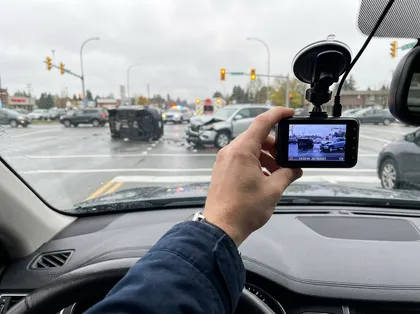
You prove fault by showing what caused the crash and who failed to use reasonable care. In intersection cases, that often means proving a driver ran a red light, failed to yield, made an unsafe turn, changed lanes improperly, or ignored the traffic conditions. Useful proof can include:
- Photos of the scene.
- Video or dashcam footage.
- Witness statements.
- Police report.
- Medical records.
- Evidence showing the traffic controls at the time.
How Much Does It Cost To Talk To A Lawyer After An Intersection Accident?
Many people also ask, “Do lawyers only get paid if they win?” In many personal injury cases, lawyers work on a contingency fee. That means the fee depends on the recovery, rather than upfront hourly billing. You should still read the written fee agreement carefully and ask how case costs are handled in your situation.
What If The Other Driver Ran A Red Light Or Failed To Yield?
If the other driver ran a red light or failed to yield and caused the crash, that conduct may support a personal injury claim against that driver’s liability insurance. California’s DMV rules make clear that a red light means stop, and a driver turning left on a flashing yellow arrow must yield to oncoming traffic before turning. These rules are important. They could explain how the collision occurred and why the other driver might be legally responsible for the injuries and losses resulting from it.
What If A Traffic Signal Malfunction Or Dangerous Intersection Helped Cause The Crash?
The case may involve more than driver error alone. If a traffic light is not working, California’s DMV says drivers must treat the intersection as an all-way stop and proceed cautiously when it is safe to do so. If a dangerous intersection condition helped cause the crash, such as a signal problem, blocked sight line, missing control device, or unsafe layout, a claim against a public entity may also be possible. Before suing a government agency, you usually need to file a claim first. This must often be done within 6 months of the injury. The agency typically has 45 days to respond.
Get Clear Answers After An Intersection Crash
After an intersection crash, it may be hard to tell exactly what happened, who caused it, or whether a traffic signal or roadway condition played a role. These cases can also raise questions about fault, insurance coverage, government claim rules, and work-related benefits if you were injured on the job.
If you have a fault dispute, a denied claim, or concerns about a risky intersection, Arash Law can review the facts and discuss your options. Many people reach the point where they think, “I need a personal injury lawyer,” especially when liability is unclear, the case involves serious injuries, or a public entity is involved. A careful legal review can help you understand what evidence matters, which deadlines apply, and what steps to take next.
Contact AK Law at (888) 488-1391 for a free initial consultation about your intersection accident case.